Why do smart-city pilots stop when the grant ends — and what did the survivors have in common?
Europe has paid cities to try out smart-city ideas for two decades; its auditors and evaluators have now counted how many outlived their grants. Most did not, and the ones that did share a handful of unglamorous traits: an owner, a duty, open code and a budget line.
Nearly sixty thousand users, then a closing date
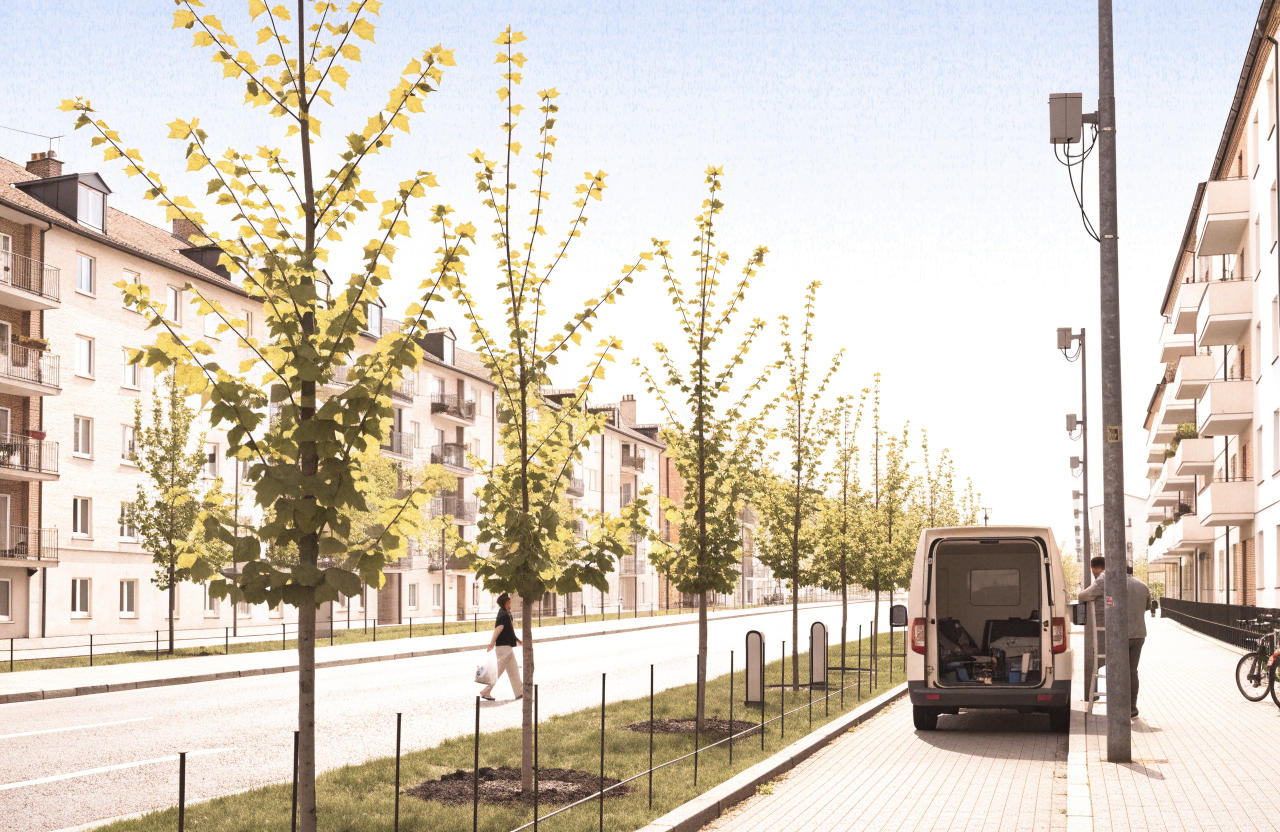
On 4 November 2017 a fleet of small electric cars took to the streets of Wrocław. Vozilla, which the city called Poland’s first municipal electric car-share, was run by a private company, Enigma, under a contract with the city. Its drivers could use bus lanes, park free in the city’s paid zones and pull into 200 reserved bays in the centre.
Two years on, the city’s website was celebrating. Nearly 60,000 people had registered, and between them they had driven more than 4 million kilometres. “The project has enjoyed great interest from the start and its popularity is not waning,” said Miłosz Franaszek, who ran Vozilla for Enigma.
Nine weeks later its end was announced. In January 2020 Enigma signed an annex to its contract that ended the service on 30 April. City Hall’s statement took one sentence: the project “did not balance its books”, owing among other things to the market and rising energy prices.

As a consequence of rapid changes in the environment and the market, the project in its current form no longer made sense to continue.The timeline below is the whole life of the pilot. Read it for the gap between the second entry and the third.
- 4 Nov 2017[source]
The cars take to the streets
Enigma runs the service under a contract with the city, which sets aside 200 free parking places in the centre.
- 13 Nov 2019[source]
Two years in
Nearly 60,000 registered users and more than 4 million km driven; the operator says popularity “is not waning”.
- 17 Jan 2020[source]
An annex ends it on 30 April
Enigma withdraws. City Hall says the project “did not balance its books”, partly because energy prices rose.
- 6 Apr 2020[source]
Fleet withdrawn a month early
With the pandemic and little demand, the cars go early; the 200 bays are opened to every electric car.
Registrations were still growing, by the operator’s account, when the contract was cut short. The city kept the software and the brand.
In the event the cars left early. With the pandemic spreading and, in the city’s words, little interest in the offer, the cars were withdrawn a month ahead of schedule, and their bays were being re-signposted for every electric car in Wrocław.
Vozilla was popular, well placed and backed by the city, and it still closed when its operator’s sums stopped adding up. Its operator called it “an experiment” whose lessons would serve the whole industry. It did not end because a grant ran out; it ended because its running costs no longer added up for the company carrying them, the same gap a grant leaves when it ends. Is Vozilla the exception or the rule? Europe’s auditors and evaluators have now counted. The more useful half of the question is what the pilots that lasted did differently.
What Europe found when it finally counted
Copying was one of the key goals of the EU’s smart-city lighthouse programme. Horizon 2020 put €381 million into projects that paired lighthouse cities, which demonstrated solutions, with fellow cities that were meant to replicate them. In 2023 the European Court of Auditors found that seven closed projects had met or beaten about two-thirds of their targets. But the Commission did “not currently plan to assess the replication” of the solutions. Without that, the auditors wrote, nobody could tell a replicable solution from one that had become obsolete or unsustainable.
So the auditors counted for themselves, in the nine projects that had closed. The chart sets what lighthouse cities said they intended, in a survey, against what had been replicated.
Two different measurements: the intention is the share of their solutions that lighthouse cities answering the auditors’ survey planned to replicate; the results are the share of planned solutions replicated in the nine closed projects. Replication can take years, the auditors add. Source: European Court of Auditors, Special Report 24/2023
Plans ran nearly three times ahead of what fellow cities had copied, and more than four times ahead of what the lighthouse cities had.
After the audit, the Commission asked the Scalable Cities consortium to carry out that assessment for its executive agency, CINEA; the report is dated October 2025. The headline reads well: many lighthouse cities “successfully upscaled 40–60%” of their solutions. The report’s own database is plainer. Lighthouse cities fully upscaled 60 of 227 solutions they had planned to spread across their own territory, and fellow cities fully replicated 82 of 316. That is about a quarter each. The share passes half only when solutions still “in the process” of upscaling are counted too.
Country by country the gap between plan and delivery varies a great deal. Look at the distance between each pair of dots.
Lighthouse cities, by country, at the time of the desktop research in 2025; partly upscaled solutions are not shown. These are the five countries the report’s text breaks down; about 50 planned solutions in other countries are not shown (Turku, in Finland, fully upscaled all nine of its own). Sweden is left out: the report gives it 26 planned solutions but a breakdown that adds up to 22. Source: CINEA / Scalable Cities, Advancing Smart City solutions across Europe (Oct 2025)
The Netherlands finished one but had 20 more under way; in Germany 22 of 28 had not been upscaled at all.
Other programmes use other yardsticks, and they do not all agree. The Urban Innovative Actions gave cities up to €5 million to test bold ideas. Their evaluators judged in 2020 that 4 of 22 early projects were likely to sustain or scale up their activities fully, 5 mostly and 10 partly. The longest look back, from transport, is far more cheerful. Five years after CIVITAS II ended in 2009, the 14 cities that answered reported that 129 of 186 planned measures still existed, which the evaluators called “a very good result”. Which ones matters. In traffic management 90% were still fully in place, as were nearly all cycling and walking measures, while clean vehicles and goods logistics scored below average.
Some of the best-known numbers come from the funders themselves. Glasgow’s Future City demonstrator delivered a £144 million return on £24 million, according to a case study by Innovate UK, the agency that paid for it. An independent evaluation, by the research firm mruk for the city council, did appear. But it was formative and, in its own words, did “not aim to determine or measure final outcomes”, and the return figure is not in it.
Read the counts with care. They rest on what projects and cities reported about themselves: CINEA’s tallies compare each project’s plans with its own end reports, and its survey heard back from 12 of 48 lighthouse cities. CINEA itself thinks its count probably understates upscaling that was still under way. Definitions move between “upscaled”, “replicated” and “sustained”. CINEA’s own totals disagree, with 227 planned solutions in one place and 230 a few pages later. Single cities flip between sources: CINEA scores Barcelona 0 of 9, while the auditors report that after its project ended Barcelona “started installing more towers in other parts of the city”. And nothing here looks more than about five years past the grant.
Still, where the evaluators compared plans with results (the auditors and CINEA), plans ran well ahead of what continued. Where the measures were signals and cycle lanes, most of them lasted. The question is what separates the two.
The breaking points
These are typical breaking points in many projects that were started with [funding] support.Jan Abt studies what happens to Germany’s funded smart-city projects after the money. City apps, sensor-guided waste collection, citizen portals and chatbots are launched with grants, and when the funding runs out quite a few stay pilots and are switched off, kommunal.de reported. The critical factors are paying for what comes next and organising who runs the service. The cases in this read show the other ways a pilot stops.
The first is money for running costs. “We are under tight budgets over the next few years,” Gary Walker, programme director of Future City Glasgow, told Holyrood; some of the apps would be hard to keep, the magazine reported, because of what they cost to run. In Vienna an e-car share for social-housing estates proved “unsustainable without EU grants”, the auditors found, and the cooperation with its provider did not continue after the project.
Then an operator walks away, as Enigma did in Wrocław. Or an election intervenes. MARES de Madrid was an Urban Innovative Actions project to grow the social and solidarity economy in four neighbourhoods. It “ended … in the context of a difficult and challenging local political transition”, wrote Alessandro Coppola, the programme’s expert on it, and the partners no longer manage its spaces. CIVITAS cities also named local elections among the reasons measures were changed or cancelled.
People are the next break. Germany’s Modellprojekte Smart Cities have €691.0 million committed to 73 model projects. By 30 November 2024 they had drawn €146.0 million. In its answer to a parliamentary question the federal government gave several reasons. Among them, the last evaluation had found that 25% of the posts created in the projects could not be filled for lack of skilled staff.

€ million drawn, cumulative
Show the numbers
| Drawn | |
|---|---|
| H1 2021 | 2.4 |
| H2 2021 | 6.7 |
| H1 2022 | 17.6 |
| H2 2022 | 41.4 |
| H1 2023 | 54.4 |
| H2 2023 | 92.9 |
| H1 2024 | 119.2 |
| H2 2024 | 146.0 |
Half-yearly drawdowns from the government’s table, added up; the second half of 2024 runs to 30 November. The commitment covers projects that run for several more years; the MPs who asked complained that drawdowns lagged the projects’ own spending plans. Source: Bundestag, Drucksache 20/14210 (12 Dec 2024)
An unspent grant is not a failed pilot. It does show how much depends on people: the posts that go unfilled during a project are the ones a city would need to run the service afterwards.
Contracts nobody enforces are another break. Santander’s council spent years promoting its sensor-based “Smartcity” platform and required the firm renewing its underground bins to connect them to it. An audit commissioned by the council found no fill-level sensors in the bins, and the platform’s manager confirmed she had received no data for years. Fixing everything the audit listed would cost more than €600,000, on a contract tendered at about €850,000.
Sometimes a bigger subsidy wins. In Trento a Horizon 2020 retrofit of 156 social-housing flats, which had already slowed under red tape, stopped when Italy’s 110% “super bonus” offered more, and some owners chose conventional works. Sometimes the vehicle was built for research, not service. Bristol is Open, a council–university venture launched in April 2015 as a programmable test-bed, hosted smart-city research projects; after three years the council took sole ownership to finish them, and “the company is now dormant”.
And sometimes a pilot never belonged to anyone. The Dutch enterprise agency RVO wrote that some past pilots “turned out to be insufficiently anchored in the organisation in which they were run”. The CIVITAS look-back shows how the problem shifts. At the end of the projects cities most often reported technical barriers, for 46% of measures. Five years on, the barrier they named most was money.
The researchers Jonas Torrens and Timo von Wirth use a word others coined for the pattern, “projectification”: relying on “temporary, situated interventions to address persistent, systemic challenges”. Some interventions did become permanent, though. What did they have?
What the survivors had in common
Hamburg did not set out to build a shared product. In 2012 the city passed a transparency law that made publishing its geodata compulsory. No product on the market met the law’s needs, so the city built a map portal on open-source code, the Masterportal. In 2018 five public bodies signed an agreement to develop it together. By the end of 2025 the partnership had 56 members, all of them public, according to a study for the federal transfer office. Members and non-members alike can pay into a development fund from €1,000 a year.
Set its timeline beside Vozilla’s. This one starts with a duty and grows a community.
- 2012[source]
Hamburg’s transparency law
Publishing geodata without personal or security content becomes a duty. No product on the market fits.
- 2015/16[source]
First version goes live
Built on open-source map code and released under the MIT licence.
- 2018[source]
A partnership of five
Five public bodies sign a cooperation agreement; as the group grows, the IT provider Dataport takes on its coordination.
- 31 Dec 2025[source]
56 members
All public bodies or wholly publicly owned, with a development fund open to members and non-members from €1,000 a year.
A law gave the portal a reason to exist from the first day; members and a shared fund now pay for its development.
In the cases here, four traits recur. The first is a duty or a standing procedure that outlives the people who started it, which is why neither of the first two examples needed a grant to begin with. Madrid’s participatory budget, which began in 2015, lived through the same change of government as MARES. The new administration cut its budget in half in 2020 and changed the rules, according to the project behind its software, but kept it.
The second is an owner who runs it. Grevesmühlen, a small town in Mecklenburg-Western Pomerania, set up Digitale Stadt Grevesmühlen GmbH as a subsidiary of its municipal utility to build its smart-city measures. The utility later took the solutions over, and the roles were planned while the measures were still being designed, the federal study records. In Glasgow about half the Future City money, £12.7 million, went into an operations centre for public-space CCTV, traffic management and police intelligence. Those services had departments behind them, and the centre was still running when a minister visited in November 2017, while the apps had no such owner.
The third is open code with a community around it. Berlin’s tree-watering app, Gieß den Kiez, was rebuilt for Leipzig from its open-source code, launched there on €5,000 of local public money and has since been adapted for Potsdam, though further growth needs more funding. CONSUL, the participation software behind Madrid’s budget, is used by more than 250 cities and organisations; Decidim counts more than 500 installations. Open code does not guarantee one shared product: OSCA, a city app started by Solingen with Wolfsburg and Remscheid, split into three main forks as cities went their own ways. Solingen’s version lives on, run with the municipal IT company regio iT, with about 25,000 users.
The fourth is a model rebuilt to stand on its own. Vienna’s social-housing company and other operators redesigned the e-car share that had lost its EU money, opened it to the wider public and found a new provider; the auditors call it “now operative and sustainable”. Barcelona’s lamp-post towers, which the auditors say the city went on installing, are the contested case met above.
None of this argues against pilots. Evgeny Morozov and Francesca Bria, then Barcelona’s chief technology officer, called for “constant small-scale pilot projects and experiments” that keep what serves residents “and discard those which are not”. Elsewhere in the same report they warn that cities must “avoid proprietary solutions favoring vendor lock-ins”.
When CINEA asked lighthouse cities what made upscaling work, almost half named political support; 4 of 12 named funding. Rotterdam described a “circle of innovation” of thinkers, deciders, sponsors and implementers: “if even one part of this circle is missing, successful replication becomes very unlikely.” Some funders have begun to change their rules.
Funders are rewriting the rules, slowly
When the Urban Innovative Actions chose projects, “transferability and scaling up” was worth 10% of the score. Its evaluators concluded in 2020 that the initiative “lacks a structured approach to supporting transfer and replication”, and suggested writing sustainability into the selection criteria.
Its successor asks more. From the European Urban Initiative’s 2023 call, supported cities “will set up transfer partnerships with three other cities to replicate the projects”, and 22 projects launched such partnerships from January 2025. Wallonia’s second Smart Region call, worth €3,113,250, made replicating, improving or scaling existing smart projects one of the two kinds of project it would fund, naming the 35 finished winners of its first call. And the Commission had the replication assessment the auditors asked for carried out.
Germany built a transfer office, the KTS, beside its model projects. The chart shows what municipalities without federal funding had done with the projects’ work by June 2024. Compare the top bar with the second.
Reported by the model projects, which can count only the cases they know of; the government adds that many solutions were still being built. Source: Bundestag, Drucksache 20/14210 (12 Dec 2024)
Unfunded municipalities had looked to a model project as an example nearly five times as often as they had taken over one of its solutions, the government told the Bundestag. The MPs who asked put the number of unfunded municipalities at 11,000. A step plan adopted in June 2024 provides for an open marketplace for smart-city applications, online in its first stages. It also provides for a competence centre for all municipalities, on which preparatory work had begun by December 2024.
France checked its own programme halfway. Territoires d’innovation holds €450 million for 24 winning territories over fifteen years; by the mid-point more than €220 million had been awarded. On how the projects will carry on, the operator’s mid-term report is candid: “these questions are still in their infancy for most beneficiaries”, though they will be a priority for the second half. The relay it suggests is other national, or even European, calls for projects.
That is the tension. Programmes pay for novelty and, increasingly, for spreading it. None of the programmes in this read is designed to pay a pilot’s running costs once its project period ends; that part still falls to the city.
Before the grant runs out
If the evidence holds one lesson for a city, it is the one Abt gave kommunal.de: “Making it permanent always starts earlier than you think. In theory it starts when the measure starts.” The Difu study turns that into five factors. Here they are as things to do in the first month, plus one for the last.
- Say what it is for, from the start, to the people who will decide its future.
- Measure a baseline before launch. One German model project wanted to keep its planning software, surveyed staff and costed the savings, and still failed to convince the decision-makers in time. Data from the start, the study concludes, would have helped.
- Build it into the city’s own systems. In Grevesmühlen the solutions went into the municipal utility’s technical systems, and the utility later took them over.
- Name the owner and put the running cost in a budget line. Abt’s rule of thumb, depending on the size of the measure: thinking that starts less than eighteen months before the funding ends is too late.
- Share the cost. Develop with other cities, under an open licence, and look for those already running something similar. Shared tools halve development and maintenance costs, Abt says.
- And plan the ending. Difu calls a deliberate decision to stop “a normal and usually sensible step”, and asks cities to wind a measure down rather than break it off. Keep the useful parts, say so in public and write down what was learned.
Lahti’s CitiCAP shows what a planned ending can leave. Its carbon-trading app, an EU-funded trial, was withdrawn from the app stores in March 2021 and archived. The bicycle highway built in the same project, about 2 kilometres of lane and a new bridge, was finished a month earlier.
None of this has to be worked out alone, city by city. The Smart Cities Hub is being built to map who runs what, to connect cities facing the same problem and to gather evaluations in the languages they are written in. If you are piloting something now, join the Hub’s community on the participate page and describe it under your ideas for collaboration; the cities, projects and organisations profiled here are the first place to look for one that already runs it. The joint-procurement and open-source routes are gathered under City Networks, Procurement & Innovation, and the audits quoted here are in the Resource Hub.
References
From the Hub’s libraries19
- Dwa lata Vozilli we Wrocławiu [STATYSTYKI] (City of Wrocław, 13 November 2019) — Knowledge
- Vozilla we Wrocławiu do 30 kwietnia (City of Wrocław, 17 January 2020) — Knowledge
- Smart cities – Tangible solutions, but fragmentation challenges their wider adoption (European Court of Auditors, Special Report 24/2023) — Knowledge
- Advancing Smart City solutions across Europe – Assessment of upscaling and replication in the European Smart Cities and Communities Lighthouse projects (CINEA / Scalable Cities, October 2025) — Knowledge
- Assessment Study of the Urban Innovative Actions 2014-2020 – Final Report (CSES for DG REGIO, December 2020) — Knowledge
- Long term evaluation – Memo 2 based on outcomes from CIVITAS II (2005-2009) and status of measures today (2014) (CIVITAS WIKI, TNO) — Knowledge
- Glasgow a world-leading smart city with support from Innovate UK (Innovate UK case study, 7 November 2017) — Knowledge
- Smart-City-Maßnahme beendet – und dann? (kommunal.de, Monique Opetz, 7 May 2026) — Knowledge
- Scottish cities in push to become 'smart' – but will budgets allow it? (Holyrood, Alan Robertson) — Knowledge
- MARES Journal 6: get an update about Madrid project (UIA Expert Alessandro Coppola, 24 February 2021) — Knowledge
- Antwort der Bundesregierung: Mittelabfluss der Smart-Cities-Modellprojekte (BT-Drucksache 20/14210) — Knowledge
- Los contenedores subterráneos de Santander no se conectaron al sistema Smartcity (El Faradio, Oscar Allende, 5 February 2024) — Knowledge
- Open-Source-Projekte gemeinsam steuern: Community- und Produktmanagement in interkommunalen Entwicklungspartnerschaften (KTS, April 2026) — Knowledge
- Von der innovativen Idee in den Regelbetrieb – Fünf zentrale Faktoren als Planungshilfen für den Verstetigungsprozess von Smart-City-Maßnahmen (BBSR / KTS, Difu, July 2025) — Knowledge
- Decidim Activity Report 2025 — Knowledge
- Rethinking the Smart City: Democratizing Urban Technology (Evgeny Morozov & Francesca Bria, Rosa Luxemburg Stiftung New York, January 2018) — Knowledge
- Circulaire — second appel à projets « Territoire intelligent / Smart Région » (Gouvernement wallon, Plan de relance, 2023) — Knowledge
- Territoires d'innovation – Résultats et impacts à mi-parcours (France 2030 / Banque des Territoires, June 2024) — Knowledge
- CitiCAP – Citizens' cap-and-trade co-created: final report (City of Lahti, 2021) — Knowledge
Further sources16
- Miłosz Franaszek, head of the Vozilla project at Enigma, January 2020 — Miłosz Franaszek, head of the Vozilla project at Enigma, January 2020
- City of Wrocław, Vozilla wycofała wszystkie samochody (6 Apr 2020) — City of Wrocław, Vozilla wycofała wszystkie samochody (6 Apr 2020) · 4 Nov 2017
- City of Wrocław, Dwa lata Vozilli we Wrocławiu (13 Nov 2019) — City of Wrocław, Dwa lata Vozilli we Wrocławiu (13 Nov 2019) · 13 Nov 2019
- CIVITAS, Traffic management and control measures in CIVITAS five years later — CIVITAS, Traffic management and control measures in CIVITAS five years later
- in its own words
- Jan Abt, German Institute of Urban Affairs (Difu), co-author of a federal study on carrying smart-city measures into regular operation — Jan Abt, German Institute of Urban Affairs (Difu), co-author of a federal study on carrying smart-city measures into regular operation
- CIVITAS cities
- Bristol is Open
- RVO wrote
- “projectification”
- KTS / Fraunhofer IESE, Open-Source-Projekte gemeinsam steuern (Apr 2026) — KTS / Fraunhofer IESE, Open-Source-Projekte gemeinsam steuern (Apr 2026) · 2012
- CONSUL Democracy, Made with CONSUL: Madrid (June 2026) — CONSUL Democracy, Made with CONSUL: Madrid (June 2026)
- launched there on
- CONSUL
- supported cities
- European Urban Initiative, 2025 retrospective — European Urban Initiative, 2025 retrospective