Madrid
The Capital That Clears the Air
Madrid's smart city story begins not with an app or a sensor but with a political fight over cars. In 2018, the city launched Madrid Central, a low-emissions zone that banned most private vehicles from the historic centre. It was popular with residents, controversial with suburban commuters, and immediately reversed by an incoming conservative administration in 2019. Then, remarkably, Madrid came back with something bigger: Madrid 360, a comprehensive low-emissions strategy that expanded the restricted zone city-wide, invested in public transport and cycling infrastructure, and linked air quality to digital monitoring.
The results have been dramatic. Through the Madrid 360 Strategy, the city achieved compliance with EU air quality norms after a decade of violations, with nitrogen dioxide levels falling 40–45% city-wide. Madrid recorded its cleanest air on record in 2024. The World Economic Forum has documented how the strategy has "endured through changes in municipal government and multiple court challenges, underscoring its durability" — a rare example of a smart city initiative that survived political transitions because it delivered visible improvements to daily life.
This is the thread that runs through Madrid's entire digital transformation: technology deployed to solve problems that residents can feel — cleaner air, smoother transport, faster municipal services — rather than technology deployed for its own sake. With 3.5 million inhabitants, Spain's capital is positioning itself as one of Europe's most dynamic digital cities under the Madrid Capital Digital strategy.
Madrid, Capital Digital
The Madrid Capital Digital strategy is the city's comprehensive digitalisation framework, designed to consolidate Madrid as a reference city for working, investing, studying, visiting, and living. At the Smart City Expo World Congress 2025 in Barcelona, Madrid presented over 80 best practices with strong technological components, drawn from across municipal departments and major contractors — organised around thematic axes aligned with the digital strategy.
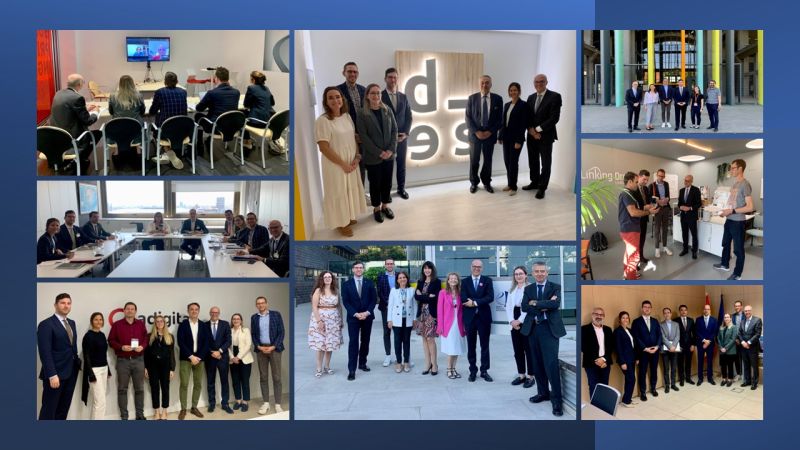
In late April 2026, Madrid hosted Bloomberg CityLab 2026 (27–29 April), the twelfth edition of the Bloomberg Philanthropies–Aspen Institute summit, convening more than 1,000 mayors, policymakers, innovators and creatives across venues including the Teatro Real. Between 23 February and 6 March 2026, the World Smart Sustainable Cities Organization (WeGO) conducted a strategic mission to Spain that used Madrid as its principal anchor, expanding partnerships with Spanish cities, universities and institutions and inviting Spanish mayors to the 7th WeGO General Assembly in São Paulo this November.
The strategy spans digital administration (online services, AI-assisted case management), smart mobility (real-time traffic management, integrated payment systems), environmental monitoring (air quality sensor networks, green infrastructure management), and citizen engagement (participatory budgeting platforms, digital service portals). Madrid's Delegados Digitales — digital officers embedded in each area of government — coordinate implementation, ensuring that digitalisation does not remain siloed in an IT department but transforms how every municipal function operates.
Madrid ranks among the top three EU regions for digital innovation and R&D according to the European Commission's Joint Research Centre 2025 report — a recognition that the city's ecosystem combines high-level research, institutional support, and a growing digital economy. The Community of Madrid has its own Digital Strategy 2023–2026 covering digital infrastructure, digital government, and business digitalisation at the regional level — creating a multi-layered governance framework where city and region reinforce each other.
The Ecosystem Behind the Strategy
La Nave Madrid — Innovation Centre, Spain's leading trade fair institution, has become a powerful catalyst for Madrid's smart city ambitions. The Foro de las Ciudades de Madrid (Madrid Cities Forum), organised by IFEMA, launched in 2025 a new Partnership for Urban Innovation — a permanent meeting space bringing together organisations to debate the construction of innovative and sustainable cities. Held alongside TECMA (the International Trade Fair for Urban Planning and the Environment) and SRR (the International Trade Fair for Recovery and Recycling), the forum positions Madrid as a convener for the entire urban innovation sector.
EMT Madrid — Empresa Municipal de Transportes (MIDE) connects the city's universities, research centres, startups, and corporate innovation labs into a coordinated network. The ecosystem is anchored by institutions including Universidad Politécnica de Madrid — one of Spain's leading engineering universities — and the IMDEA research institutes, which cover energy, water, materials, and software. This institutional depth gives Madrid a research pipeline that complements the city government's deployment ambitions.
South Summit, held annually in Madrid, is one of Europe's largest startup and innovation conferences, drawing thousands of entrepreneurs, investors, and corporate partners. The event has become a marketplace where urban technology ventures meet city governments from across the Spanish-speaking world — a role that leverages Madrid's cultural and linguistic connections to Latin America.
Smart Mobility in a Mediterranean Capital
Madrid's smart mobility investments reflect the distinctive challenges of a southern European capital: intense summer heat that makes walking and cycling uncomfortable for months, a sprawling metropolitan area of over 6 million people, and a car culture that successive administrations have struggled to shift. The Madrid 360 programme addresses all of these through a combination of regulation, infrastructure, and technology.
A flagship example of this integrated thinking is the Mercamadrid Smart Urban Space at Europe's largest wholesale food market, presented in 2026 as a real-world testbed for the Green & Digital Roadmap: the site integrates mobility, lighting and access solutions with an app that lets tenants exchange surplus clean energy across the precinct, condensing several of Madrid Capital Digital's strategic axes into a single operating asset.
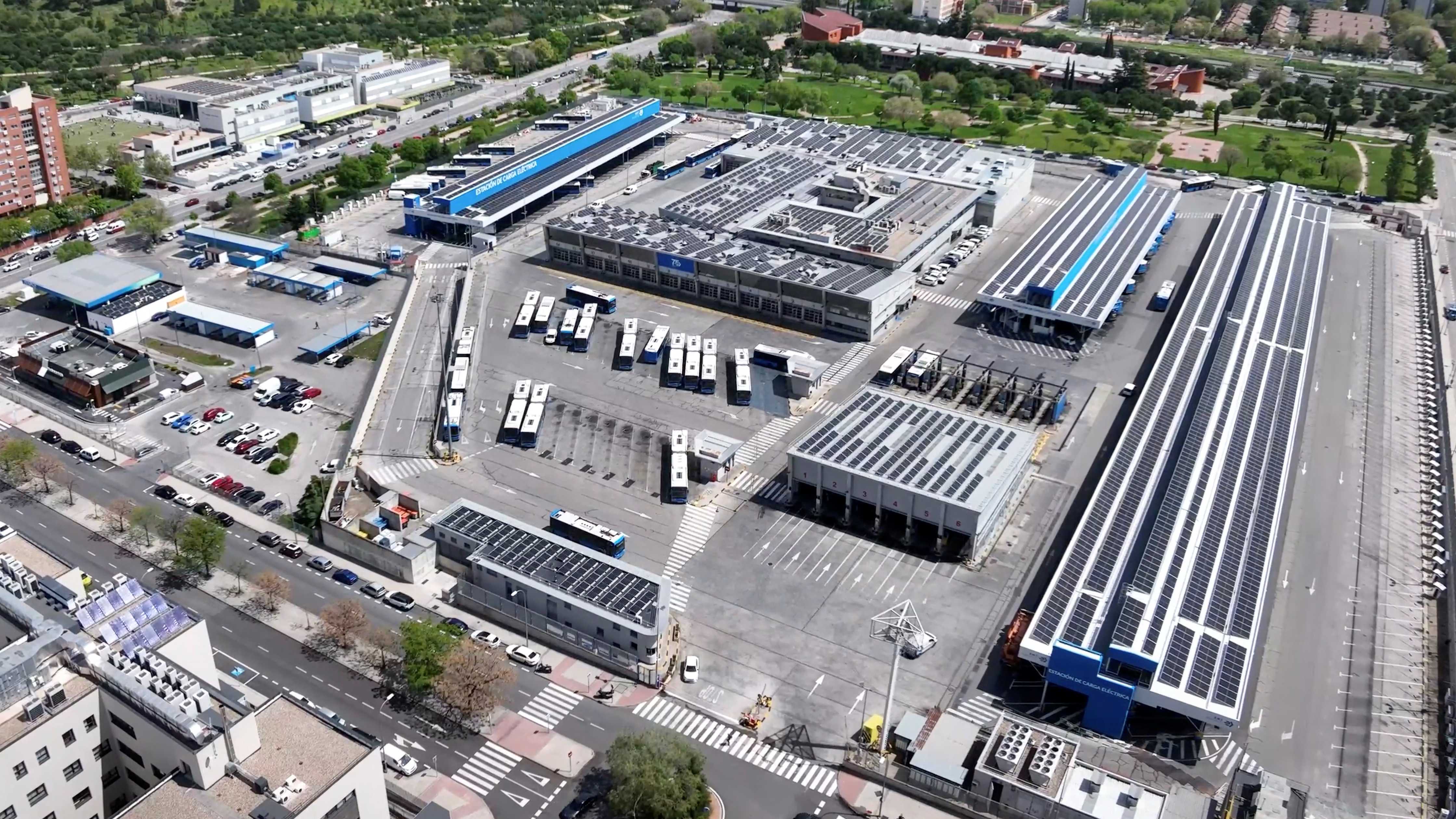
The city has expanded its BiciMAD electric bike-sharing system, deployed thousands of electric vehicle charging points, and invested in a real-time traffic management centre that coordinates signal timing, bus priority, and incident response across the metropolitan network. The Cercanías commuter rail system and Metro de Madrid — one of Europe's largest — provide the backbone, with digital ticketing, real-time occupancy data, and accessibility features that are progressively being rolled out.
Madrid's MaaS (Mobility as a Service) ambitions are embedded in its broader approach. The city's integrated transport card now works across metro, bus, commuter rail, and bike-sharing, with real-time information available through a single app. Autonomous vehicle testing is underway in controlled environments, and the city has invested in C-ITS infrastructure that allows traffic lights, vehicles, and infrastructure to communicate.
Terrazas, Technology, and the Mediterranean Evening
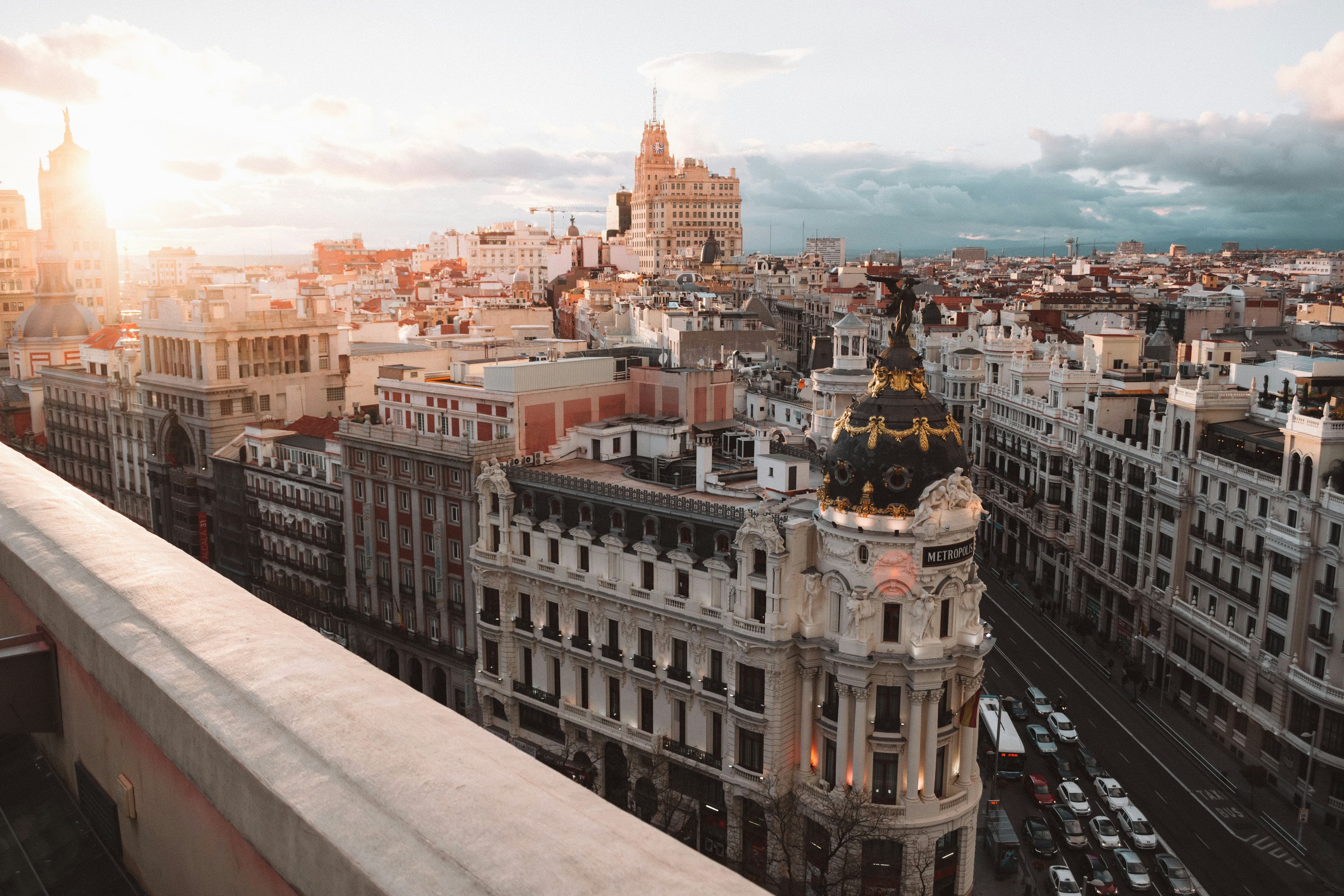
To experience Madrid's smart city, step onto the Gran Vía on a summer evening. The pedestrianisation of sections of this iconic boulevard — enabled by real-time traffic rerouting and air quality monitoring — has created one of Europe's most vibrant urban spaces. Residents fill the terrazas (outdoor café seating) while environmental sensors track noise and air quality, feeding data back into decisions about when and where further pedestrianisation should extend.
Or visit Madrid Nuevo Norte, the largest urban regeneration project in Europe, where an entire new district is being built around the Chamartín railway station. The development integrates smart building technology, district energy systems, digital infrastructure from the ground up, and a new intermodal transport hub — a laboratory for what 21st-century urban development looks like when digital planning is embedded from the start.
Madrid's relationship with public space is cultural and deeply felt. The paseo — the evening walk — is not a quaint tradition but a living practice that shapes how millions of Madrileños use their city every day. Smart city technology, when it works, makes the paseo better: cleaner air to breathe, quieter streets to walk, real-time information about when the next bus comes so you can linger ten minutes longer at the café. When it does not work — when sensors fail, apps crash, or zones are poorly designed — Madrileños notice immediately and complain loudly. This is a city that tests its innovations against the harshest possible standard: whether they make daily life more enjoyable. So far, the clearest evidence is in the air itself — the cleanest Madrid has breathed in living memory.
References2 resources11 external