Poland
Central Europe's Quiet Climber
Poland rarely features in the headlines of European smart city discourse. It lacks the Nordic brand of digital government, the German engineering mystique, or the southern European flair for reinventing ancient cities through technology. Yet something significant is happening in Polish cities. Warsaw jumped ten places to 28th in the IMD Smart City Index 2025, placing it ahead of cities like Madrid, Brussels, and Milan. Wrocław has become a reference point for intelligent transport. Kraków is building an innovation district that blends heritage preservation with applied technology. And across the country, a generation of digitally fluent civil servants, many of them trained through GovTech Polska, is quietly transforming how Polish municipalities deliver services.
The context matters. Poland is the largest economy in Central Europe, with 38 million people and a technology sector that has grown into one of the continent's most significant — home to over 400,000 IT professionals and a startup ecosystem increasingly visible on the European stage. The country's EU-funded recovery plan channels billions into digital infrastructure, and a national Smart City Development Strategy backs local governments with dedicated investment. But Poland also faces persistent challenges: a digital skills gap that the European Commission has flagged repeatedly, a north–south and urban–rural divide in connectivity, and political debates about the pace and direction of digital transformation.
What makes Poland's smart city story interesting is not spectacle but substance — a pragmatic, citizen-oriented approach to urban technology that reflects a society determined to modernise on its own terms.
The Politics of Polish Digitalisation: EU Funds Meet Local Ambition
Poland's national digital framework is shaped by two forces: substantial EU funding and a growing domestic appetite for digital government. The country's Digital Decade roadmap comprises 55 measures backed by a budget of €12.4 billion, equivalent to 1.47 per cent of GDP. The European Commission's 2025 assessment praised Poland's strong fixed internet connectivity and noted progress on quantum computing, AI, and cybersecurity, while flagging persistent weaknesses in digital skills and the slow adoption of advanced technologies by businesses.
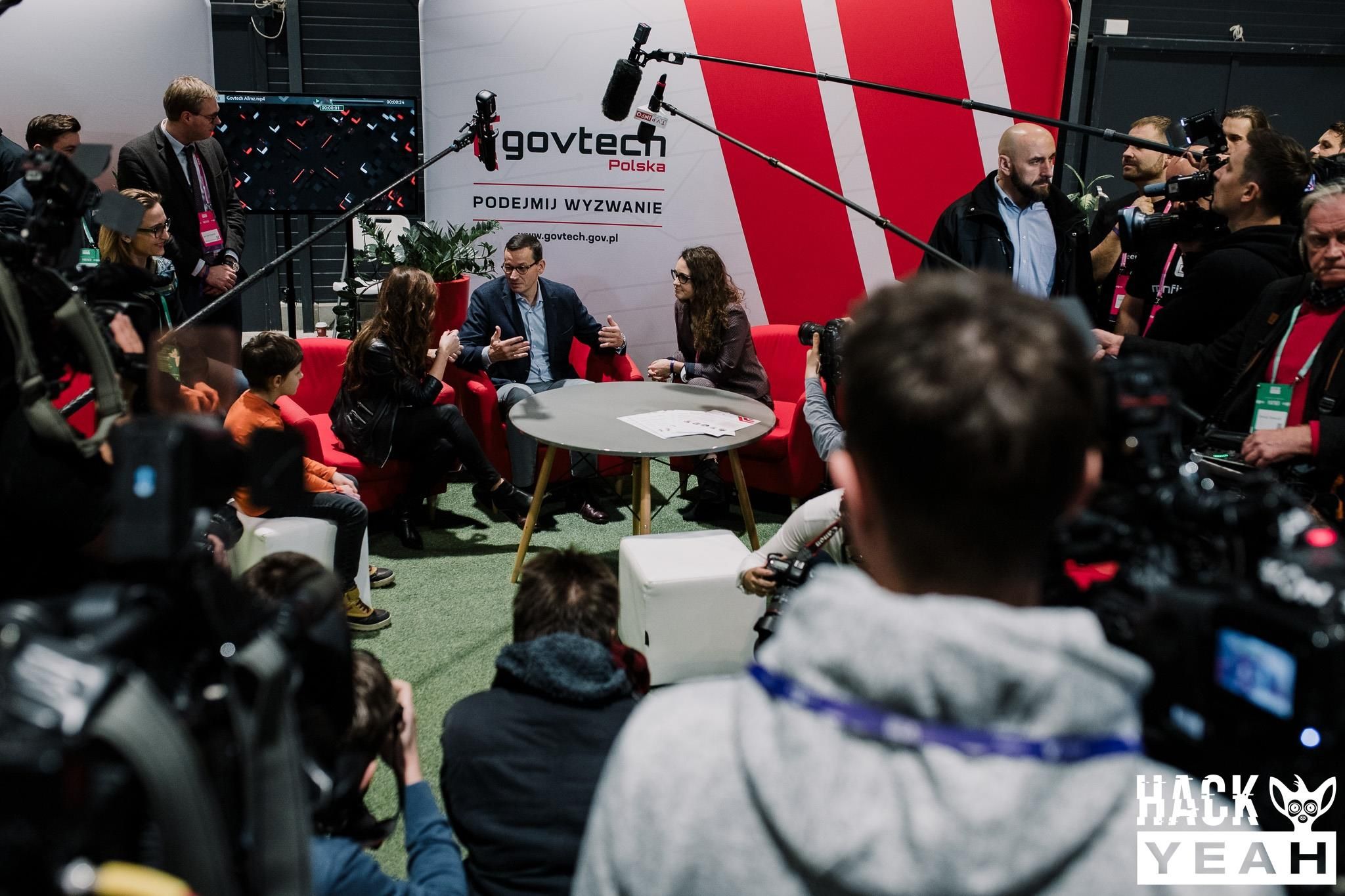
The national Smart City Development Strategy, introduced in 2023, allocated approximately $300 million to support local governments in implementing smart solutions focused on energy efficiency, mobility, and public safety. GovTech Polska, a government agency under the Chancellery of the Prime Minister, has become a distinctive institution in the European landscape — not merely promoting digitalisation from above but actively building capacity within public administration, training civil servants in technology procurement, and fostering a culture of innovation within municipalities. Its approach has drawn attention from other EU member states as a model for bridging the gap between national digital ambitions and local implementation capacity.
At the city level, Warsaw has been the most visible champion of smart city development. The capital's smart city strategy encompasses shared mobility, digital citizen services, participatory budgeting, and open data. Warsaw's participation budget, running since 2015 and accessible via a dedicated mobile app, allows residents to propose and vote on neighbourhood projects — a mechanism that has channelled millions of złoty into citizen-led urban improvements. The city's open data platform, Otwarte dane po warszawsku, publishes over 200 datasets covering transport, education, culture, real estate, and social services.
Critical perspectives in Poland tend to focus less on surveillance and digital rights — though these debates are growing — and more on the uneven distribution of smart city investment. Smaller cities and rural municipalities struggle to attract the technical expertise and funding needed to digitise basic services, creating a risk that Poland's smart city transformation becomes a story of a few leading cities pulling further ahead. The Warsaw University of Technology — Smart City Research, through its smart city research programmes, has argued for greater knowledge transfer between advanced and developing municipalities.
Warsaw Leads, but Wrocław and Kraków Are Close Behind
Poland's smart city ecosystem is increasingly polycentric, with distinct strengths emerging in several cities.
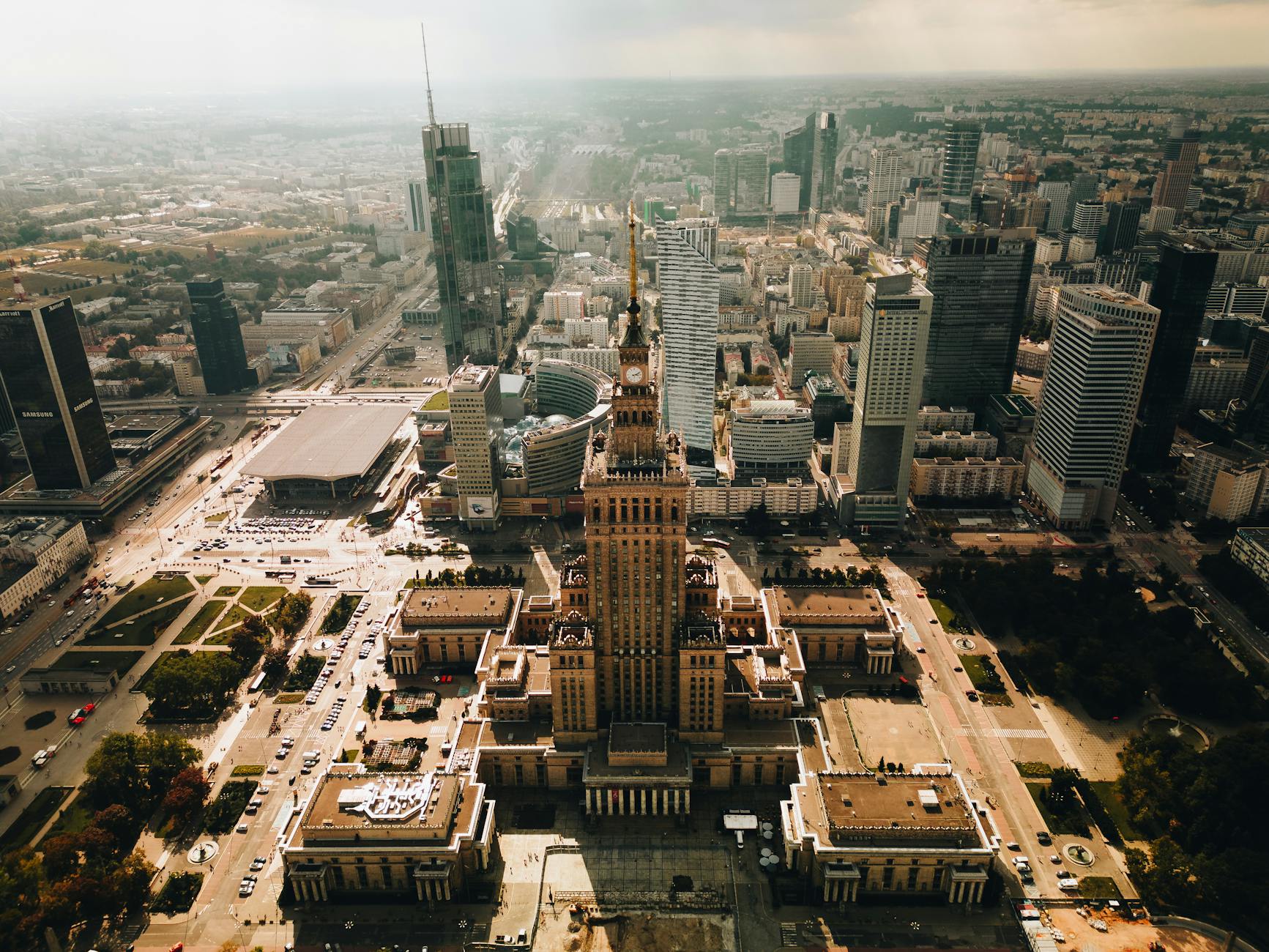
Warsaw is the undisputed leader. The capital's rise in the IMD Smart City Index reflects sustained investment in digital infrastructure, citizen-facing apps, and transport technology. The Moja Warszawa app gives residents access to local information, parking payments, and the ability to report urban issues directly to city services. The mObywatel national digital identity app, widely adopted across Poland, allows citizens to carry official documents on their phones and access government services remotely. Warsaw's Veturilo bike-sharing system, integrated public transport app, and expanding network of electric bus routes demonstrate a practical, mobility-focused approach to smart city development.
The New Centre of Warsaw Revitalisation project represents a different dimension of the city's smart ambitions — a comprehensive urban redesign that prioritises pedestrians, increases green space, and enhances climate resilience in the heart of the capital. It is a reminder that Poland's smart city agenda is not solely about sensors and apps but also about rethinking how public space is designed and used.
Wrocław, in Lower Silesia, has established itself as a leader in smart transport management. The city's integrated traffic management system, real-time public transport information, and advanced ticketing solutions have been recognised as best practice within Poland. Wrocław has also invested in e-services, smart specialisation strategies, and programmes to attract and integrate international talent — reflecting its status as one of Poland's fastest-growing tech hubs.
Kraków is carving out a distinctive role through the Kraków Technology Park, which functions as an urban innovation laboratory connecting heritage preservation with applied technology. The city's challenge — balancing its status as a UNESCO World Heritage site with the demands of a growing tech economy and mass tourism — has produced creative approaches to smart tourism management, air quality monitoring, and sustainable mobility.
Gdańsk, Poznań, and Katowice are also advancing, each with local priorities shaped by their distinct economic profiles and urban challenges.
The research infrastructure supporting these cities is growing. SmartCity Lab Poland, a non-profit research institute, provides independent assessments of smart city technologies for Polish municipalities, offering a rare source of vendor-neutral advice in a market where commercial interests often dominate the conversation. Warsaw University of Technology — Smart City Research conducts applied research on urban innovation, sustainable infrastructure, and data-driven city management, collaborating directly with municipalities on pilot projects.
The Smart City Forum, now in its nineteenth edition, has become Poland's most important congress on urban innovation, bringing together municipal decision-makers, technology providers, and researchers for substantive debate on the future of Polish cities. The annual Smart City Expo Poland Warsaw 2025 in Warsaw, held under the honorary patronage of the city, connects the Polish ecosystem with international partners.
What Polish Cities Have Actually Built
Poland's smart city deployments tend to be practical rather than flashy — focused on solving everyday urban problems rather than showcasing cutting-edge technology for its own sake.
Digital citizen services are perhaps the most impactful area. The mObywatel app, adopted by millions of Poles, has transformed interactions with government — from carrying digital driving licences to accessing vaccination records and voting information. Warsaw's suite of city apps, including Moja Warszawa and the parking payment system, has reduced the need for in-person visits to municipal offices. The participation budget platform has become a model for civic engagement, with residents directly shaping neighbourhood investment decisions.
Smart transport is the most visible deployment category. Warsaw's real-time public transport tracking, integrated ticketing across bus, tram, and metro, and expanding bike-sharing network have measurably improved urban mobility. Wrocław's traffic management centre uses adaptive signal control and real-time data to reduce congestion. Across Polish cities, electric bus fleets are expanding rapidly — Warsaw alone has ordered hundreds of electric buses as part of its green mobility transition.
Environmental monitoring has gained urgency due to Poland's well-documented air quality challenges. Warsaw, Kraków, and other cities have deployed networks of air quality sensors that feed real-time data to public dashboards and mobile apps, allowing residents to check pollution levels before heading outdoors. Kraków, where winter smog has historically been severe, has combined sensor networks with regulatory measures — including bans on solid fuel heating — to drive measurable improvements in air quality.
Open data and civic tech represent a growing strength. Warsaw's open data portal supports a small but active civic tech community that builds tools for everything from transport planning to cultural event discovery. The Otwarte dane initiative reflects a broader trend in Polish cities toward transparency and data-driven governance, even if adoption remains uneven across the country.
Urban revitalisation projects, such as Warsaw's New Centre programme, integrate smart planning tools with physical redesign — using data on pedestrian flows, microclimate conditions, and green infrastructure performance to inform decisions about how public space is reshaped.
Where the Smart City Meets the Milk Bar
To experience Poland's smart city in practice, you might start at a Warsaw bus stop — where a real-time display shows your tram arriving in three minutes, your phone pings with an air quality update from the nearest sensor, and the Moja Warszawa app alerts you that a neighbourhood meeting about the new cycling lane is happening this evening. It is not futuristic. It is functional. And that, in many ways, is the point.
Walk through the revitalised Vistula riverbank — once an industrial wasteland, now a thriving public promenade with Wi-Fi, environmental monitoring, and crowd-sourced event programming — and you see how Warsaw is using technology to reclaim space for its residents. In Kraków's Kazimierz district, heritage sensors monitor the structural health of medieval buildings while tourists navigate using digital guides that balance visitor flow across the Old Town.
There is something characteristically Polish about this approach: a practical scepticism toward grand visions, combined with a genuine enthusiasm for tools that make daily life a little better. Poland's cultural habit of the bar mleczny — the milk bar, those beloved subsidised canteens where professors and labourers share tables over pierogi — captures a civic egalitarianism that the best smart city thinking tries to replicate digitally. The participation budget, the open data portal, the mObywatel app — these are, in their way, digital milk bars: public goods, available to everyone, designed to serve rather than to impress.
As Poland's Deputy Minister for Digitisation noted at the 2025 Smart City Forum: "We are not trying to build the smartest city in Europe. We are trying to build cities that work well for the people who live in them." For a country that has spent three decades rebuilding its institutions from scratch, that pragmatism may turn out to be the smartest strategy of all.
References5 resources8 external