When a city's cameras start deciding what matters, what do they actually achieve?
France ran AI on Olympic CCTV and its own evaluators found it rarely led to anyone being sent; London's facial-recognition cameras report arrests by the hundred; Warsaw's clean-air zone fined no one in its first year. A look across eight countries at which algorithmic cameras deliver, which cannot show results, and who decides what a city may switch on.

Three kinds of camera that decide what to show a human
In May 2024 the Cannes film festival became a test bench. Software watched 17 of the town’s cameras for trouble; Cannes was the only local authority to join France’s experiment with algorithmic video surveillance, set up for the 2024 Olympics. During the festival it raised 37,194 alarms. Operators handled 25,639 of them, and none called for an officer on the ground. The town’s later runs, after work with the supplier, did better, the evaluators note.

In October 2025, at the other end of the evidence, the Metropolitan Police put live facial-recognition cameras at the two ends of Croydon’s high street in south London. Over six months, the Met says, officers using them made 173 arrests.
Both are sold as smart cameras, but they do different jobs. Some check a narrow rule: a number plate in a clean-air zone, a phone in a driver’s hand. Some watch CCTV for events such as a fight or a bag left behind; France’s experiment was of this kind, and used no facial recognition. Some compare every passing face with a watchlist.
The two scenes differ in one more way. Cannes added no cameras for its test: the software ran on cameras the town already had. Croydon’s were new face-matching cameras, bolted to existing lamp posts. Most cameras filming a street are not the city’s at all. The chart shows who owns those that Dutch owners have volunteered to a police register.
Cameras that owners chose to register with Camera in Beeld, the police database used to solve crimes; many owners and some municipalities do not take part, so this is an indication, not a census. Source: Binnenlands Bestuur / Nieuwsuur, Wie heeft zicht op alle camera's? (1 Apr 2026)
Counting every camera that films a Dutch road, the surveillance expert Sander Flight puts the total at 2 to 3 million and the government’s share at 1%. So a city’s real choice is often what software to run on cameras it already has, and who may act on what it flags.
This read puts the same three questions to each kind of camera. What was it bought to do? What did it measurably do? And who decides whether it may be switched on? Only one of the three kinds has much of an answer to the second question.
Plates, phones and crowds: the cameras with receipts
The Dutch call them focusflitsers: cameras built to spot a driver holding a phone. About forty are in use, moving every two months or so between 300 designated spots. In 2025 they found 30% of the phone offences recorded, and for every photograph an employee of the CJIB, the national fines-collection agency, decides whether there really is an offence. The chart shows how the number of phone fines moved.
Fines processed by the CJIB. Focusflitsers found 30% of 2025’s offences and a CJIB employee checks every photograph; the rise is not attributed to the cameras alone. Source: Hart van Nederland / CJIB, phone fines 2025 (17 Feb 2026)
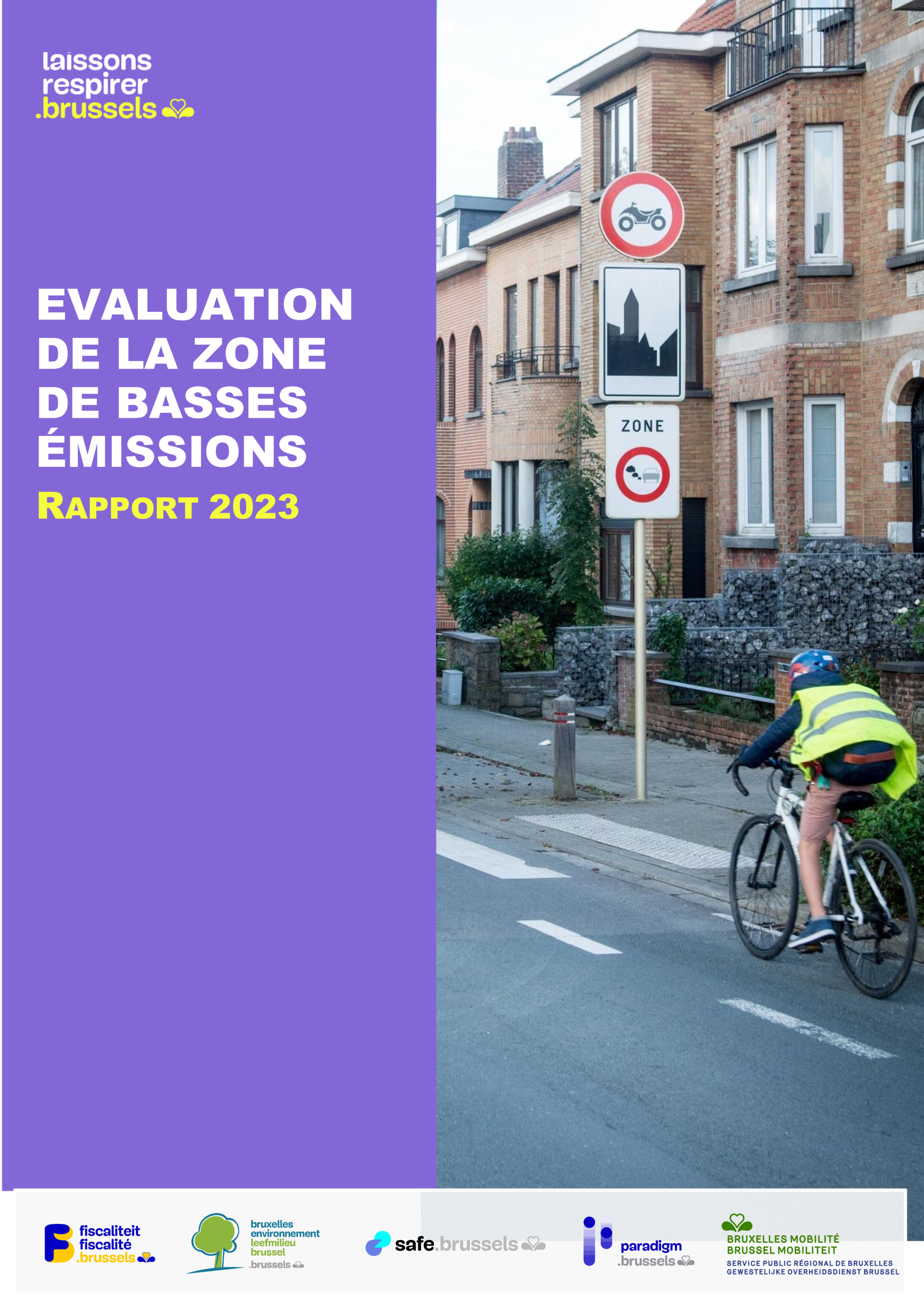
Brussels runs a bigger network. About 363 number-plate cameras enforce its low-emission zone, and in 2023 they identified an average of 358,315 different vehicles a day. By mid-2024, 99.3% of the vehicles the rules target were compliant, exempt or carrying a day pass. The region’s evaluation also credits the changing fleet with cutting road traffic’s nitrogen oxide emissions by 36% between 2018 and 2023. That figure is modelled: the fleet the cameras see is “la seule variable”, while emission factors and total distance driven are held constant. The cameras measure what drives in, not the air.
Warsaw shows how much the rule itself decides. Its clean-transport zone has covered 37 km² since July 2024. By August 2025 the municipal guard’s four mobile devices had registered more than 222,000 vehicles that year, and 0.59% of them did not meet the standard. Yet the guard had found no offence to fine: an older car may enter four times a year, and residents, Warsaw firms and the over-70s are exempt until 2027. Campaigners want the city’s own CCTV to read plates too; city hall says there is no legal basis to fine drivers automatically from it.
Kraków’s zone opened on 1 January 2026, with a paid way in for older cars during a transition. Its number-plate cameras were not yet enforcing it, so the chart shows six weeks of hand checks by the municipal guard.
Checks by the municipal guard before the zone’s number-plate cameras were running; the city chose to warn most drivers at the start. One further case went to court. Figures from the city hall spokesman. Source: GLOBEnergia, Kraków city hall figures for the clean-transport zone (17 Feb 2026)
“Od wprowadzenia SCT w Krakowie minęło dopiero 1,5 miesiąca, dlatego za wcześnie na ocenę skutków jej funkcjonowania”, the city’s spokesman Piotr Subik told GLOBEnergia in February: six weeks in, it was too soon to judge. By August, according to SmogLab, the number-plate cameras had been accepted from the contractor and switched on, and the city was working out how to pass their data to the inspectors.
Counting crowds asks least of the people filmed. Amsterdam’s Public Eye counted heads on camera images from 2019 to 2021, needing about 70% accuracy and delivering about 90% on its training images; it is now out of use. The register entry for a newer camera system, in use since 2022, says its counts can switch crowd signs automatically, but traffic measures need a visual check on site first. It also concedes that at very low counts, combined with other data, a passer-by’s route could in theory be followed.
These cameras deliver when the rule is narrow, a person confirms each case and a law lets the authority act on the picture. France’s noise radars show the third condition at work: the legal frame has been in place since 2023, but no device has yet been certified to fine. In July 2026 the Métropole du Grand Paris’s sensors in 27 communes only displayed drivers’ noise (“ne dressent aucun procès-verbal”) while the radars meant to fine were still being tested.
Software that watches for trouble, and struggles to show it found any
France’s 2023 Olympics law allowed an experiment: software on CCTV that flags predetermined events such as an intrusion, a dense crowd, an abandoned bag or a fire. The police prefecture, the transport operators RATP and SNCF and Cannes used it on about 800 cameras. The state committed €885,626 for it. Wintics was in practice the only supplier the prefecture, RATP and SNCF tested; Cannes used Videtics. An evaluation committee set up under the law reported in January 2025.
Some functions worked. Intrusion and crowd-density alerts were broadly satisfactory. Fire detection mistook car lights, flashing beacons, illuminated signs and the reflections of sunrise and sunset for fires, and in Cannes the software took the pavement for a person lying on the ground. The chart shows RATP’s alerts during the Games; look at the third bar of each group.
RATP’s count for the Olympic Games of correct and false alerts and of cases passed to its command post for possible action (the 14 and the total are sums of the three use cases). Over the whole experiment RATP escalated 62 cases. The committee adds that police presence during the Games was exceptionally heavy. Source: Comité d'évaluation, Expérimentation de traitements algorithmiques d'images (January 2025)
More than 78% of RATP’s abandoned-object alerts were false. The committee counted one intervention due to the software at the police prefecture and four at SNCF during the Games. RATP, over the whole experiment, passed 62 cases to its security post, a few of which led to action; RATP itself counts all 62 as interventions based on an alert.
The committee blames the small numbers partly on the heavy police presence, and calls the system’s value “tout à la fois limité et réel”: limited by uneven performance, real because alerts let operators focus on likely risks and place staff better.
The number of interventions carried out solely because of the processing, by the various operators, to establish or prevent a risk or an offence, remained extremely marginal.In Germany, Mannheim’s police and the Fraunhofer IOSB institute have run a version since 2018. On 46 of the city’s 70 public-space cameras, the software reduces passers-by to stick figures and sounds an alarm at blows, kicks or shoves. The city paid €860,000 for the cameras and the police €190,000; Fraunhofer owns the code. With little real footage available, officers staged fights to train it.
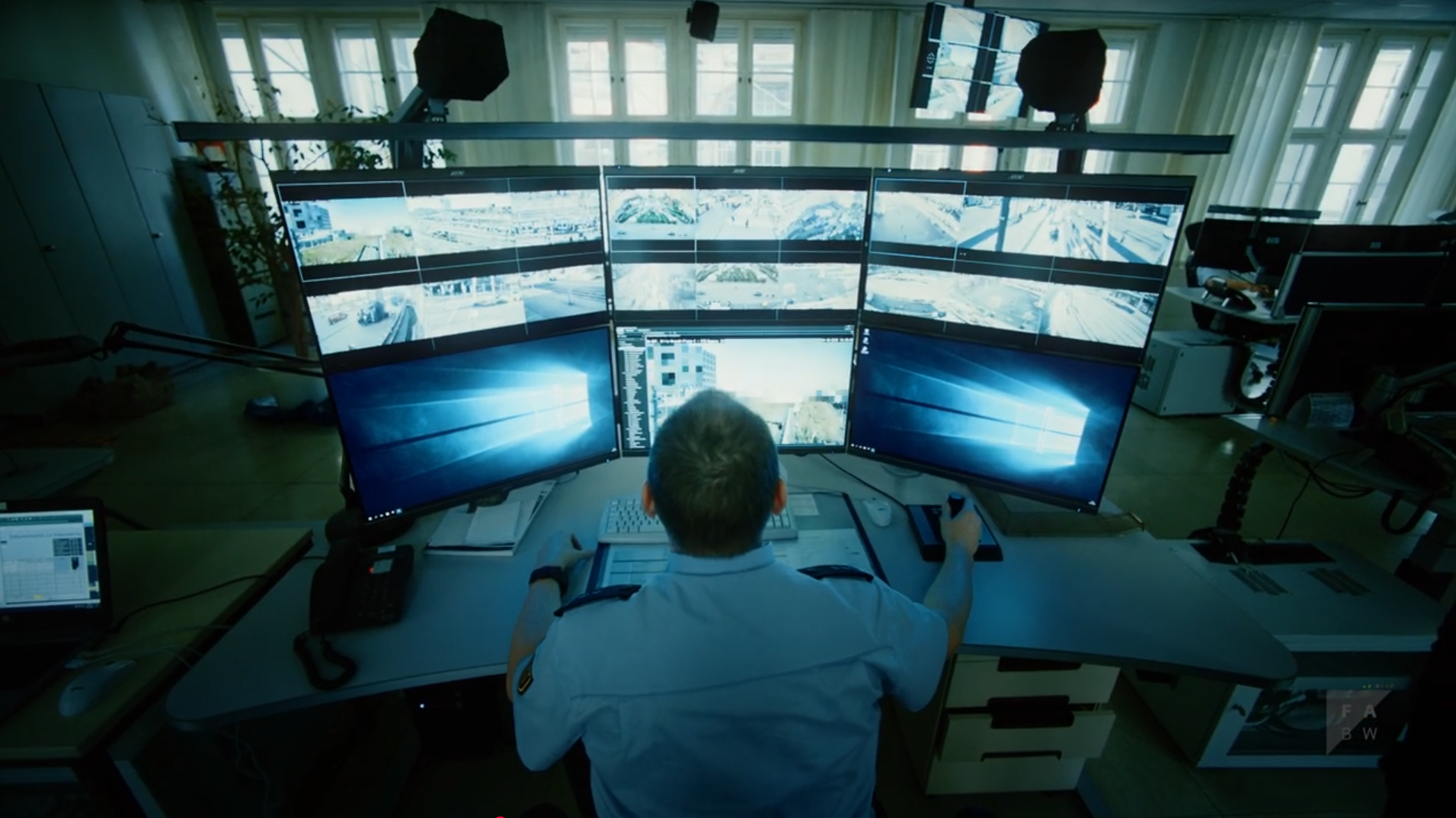
Seven years on, the police could not or would not say how often the software had raised an alarm or what it had found. Its success, they wrote, lies in the system’s continuous development and “kann zum derzeitigen Projektstand nicht mit Kennzahlen dargestellt werden”: it cannot yet be shown in figures. Recorded street crime in the watched areas is back at its level of the year before video surveillance began, though recorded crime rises wherever police look harder, so the figure says little either way. No independent evaluation is planned.
The idea spreads all the same. Hamburg switched it on in September 2025 and Hesse’s police law allows it. Berlin’s police law of December 2025 does too, and the Greens and the Left have asked the state’s constitutional court to review it. On 10 July 2026 the Bundestag passed a federal police law that would let stations use video surveillance that identifies people and assesses their behaviour automatically; it still needs the consent of the Bundesrat, which rejected an earlier version in 2021.
Italy shows the other end. Trento put AI on its existing CCTV, with street microphones, for two EU-funded research projects. In January 2024 the data-protection authority fined the city €50,000: research is not a municipal function, the anonymisation was inadequate and the city could not show it had assessed the impact first. The cameras with the thinnest evidence are the ones parliaments keep extending.
Faces: the most numbers and the hardest questions
On 23 February 2024, near London Bridge, a facial-recognition camera matched Shaun Thompson, a 39-year-old Black community worker, to a photograph of his brother on a police watchlist. Officers asked him to prove who he was, and when he declined to give his fingerprints he was threatened with arrest, the High Court’s summary records.
![R (Thompson and Carlo) v Commissioner of Police of the Metropolis [2026] EWHC 915 (Admin) — press summary, 21 April 2026](https://okzklhj6dqfoztwq.public.blob.vercel-storage.com/pdf-cover-1790907539917.png)
The Met publishes an annual report. Over the year to September 2025 its 203 deployments scanned 3,147,436 faces. The Met puts its false-alert rate at 0.0003% of faces scanned; counted per alert it is 0.48%. The chart shows what the alerts became.
From 203 deployments that scanned 3,147,436 faces. The arrests are those the Met attributes to live facial recognition; the Met’s report says the demographic imbalance in false alerts is not statistically significant. Source: The Register, reporting the Met's live facial recognition annual report (3 Nov 2025)
The Home Office confirms the 962 arrests and says over a quarter involved violence against women and girls. Of the ten false alerts, seven involved Black men and one a Black woman. The Met’s report calls the imbalance not statistically significant; Big Brother Watch called it “disturbing”.
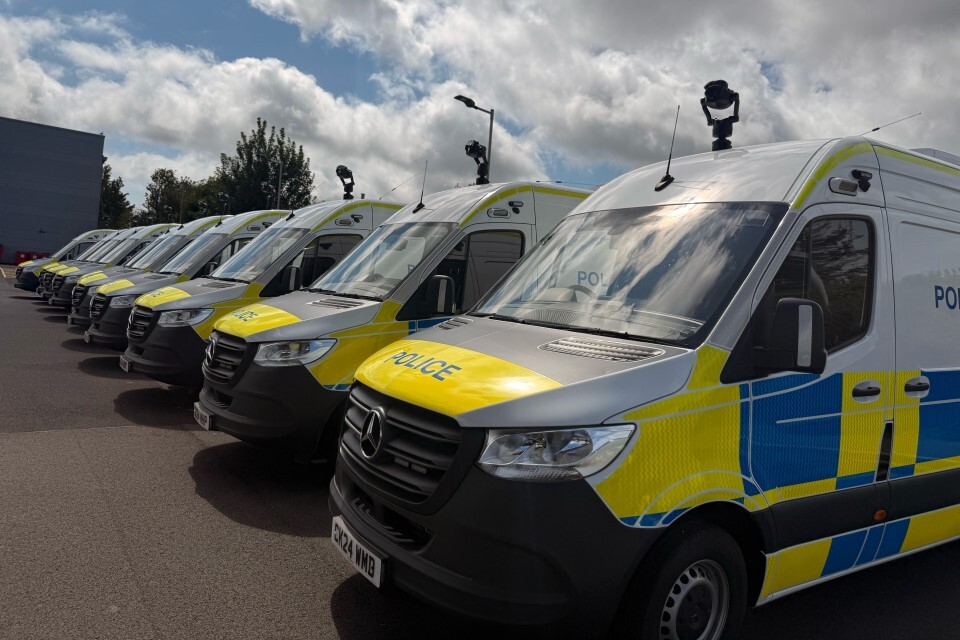
In the six months of the Croydon pilot, the Met says, its fixed cameras led to 173 arrests in 24 operations, with more than 470,000 people walking past and one false alert. It also reports crime in the area down 10.5% on the same period a year earlier, its own before-and-after figure with no comparison area.
These results show why live facial recognition is such a powerful tool when it’s used carefully, openly and in the right places.Forcing people to enter a digital police lineup in the capital’s busiest and most popular destinations is an affront to the idea that you should not have to identify yourself to the police if you have done nothing wrong.In the United Kingdom, judges have set the limits so far. In 2020, in the Bridges case, the Court of Appeal ruled that South Wales Police, after scanning perhaps 500,000 faces, had left its officers too free a hand. Nobody could tell who might go on a watchlist, the judges wrote, or by what criteria a camera’s location was chosen.
![R (Bridges) v Chief Constable of South Wales Police [2020] EWCA Civ 1058 — Judgment](https://okzklhj6dqfoztwq.public.blob.vercel-storage.com/pdf-cover-1790911939755.png)
Six years later the High Court dismissed the challenge by Thompson and Carlo: the Met’s policy, read as a whole, set “clear, interlocking and cumulative constraints”. The Home Office consulted that winter on a statute and a new oversight body; we found no law passed since. Meanwhile the Met plans fixed cameras in the West End and Soho by December.
Elsewhere the answer differs. Italy’s parliament has extended a moratorium on facial recognition in public places to 31 December 2027, with police use subject to the data-protection authority’s favourable opinion. In Hungary, three civil-society authors write, 2025 amendments extended facial recognition to all petty offences, and trucks fitted with biometric cameras were parked around that year’s Budapest Pride march; the authorities say their system is not “real-time”. In none of these cases was the decision a city council’s. City governments can still say no: Amsterdam’s new coalition agreed in 2026 not to use facial recognition at all.
The city owns the camera, not the rules
Since 2 February 2025, Article 5 of the EU AI Act has banned real-time remote biometric identification in publicly accessible spaces for law enforcement. Three exceptions remain: searching for victims or missing people, an imminent threat to life or of a terrorist attack, and locating suspects of serious crimes. Each use needs a national law and authorisation from a judge or independent authority, beforehand or within 24 hours in an emergency. Identification after the fact is not banned but counts as high-risk, and since the AI Omnibus those duties start on 2 December 2027.
Software that flags behaviour without identifying anyone falls outside that ban; national law sets its limits. In August 2026 France’s Conseil constitutionnel ruled on the Ripost law. It struck down provisions in eleven of the law’s articles but upheld those on cameras. They extend the experiment to 31 December 2030, and from events to buildings and places open to the public that are particularly exposed, permanently or for a time, to terrorism or serious attacks on people. For the permanently exposed places, the Council added, each authorisation may last no more than three months, renewable.

The same law starts a three-year trial of an algorithm that combs number-plate data for vehicle movements suggesting organised crime or car theft. Its signal “ne peut fonder, par lui-même, aucune décision individuelle ni aucun acte de poursuite”: on its own it cannot ground a decision about anyone, or a prosecution.
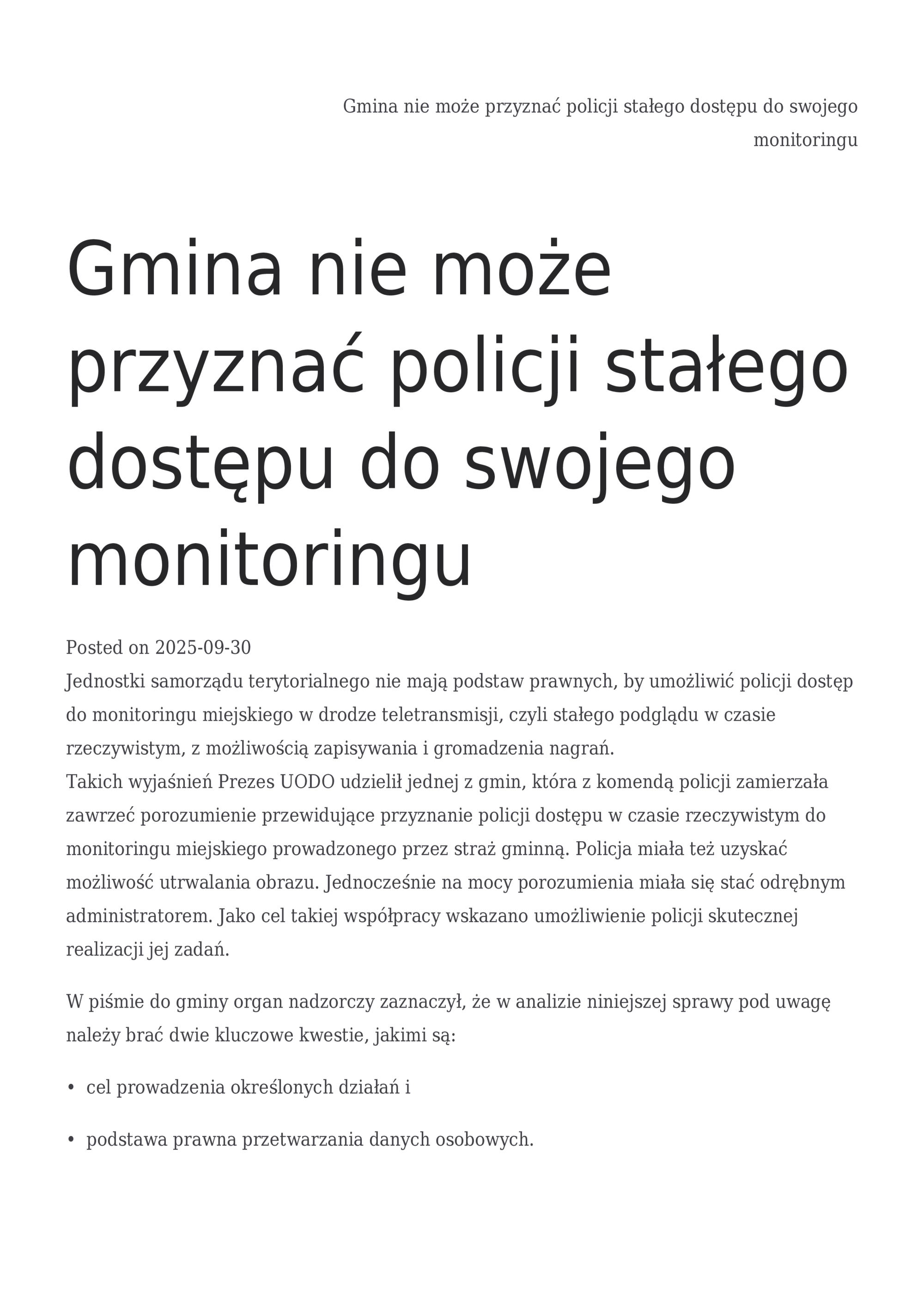
Regulators are drawing the edges for cities. Poland’s data-protection office told a municipality in 2025 that it may not give the police a live feed from its CCTV: “brak jest jakiejkolwiek normy prawnej” for it, there is no legal provision at all. Police must ask case by case, in writing. Italy’s authority stopped Como’s facial-recognition cameras in 2020.
Everyone must do their own job: the judiciary has one task, the security forces another, municipalities another still. A municipality cannot have powers comparable to the judiciary’s; it cannot investigate.Data also travels upwards. In 2025 Belgium connected 450 Brussels cameras, bought for the low-emission zone and speed checks, to ANPR@GPI, a national police number-plate platform, and offered municipalities €20 million to buy more. Two years earlier Flanders’ privacy supervisor had told councils to debate need and purpose before buying, because, it observed, purposes tend to be fixed after the network exists and a legal footing found later still, and cameras once up keep gaining new uses.
- May 2017[source]
South Wales Police start scanning faces
South Wales Police deploys facial recognition at about 50 public events up to April 2019.
- 2018[source]
Mannheim starts behaviour detection
Fraunhofer software begins scanning police CCTV for fights.
- 26 Feb 2020[source]
Como’s face cameras stopped
Italy’s data-protection authority halts the city’s facial-recognition project.
- 11 Aug 2020[source]
Bridges
The Court of Appeal finds South Wales Police’s framework leaves too much discretion over who and where.
- 19 May 2023[source]
France legalises a trial
The Olympics law allows algorithmic processing of CCTV as an experiment.
- Jan 2025[source]
France’s evaluation
The committee finds interventions due to the software “extrêmement résiduel” and the value “limité et réel”.
- 2 Feb 2025[source]
The AI Act ban applies
Real-time biometric identification for law enforcement is banned, save three exceptions.
- Jul 2025[source]
Belgium’s police platform goes live
ANPR@GPI starts; 450 Brussels cameras are connected by November.
- 30 Sept 2025[source]
No live feed in Poland
The data-protection office says there is no legal basis for permanent police access to municipal CCTV.
- 21 Apr 2026[source]
The Met’s policy upheld
The High Court dismisses the challenge by Shaun Thompson and Silkie Carlo.
- 10 Jul 2026[source]
Bundestag passes federal police law
It would allow automated identification and behaviour analysis at stations; the Bundesrat must still consent.
- 14 Aug 2026[source]
Ripost’s camera articles upheld
France’s experiment runs to 31 December 2030; for permanently exposed places each authorisation is capped at three months.
- 2 Dec 2027[source]
High-risk duties begin
After-the-fact biometric identification must meet the AI Act’s high-risk rules.
Police forces and parliaments moved first; courts and regulators set the limits afterwards.
The same French decision can be read two ways. The Council itself wrote that algorithmic processing makes “une analyse systématique et automatisée” of the images, able to increase considerably how much can be drawn from them. That is why it demands particular guarantees. La Quadrature du Net, which campaigns against the technology, sees the law as one more move in a “stratégie des petits pas”: small steps that settle it into daily life without a real public debate.
What residents say, and what they rank first
The IMD Smart City Index asks 120 residents in each city whether they agree with a list of statements. Two concern cameras: whether CCTV has made residents feel safer, and whether they are comfortable with face recognition to lower crime. The chart sets the two answers side by side for the 24 European cities in the Hub’s scope. Each line joins two different questions, not two moments in time.
All 24 European cities in the Hub’s IMD set. Each line joins answers to two different statements, not a change over time: one asks whether CCTV has made residents feel safer, the other whether they are comfortable with face recognition to lower crime. About 120 residents per city; IMD combines three survey years in its city scores. Source: IMD World Competitiveness Center, Smart City Index 2026 (resident survey, city profiles)
Kraków is the only exception; in Berlin the two answers run from 47.8% to 71.8%. One statement names a purpose and the other asks about a result, so this is a gap, not a contradiction.
France’s evaluation committee commissioned a survey of 1,005 people in December 2024. Of those asked, 81% favoured AI cameras that spot risky situations without identifying anyone, and 76% even cameras that recognise a specific person. Yet 62% thought it would make general surveillance normal. Asked what should come first for public safety, they put AI video well down the list.
Verian survey of 1,005 people for the evaluation committee, online, 3 to 5 December 2024. The three options the report quotes; the same respondents favoured AI cameras by 81%. Source: Comité d'évaluation, Expérimentation de traitements algorithmiques d'images (January 2025)
Only one in five knew what the experiment actually was. In Britain, the Home Office’s own polling found two in three people support police use of facial recognition, fewer for live use against crime (59% said always or usually acceptable), while many worried about misuse and false identification.
Acceptance is high and conditional. That makes telling residents what a camera does part of the licence to run it, not a courtesy.
Before a city switches the algorithm on
The evidence in this read turns into five questions an official can put to any proposal.
- What rule does the camera check, and does a law let us act on what it sees? Warsaw’s guards fined no one in a year because the zone’s rules let almost every car in; the city also says it has no legal basis to fine automatically from its own CCTV.
- Who confirms each alert before anyone acts? In the Netherlands a CJIB employee checks every phone photograph; Amsterdam checks on site before changing the traffic.
- Is it in a public register, with its impact assessment? Amsterdam’s algorithm register entries say what each system does and where it can fail.
- Is there an independent evaluation, with a comparison, published before the system grows? France’s law required an evaluation, though not of crime, and Parliament extended the trial after it; Mannheim has none planned.
- Where does the data go next? Brussels’ clean-air cameras now answer national police searches.
The Smart Cities Hub is being built to map who runs which cameras under which rules, to connect cities facing the same decision and to gather evidence in the languages it is written in. It aims to support shared work, such as procurement clauses and impact assessments the next city can reuse.
If your city has a camera register entry, an evaluation or procurement terms to share, join the Hub’s community and describe them under your ideas for collaboration. The library holds the evaluations, rulings and regulators’ decisions this read draws on; the projects and organisations working on city data and AI are listed under Data Platforms, AI & Digital Twins.
References
From the Hub’s libraries20
- Expérimentation de traitements algorithmiques d'images légalement collectées au moyen de systèmes de vidéoprotection — Rapport du comité d'évaluation (janvier 2025) — Knowledge
- Met makes one arrest every 35 minutes during live facial recognition pilot (Metropolitan Police, 13 May 2026) — Knowledge
- Wie heeft zicht op alle camera's in de publieke ruimte? (Binnenlands Bestuur / Nieuwsuur, 1 Apr 2026) — Knowledge
- Evaluation de la zone de basses émissions — Rapport 2023 (Bruxelles Environnement) — Knowledge
- Gonienie króliczka, czyli warszawska SCT — Knowledge
- Langzaam Verkeer Monitoringsysteem Amsterdam — Algoritmeregister (Gemeente Amsterdam) — Knowledge
- Verhaltensscanner in Mannheim: Hier wird die Überwachung getestet, die so viele Städte wollen (netzpolitik.org, 18 Oct 2025) — Knowledge
- Berliner Polizeigesetz: Linke und Grüne ziehen vor den Verfassungsgerichtshof (netzpolitik.org, 28 Aug 2026) — Knowledge
- Videosorveglianza, no all'intelligenza artificiale che viola la privacy. Il Garante sanziona il Comune di Trento (Garante per la protezione dei dati personali, Jan 2024) — Knowledge
- R (Thompson and Carlo) v Commissioner of Police of the Metropolis [2026] EWHC 915 (Admin) — press summary, 21 April 2026 — Knowledge
- Consultation on a new legal framework for law enforcement use of biometrics, facial recognition and similar technologies (Home Office, December 2025) — Knowledge
- R (Bridges) v Chief Constable of South Wales Police [2020] EWCA Civ 1058 — Judgment — Knowledge
- Budapest free to celebrate Pride again, but Orbán surveillance machine still in place (EUobserver, 25 June 2026) — Knowledge
- Jouw stad is mijn stad. Coalitieakkoord 2026–2030 PRO Amsterdam en D66 Amsterdam — Knowledge
- Article 5: Prohibited AI Practices — EU Artificial Intelligence Act (Regulation (EU) 2024/1689) — Knowledge
- Décision n° 2026-915 DC du 14 août 2026 — Loi visant à offrir des réponses immédiates aux phénomènes troublant l'ordre public, la sécurité et la tranquillité de nos concitoyens (loi Ripost) — Knowledge
- Gmina nie może przyznać policji stałego dostępu do swojego monitoringu (UODO, 30 Sept 2025) — Knowledge
- Richtlijn en waarschuwing ANPR-camera's en trajectcontroles voor steden en gemeenten (Vlaamse Toezichtcommissie, 2023–2024) — Knowledge
- Loi RIPOST adoptée : faisons le bilan (La Quadrature du Net, 9 Sept 2026) — Knowledge
- 2026 IMD Smart City Index: The quest for trust and transparency — Knowledge
Further sources21
- NOS, CJIB fine figures for 2025 (17 Feb 2026) — NOS, CJIB fine figures for 2025 (17 Feb 2026)
- told GLOBEnergia
- Elektromobilni.pl / SmogLab, Krakowska SCT (17 Aug 2026) — Elektromobilni.pl / SmogLab, Krakowska SCT (17 Aug 2026)
- Algoritmeregister, Public Eye (Gemeente Amsterdam) — Algoritmeregister, Public Eye (Gemeente Amsterdam)
- Motorsactu, Les premiers radars sonores sont installés (9 Jul 2026) — Motorsactu, Les premiers radars sonores sont installés (9 Jul 2026)
- Evaluation committee of France’s algorithmic video-surveillance experiment, chaired by Christian Vigouroux, January 2025 — Evaluation committee of France’s algorithmic video-surveillance experiment, chaired by Christian Vigouroux, January 2025
- federal police law
- The Register, reporting the Met's live facial recognition annual report (3 Nov 2025) — The Register, reporting the Met's live facial recognition annual report (3 Nov 2025)
- Lindsey Chiswick, national and Met lead for live facial recognition, 13 May 2026 — Lindsey Chiswick, national and Met lead for live facial recognition, 13 May 2026
- Silkie Carlo, Director of Big Brother Watch and co-claimant with Shaun Thompson, June 2026 — Silkie Carlo, Director of Big Brother Watch and co-claimant with Shaun Thompson, June 2026
- Hermes Center / Rete Diritti Umani Digitali, moratorium extension (12 Mar 2026) — Hermes Center / Rete Diritti Umani Digitali, moratorium extension (12 Mar 2026)
- 2 February 2025
- counts as high-risk
- National Law Review, EU AI Omnibus enters into force (31 Jul 2026) — National Law Review, EU AI Omnibus enters into force (31 Jul 2026)
- Agostino Ghiglia, member of the board of Italy’s data-protection authority (Garante), June 2021 — Agostino Ghiglia, member of the board of Italy’s data-protection authority (Garante), June 2021
- Newmobility.news, Brussels ANPR cameras linked to federal police network (6 Nov 2025) — Newmobility.news, Brussels ANPR cameras linked to federal police network (6 Nov 2025)
- Court of Appeal, R (Bridges) v South Wales Police [2020] EWCA Civ 1058 — Court of Appeal, R (Bridges) v South Wales Police [2020] EWCA Civ 1058 · May 2017
- netzpolitik.org, Verhaltensscanner in Mannheim (18 Oct 2025) — netzpolitik.org, Verhaltensscanner in Mannheim (18 Oct 2025) · 2018
- Conseil constitutionnel, décision n° 2026-915 DC (14 Aug 2026) — Conseil constitutionnel, décision n° 2026-915 DC (14 Aug 2026) · 19 May 2023
- UODO (30 Sept 2025) — UODO (30 Sept 2025) · 30 Sept 2025
- The Judiciary, press summary (21 Apr 2026) — The Judiciary, press summary (21 Apr 2026) · 21 Apr 2026