Belgium
The Country That Writes Europe's Digital Rules — and Tests Them at Home
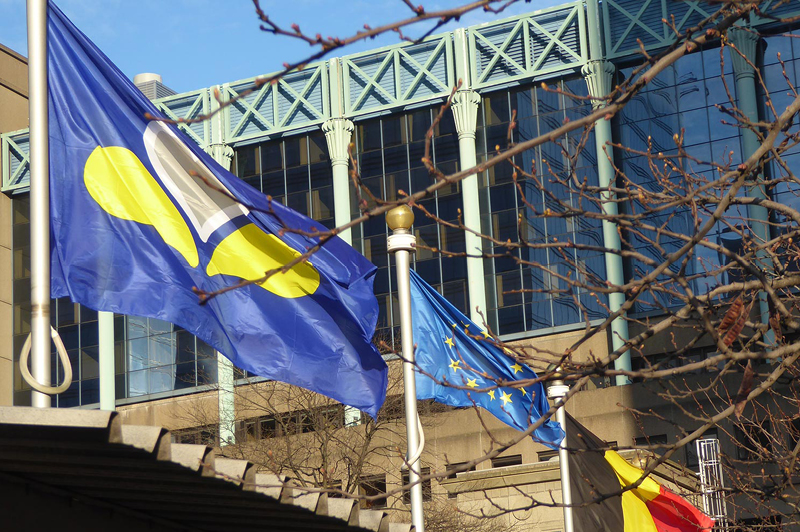
Belgium is a paradox wrapped in a federal structure. A nation of 11.7 million people, split across three regions and three language communities, where forming a national government can take longer than building a smart motorway — and yet one that consistently punches above its weight in urban innovation. The reason is partly geographic luck: Brussels hosts the European Commission, the European Parliament, and the headquarters of nearly every major European city network, making it the place where continental digital policy is drafted, debated, and signed into law. But it is also a matter of institutional design. Belgium's federal architecture forces its three regions — Flanders, Wallonia, and the Brussels-Capital Region — to develop their own smart city strategies, creating a natural laboratory of competing approaches within a small territory.
The result is not neat. Belgian smart city governance is messy, multilingual, and occasionally contradictory. But it produces a remarkable density of experimentation, from Antwerp's real-time port digital twin to Brussels' civic reporting platforms to Flanders' region-wide IoT research infrastructure. As the Brussels-Capital Region puts it, the smart city is about achieving "better with less" — a pragmatic motto for a country that has learned to do a great deal with the complex governance hand it has been dealt.
Three Regions, Three Digital Temperaments
Belgium's smart city landscape cannot be understood without grasping its federal structure. Each region sets its own innovation agenda, and the differences in approach are striking.
Flanders, the Dutch-speaking north, has invested heavily in research-led urban technology. The region's flagship is IMEC, one of the world's foremost nanoelectronics and digital technologies research institutes, headquartered in Leuven. IMEC's City of Things programme deploys IoT sensor networks across Flemish cities, with Antwerp serving as the primary living laboratory. The Antwerp Smart Zone combines thousands of sensors with a Generic IoT Platform that breaks down data silos, allowing traffic, air quality, noise, and energy data to flow into a single analytical environment. Flanders has also been a pioneer of public-sector digital twins, with the EU-funded DUET project creating urban digital twins for Flemish cities that allow policymakers to simulate interventions before implementing them. Through VLAIO, the Flemish innovation and entrepreneurship agency, the region funds digitalisation projects for local authorities and participates in the Driving Urban Transitions partnership, supporting transnational research on positive energy districts, the 15-minute city, and circular urban economies.
The Brussels-Capital Region takes a governance-first approach shaped by its extraordinary institutional complexity: nineteen municipalities, three official languages, and a population of 1.2 million that includes a vast international community. The region's Brussels Smart City Strategy, launched in 2023, is built on five pillars — strategy and governance, data, digital skills, technological solutions, and financing — with citizen engagement woven throughout. The Brussels Smart City Hub coordinates across municipal boundaries, while i-CITY, the City of Brussels' digital transformation unit, has digitised dozens of administrative processes through the MyBXL platform, from event permits to marriage registrations. In 2024, i-CITY partnered with Microsoft to prototype AI-driven improvements to the city's contact centre — a signal that even Brussels' traditionally cautious administration is embracing experimental approaches.
Wallonia, the Francophone south, has focused on industrial transition and digital inclusion, with smart city efforts concentrated in Charleroi, Liège, and Namur. The region's approach is less visible internationally but significant domestically, particularly in connecting post-industrial cities with new digital capabilities.
At the federal level, the Digital Belgium programme sets overarching ambitions, and the AI4Belgium coalition has worked to position the country as an AI-ready economy. But the real action happens at regional and municipal level — by design.
Where the Continent's Urban Networks Converge
Belgium's smart city ecosystem is unusually shaped by the presence of European institutions and pan-continental networks that call Brussels home.
Eurocities, representing over 200 major European cities, operates from Brussels, channelling urban innovation knowledge across borders through working groups on digital transformation, sustainable mobility, and circular economy. EIT Digital Brussels, part of the European Institute of Innovation and Technology, runs its EU affairs hub from the capital, connecting over 200 partners across industry and academia to drive digital innovation with a strong smart city focus. The European Commission's Smart Cities Marketplace and the Living-in.EU movement, which unites cities and member states around ethical digital transformation principles, also operate from Brussels.
On the research side, IMEC's more than 5,500 researchers develop the foundational technologies — IoT sensors, AI chips, low-power connectivity — that power smart city infrastructure worldwide. The Vrije Universiteit Brussel - SMIT Research (Studies in Media, Innovation and Technology) brings a critical social science perspective, researching data governance, digital inclusion, and the democratic implications of algorithmic decision-making in cities. SMIT's work directly shapes EU policy on smart cities and digital rights, ensuring that Belgium's contribution to the field is not only technological but also ethical.
Agoria Smart City, Belgium's largest technology industry federation with over 2,000 member companies, bridges technology providers with municipal governments through its dedicated Smart City division, organising conferences, publishing research, and advocating for policies that support urban digital transformation. The European Digital Innovation Hub Brussels (sustAIn.brussels), launched in 2022, provides a single access point for SMEs and public organisations seeking to adopt AI and sustainable digital technologies, addressing a gap: while Belgium's research institutions are world-class, its small and medium-sized enterprises have historically lagged in digital adoption.
Belgium has also nurtured a distinctive cluster of urban technology startups. Sentiance transforms smartphone sensor data into motion intelligence for mobility planning. Ovinto builds digital twins for buildings and urban districts, enabling data-driven energy optimisation. Riaktr turns raw telecom and utility network data into actionable intelligence. Lancey Energy develops smart electric radiators with integrated battery storage for grid-flexible buildings.
A Port That Thinks, a Street That Talks Back
Belgium's smart city deployments tend towards the practical — tools that solve real problems rather than showcase futuristic ambitions.
The Port of Antwerp-Bruges operates APICA, one of Europe's most advanced industrial digital twins: a real-time 2D/3D replica integrating data from thousands of sensors, drones, smart cameras, and digital "iNoses" to monitor operations, infrastructure, environmental conditions, and energy use. For a port handling over 290 million tonnes of cargo annually, this is not a demonstration project — it is operational infrastructure that supports safer, more efficient, and more sustainable logistics.
In Brussels, Fix My Street Brussels has become a model for civic technology across Europe. The platform enables residents to report infrastructure problems — potholes, broken streetlights, illegal dumping — using geolocation and photos, then track repairs in real time. It is unspectacular technology, but it has fundamentally changed the relationship between citizens and municipal maintenance, building trust through transparency.
The Smart Move Brussels - Mobility Plan plan proposes replacing conventional road tax with distance-based charging, aiming to reduce congestion by 25 per cent while funding public transport expansion. It remains one of the region's most politically charged smart city proposals. The MaaS Brussels - Mobility as a Service platform integrates public transit, shared bikes, car-sharing, and e-scooters into a single application with AI-optimised multimodal routing — a practical response to a city where 60 per cent of commuters cross regional boundaries daily.
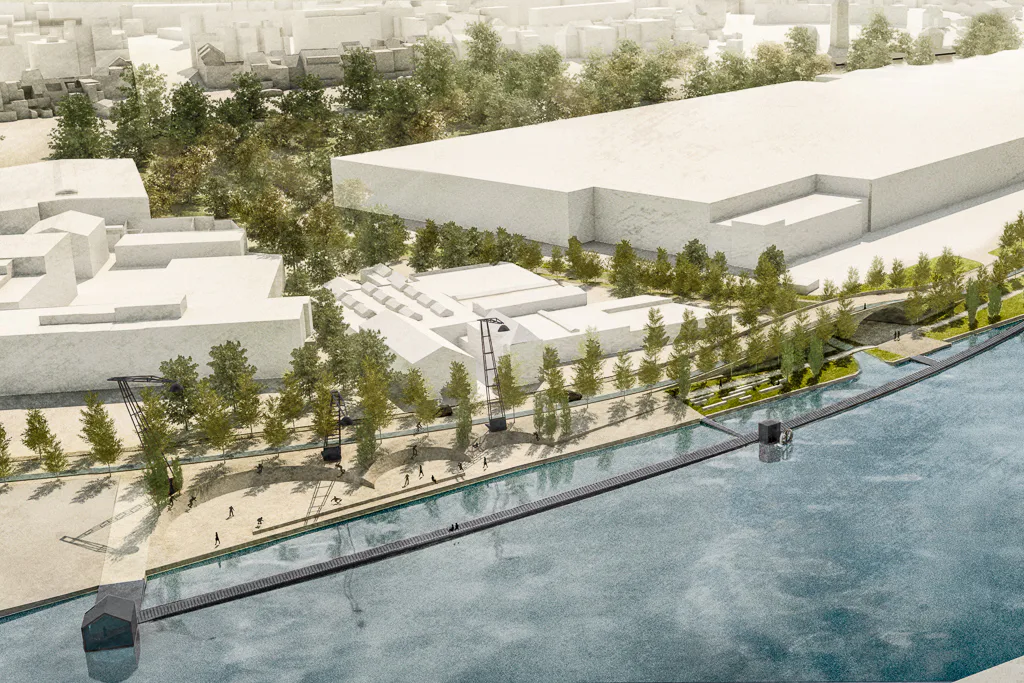
The Kanal - Brussels Canal Zone Regeneration is transforming a declining industrial corridor into a mixed-use district with smart infrastructure embedded from the design stage: district energy networks, flood-resilient smart water management, and IoT-enabled buildings. The anchor is the conversion of a former Citroën factory into the Kanal Centre Pompidou, a contemporary art museum that has become a symbol of Brussels' capacity to reinvent its industrial heritage.
The Brussels Circular Economy Programme supports 111 projects transforming linear consumption into circular systems — from AI-powered urban logistics to material banks for construction. And the Brussels Energy Transition Programme targets carbon neutrality by 2050 through 30,000 building renovations and smart grid deployment, a particularly urgent challenge in a region where 70 per cent of buildings predate 1970.
Comic Books, Chocolate, and the Art of Système D
Where do Belgians actually experience the smart city? In Brussels, it might be through the Fix My Street app, or through the Brussels Smart City Card, a fully digital visitor pass integrating public transport, museums, and services. In Antwerp, it is the data-driven optimisation of a port that shapes the rhythm of an entire city. In Flanders' smaller cities, it is the sensor networks quietly measuring air quality, water levels, and traffic patterns that inform decisions residents may never see directly but benefit from daily.
Belgium hosts a remarkable calendar of smart city events that reflect its role as Europe's urban policy capital. European Mobility Week 2025, coordinated from Brussels, is the continent's largest sustainable transport campaign.
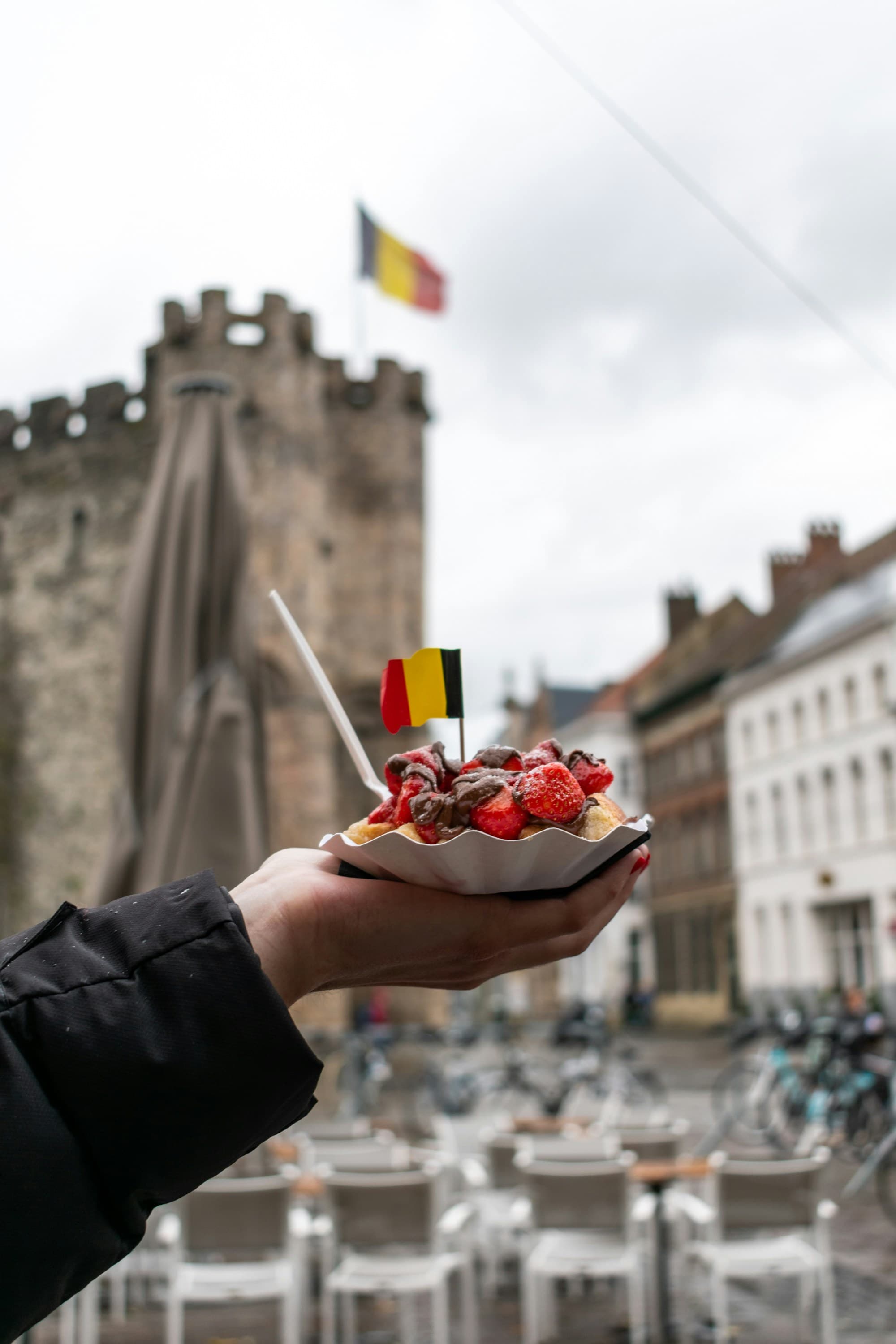
There is something characteristically Belgian about the country's smart city approach. Belgians have a phrase for getting things done despite institutional complexity: système D — the art of resourcefulness. It is the same spirit that fills Brussels' streets with irreverent comic book murals — Tintin peering around a corner, the Smurfs scaling a wall — that sustains a café culture where Flemish and Francophone neighbours share une petite bière despite their governments' inability to agree on much, and that keeps Fix My Street reports flowing even when the response must cross three administrative boundaries. Belgium will never be the fastest or the flashiest smart city nation. But as the country where Europe's digital rules are written, it carries a particular obligation to show that smart city transformation can be democratic, multilingual, and messily human — and still work.
References19 resources16 external