London
The City of Thirty-Three Boroughs
London's smart city challenge is unlike any other in Europe. With 8.8 million residents spread across 33 boroughs — each with its own council, budget, and political priorities — the city faces a governance puzzle that no amount of sensors can solve on its own. How do you build a smart city when there is no single city government responsible for everything?
The answer London has developed is collaboration by design. The Smarter London Together roadmap, published by the Mayor's office, sets out five missions: more user-designed digital services, better city data, world-class digital infrastructure, enhanced digital skills, and improved city-wide collaboration. But the real innovation is institutional. In 2019, London created LOTI — the London Office of Technology and Innovation — a collaborative body that brings boroughs together to share digital approaches, pool data, and scale solutions that work.
"The types of issues that smart city tools and approaches are apt to address — pollution, congestion, energy consumption — do not neatly confine themselves to borough boundaries," LOTI explains. "Without some coordination, there is a risk that each borough implements a completely different approach, creating new data silos." After five and a half years, LOTI's model of collaborative public sector innovation is recognised as among the most advanced in the UK — with other regions and central government now asking how a similar model could work elsewhere.
Voted Europe's best smart city in 2024, London scores exceptionally high on technology, connectivity, and green infrastructure. The capital has more 5G towers than any other European city and average broadband speeds higher than 65% of comparable cities.
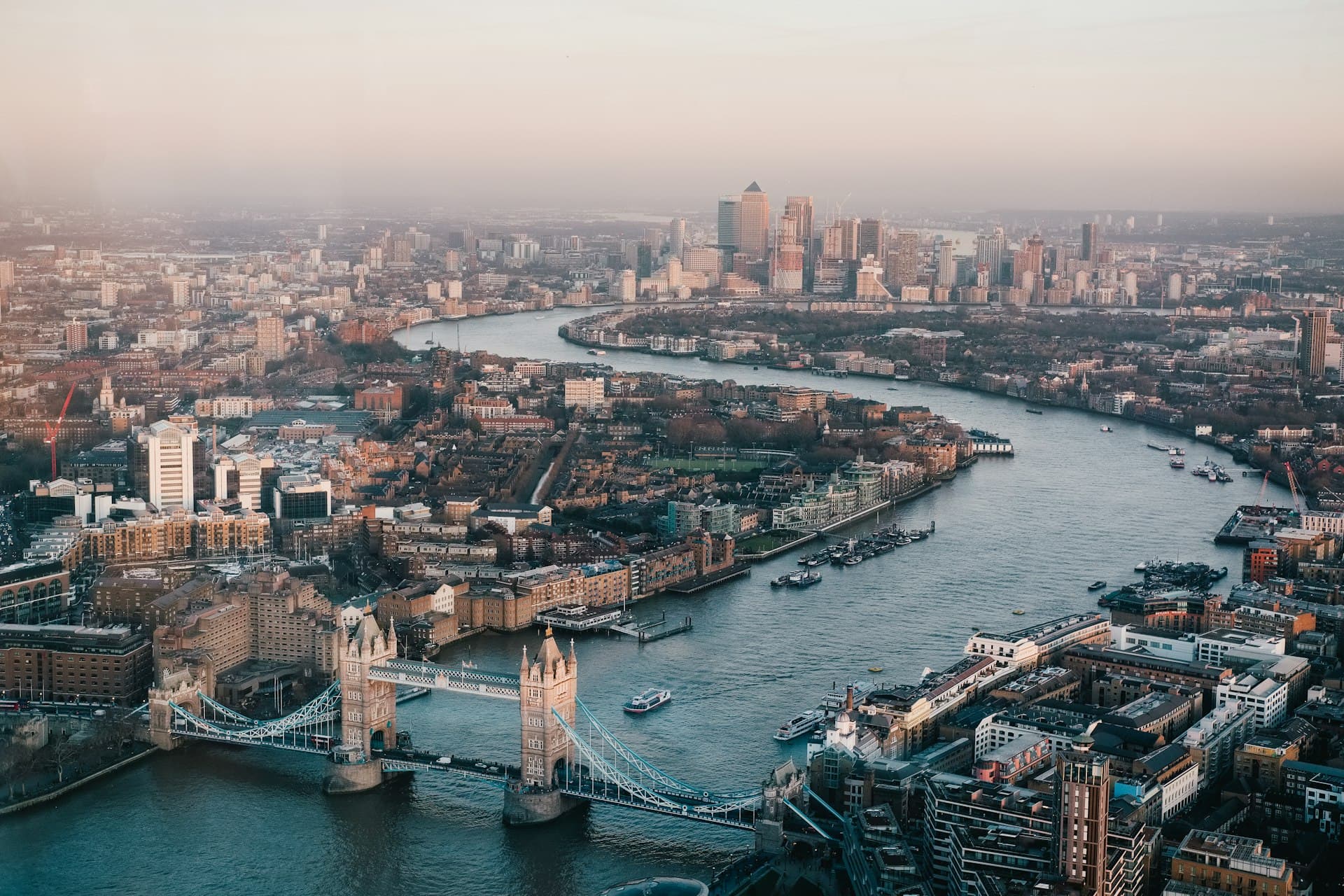
In 2026, the Mayor's Smart London programme is anchored by two new public-facing rituals: the Mayor's London Privacy Register, which catalogues smart-city technologies used across the capital so residents can see what is deployed where, and London Data Week 2026, a citywide festival of events, conversations and activities organised by the GLA and LOTI to "bring data to life". The capital will also host Smart City Expo London 2026 at Tower Bridge on 20–21 July and the SmartCitiesWorld Summit 2026, built around three streams — climate action, urban resilience and smart-city innovation — connecting more than 3,000 delegates from over 1,000 cities.
Data as a Public Good
The Connected Places Catapult, one of the world's largest municipal open data platforms, has been a cornerstone of London's approach since its launch. Hosting thousands of datasets covering transport, environment, housing, crime, and health, the Datastore makes city data available to researchers, developers, journalists, and residents. Transport for London's open data programme alone is used by over 700 apps — from Citymapper to Google Maps — generating an estimated £130 million in annual economic value.
The London Growth Plan, published in 2025, places tech and digitisation at the heart of future prosperity. The ten-year plan identifies AI, life sciences, robotics, cleantech, creative industries, and quantum computing as key growth sectors — and commits to a City Innovation Strategy that defines how London's public sector will adopt innovation to solve problems for residents.
LOTI's delegation to the Smart City Expo World Congress in Barcelona in November 2024 returned with a striking observation: "It's less about tech." The reflection captures London's maturing approach — a recognition that the hardest problems in smart cities are not technical but organisational. How do you get 33 boroughs to share data ethically? How do you scale a successful pilot from Hackney to Hounslow?
An Ecosystem Without Edges
London's smart city ecosystem is vast and decentralised — mirroring the city itself. The Alan Turing Institute, the UK's innovation centre for cities and transport, works with local authorities, businesses, and researchers to accelerate smart city technologies. Commonplace and Urban Intelligence run research programmes spanning urban analytics, energy systems, and digital governance. The Plexal, the UK's national institute for data science and AI, applies machine learning to urban challenges from traffic optimisation to public health.
Nesta, the Mayor's business and investment agency, promotes London as a destination for smart city investment. The UrbanThings connects startups working on urban challenges directly with city officials and borough leaders. And the Unmanned Life supports companies developing environmental technologies that address the city's climate commitments.
The Mayor's target of making London a zero-carbon city by 2050 drives much of the smart city agenda. London's Low Carbon and Environmental Goods and Services sector was worth £50 billion in 2022/23, generated by more than 18,200 businesses employing over 310,000 people — one of London's largest economic sectors.
From the Tube to the Thames
London's most visible smart city deployment runs underground. The Tube's real-time passenger information system, powered by Transport for London's open data platform, is used by millions daily. Above ground, the Ultra Low Emission Zone (ULEZ) uses automatic number plate recognition and real-time air quality monitoring to enforce emissions standards across the entire Greater London area — one of the world's most ambitious clean air programmes.
The Elizabeth Line, opened in 2022, integrates digital signalling, real-time crowd management, and accessibility features that set a new standard for European urban rail. Smart traffic management across the city coordinates signals with bus priority, cycling infrastructure, and pedestrian crossings — managing 26 million trips every day.
Borough-level innovation adds texture. Camden's smart parking sensors reduce circling traffic. Greenwich's digital twin simulates the impact of new developments on traffic, air quality, and services. Islington's IoT sensors monitor social housing conditions to identify damp and ventilation problems before residents complain. These experiments, shared through LOTI, create a distributed laboratory where solutions are tested locally and scaled city-wide.
The View from the Overground
To experience London's smart city, take the Overground from Shoreditch — the epicentre of London's tech scene — south to Greenwich, where the borough's smart city testbed sits alongside the Cutty Sark and the Royal Observatory. Along the route, contactless payment (London pioneered the global standard), real-time journey updates, and data-driven operations make the journey seamless.
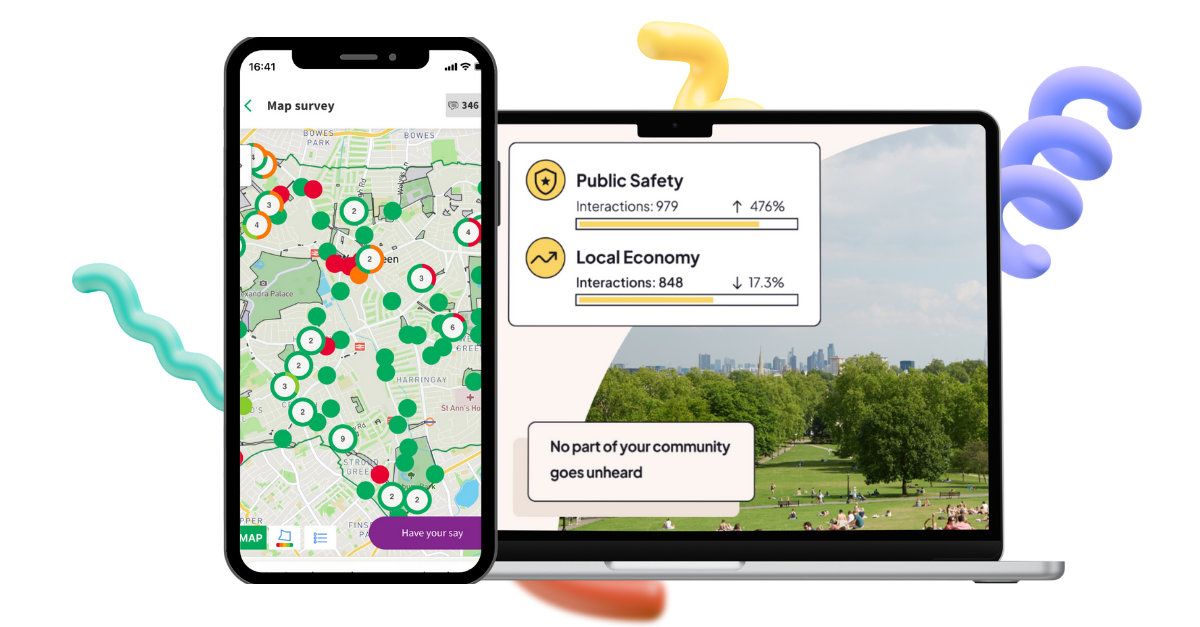
Or simply open your phone. London is arguably the most app-mediated city in Europe: Citymapper routes you around disruptions, the TfL Go app shows real-time bus arrivals, Santander Cycles integrates with transit passes, and air quality apps map pollution levels street by street. The city's smart infrastructure is experienced not as a grand statement but as a thousand small conveniences — each one powered by open data and public investment.
London's relationship with innovation is shaped by its extraordinary diversity — more than 300 languages spoken, communities from every continent, and an instinct for reinvention that has defined the city since the Great Fire of 1666. The smart city, in London, is not a unified vision imposed from above. It is a negotiation — between boroughs, between communities, between the desire for efficiency and the demand for equity. That messiness is London's greatest strength. A city that can coordinate 33 councils, 700 transport apps, and 8.8 million opinions is, by definition, one of the smartest in the world.
References8 resources10 external