Stockholm
The Nordic Capital That Treats Sustainability as a System
Stockholm has spent decades building a reputation as one of the world's most liveable cities. But behind the archipelago views and cycling-friendly streets lies something more deliberate: a city that has turned sustainability and digitalisation into interconnected pillars of urban governance. Named the European Innovation Scoreboard 2024 by the European Commission's 2024 Innovation Scoreboard, Stockholm does not merely deploy smart city technologies — it embeds them into a broader vision of what a future-proof capital should look like.
The city's formal smart city strategy, approved by the City Council in 2017, rests on connectivity, publicly accessible data, smart IT platforms, sensors, and innovation as its five pillars. It was developed collaboratively with residents, businesses, and academia — and it carries a striking ambition. As a project webpage put it: "Anything that can be digitalized will be digitalized." That sentence, simultaneously bold and pragmatic, captures Stockholm's approach: comprehensive in scope, grounded in implementation.
Stockholm is one of the EU Mission: 100 Climate-Neutral and Smart Cities by 2030, committing to a pace of decarbonisation that far exceeds the EU's 2050 target. With nearly one million residents and rapid growth, the Swedish capital faces mounting pressure to demonstrate that sustainability and urban expansion can coexist.
A Government That Innovates from the Inside
Stockholm's municipal administration does not outsource its smart city ambitions to a single agency. Instead, the City Executive Office coordinates digitalisation, innovation, and urban development as interlinked portfolios. A dedicated Director of Innovation leads strategic efforts to strengthen the city's capacity for renewal, working across departments to embed digital tools into everyday municipal operations — from elderly care to traffic management.
The city's digitalisation strategy frames AI and digital infrastructure as means to become "a smart and connected city," not ends in themselves. This language matters. Stockholm deliberately positions technology as a servant of public service quality rather than a branding exercise.
At the national level, Sweden's climate goals — fossil-free by 2045 and 100 per cent renewable energy — provide a powerful policy backdrop. The Vinnova — Sweden's Innovation Agency, coordinated by Vinnova, Sweden's innovation agency with an annual budget of approximately 3.5 billion SEK, brings together the country's largest cities with industry, academia, and civil society to achieve climate-neutral cities by 2030. Stockholm is a lead participant, using the programme as a framework to align municipal climate action with national innovation funding. Vinnova's emphasis on systemic change — coordinated action across governance levels and sectors rather than isolated technology pilots — has shaped how the city approaches its own smart city investments.
Critical voices exist, however. Academic research has questioned the "utopian logics" of Smart Stockholm, arguing that the strategy's emphasis on visibility, predictability, and controllability risks privileging technocratic governance over genuine citizen participation. The tension between efficiency-driven digitalisation and democratic engagement remains an active debate in Swedish urban policy.
Where Research Meets the Street
Stockholm's smart city ecosystem draws its strength from an unusually tight integration between world-class research institutions, well-funded government agencies, and a thriving technology startup scene.
KTH Royal Institute of Technology — SPHERE Smart Cities is the academic backbone, bringing together researchers from architecture, civil engineering, computer science, and economics to work on smart energy systems, intelligent transport, urban environmental monitoring, and digital infrastructure. SPHERE's research reaches beyond laboratories: it collaborates directly with the City of Stockholm and major industry partners to ensure findings translate into deployable solutions. The initiative focuses on zero emissions and zero accidents as overarching targets, testing innovations through interconnected testbeds across the city.
Smart City Sweden, a state-funded export platform managed by IVL Swedish Environmental Research Institute, operates from its headquarters in Stockholm, connecting international delegations with Swedish smart city companies and municipalities. The platform curates a portfolio of solutions across energy, mobility, waste management, water, and digital infrastructure — and it uses Stockholm's flagship projects as demonstration cases. Smart City Sweden reflects a distinctly Swedish approach: sustainability as both a national value and an export opportunity.
The city's startup ecosystem adds another dimension. Stockholm has produced some of Europe's most successful technology companies, and this entrepreneurial culture extends into the urban innovation space. The annual Stockholm Smart City expo, the Nordic region's largest gathering for smart cities, brings together over 3,200 visitors and 250 exhibitors to showcase innovations in digital infrastructure, IoT, AI, and sustainable urban development — a testament to the commercial vitality of the sector.
Connecting these actors is a governance culture that prizes collaboration. Sweden's consensus-driven political tradition means that smart city projects typically involve extensive stakeholder engagement before deployment. This slows initial timelines but tends to produce solutions with broader buy-in and longer lifespans.
From Industrial Port to Climate-Positive District
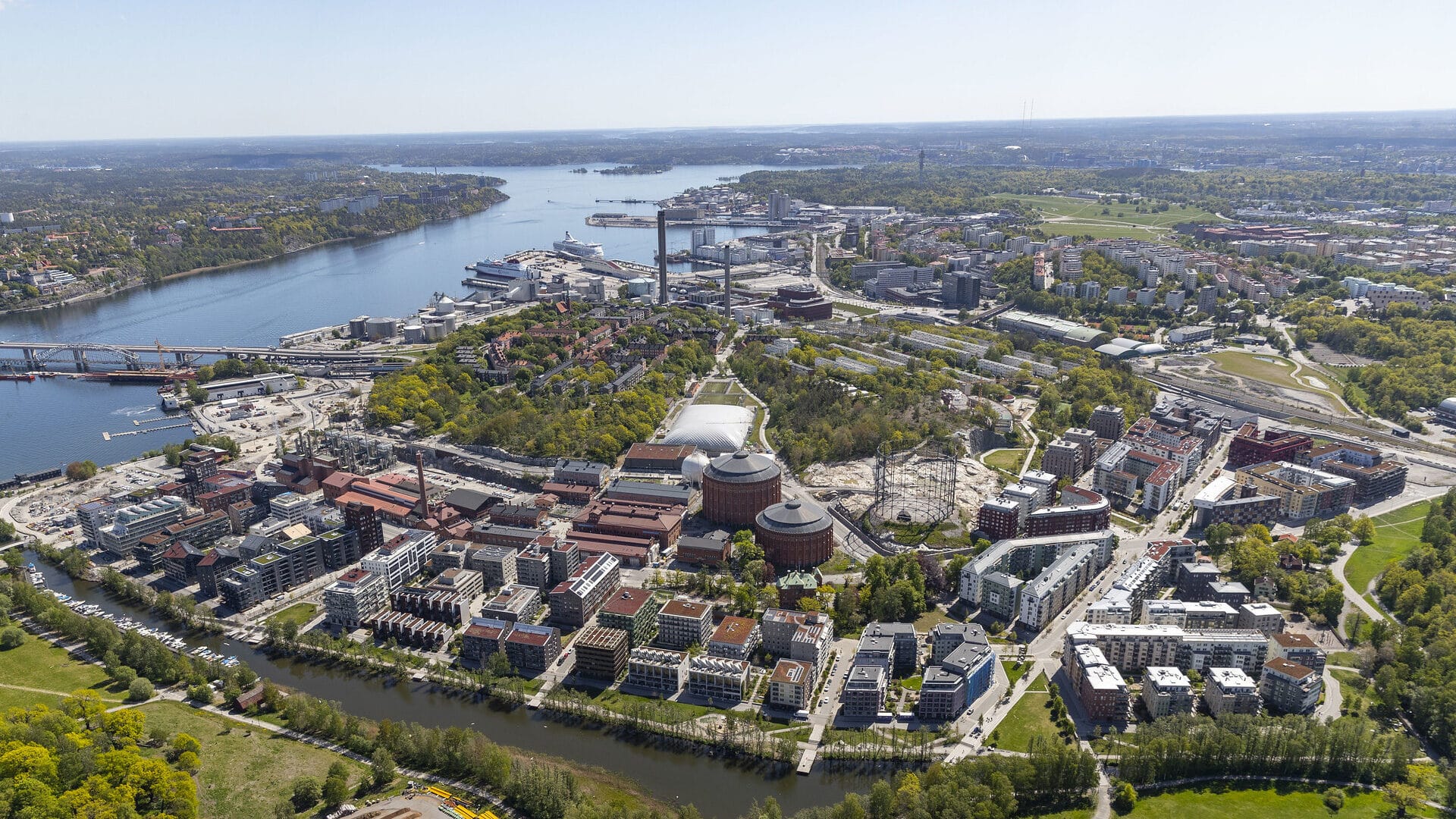
Stockholm's most visible smart city showcase is Stockholm Royal Seaport (Norra Djurgårdsstaden) (Norra Djurgårdsstaden), the country's largest urban development project. Transforming former industrial and port land along the waterfront, the project will deliver approximately 12,000 new homes and 35,000 workplaces in a district designed to be climate-positive by 2030.
Royal Seaport integrates advanced systems at a scale rarely seen in European urban development: a smart grid with local renewable energy generation and storage, pneumatic waste collection with automated sorting, intelligent building energy management, and a comprehensive mobility strategy that prioritises walking, cycling, and shared electric vehicles. Each building communicates with a neighbourhood-scale smart grid that optimises energy flows in real time — a living laboratory where technologies are tested at scale before potential deployment across Stockholm.
The GrowSmarter project, funded by the EU's Horizon programme, demonstrated complementary innovations in the Årsta district. Twelve smart solutions spanning low energy districts, integrated infrastructure, and sustainable mobility were tested in refurbished buildings, achieving annual CO₂ reductions of 1,187 tonnes and primary energy savings of nearly 5,000 MWh per year. The results provided hard evidence that retrofitting existing buildings with smart systems can deliver measurable climate benefits at district scale.
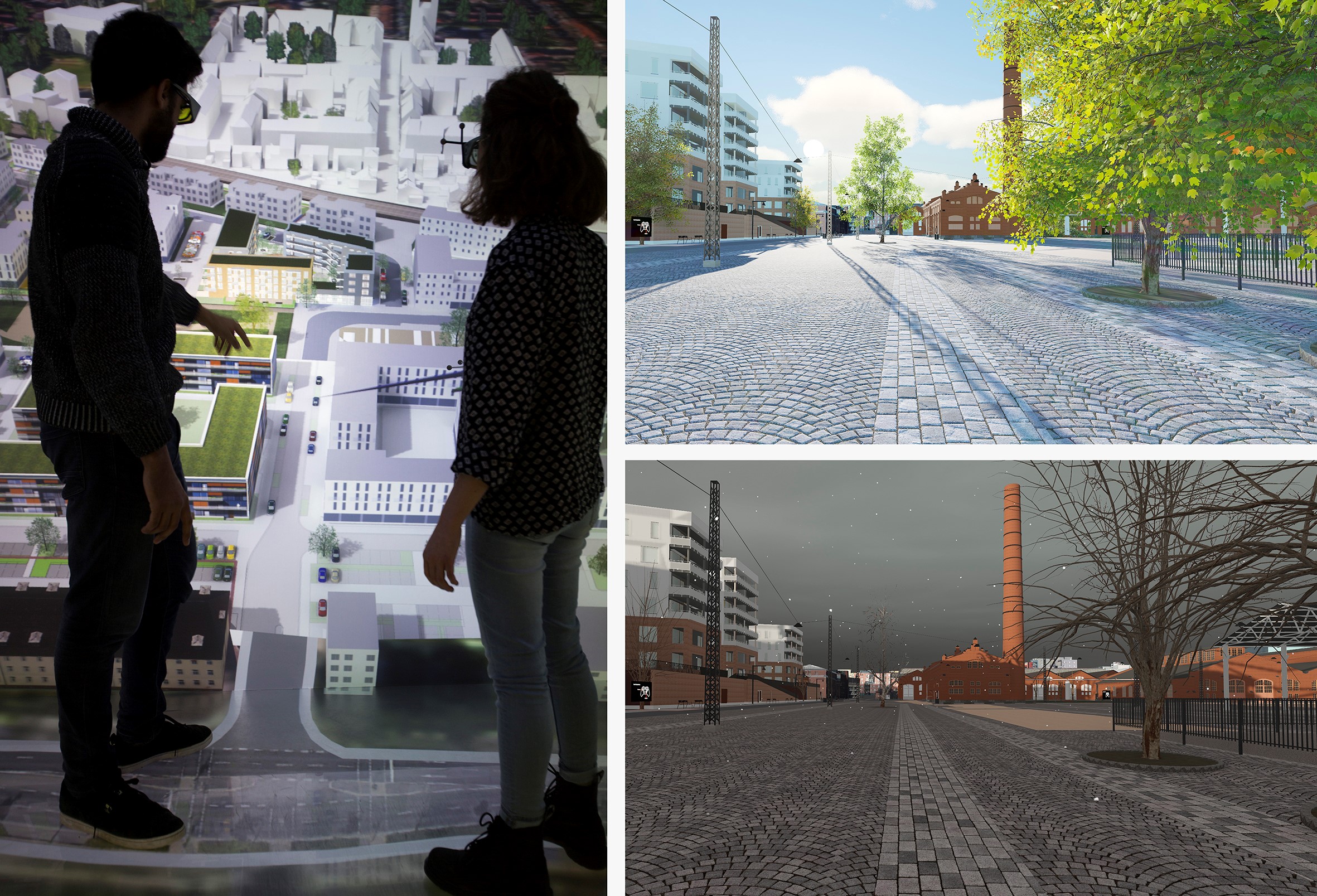
Meanwhile, the Stockholm Virtual City project, part of Drive Sweden's innovation programme, is developing AI-powered urban management tools using data from taxis, smartphones, and city sensors. The project aims to create a dynamic digital model of the city that supports real-time decision-making on everything from traffic management to construction oversight. Stockholm's Enabling the Digital Green Transition: A Study of Potentials and Data-Driven Policy Measures, documented by the Nordic Council of Ministers, focuses specifically on urban planning and citizen engagement — using immersive 3D visualisations to enable residents to explore proposed changes to their neighbourhoods interactively, rather than deciphering technical planning documents.
Where the Smart City Becomes Tangible
For Stockholmers, the smart city is not an abstraction. It is the congestion charge system that, since 2006, has reduced city-centre traffic by over 20 per cent and generated revenue reinvested in public transport. It is the SL Access card that integrates buses, metro, ferries, and commuter rail into a seamless network. It is the open data portal where anyone can access thousands of municipal datasets — from air quality readings to construction permits.
The metro system itself is a kind of civic artwork: over 90 of Stockholm's 100 stations feature unique art installations, making it one of the world's longest art galleries. This marriage of infrastructure and culture is characteristically Swedish — the belief that public systems should be not merely functional but beautiful.
There is a Swedish word, lagom, often translated as "just the right amount." It captures a cultural disposition towards balance and moderation that permeates Stockholm's smart city approach. The city does not pursue technology for spectacle. It pursues solutions that improve daily life without excess — a smart waste bin that simply works, a heating system that quietly adapts, a planning consultation where residents can walk through a 3D model of their future neighbourhood. As Stockholm's Director of Innovation has stated, the goal is "to strengthen the city's capacity for innovation and renewal, enhancing both quality and efficiency in municipal operations."
For visitors, the most striking experience may be arriving at Royal Seaport and realising that this gleaming waterfront district — with its smart buildings, car-free streets, and integrated green spaces — was industrial wasteland just years ago. It is the kind of transformation that makes you reconsider what is possible when a city treats sustainability not as a constraint but as a design principle.
In 2026, Stockholm is consolidating its role as the Nordics' convening hub. The Stockholm Smart City Conference & Expo 2026 (20–21 May) brings together more than 250 exhibitors and 3,200 visitors across infrastructure, energy, mobility, security, IoT and AI — introducing a new curated Speed Dating programme for procurement officers, planners and decision-makers responsible for major urban projects. The complementary Smart Cities & Infrastructure Projects Summit: Nordics Edition (10–11 June 2026), keynoted by Metropolitan Stockholm Mayor Aida Hadžialić alongside former Mayor Anna König Jerlmyr and Stockholm Science City CEO Ylva Williams, drills into delivery rather than vision. Later in the year, Stockholm ImpACT Days 2026 — RE:THINK Cities (28 September – 2 October) gathers the city's impact scene to align climate-positive urban development with the EU Mission's 2030 milestones.
References7 resources11 external