Overview of the Report and Its Origin
The document “Enabling the Digital Green Transition: A Study of Potentials and Data‑Driven Policy Measures” is published by the Nordic Council of Ministers, a regional intergovernmental body that supports cooperation among the Nordic countries. It presents a detailed examination of how digital twin technology is being applied in Nordic cities to promote urban sustainability, offering concrete examples, data, and policy recommendations that can inform wider European efforts in sustainable housing and city planning.
Digital Twins as Tools for Sustainable Development
Digital twins are dynamic, three‑dimensional virtual replicas of urban environments that integrate real‑time environmental data. The report emphasizes that these models are not merely technical assets; they serve as instruments for achieving sustainability goals. By simulating green infrastructure, optimizing energy flows, and modeling climate adaptation strategies, digital twins enable planners to evaluate the environmental impact of interventions before physical implementation, thereby reducing waste and accelerating progress toward climate targets.
Case Study: Helsinki’s Energy‑Focused Twin
In Helsinki, the digital twin merges 3D building models with energy consumption statistics, solar potential assessments, and noise mapping. This integration supports district‑scale energy performance analyses, guiding retrofit programmes and zoning decisions that prioritize energy‑efficient development. The data‑driven approach helps the city identify high‑impact measures, contributing to its broader climate objectives.
Case Study: Copenhagen’s Integrated Smart City Platform
Copenhagen’s twin is linked to a comprehensive smart‑city data platform that combines traffic, energy, and environmental datasets. Planners use this system to simulate the effects of new cycling infrastructure, green corridors, and building projects on the city’s carbon‑neutrality roadmap. The ability to test multiple scenarios supports evidence‑based policy making and efficient resource allocation.
Case Study: Stockholm’s Citizen‑Centric Visualisation
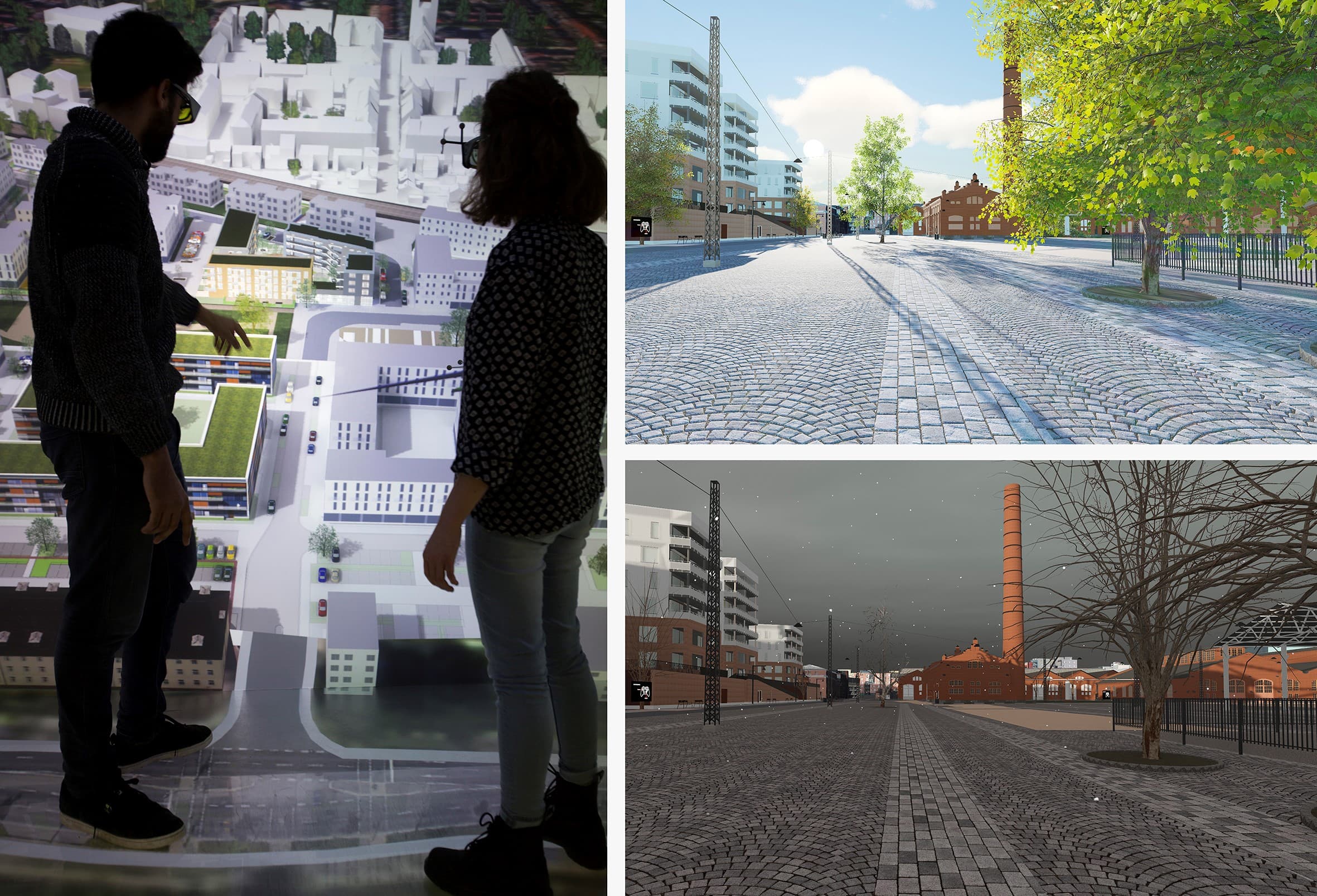
Stockholm’s digital twin prioritizes public participation. Immersive 3D visualisations are employed in community consultations, allowing residents to explore proposed neighbourhood changes in an intuitive format. This approach enhances transparency and inclusivity, fostering informed citizen engagement in the planning process.
Case Study: Oslo’s Zero‑Emission Zone Planning
Oslo utilizes its twin to monitor transport emissions, building energy use, and green space coverage, directly supporting the city’s zero‑emission zone ambitions and climate budgeting. By continuously tracking key indicators, Oslo can adjust strategies in real time, ensuring alignment with its emission reduction targets.
Democratizing Planning Through Visual Tools
A central finding is that digital twins transform traditional, document‑heavy planning into an interactive, visual experience accessible to non‑experts. Features such as before‑and‑after visualisations, scenario testing tools, and online platforms enable broader public participation beyond conventional meetings, turning citizen input into a co‑creative element of urban development.
Key Lessons for Pan‑European Implementation
The report outlines four actionable lessons for cities across Europe:
- Define clear sustainability objectives before building a twin.
- Integrate environmental data (energy, climate, ecological) from the outset.
- Ensure data interoperability across municipal departments.
- Leverage visualisation capabilities to foster genuine citizen co‑creation. These guidelines underscore that successful digital twins require purposeful design, robust data ecosystems, and a commitment to inclusive governance.
Data Highlights and Impact Potential
- Digital twins enable pre‑implementation testing of green roofs, tree planting, and renewable energy integration, reducing physical trial‑and‑error costs.
- Energy optimisation models can identify inefficiencies, potentially lowering district energy consumption by up to 15 % in pilot studies.
- Climate scenario simulations support flood‑risk and heatwave mitigation planning, essential for resilient housing development. By adopting these evidence‑based practices, European cities can accelerate the transition to sustainable, data‑driven housing and urban environments, drawing on the proven successes of the Nordic experience.