Loading...
City
Rotterdam
Country🇳🇱 Netherlands
Built on Water, Rebuilt with Data
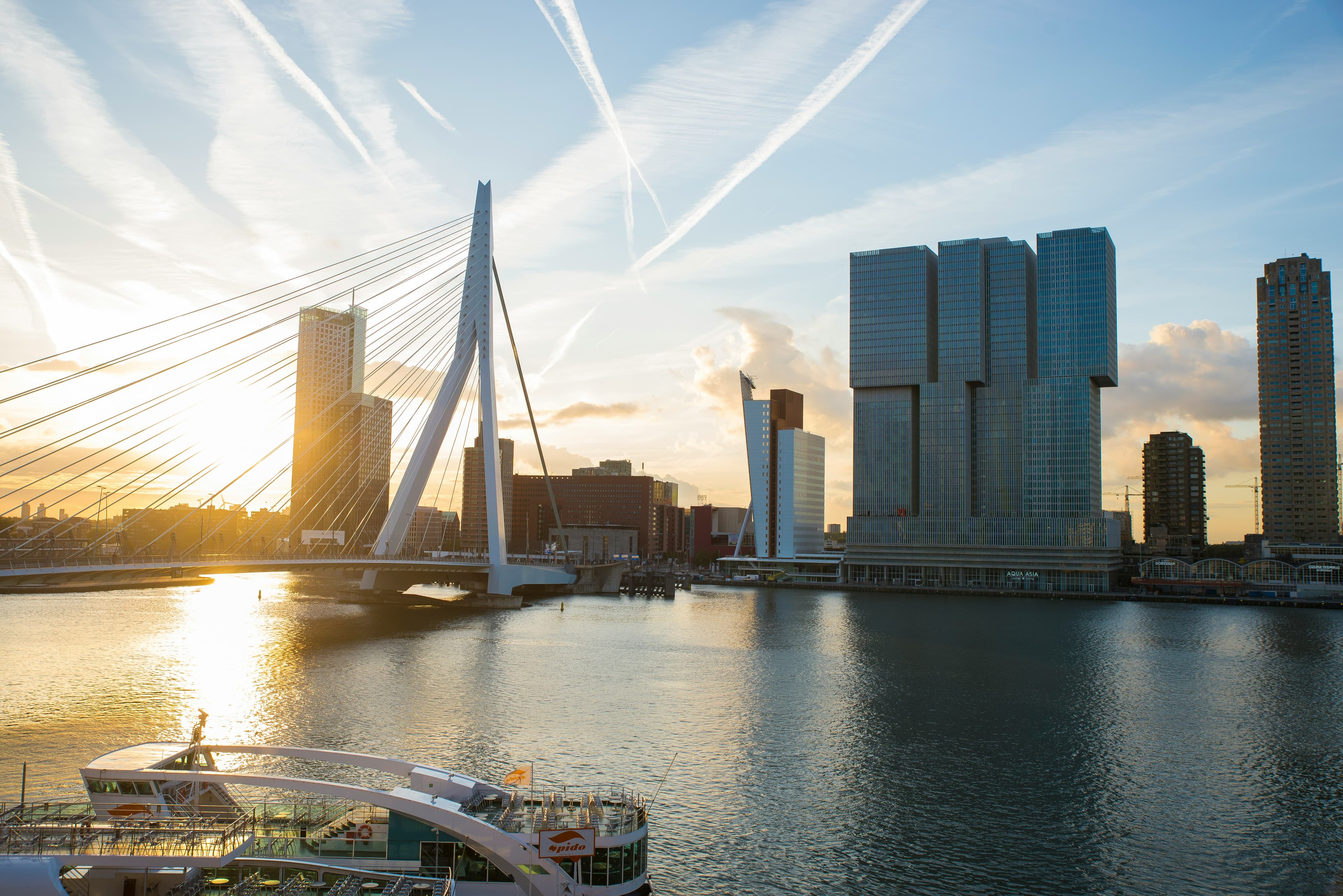
Rotterdam has always been a city defined by its relationship with water — and its determination to control it. Sitting largely below sea level in the Rhine-Meuse delta, the Netherlands' second city was devastated by bombing in 1940 and rebuilt not as a replica of the past but as an experiment in the future. That forward-looking instinct has made Rotterdam one of Europe's most interesting smart city stories: a place where climate resilience, digital innovation, and bold architecture converge in a working-class port city with none of the polish of Amsterdam but considerably more swagger.
With 660,000 residents and Europe's largest port on its doorstep, Rotterdam faces an uncommon set of urban challenges. Sea level rise, extreme rainfall, urban heat stress, and the economic transition away from fossil fuels all demand solutions that are simultaneously technological and social. The city's answer has been to embed digital infrastructure into its resilience strategy, using data and sensors not as ends in themselves but as tools for managing a city that exists, quite literally, at the edge.
Resilience as a Governing Philosophy
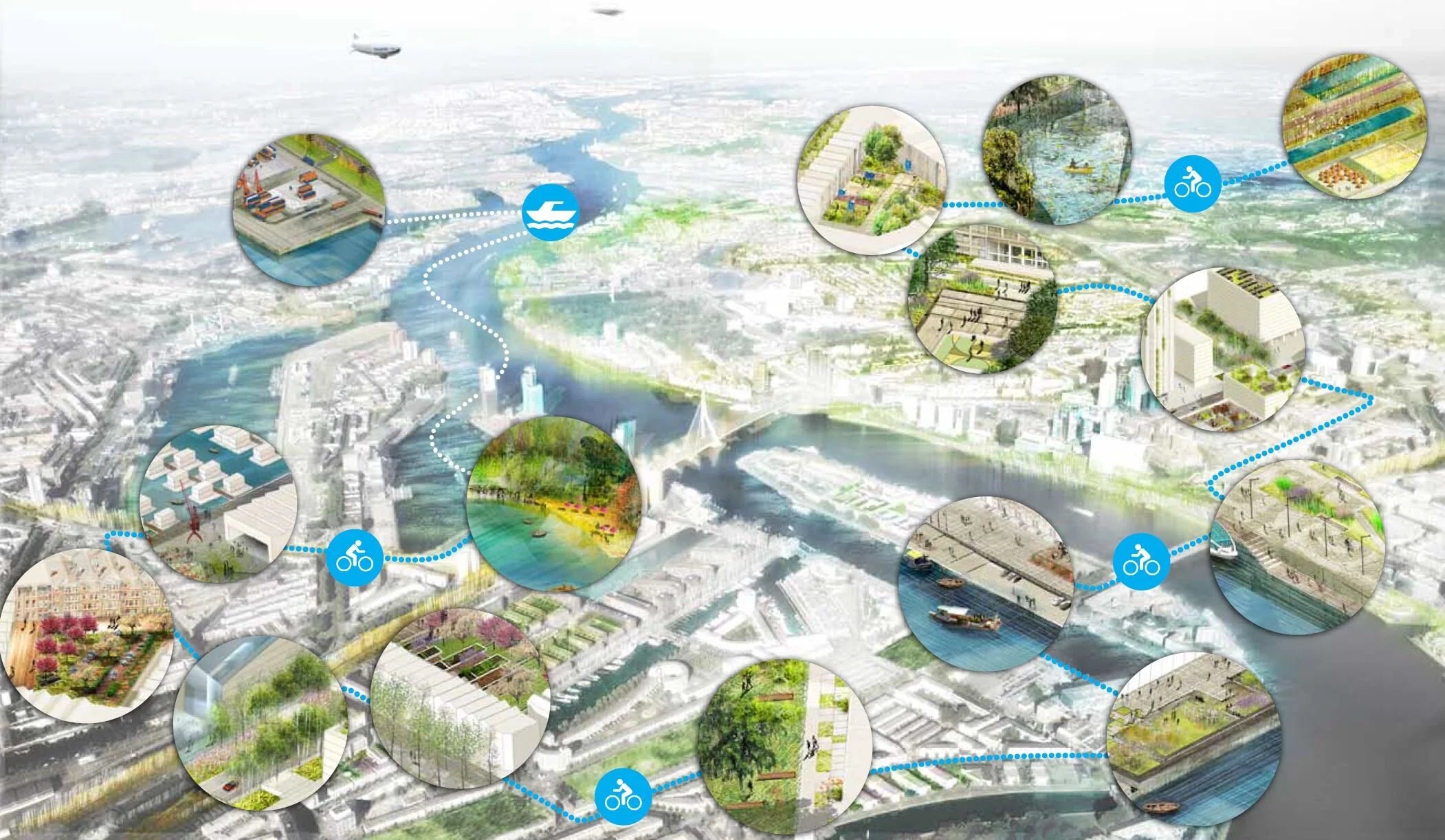
The Rotterdam Resilience Strategy, developed through the city's participation in the Rockefeller Foundation's 100 Resilient Cities initiative, remains the anchor of the city's smart city agenda. The strategy identifies seven resilience goals spanning climate adaptation, social cohesion, infrastructure robustness, economic diversification, cyber resilience, and governance innovation. What makes it distinctive is its insistence that physical resilience and social resilience are inseparable — that vulnerable communities bear disproportionate climate risks, and that technology must serve equity as well as efficiency.
Rotterdam's political leadership — historically centred on a pragmatic coalition of Labour, liberal, and green parties — has supported the resilience agenda through successive administrations. The city's chief resilience officer works across departments to ensure that climate adaptation is embedded in transport, housing, energy, and digital strategy rather than siloed in an environmental office. Critics, including community groups in the city's historically disadvantaged southern districts, have noted that the pace of building renovation and energy transition has not kept up with the ambitions of the Resilience Strategy — a tension the city acknowledges and is working to address.
The Urban Future Conference Rotterdam 2024, held in Rotterdam in 2024, drew thousands of urban professionals to the city, with Rotterdam's own water management, circular economy, and smart city technologies providing a compelling backdrop. Rotterdam also hosted the European Urban Resilience Forum in 2025, co-organised with ICLEI Europe and the European Environment Agency — further cementing its role as Europe's go-to city for resilience innovation.
From Shipyards to Living Labs
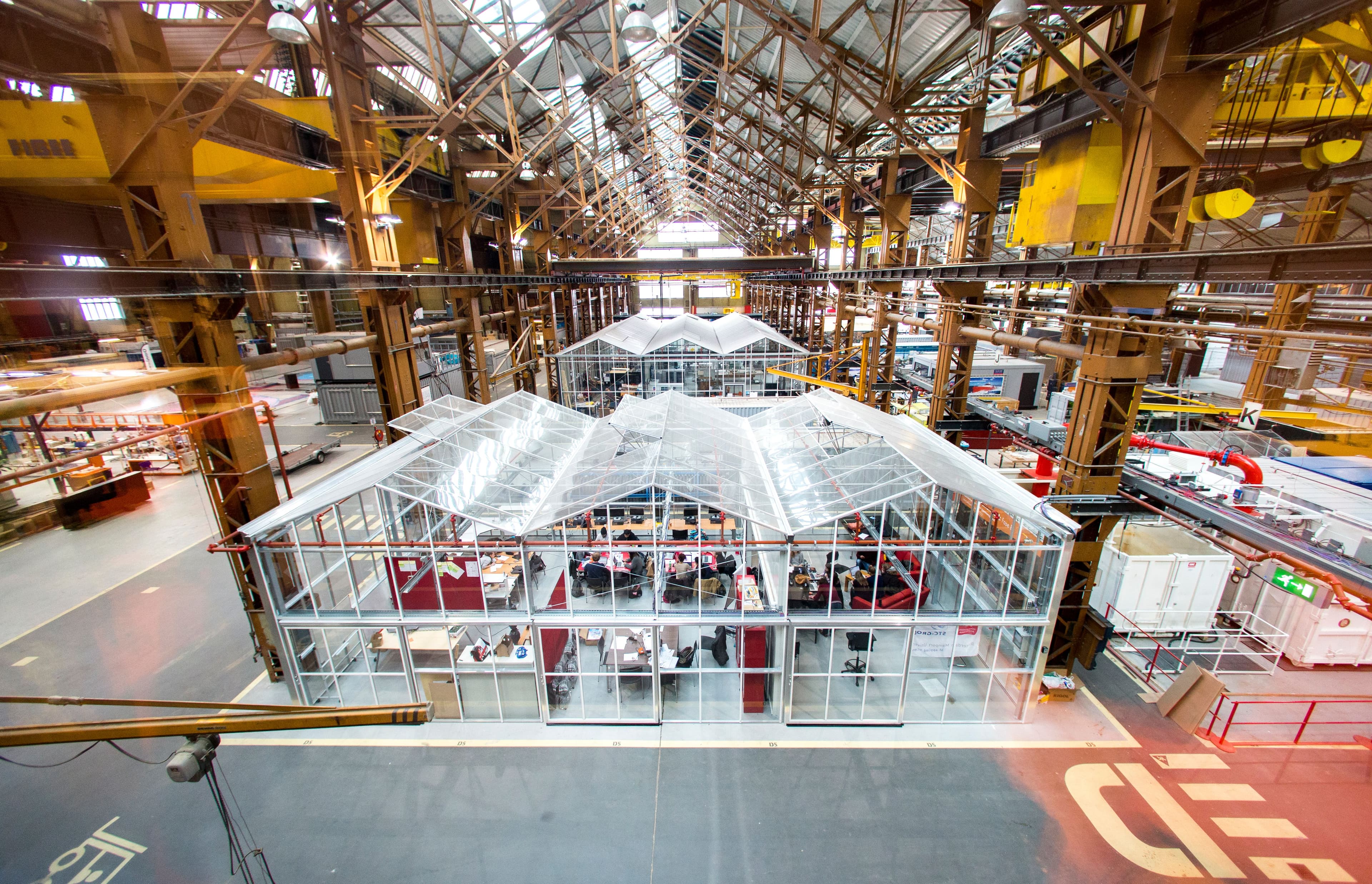
Rotterdam's innovation ecosystem is anchored in three distinctive nodes. RDM Rotterdam — Research Design Manufacturing — Research, Design, Manufacturing — occupies the former shipyard of the Rotterdamsche Droogdok Maatschappij on the south bank of the Maas. The campus hosts Rotterdam University of Applied Sciences, technology start-ups, and research groups working on circular economy, sustainable construction, and port logistics innovation. Its large-scale prototyping facilities — a legacy of its shipbuilding past — distinguish RDM from office-based innovation hubs and make it particularly valuable for sectors where physical testing is essential.
The Erasmus Centre for Urban, Port and Transport Economics at Erasmus University brings rigorous quantitative research to Rotterdam's smart city challenges. Researchers examine how port cities can balance economic competitiveness with liveability and environmental sustainability — questions of particular relevance as Rotterdam's port navigates the energy transition and digitalisation of logistics. The centre's evidence-based policy advice directly informs the city's infrastructure investment decisions.
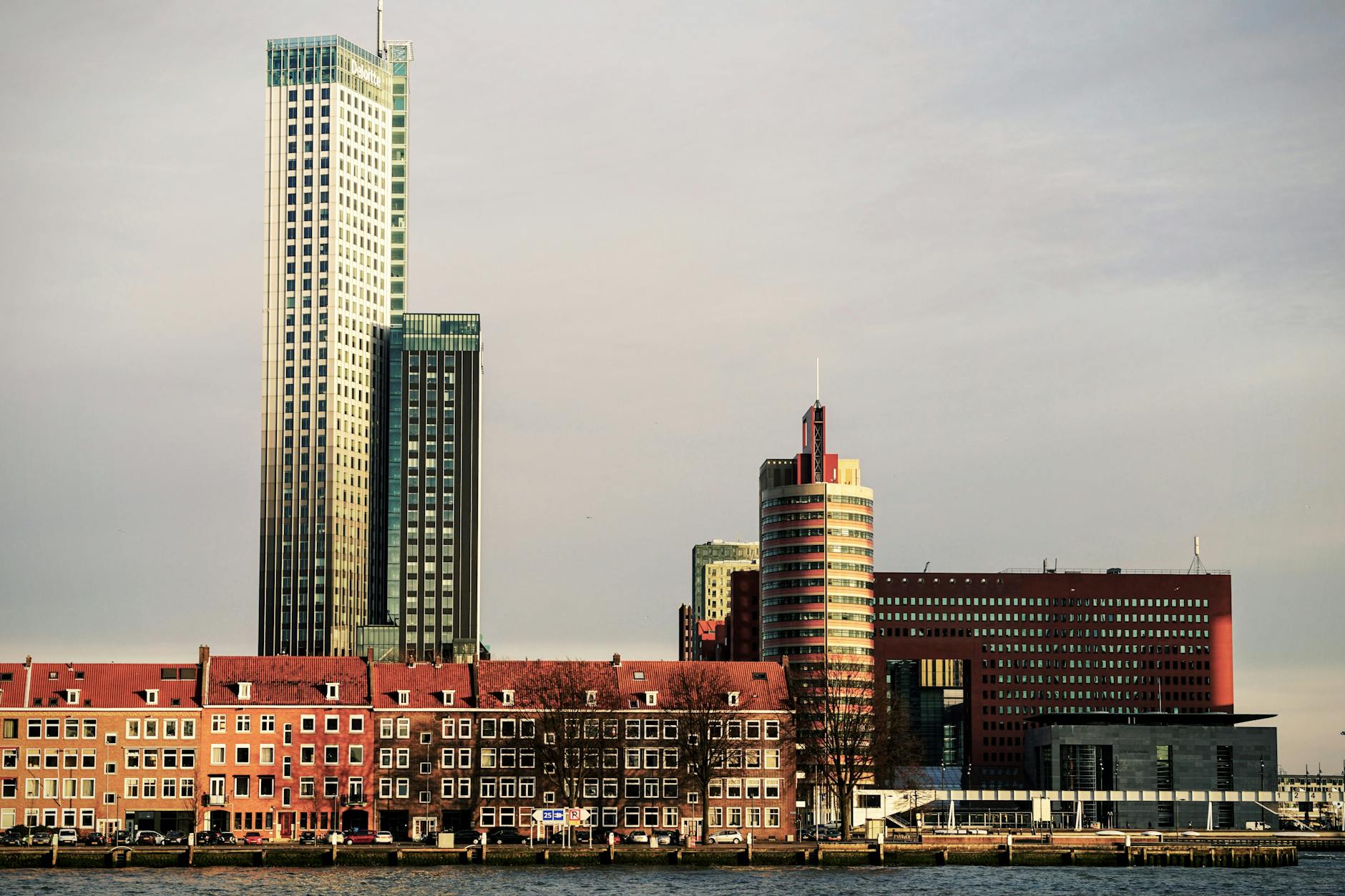
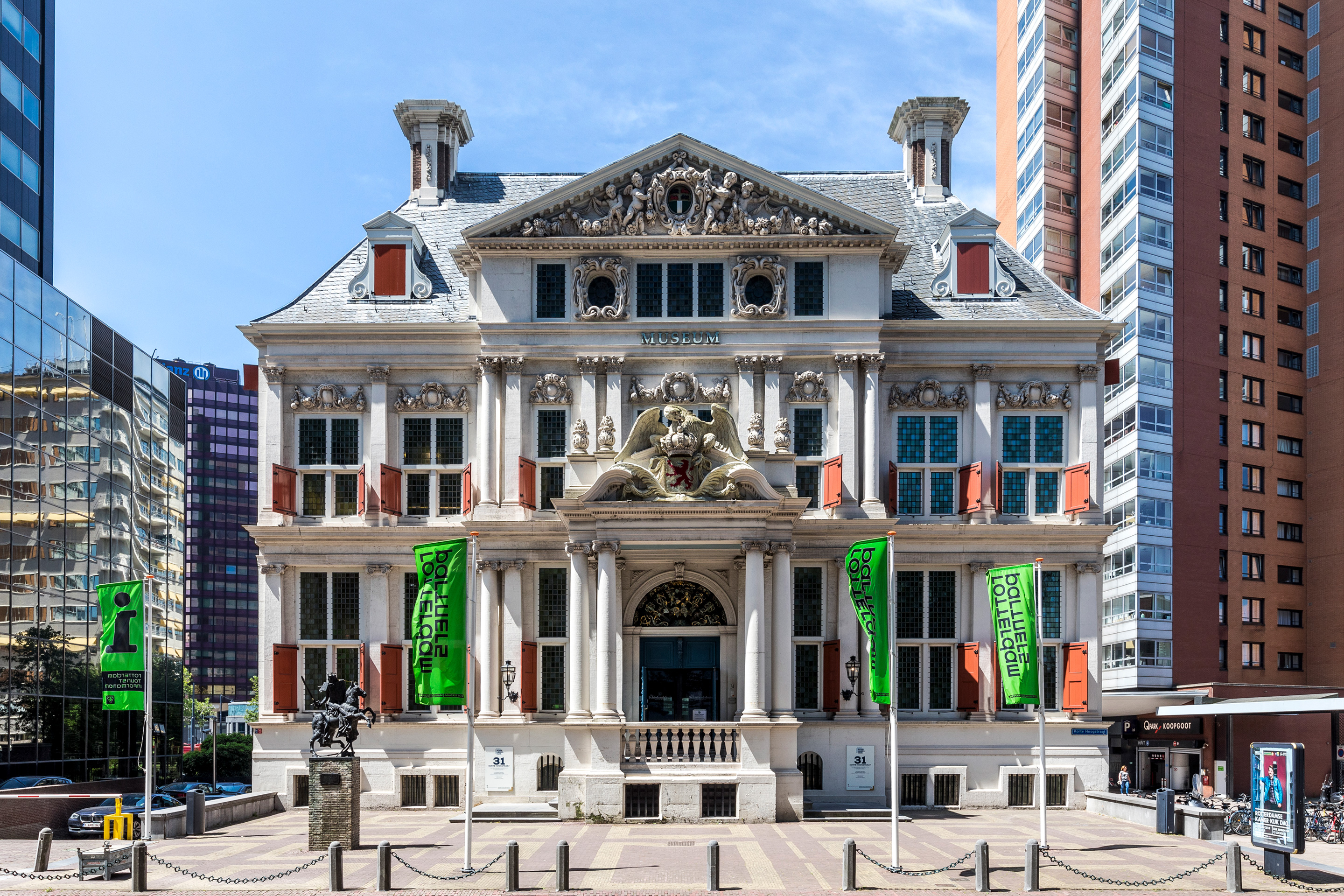
Rotterdam Partners, the city's economic development and marketing agency, has increasingly focused on positioning Rotterdam's innovation ecosystem to international audiences. The city's reputation for architectural experimentation — from the Markthal to the Cube Houses — extends into its digital ambitions, creating a narrative of relentless reinvention that attracts technology companies and EU-funded projects. The RUGGEDISED project, funded under Horizon 2020, tested thirteen innovative sustainable measures in the Hart van Zuid development area — from smart energy management to electric mobility and connected street lighting — with Rotterdam as a Lighthouse city alongside Glasgow and Umeå.
The Citiverse and the Rooftop Revolution
Rotterdam's most ambitious digital infrastructure project is the Open Urban Platform with integrated Digital Twin, launched in early 2025. The platform creates a three-dimensional digital replica of the city that integrates building data, sensor feeds, traffic flows, and environmental measurements, allowing planners and citizens to explore how proposed changes would affect their neighbourhoods. The Rotterdam School of Management at Erasmus University describes the vision as "building a human-centred smart city" — an approach that prioritises citizen rights, inclusivity, and democratic oversight over technological capability for its own sake.
The platform's next evolution is the Rotterdam Citiverse — a public-private model that the city describes as a European, human-centred alternative to the corporate Metaverse. Developed through the European x-CITE project and aligned with the Open & Agile Smart Cities network, the Citiverse aims to integrate physical, digital, and social realities into a holistic ecosystem where citizens can participate in urban planning, test scenarios, and hold the municipality accountable. A Right to the Digital Twin City? Citizen Participation and Limits-by-Design in Rotterdam's Urban Digital Twin on Rotterdam's urban digital twin found that while the technology opens new possibilities for citizen participation, "limits-by-design" in the platform's architecture can also constrain what citizens are able to see and do — a tension the city is actively working to resolve.
Rotterdam's Roof Programme, which uses AI to assess the potential of the city's extensive flat rooftops for solar panels, green roofs, water storage, and urban agriculture, has attracted international attention as an example of data-driven climate adaptation. The The State of European Smart Cities: Exploring and showcasing models, solutions, and financing for European replication to achieve climate neutrality report by the European Commission noted how cities like Rotterdam are demonstrating that smart city investment can simultaneously address climate adaptation, energy transition, and social inclusion — provided the governance structures are in place to hold competing priorities in balance.
Bitterballen, Bike Lanes, and the Water Plaza Next Door
The most characteristically Rotterdam experience of the smart city is the water plaza. In the Benthemplein neighbourhood, a public square designed by landscape architects De Urbanisten doubles as a stormwater retention basin during heavy rainfall — its sunken sports courts and amphitheatre gradually filling with water, transforming from playground to flood defence and back again within hours. Sensors monitor water levels and drain the plaza automatically when the storm passes. It is engineered resilience that you can play basketball on, and it has become one of the most celebrated examples of smart climate adaptation in Europe.
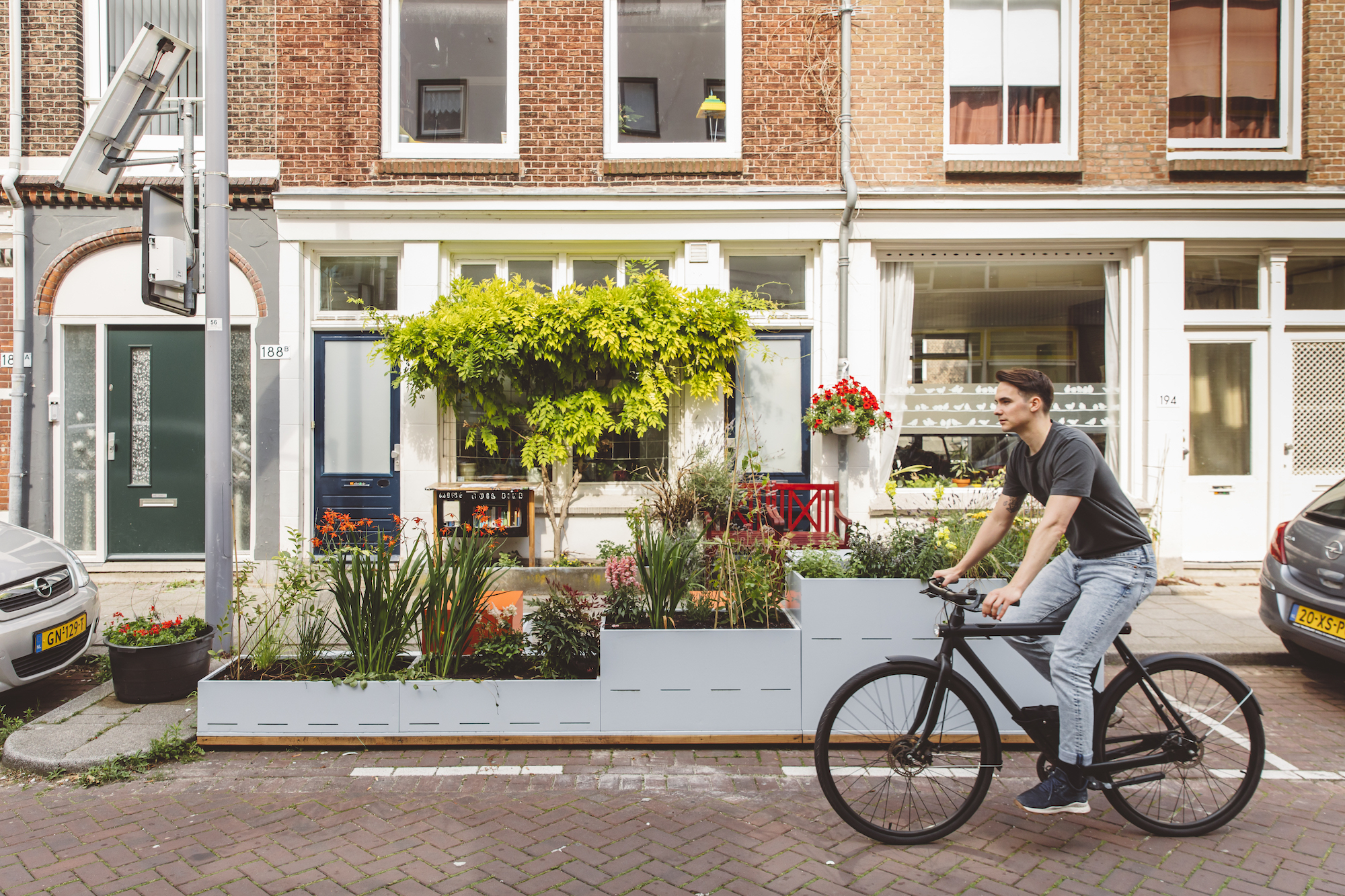
Rotterdam's cycling infrastructure — monitored by sensors that count riders, measure speeds, and adjust traffic signals — reflects the Dutch genius for making sustainable choices the easiest choices. Smart parking guidance, real-time public transport tracking, and integrated journey planning through the OV-chipkaart system make multimodal travel seamless. The data.europa.eu academy featured Rotterdam's approach as a case study in how open data powers smart city services — from real-time water management to predictive infrastructure maintenance.
As Rotterdam Make It Happen, the city's own slimme stad platform, puts it: "The smart city is more than just technology or digital tools. It is precisely the place where people and technology strengthen each other." If there is a single quality that defines Rotterdam's approach, it is bluntness. The city does not romanticise its challenges or disguise its contradictions. It sits below sea level, it knows it, and it builds accordingly. That unsentimental pragmatism — the same quality that rebuilt a destroyed city as a laboratory for modern architecture — now drives one of Europe's most honest and effective smart city programmes. Rotterdam is not the prettiest city in the Netherlands. But it may well be the smartest.
In late 2025, the Rotterdam School of Management feature on the Rotterdam Citiverse confirmed the project's framing as a public-private, European, human-centred alternative to corporate metaverse efforts — and detailed how the city is staging Citiverse pilots through partnerships rather than vendor lock-in. The Eurocities 2026 cities report singles out Rotterdam alongside other delta cities as evidence that digital twins and data spaces have moved from showcase pilots to operational tools for climate-resilient decision-making, with simulation now routinely informing flood-risk and infrastructure investments. Capgemini's 2026 sectoral analysis describes the emerging architecture in terms Rotterdam already practises: sovereign data spaces as the "neural pathways," digital twins as the "brain," and agentic AI as the "reflex system" — a framing the city's Open Urban Platform team is testing as it scales the Citiverse beyond pilot stage.
References7 resources11 external
Resources
Organisation
Erasmus Centre for Urban, Port and Transport Economics
Conducts economic research on urban systems, ports, and transport to guide policy.
Knowledge
The State of European Smart Cities: Exploring and showcasing models, solutions, and financing for European replication to achieve climate neutrality
Teasing climate‑neutral city models, €345 M EU funding, 120 cities, 550+ solutions, and groundbreaking financing insights.
Organisation
RDM Rotterdam — Research Design Manufacturing
A sustainable innovation campus transforming historic shipyard into research, education, and urban solutions.
Project
Rotterdam Resilience Strategy
Seven resilience goals, water plazas, IoT sensors, and underground storage transform Rotterdam’s flood defenses.
Knowledge
Right to the Digital Twin City? Citizen Participation and Limits-by-Design in Rotterdam's Urban Digital Twin
Explore how Rotterdam's digital twin embeds citizen input and hidden design limits shaping urban decision‑making.
Organisation
Rotterdam Partners
Drives Rotterdam's economic growth, innovation, and tourism through international partnerships and branding.
Event
Urban Future Conference Rotterdam 2024
Urban leaders and professionals gathering to explore sustainable city development and innovative solutions.
External Sources
From Data Spaces to Digital Twins: Climate-Resilient Citieseurocities.euTrends in 2026 for Smart Cities: From Technology-Led to Insights-Drivencapgemini.comOpen Urban Platform Rotterdamrotterdam.nlRotterdam's Digital Twin: Building a Human-Centred Smart Cityrsm.nlSmart City Rotterdamrotterdaminnovationcity.comRotterdam Unveils Vision for the Digital Cityoascities.orgSmart Cities and Digital Twin Technology: The Case of Rotterdamdata.europa.eudata.europa.eudata.europa.euRotterdam Resilience Strategyresilientrotterdam.nlSlimme Stad Rotterdamrotterdammakeithappen.nlEuropean Urban Resilience Forum 2025climate-adapt.eea.europa.eu