Loading...
City
Paris
Country🇫🇷 France
The Fifteen-Minute Metropolis and Its Grand Ambitions
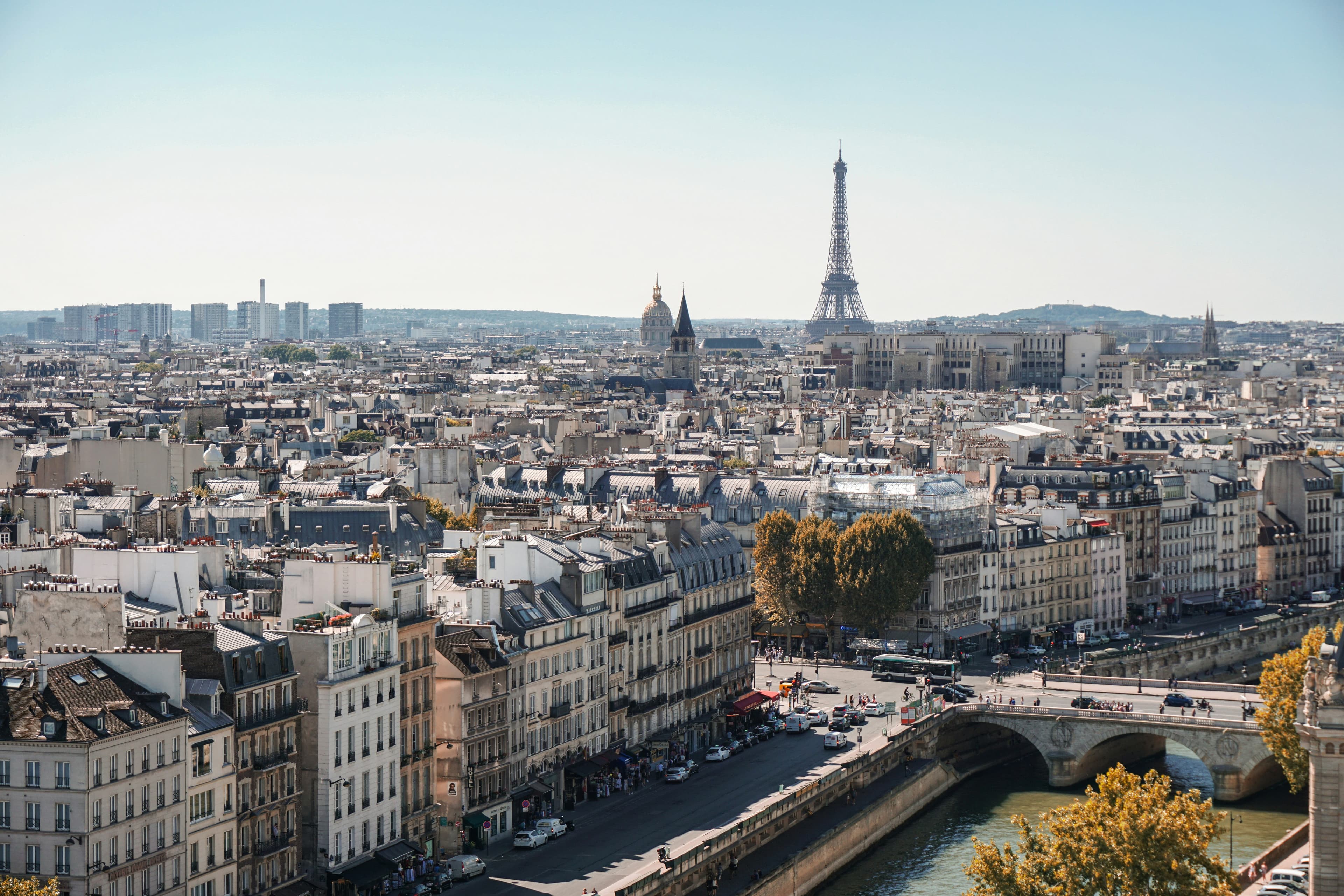
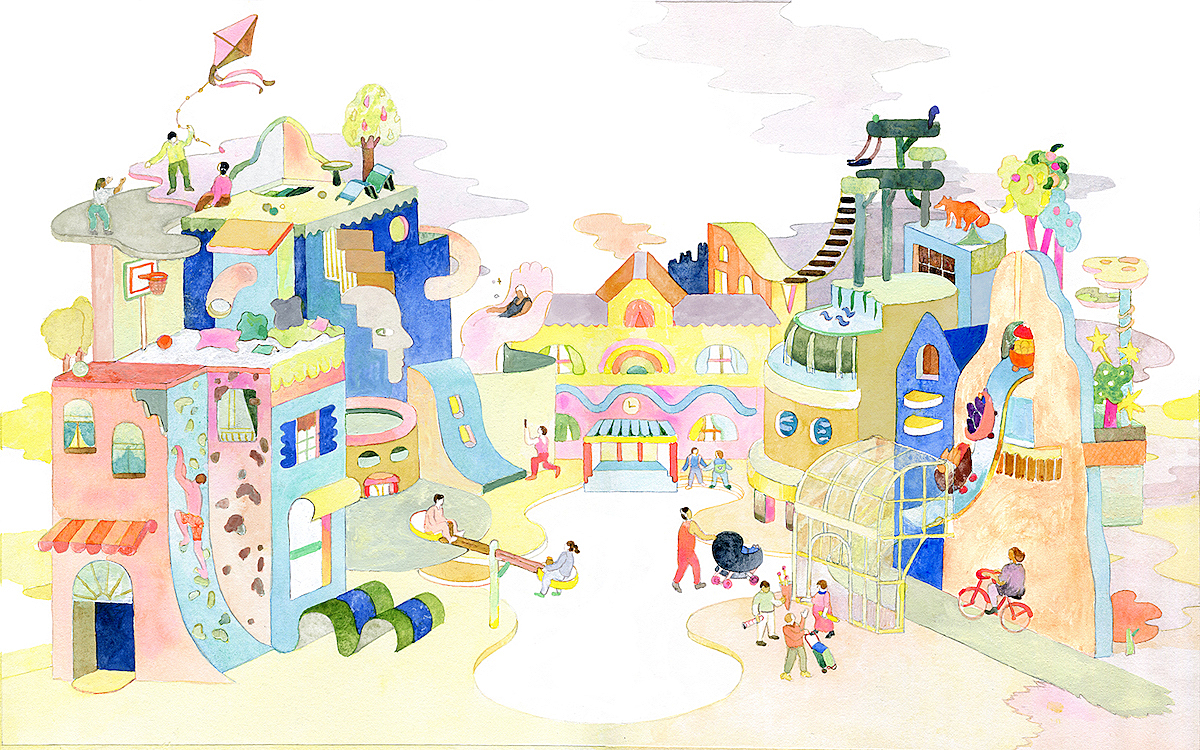
No city in Europe has branded its smart city vision more effectively than Paris. The Ville du Quart d'Heure — the Paris 15-Minute City Programme — has become a globally recognised concept, promising a metropolis where every resident can access work, shopping, healthcare, education, and leisure within a fifteen-minute walk or cycle from home. Coined by Carlos Moreno, a professor at the Sorbonne, and championed by Mayor Anne Hidalgo since her re-election in 2020, the idea has reshaped Paris's streets, redrawn its mobility map, and sparked fierce debate about who the city is really being redesigned for.
But the fifteen-minute city is only the most visible layer of a far deeper transformation. Paris is simultaneously building one of Europe's largest transport infrastructure projects, deploying an ambitious open data platform, driving a radical climate action plan, and nurturing an innovation ecosystem that stretches from the historic centre to the sprawling Paris-Saclay Innovation Cluster research cluster 25 kilometres to the south. With 2.16 million residents in the city proper and over 12 million in the Île-de-France region, Paris is the EU's largest metropolitan area — and the scale of its smart city ambitions matches.
Political Will, Public Investment, and Persistent Friction
Mayor Anne Hidalgo has governed Paris since 2014, making her one of Europe's longest-serving major-city leaders. Her administration has pursued an aggressively green urban agenda: banning through-traffic along the Seine, creating hundreds of kilometres of cycle lanes, pedestrianising streets around schools, and planting urban forests in formerly asphalted spaces. The Paris Climate Action Plan 2024–2030, adopted in late 2024, commits the city to a 50% reduction in greenhouse gas emissions by 2030 compared to 2004, with targets for thermal renovation of buildings, expansion of renewable energy, and a comprehensive plan volet (shutter plan) to reduce overheating in homes.
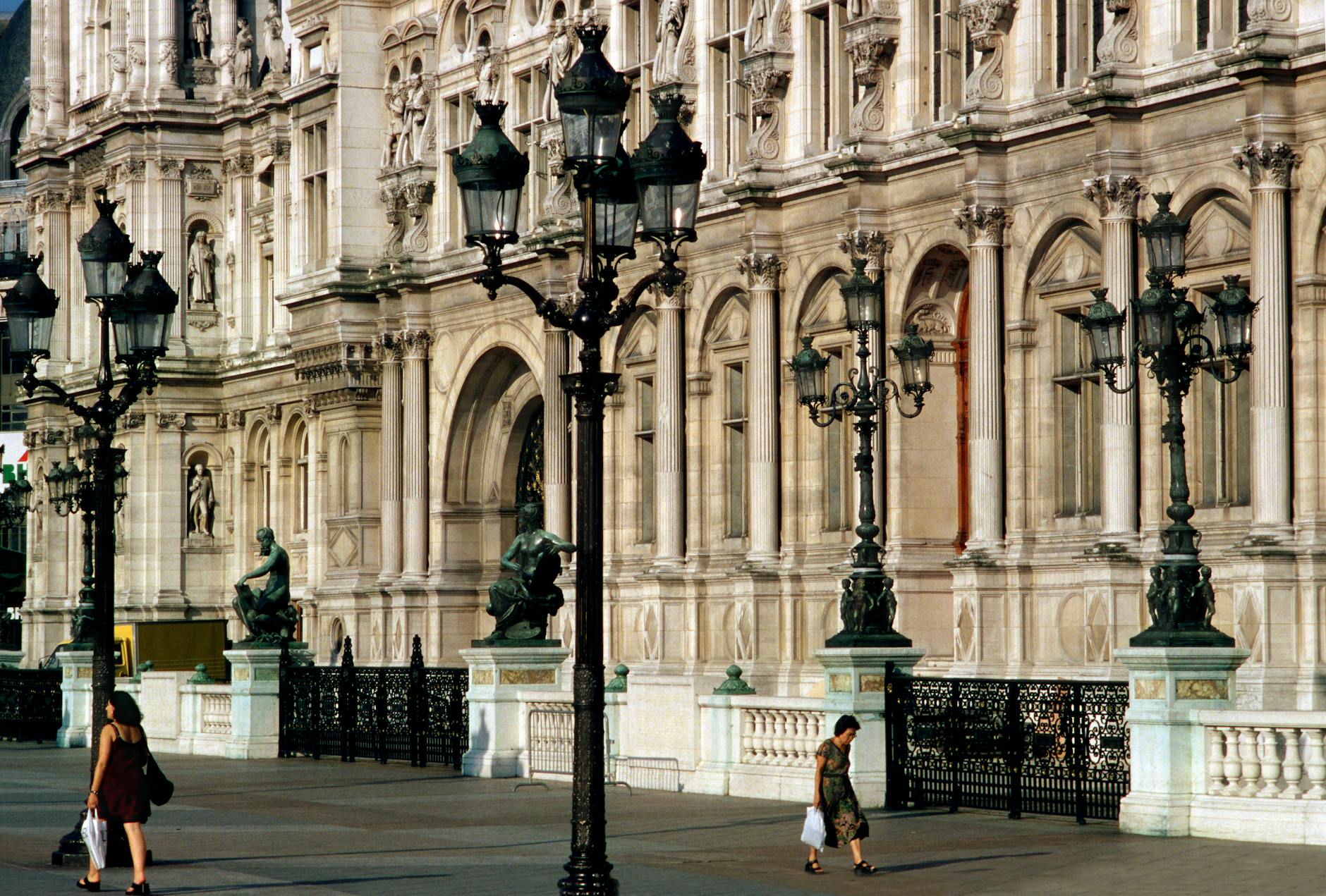
The Ville de Paris - Direction de l'Innovation coordinates the city's digital and innovation strategy, overseeing a participatory budgeting programme that has allocated hundreds of millions of euros to citizen-proposed projects since 2014 — making it one of the largest participatory budgets in the world. Smart infrastructure, greening initiatives, and neighbourhood improvements proposed and voted on by Parisians have been funded through this mechanism, creating a direct link between digital participation and physical urban change.
At the metropolitan level, the Greater Paris Metropolis (Métropole du Grand Paris) has supported over 270 digital transformation projects with approximately €50 million in investment and €14 million in subsidies, according to its Metropolitan Digital Development Plan 2024–2025. Branded Métropole des Intelligences (Metropolis of Intelligences), the plan emphasises that digital transformation must serve social inclusion, environmental goals, and democratic participation — not just efficiency.
Yet Hidalgo's approach has generated significant opposition. The city's transformation of road space has angered motorists and suburban commuters, and the mayor's poll ratings have suffered. Centre-right critics accuse the administration of pursuing an ideological anti-car agenda at the expense of economic accessibility. The cycling infrastructure, while celebrated internationally, has been criticised domestically for inconsistent quality and dangerous intersections. With municipal elections approaching in 2026, the future direction of Paris's smart city agenda is politically contested — though all major candidates have signalled continued commitment to digital modernisation, even if they differ on transport policy.
"Paris has become a laboratory, and laboratories are not always comfortable places to live," wrote the journalist Olivier Razemon in Le Monde. "The question is whether the experiment will produce results that benefit everyone, or only those who already have the luxury of living in the centre."
An Innovation Ecosystem of Continental Scale
Paris's smart city ecosystem is unusually rich, spanning public research institutions, a dense start-up landscape, major corporate R&D centres, and a network of innovation agencies that connect them.
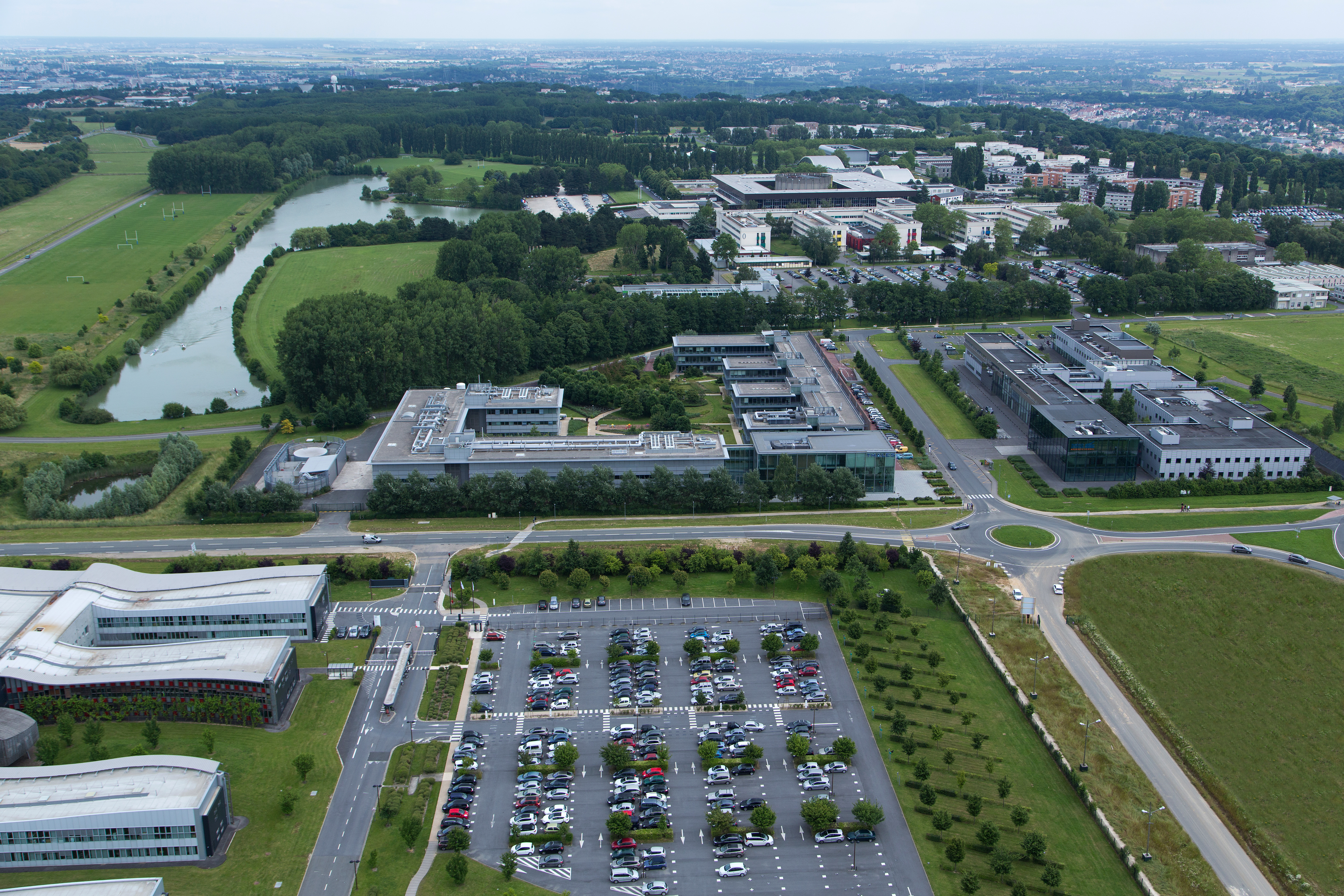
The Paris-Saclay Innovation Cluster, located on the Saclay plateau south of the city, is Europe's largest concentration of higher education and research. Ranked 13th globally in the Shanghai Academic Ranking, the cluster brings together the University of Paris-Saclay, École Polytechnique, CentraleSupélec, and dozens of research laboratories alongside some 25,500 companies and 318,000 inhabitants. For smart city practitioners, Paris-Saclay is significant as a source of fundamental research in AI, energy systems, materials science, and urban engineering that feeds directly into the city's innovation pipeline.
Within the city itself, Efficacity — a research and development institute for urban energy transition — conducts applied research on district energy systems, building performance, and urban metabolism. Its work bridges the gap between academic research and deployable urban solutions, with pilot projects across the Greater Paris region.
The start-up ecosystem is formidable. Qarnot Computing has developed digital radiators that use the waste heat from distributed computing to warm buildings — a concept that sounds like science fiction but is deployed in several Parisian social housing buildings, reducing heating costs while providing computing power. Karos, an AI-powered short-distance carpooling platform, tackles the "last mile" commuting challenge in the Île-de-France region, where many journeys are too short for public transport but too long to walk. Murmuration uses AI and satellite imagery to predict urban mobility patterns and inform transport planning — technology that has been adopted by several French metropolitan authorities.
ATEC ITS France, the national professional association for intelligent transport systems, is headquartered in Paris and plays a convening role for the French smart mobility sector, connecting municipalities with technology providers and advocating for interoperability standards.
The Greater Paris region also benefits from a dense network of innovation intermediaries. Paris&Co, the city's innovation and economic development agency, runs incubators and acceleration programmes that have supported hundreds of urban tech start-ups. The Réinventer Paris competitions — launched in 2014 by the Hidalgo administration — have run Réinventer Paris Urban Innovation attracting submissions from over 70 countries, challenging architects, developers, and technologists to reimagine underused Parisian sites through innovative design and smart technology. Winning projects have introduced modular housing, urban farms, and digitally managed co-living spaces onto formerly neglected plots.
Beneath the Streets and Above the Rooftops: What Paris Is Building
The most transformative infrastructure project in Paris — and arguably in Europe — is the Grand Paris Express, a €36 billion, 200-kilometre new automated metro network with 68 new stations. When fully operational, it will carry an estimated two million passengers daily, connecting suburban employment centres, university campuses, airports, and residential areas that have historically been poorly served by radial transport lines converging on central Paris. The project, managed by the Société du Grand Paris, is the largest transport investment in Europe and will fundamentally reshape mobility patterns across the Île-de-France region.
Grand Paris Express is a smart infrastructure project in its own right. Stations are being designed with integrated sensor systems for crowd management, air quality monitoring, and energy optimisation. The automated train control systems use real-time data to adjust frequency and routing. And the construction process itself has become a data exercise, with BIM (Building Information Modelling) used extensively to manage the complexity of tunnelling beneath one of Europe's densest cities.
The Paris Data Platform, the city's official open data portal, provides public access to municipal datasets across eight thematic categories including transport, environment, urban planning, and culture. Built on the CKAN open-source framework, the platform supports civic tech developers, researchers, and journalists in holding the city administration accountable and building services on top of public data. The platform's integration with real-time transport and environmental data feeds is increasingly used by navigation apps and air quality monitoring tools.
The 2024 Paris Olympics served as an accelerator for smart city deployments. The city invested in intelligent traffic management systems, environmental monitoring networks, and digital wayfinding infrastructure in preparation for the Games. While some of this infrastructure was temporary, much has been retained and integrated into the city's permanent smart systems — including enhanced cycling infrastructure along Olympic routes and air quality sensor networks in competition zones.
In 2026, Paris 2024's legacy has acquired an explicit cross-border dimension. Milano–Cortina 2026 has reused materials and operational know-how from Paris's organising committee under a formal circular-economy partnership, while Paris–Saclay and Greater Paris researchers have begun publishing comparative studies of how the two Games metabolised digital infrastructure into post-event urban services. Domestically, post-Olympics analysis confirmed measurable boosts to French growth and international arrivals, with the Ville du Quart d'Heure framework retained as the planning backbone for the 2026 municipal-election year.
On the energy front, Paris is pursuing an ambitious programme of building thermal renovation, targeting the city's notoriously energy-inefficient housing stock — much of it Haussmann-era stone buildings that are beautiful but thermally disastrous. The Climate Action Plan 2024–2030 sets binding renovation targets and provides subsidies for insulation, heat pump installation, and solar panel deployment. Smart building management systems are increasingly being installed in renovated social housing, enabling real-time monitoring of energy consumption and indoor environmental quality.
Terrasses, Data, and the Art of Living: Paris as Smart City Experience
The most Parisian way to experience the smart city is also the most pleasant: sit at a café terrace on a street that, three years ago, was choked with traffic. The reallocation of road space to pedestrians, cyclists, and café terrasses — accelerated during the pandemic and made permanent through the Ville du Quart d'Heure framework — has been informed by mobility data, pedestrian flow analysis, and air quality monitoring. The result is streets where the dominant sound is conversation rather than engines.
For a more structured encounter, visit the Pavillon de l'Arsenal, Paris's centre for urbanism and architecture, which regularly hosts exhibitions on the city's digital and ecological transformation. Interactive displays allow visitors to explore the Grand Paris Express network, visualise climate scenarios, and understand how data is shaping the city's evolution.
Or venture to the 13th arrondissement, where a cluster of social housing buildings heated by Qarnot Computing digital radiators offers a glimpse of a future where computing and urban services converge. Residents benefit from reduced heating bills; the tech sector benefits from distributed computing capacity. It is the kind of quietly radical solution that Paris, despite its love of grand gestures, increasingly excels at.
There is a cultural dimension that shapes all of this. The Parisian attachment to terroir — the idea that quality of life is rooted in the specific character of a place — runs deep. It is why the fifteen-minute city concept resonated so powerfully here: it speaks to an existing cultural instinct that a good life is a local life, lived among familiar shopkeepers, markets, and neighbours. The smart city, in Paris, is not about transcending the neighbourhood but about perfecting it.
"The fifteen-minute city is not a technological concept — it is a human one," Carlos Moreno told France Inter in 2024. "Technology enables it, but the soul of the idea is proximity, conviviality, and the right of every citizen to a complete life in their own quartier."
Whether that vision survives the political turbulence ahead — and whether it can extend from the gentrified arrondissements of central Paris to the banlieues where most of the region's residents actually live — remains the essential question. The infrastructure is being built. The data platforms are running. The challenge, as always in Paris, is ensuring that the revolution reaches everyone.
References11 resources9 external
Resources

Organisation
Murmuration
Predicts mobility and crowd dynamics with satellite imagery, AI, and sensor data.

Organisation
Karos
AI-driven short‑distance carpooling reduces congestion, emissions, and integrates public transport, employers, effortlessly.
Project
Paris 15-Minute City Programme
Synopsis: Reduces carbon, repurposes schoolyards, led by Carlos Moreno, prioritizes walking and biking.
Organisation
Ville de Paris - Direction de l'Innovation
Leads Paris's digital transformation, smart city initiatives, participatory democracy, and citizen‑focused sustainability.
Organisation
Paris-Saclay Innovation Cluster
Integrates top-tier research and corporate R&D to drive smart city innovations across.
Organisation
Efficacity
Accelerates urban energy transition with tools for energy‑efficient buildings, districts, and mobility.
Organisation
ATEC ITS France
Advances smart mobility through ITS standards, events, research, and European national collaboration.

Knowledge
Paris Data Platform
Paris Data offers 200k+ tree records, real‑time bike‑share stats, and daily‑updated civic datasets.

Organisation
Qarnot Computing
Digital radiators provide cloud computing while delivering free, low‑carbon heating to buildings.
Project
Réinventer Paris Urban Innovation
Over 70 countries compete, delivering 40+ Paris projects with smart energy, IoT spaces, and timber designs.

Project
Grand Paris Express
€36 billion, 200 km of driverless lines, AI‑managed flow, digital twin, green stations.
External Sources
Paris Climate Action Plan 2024–2030paris.frMetropolitan Digital Development Plan 2024–2025metropolegrandparis.frParis smart city and urban transformation commentarylemonde.frCarlos Moreno on the fifteen-minute cityfranceinter.frPavillon de l'Arsenal exhibitionspavillon-arsenal.comParis 2024 Olympics smart city legacyparis2024.orgFrom Paris 2024 to Milano–Cortina 2026: A Sustainable Legacyolympics.comOlympics.comolympics.comOlympics Boost for Paris and Other Urban Transformation Storiesweforum.org