A city that runs neither its trains nor its grid
Boston’s name covers more than its city limits. The City of Boston, the municipality this profile covers, had 672,973 residents in July 2025 on the Census Bureau’s estimate. Cambridge, home to MIT and Harvard’s main campus, is a separate city across the Charles River; Somerville and the town of Brookline are separate municipalities too. City Hall thinks the count is low: its budget papers for 2026–27 call the census figure “likely understated”.
Boston does not run its own trains. The subway, buses and commuter rail belong to the MBTA (the Massachusetts Bay Transportation Authority, known as the T), an agency of the State of Massachusetts. The mayor appoints one of its nine board members. The recent figures for the city alone cover only commuting. In the 2024 American Community Survey, the Census Bureau’s yearly sample survey, 42.7% of working residents commuted by public transport, on foot or by bike. 37.6% went by car and 15.5% worked from home; of those who did travel, 50.6% walked, cycled or took public transport.
Usual journey to work of the 378,248 workers aged 16 and over who live in the City of Boston, American Community Survey 2024 (one-year estimates, with margins of error). This covers commuting only, not all trips; no recent survey of all trips for the city was found. Motorcycle and other means (about 2%) are not shown. Source: US Census Bureau, American Community Survey 2024, table B08301 (via Census Reporter)
In IMD’s 2026 survey, whose Boston sample may reach beyond the city into the wider metro area, residents score the statement that traffic congestion is not a problem at 17.4 out of 100. The city says Boston had the 8th-worst traffic delays in the world in 2023.
The climate goal is net-zero emissions by 2050, with a cut of 50% on 2005 levels by 2030. By 2023 citywide emissions were 23.8% below 2005, at 5.5 million tonnes of CO₂ equivalent. The city’s own inventory credits about half of the fall since 2005 to State and regional action that cleaned the New England electricity grid.
% of the 2005 level
Show the numbers
| Measured | City goal | |
|---|---|---|
| 2005 | 100.0 | — |
| 2022 | 78.2 | — |
| 2023 | 76.2 | 76.2 |
| 2030 | — | 50.0 |
| 2050 | — | 0.0 |
Community-wide greenhouse-gas emissions inside city limits under the GPC protocol (aviation at Logan Airport and consumption-based emissions excluded), indexed to 2005. 2023: 5.5 Mt CO₂e, 23.8% below 2005; 2022 is derived from the 2.6% fall the inventory reports for 2023. The latest edition revised the 2005 baseline. The second line joins 2023 to the city’s goals of −50% in 2030 and net zero in 2050. Source: City of Boston Environment Department, 2005–2023 greenhouse-gas inventory
Buildings produce 68% of what remains and transport 31%. Reaching the 2030 goal means cutting about 3.7 percentage points of the 2005 level every year, against an average of 1.3 a year so far.
Climate Ready Boston, the resilience programme since 2016, has coastal plans for all 47 miles of shoreline. A project to keep coastal flooding out of East Boston along the Border Street waterfront is due to be finished in 2029.
In IMD’s survey 76.1% put affordable housing among the city’s most urgent needs. They score the statement that a home costing 30% of a monthly salary or less is easy to find at 26.5 out of 100.
In 2024, 94.6% of households had an internet subscription, yet 11.2% relied on a mobile data plan alone and 3.9% had no access at all. Analyze Boston, the open-data portal run by the Department of Innovation and Technology (DoIT), lists 235 datasets. Wicked Free Wi-Fi, a city network since 2014, has more than 300 access points outdoors and in city buildings.
The gap shows when residents ask for something. BOS:311, the city’s service-request line, handles about 307,000 cases a year; it closed 80.7% on time in 2023 and 76.5% in 2024. Boston comes 35th of 148 in IMD’s 2026 Smart City Index, a survey of perceptions. Its respondents score the statement that reporting a maintenance problem online brings a speedy fix at 45.2 out of 100.
Language and money set limits too. About one household in nine, 10.9%, is limited-English-speaking, most often Spanish- or Chinese-speaking. In May 2025 Washington cancelled $14.1m of digital-equity money for Massachusetts, including $1.44m for new rounds of the State’s grants that help cities and towns plan and run digital-inclusion work.
The city’s own labs work beside a State-run transit system
Digital work at City Hall sits in DoIT. In August 2026 the mayor named Shin-pei Tsay its chief information officer. She earlier led the Mayor’s Office of New Urban Mechanics, the city’s civic research-and-development lab, and as chief research and data officer launched the city’s first data strategy. She replaces Santiago Garces, who left for Harvard after four years in the post.
Streets sit with the Streets Cabinet and its Traffic Management Center, which times the signals. Its leadership has turned over. The Chief of Streets, Jascha Franklin-Hodge, left days after the November 2025 election, and his deputy Nick Gove held the post on an interim basis. From 3 August 2026 Wu replaced Gove with Chris Osgood, chief of streets under Mayor Marty Walsh, again as interim. The Environment Department runs the building-emissions law and the city’s bulk purchase of electricity.
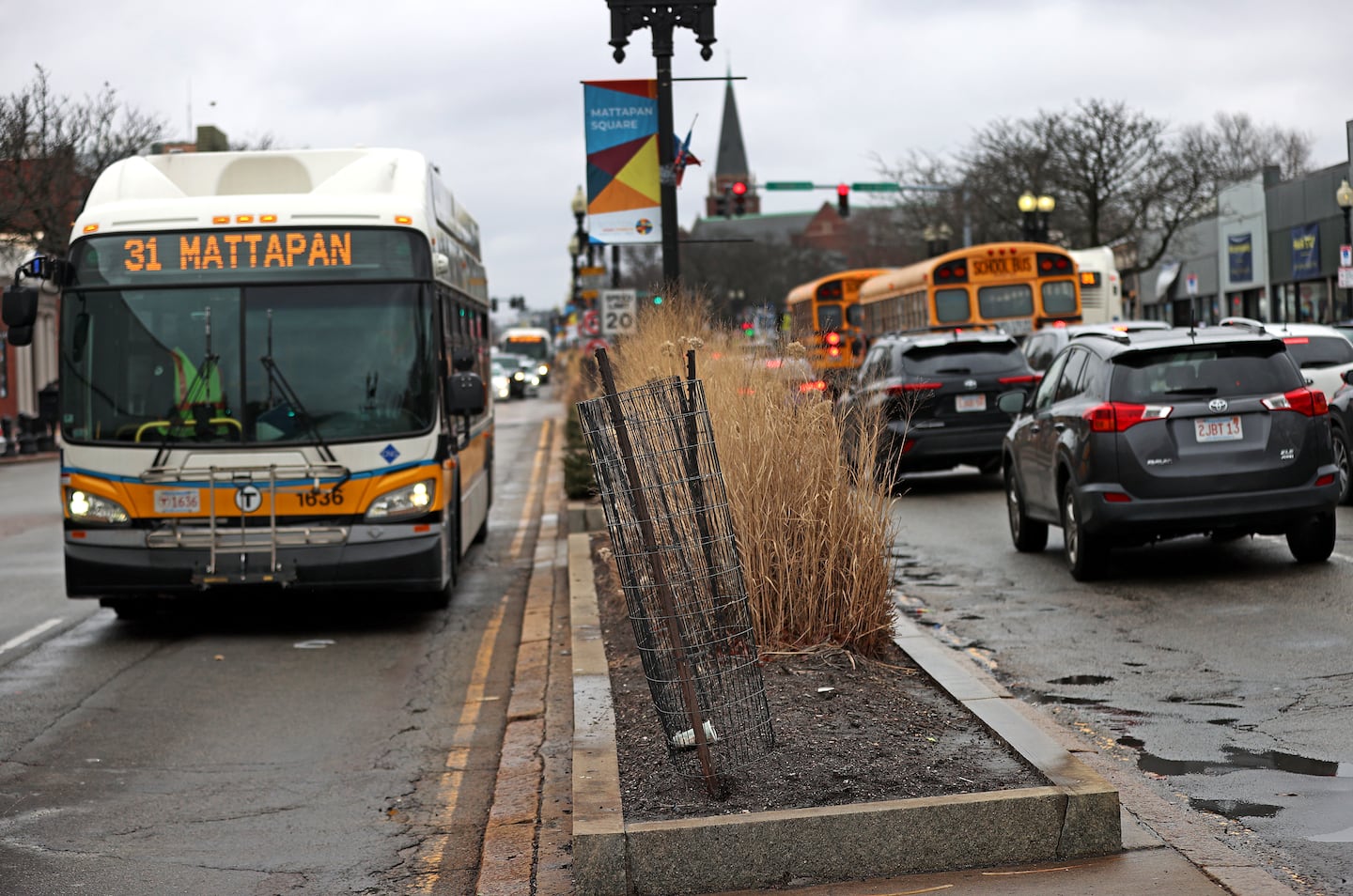
Several services Bostonians use daily are shared with other places. Bluebikes, the bike share, is publicly owned, operates in 13 municipalities and is run by Lyft; 352 of its more than 600 stations are in Boston. The MBTA is led by Phillip Eng, its general manager, who is also the State’s interim transportation secretary.
The research partners are close by. Northeastern University’s Boston Area Research Initiative (BARI) runs civic research and a data portal on the city, and held its 10th annual conference in 2026. Northeastern’s Burnes Center and NuLawLab helped write the city’s guidelines on generative AI.
Watchdogs have formal seats. The ACLU of Massachusetts, a civil-liberties group, sits by ordinance on the board that advises on the city’s surveillance technology. Transit and street groups such as TransitMatters, LivableStreets Alliance and Transportation for Massachusetts have criticised the pause in the city’s street projects. Fight for the Future, a national digital-rights campaign, follows the police plate-reader trials.
Private money is counted State-wide. Massachusetts start-ups raised $16.7bn of venture capital in 2025, 12% more than in 2024, while local venture firms raised only $3.1bn, their lowest since at least 2015. MassChallenge, an accelerator founded in 2009 and based at Fan Pier on the waterfront, says it has supported more than 5,000 start-ups. The companies most visible in the city’s own projects are Google for traffic signals, SoundThinking for gunshot sensors, and Motorola Solutions and Axon for plate readers.
Rules written at City Hall, money decided elsewhere
Michelle Wu, a Democrat, has been mayor since 2021. She won a second term in November 2025 with 93.23% of the vote, after her challenger, Josh Kraft, withdrew following the preliminary round. In January 2026 the 13-member City Council, which passes the city’s ordinances and budget, elected Liz Breadon its president by 7 votes to 6.
Boston steers its climate work through the Climate Action Plan, which carries the 2030 and 2050 goals, and Climate Ready Boston for the coast and heat; there is no separate smart-city plan. For its own staff it has written rules on generative AI: guidelines in May 2023, a full policy in January 2025 and version 2.1 in March 2026. Staff must be trained before they get access to the city’s AI tools. We found no published evaluation of how they are used.
Many decisive levers sit at the State House, the seat of the Massachusetts government. In July 2026 the State gave the MBTA $530m from its Fair Share surtax, an extra tax on incomes above $1 million. Average weekday ridership had risen by over 21% in two years, to 945,332 in May 2026.
Cities may not use speed cameras without a State law. In late July the State Senate added a limited authorisation to an economic development bill, which then went to a conference of the two chambers. In January the Senate had rejected, by 33 votes to 5, an amendment mirroring Wu’s plan to shift more of the property tax onto commercial property.
Washington has taken money back. In September 2025 the federal transport department withdrew a $20m grant for safety, transit and tree-planting on three Roxbury corridors. Its letter said the project’s small investment in electric-vehicle charging did not fit its priorities, and the city sued on 28 September 2026. Broadband money still flows through the State. In February 2026 the federal telecoms agency, NTIA, approved $18.8m under BEAD, the national broadband scheme, for 2,565 unserved or underserved homes and businesses in 251 communities.
Surveillance is where Boston’s rules are tested hardest. In 2020 the City Council, with Wu among the sponsors, unanimously banned city use of face surveillance. In 2021 it required a published policy and a yearly report for each kind of surveillance technology the city uses. There are now 26 such policies, 19 of them for the police.
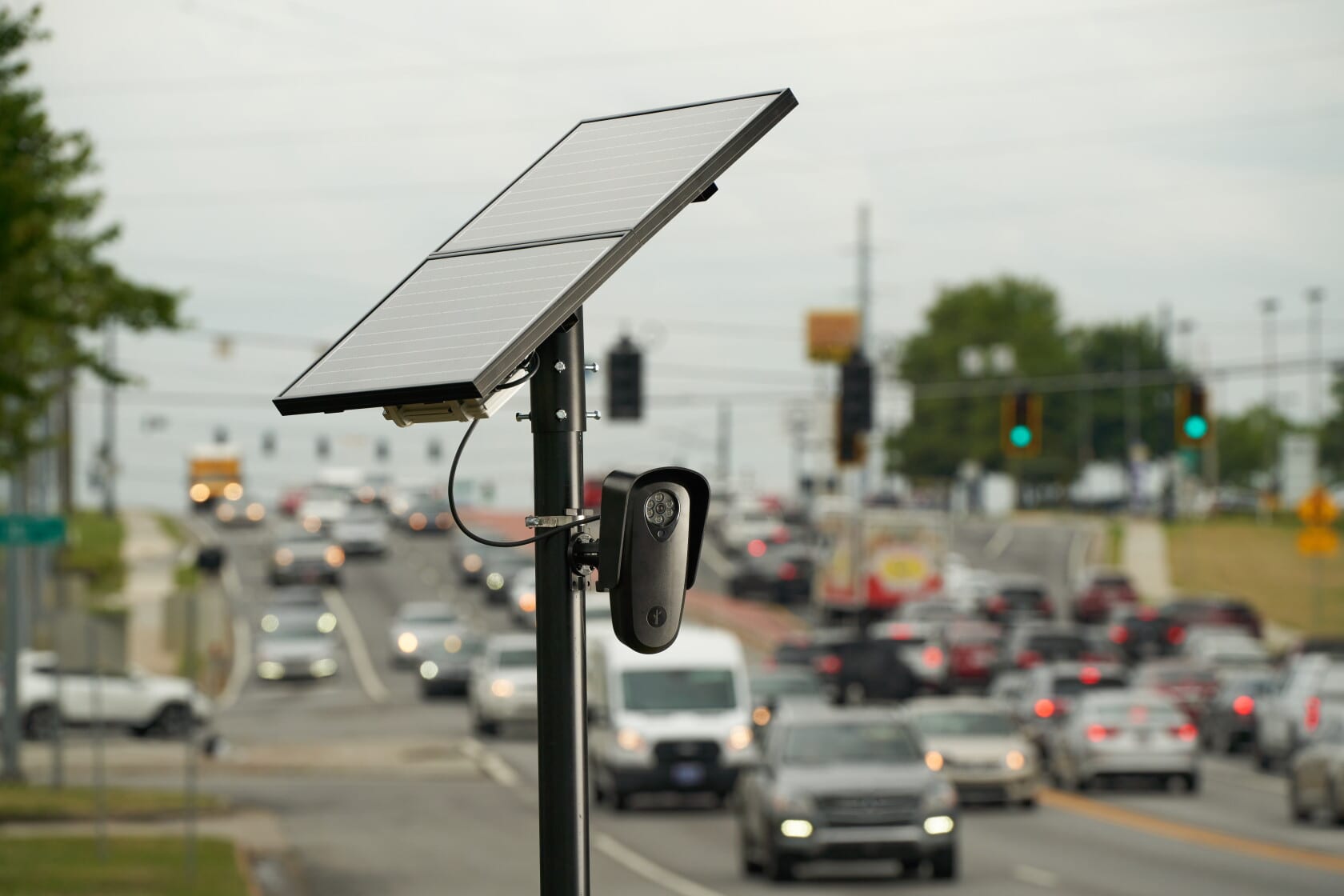
The police trial of Flock plate-reading cameras in 2025 tested those rules. Data sharing was switched off in the contract, yet within three days officers found that outside agencies could search Boston’s plates through a nationwide lookup the vendor had enabled in error. The city dropped Flock and began trials with Motorola Solutions and, from about June 2026, Axon. Critics say those trials skipped the council approval the 2021 ordinance requires.
We bypassed the public process our communities deserve and then handed their data to a private company that failed to keep it secure.Nick Collins, a Massachusetts state senator, defended the pilots, which “are made to test and get the kinks out of a new practice”. His condition: “there’s got to be a balance to ensure people’s rights are protected”. On speed cameras the next decision is the State’s. Governor Maura Healey, a Democrat who proposed them in two budgets, faces the Republican Mike Minogue in November 2026.
- Jun 2020[source]
Face surveillance banned
The City Council votes unanimously to bar city use of face surveillance.
- Feb 2021[source]
Electricity in bulk
Boston Community Choice Electricity starts supplying residents who do not opt out.
- Mar 2022[source]
Three free bus routes
Routes 23 and 29 join Route 28, fare-free since 2021, paid for by the city.
- May 2023[source]
AI guidelines
First guidelines for city staff on generative AI.
- Apr 2025[source]
Plate-reader trial
The police begin a five-month trial of Flock cameras.
- Sept 2025[source]
Street grant withdrawn
The federal transport department pulls $20m for three Roxbury corridors.
- Aug 2026[source]
New streets chief; building limits
An interim chief of streets takes over; reports against BERDO’s first emissions standard fall due.
- Dec 2026[source]
Free-bus money ends
The current extension of the fare-free routes runs out.
- 2030[source]
Halve emissions
Goal: citywide emissions 50% below 2005.
- 2050[source]
Net zero
The city’s goal, and the BERDO deadline for large buildings.
From a ban on the city’s own face surveillance to the climate goals, with the dates on which temporary money runs out.
What Boston bought, what it legislated, what it paused
Routes 23, 28 and 29, bus lines through Roxbury, Dorchester and Mattapan, have been free to ride since 2021 and 2022, a service the city buys from the MBTA. By the city’s figures the three routes carried nearly 23,000 fare-free trips each weekday in 2026. After fares were dropped on Route 28 in 2021, its ridership recovered to more than 12,000 a day, over 90% of the pre-pandemic level. Boarding by all doors cut time at stops by about 20%.
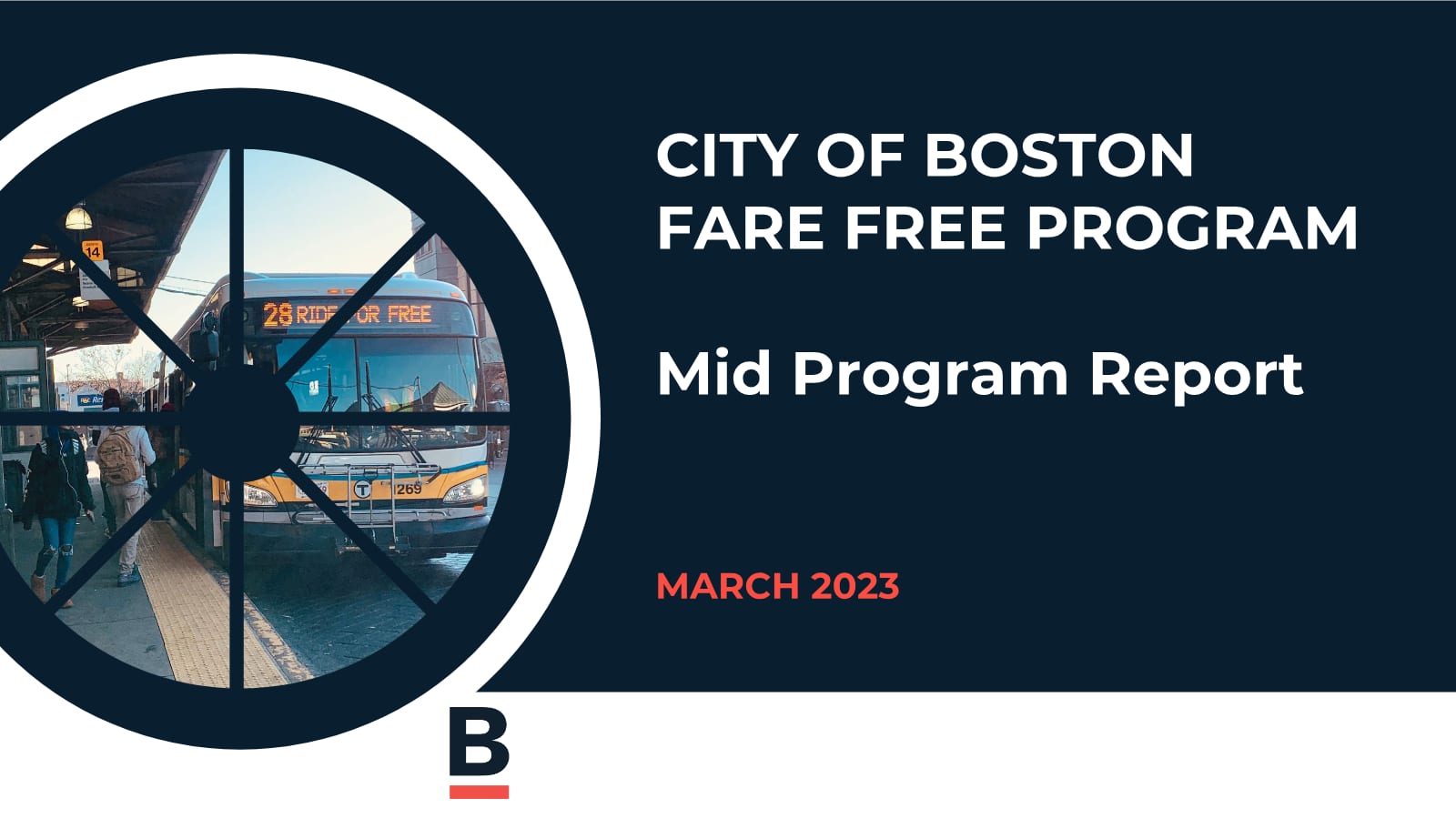
The city’s mid-programme report found 26% of riders saving at least $20 a month; we found no independent evaluation. The $8m that repays the MBTA its lost fares is federal pandemic-recovery money (ARPA), helped by savings from the MBTA’s low-income fares, and runs to December 2026.
Fare-free buses are delivering results for residents — saving commuters money, easing traffic, and growing our economy by connecting Bostonians to work, fun, and family.BERDO, the Building Emissions Reduction and Disclosure Ordinance, sets falling emissions limits for about 5,500 large buildings, down to net zero in 2050. For the 2024 data year, 67% of the buildings covered, with 76% of the floor area, reported their emissions. As one route to compliance, owners over their limit may pay $234 a tonne into a fund for low-income and minority neighbourhoods the State designates. Reports against the first limits were due on 15 August 2026, three months late; we found no published results by mid-October.
Boston Community Choice Electricity buys power in bulk for more than 200,000 households and businesses, enrolled unless they opt out. Against the standard rate of Eversource, the private utility that runs the local grid, the city puts the average saving at $150 a year from February 2021 to December 2025, over $250m in all.
Project Green Light is a Google Research partnership with the Traffic Management Center: Google proposes signal timings from Maps driving data, and city engineers review them. By May 2025 signals at 114 congested intersections in 20 neighbourhoods had been adjusted, and the city reported 13.5% less delay there and about a fifth fewer unnecessary stops.
Riders on Bluebikes made 2.6 million trips in Boston in 2025, and in East Boston summer trips rose from 16,700 in 2019 to 61,700 in 2025 as the number of stations doubled. An expansion of 100 Boston stations, about 40% more, had 79 in place by June 2026.
BOS:311 is changing systems behind its own schedule. The move to a new back end began in October 2025 and was meant to finish by mid-2026, yet in mid-October 2026 the old public dataset was still receiving cases.
Street Bump, a 2011–14 app from New Urban Mechanics, logged bumps from drivers’ phones. It found sunken manhole covers 4 times as often as potholes, and the city fixed 1,250 of the worst with the utility companies; the app is no longer active.
The street programme is the lever the city holds itself. Early in 2025 Wu ordered a 30-day review of all street changes, and a bus lane on Boylston Street was removed. Officials then told Streets staff to stop most design and construction work until her office approved it. In March 2026, 11 current and former Streets staff told the Boston Globe that dozens of projects were waiting.
TransitMatters, a transit advocacy group, pointed to two square redesigns whose federal pandemic money expires at the end of 2026; Wu said they “will get done”.
It feels like transportation is no longer a priority of the city.In July 2026 Louisa Gag, a city employee who worked on bike-share and road-safety policy, was killed by a truck while cycling on Tremont Street. Wu then brought in the interim chief and an advisory group of advocates and former officials. At the end of July one advocate, Ben Siegel, was still asking her to restart more than a dozen stalled projects.
Two of Boston’s levers come with numbers residents can check: the free buses it buys from the MBTA and the power it buys in bulk, both resting on contracts or temporary money. Its own tools have counts too, from shorter delays at retimed signals to Street Bump’s repaired manhole covers. The emissions law has so far produced filings, not published results. The streets, which the city holds outright, were paused; since July they have an interim chief and an advisory group, but we found no restart date.
References
Statistics1Click on any number to see the source
Population & migration
From the Hub’s libraries8
- Boston's Carbon Emissions — 2005–2023 community and municipal GHG inventory (City of Boston) — Knowledge
- Boston's streets projects have stalled under Wu, long a transit champion (Boston Globe, 15 Mar 2026) — Knowledge
- City of Boston Generative Artificial Intelligence (Gen AI) Policy — Knowledge
- $530M from state millionaire tax will go to Boston-area transit agency (Smart Cities Dive, 24 July 2026) — Knowledge
- Boston dropped Flock, but it's not giving up license plate readers (MassLive via Governing, 22 Sept 2026) — Knowledge
- 2025 City of Boston Annual Surveillance Reports — Knowledge
- Free MBTA bus routes extended through end of year, Wu announces (Boston.com, 9 June 2026) — Knowledge
- BERDO Review Board Meeting Presentation, 25 August 2025 (City of Boston) — Knowledge
Further sources13
- Vintage 2025 population estimates, Massachusetts places — US Census Bureau · 2026
- American Community Survey 2024, means of transportation to work, Boston city — US Census Bureau (via Census Reporter) · 2025
- Smart City Index 2026 — Boston — IMD World Competitiveness Center · 2026
- 311 service requests — City of Boston (Analyze Boston)
- Mayor Wu announces Shin-pei Tsay as Chief Information Officer — City of Boston · 13 Aug 2026
- Massachusetts venture capital in 2025 — Boston Globe · 15 Jan 2026
- MBTA Board of Directors — MBTA
- Senate agrees to limited use of cameras to enforce speed limits — GBH News · 27 Jul 2026
- Boston’s use of surveillance technology — City of Boston · 2026
- Boston bans facial recognition — WBUR · 23 Jun 2020
- Boston Community Choice Electricity — City of Boston
- Cyclist’s death puts pressure on Wu’s streets cabinet — WBUR · 31 Jul 2026
- Bluebikes expansion open house — City of Boston · Jun 2026
Written