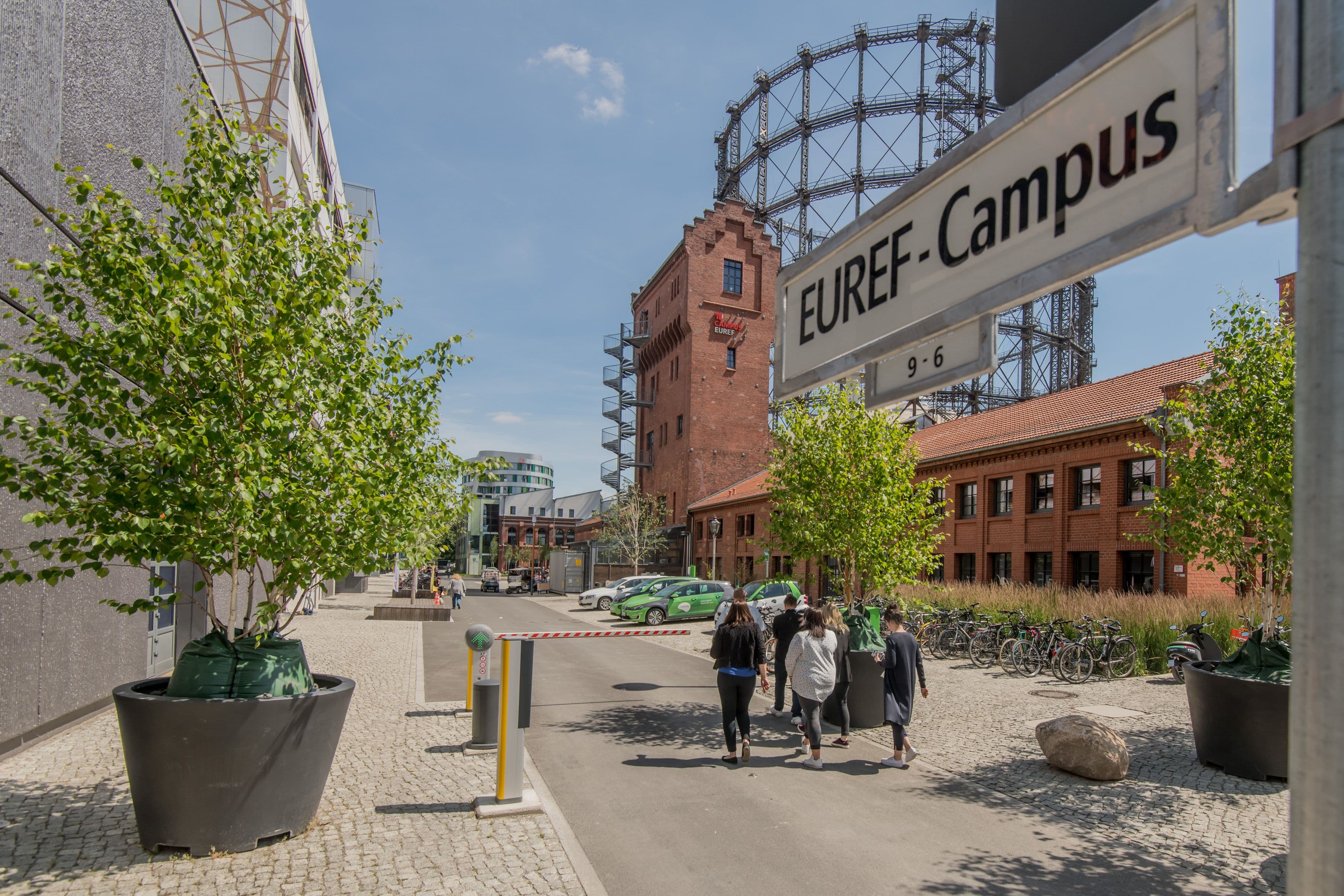
EUREF AG is the development company behind EUREF-Campus in Berlin-Schöneberg, a 5.5-hectare smart city district that has been meeting Germany's 2045 CO₂ climate targets since 2014. Since 2007, EUREF AG has transformed a former gasworks site around a historic gas holder into an intelligent urban quarter for work, research, education, and living — widely recognised as one of Europe's leading real-world laboratories for the energy transition.
The campus hosts more than 150 companies and research facilities employing approximately 7,000 people, spanning sectors from energy and mobility to sustainability and digital infrastructure. Major tenants include Cisco, Schneider Electric, Deutsche Bahn, and TU Berlin (which offers five postgraduate courses on-site). The campus operates a smart microgrid powered by renewable energy, saving approximately 2,000 tonnes of CO₂ annually.
For the smart city domain, EUREF-Campus is a reference model for integrated district-level urban innovation. It combines energy-efficient building technologies, a local micro-smart grid, electric mobility infrastructure (including autonomous driving test operations), and cross-sector collaboration between corporates, startups, and academia. The Mobility2Grid research campus, funded by the German Federal Ministry of Education and Research, uses the site to develop and test energy-mobility coupling, smart grid integration, and bidirectional EV charging.
The EUREF model has been commercially successful and is being replicated in Düsseldorf and Essen. EUREF AG received the Global Forum on Human Settlements 'Best Practice of Global Urban Renewal' award in 2013. The campus also serves as a major conference and event venue for smart city and energy transition events.