
Overview of the Dutch Sovereign Cloud Initiative
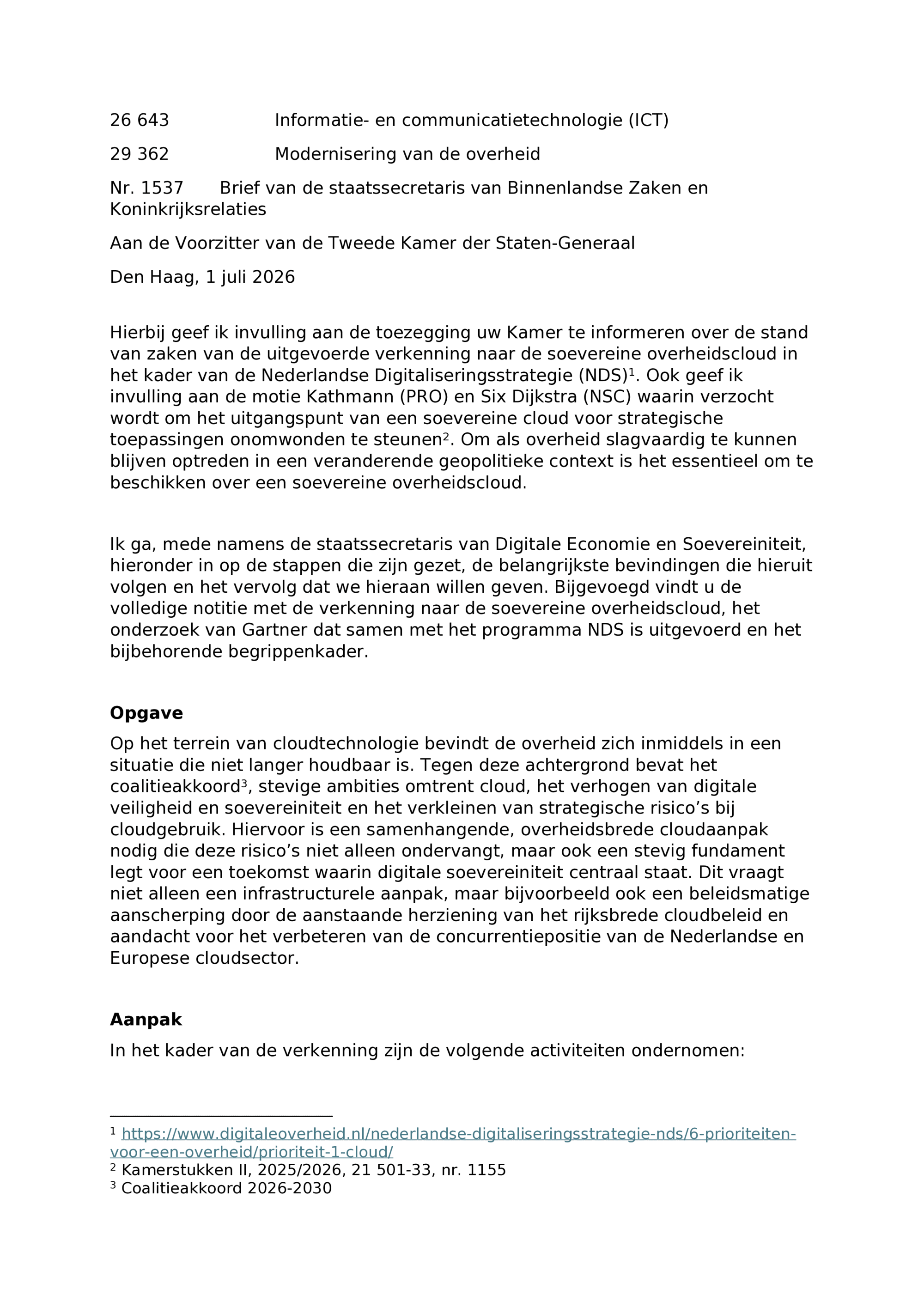
The document is a Kamerbrief (official parliamentary letter) titled “Kamerbrief stand van zaken verkenning soevereine overheidscloud.” It presents the Dutch government’s current assessment of a sovereign cloud platform intended to replace reliance on foreign, primarily U.S., cloud service providers. The initiative is driven by concerns over data sovereignty, security, and long‑term sustainability of public digital infrastructure.
Government Policy Context
The briefing originates from the Dutch Ministry of the Interior and Kingdom Relations, reflecting the cabinet’s policy direction to develop an open‑source, nationally controlled cloud environment. The policy is positioned within broader national strategies on digital autonomy and aligns with European Union goals for resilient, secure, and environmentally responsible public services.
Technical Scope and Objectives
Key objectives include establishing a cloud infrastructure that meets public sector requirements for data protection, interoperability, and scalability. The plan emphasizes open‑source software to avoid vendor lock‑in, reduce licensing costs, and facilitate transparent security audits. The cloud is expected to support a wide range of governmental applications, from citizen services to internal administrative tools.
Financial and Resource Allocation
While the document does not disclose detailed budgeting, it references a structured rollout with phased investments. The emphasis on open‑source solutions is projected to lower long‑term operational expenses and enable cost‑effective maintenance through community contributions and shared European resources.
Sustainability Implications
The sovereign cloud strategy contributes to sustainable digital governance by promoting energy‑efficient data centres, leveraging renewable energy sources, and optimizing resource utilization through virtualization. By reducing dependence on large multinational data‑centre operators, the Dutch government aims to lower the carbon footprint associated with data transmission and storage.
Current Status and Milestones
The briefing indicates that the project is in an exploratory phase, with assessments of technical feasibility, legal frameworks, and stakeholder engagement completed. A public report summarizing findings has been released, and the next steps involve pilot implementations and detailed procurement processes.
European Collaboration Prospects
The initiative is presented as a potential model for other EU member states seeking digital sovereignty. By sharing best practices and possibly co‑developing components, the Netherlands aims to foster a pan‑European ecosystem of sustainable, secure cloud services that align with EU digital strategy and climate commitments.
Access and Documentation
The full document is available through the official Dutch governmental publication portal, providing comprehensive details on methodology, risk assessments, and implementation timelines for interested policymakers, researchers, and technology partners.