Overview of the Resource
The resource “Green Social Housing: Lessons from Vienna” is hosted on the Climate and Community website, a platform that publishes research and case studies on climate‑friendly urban development. The page aggregates several articles and reports that examine Vienna’s approach to integrating sustainability, affordability, and community well‑being into its social housing program. Authors linked to the content are researchers and practitioners associated with Climate and Community, including contributions from Gianpaolo Baiocchi, a recognized expert on sustainable housing policy.
Vienna’s Sustainable Housing Model
Vienna’s social housing system is celebrated for its energy‑efficient building standards, extensive use of renewable energy, and emphasis on green spaces. The city’s long‑standing commitment to high‑quality public housing has resulted in a stock where over 60 % of apartments meet stringent energy‑performance criteria, dramatically reducing per‑household carbon emissions compared to national averages.
Key Design Features
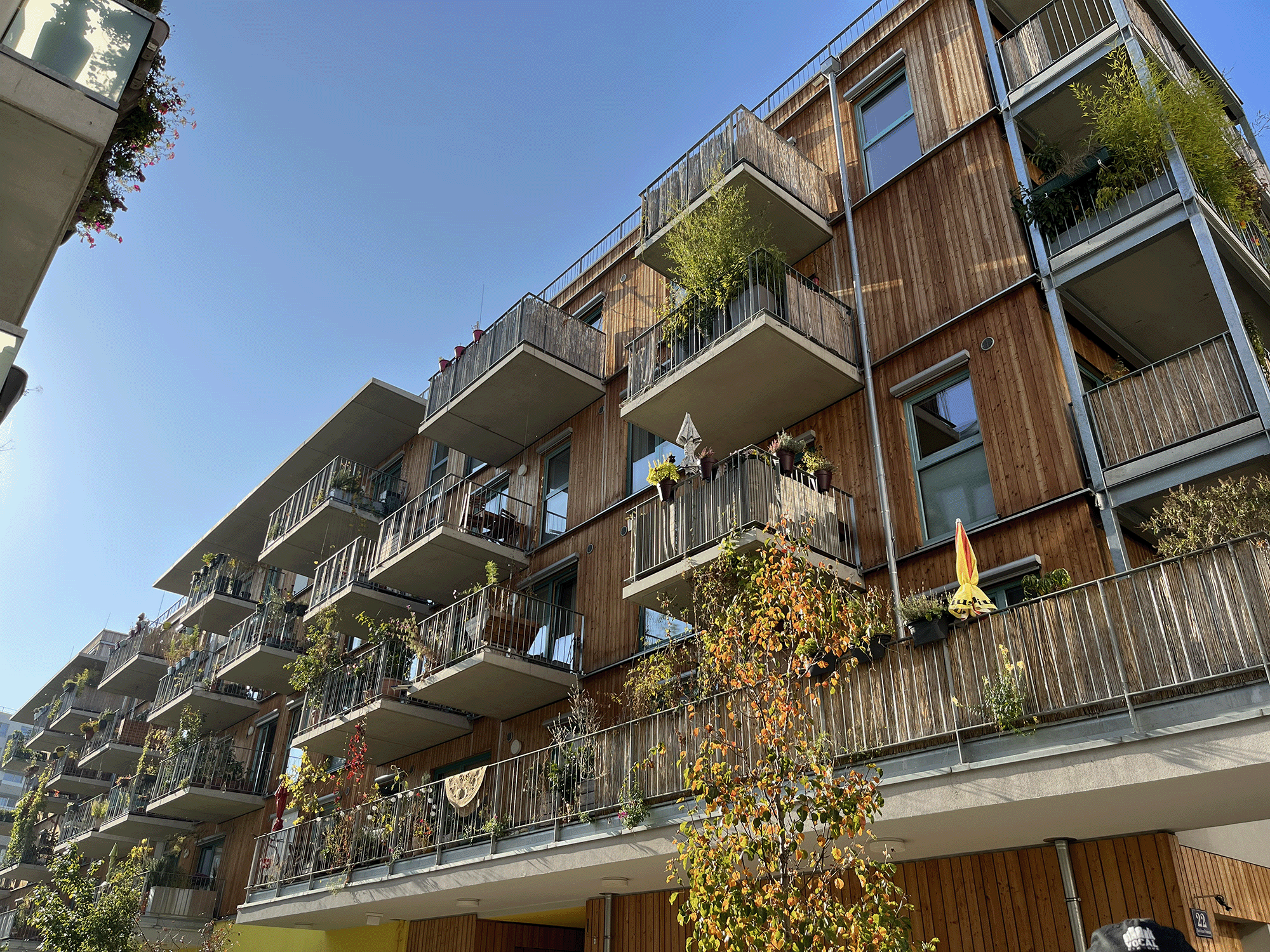
The housing projects highlighted incorporate passive solar design, high‑performance insulation, and district heating networks powered by renewable sources. Roofs and façades often feature photovoltaic panels, while communal courtyards and green roofs provide biodiversity habitats and improve residents’ quality of life. Building materials are sourced locally to minimize embodied carbon.
Economic Efficiency and Affordability
Data from the case studies show that the upfront investment in green retrofits yields long‑term savings for both tenants and the municipality. Energy‑cost reductions of up to 30 % are reported, allowing rent levels to remain affordable. The cost‑benefit analysis presented by Climate and Community indicates that every euro spent on energy‑saving upgrades returns roughly €2.5 in reduced operating expenses over a 20‑year horizon.
Measurable Environmental Impact
Vienna’s social housing contributes significantly to the city’s climate targets. The aggregated data point to a collective reduction of approximately 300 000 tCO₂e per year across the examined portfolio. Water‑saving fixtures and waste‑reduction programs further enhance the environmental performance of the housing units.
Social Benefits and Community Cohesion
Beyond environmental metrics, the research underscores social outcomes such as higher resident satisfaction, lower turnover rates, and stronger community ties. Shared amenities, cooperative management structures, and inclusive design elements foster a sense of ownership among occupants, which is linked to better maintenance and lower vandalism.
Replicability for Pan‑European Context
The summary identifies several transferable lessons for other European cities: (1) integrating green standards into existing social housing stock through phased retrofits; (2) leveraging public‑private partnerships to finance sustainability upgrades; (3) adopting district‑wide energy solutions that align with national renewable energy goals; and (4) embedding community participation in planning and management processes. These strategies align with EU directives on energy efficiency and social inclusion.
Policy Recommendations
The authors recommend that policymakers prioritize funding mechanisms that reward energy‑saving innovations in public housing, establish clear performance benchmarks, and facilitate knowledge‑sharing platforms similar to Climate and Community. They also suggest embedding sustainability criteria into housing allocation policies to ensure that low‑income households benefit from greener living environments.
Sources Cited
The summary draws on five sources listed on the page, including the main “Green Social Housing Lessons From Vienna” overview, specific project case studies, and a broader analysis of housing communities on the Climate and Community site. Additional context is provided by a feature article from cfpublic.org discussing Vienna as a potential model for addressing the housing crisis and climate change across Europe.