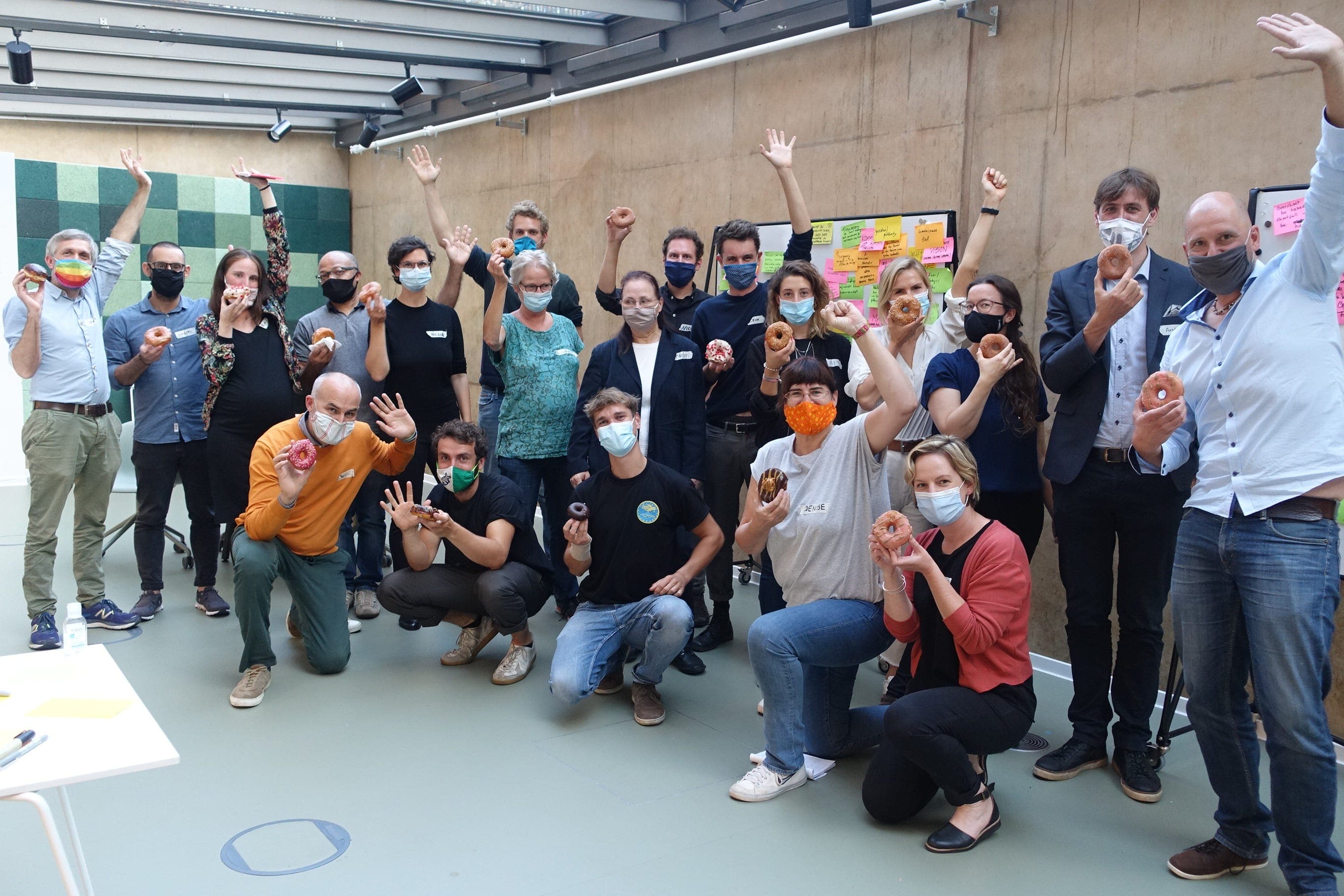
Overview of the Doughnut Economics Resource
Doughnut Economics for Cities is a toolkit created by Kate Raworth and the Doughnut Economics Action Lab (DEAL). It translates the global Doughnut Economics framework—balancing human wellbeing within planetary limits—into practical guidance for city‑level planning. The resource offers methodologies, assessment tools, and facilitation guides to help urban policymakers, planners, and community groups design sustainable, equitable urban environments.
The Doughnut Framework Explained
The model visualises a “safe and just space” as a ring between two boundaries. The inner ring, the social foundation, lists essential life‑safety standards such as food, water, health, education, housing, income, political voice, gender equality and social networks. The outer ring, the ecological ceiling, enumerates planetary boundaries like climate change, ocean acidification, biodiversity loss, land‑use change, freshwater consumption, chemical pollution and air quality. The area between them—the doughnut—represents thriving economies that meet human needs without degrading Earth’s life‑support systems.
Downscaling to City‑Level Analysis
The first public application, the Amsterdam City Doughnut (April 2020), introduced the “City Portrait” approach. This four‑lens assessment examines:
- Local‑Social: resident wellbeing and basic needs fulfillment.
- Local‑Ecological: the city’s impact on its immediate environment.
- Global‑Social: effects of the city’s supply chains on people elsewhere.
- Global‑Ecological: the city’s contribution to worldwide environmental pressures. This holistic view moves beyond traditional metrics that focus only on local environmental indicators, encouraging cities to consider broader social and ecological responsibilities.
Practical Tools and Methodologies Provided
The resource equips practitioners with:
- A structured City Portrait methodology and updated Doughnut Data Portraits guidance.
- Workshop facilitation guides for participatory sessions with residents, businesses and officials.
- Assessment frameworks to evaluate policies, projects and investments against Doughnut criteria.
- Access to a community of practice linking cities and organisations implementing the Doughnut worldwide. These tools are designed to be adaptable across diverse urban contexts, supporting evidence‑based decision‑making.
Adoption Across Europe and Impact Highlights
Since Amsterdam’s pioneering use, the framework has been adopted by numerous European cities, including Brussels, Berlin and Barcelona, as well as many smaller municipalities. It has shaped urban strategy documents, community development plans and housing policies. Key impact areas include:
- Housing affordability: promoting access to adequate, sustainable dwellings for all residents.
- Climate action: aligning development with planetary boundaries to reduce emissions and resilience risks.
- Social equity: addressing disparities in services, opportunities and political participation.
- Circular economy: redesigning material flows to eliminate waste and regenerate natural systems. These adoptions demonstrate the resource’s relevance for pan‑European audiences seeking scalable solutions to sustainable housing challenges.
Key Data and Facts
- Resource URL: https://doughnuteconomics.org/tools-and-stories/11
- Database submission recorded on April 29 2026 (time omitted per instructions).
- The resource is publicly available and not tied to a separate website submission.
- It combines academic insight from Raworth and practical expertise from DEAL, Biomimicry 3.8, Circle Economy and C40. By providing a clear, data‑driven framework and actionable tools, Doughnut Economics for Cities offers European cities a concrete pathway to create housing that is both socially inclusive and environmentally sustainable.