A refinery closed and emissions fell; the rest is harder
Philadelphia had 1.57 million residents in July 2025, slightly fewer than at the 2020 census. For a European reader, two things set the scene: the city and county are one, and much of what moves people and money, from transit funding to big infrastructure grants, is decided in Harrisburg, the State capital, or in Washington.
The commute still runs on cars. In 2024, 54.3% of working residents went to work by car, 29.0% walked, cycled or took public transport, and 14.4% worked from home. The city had led big US cities for cycling to work since 2008; in 2024 New York overtook it.
Usual journey to work of workers aged 16 and over living in Philadelphia, American Community Survey 2024 (one-year estimates). Commuting is only part of all travel; no city-wide survey of all trips was found. Source: US Census Bureau, American Community Survey 2024, table B08301 (via Census Reporter)
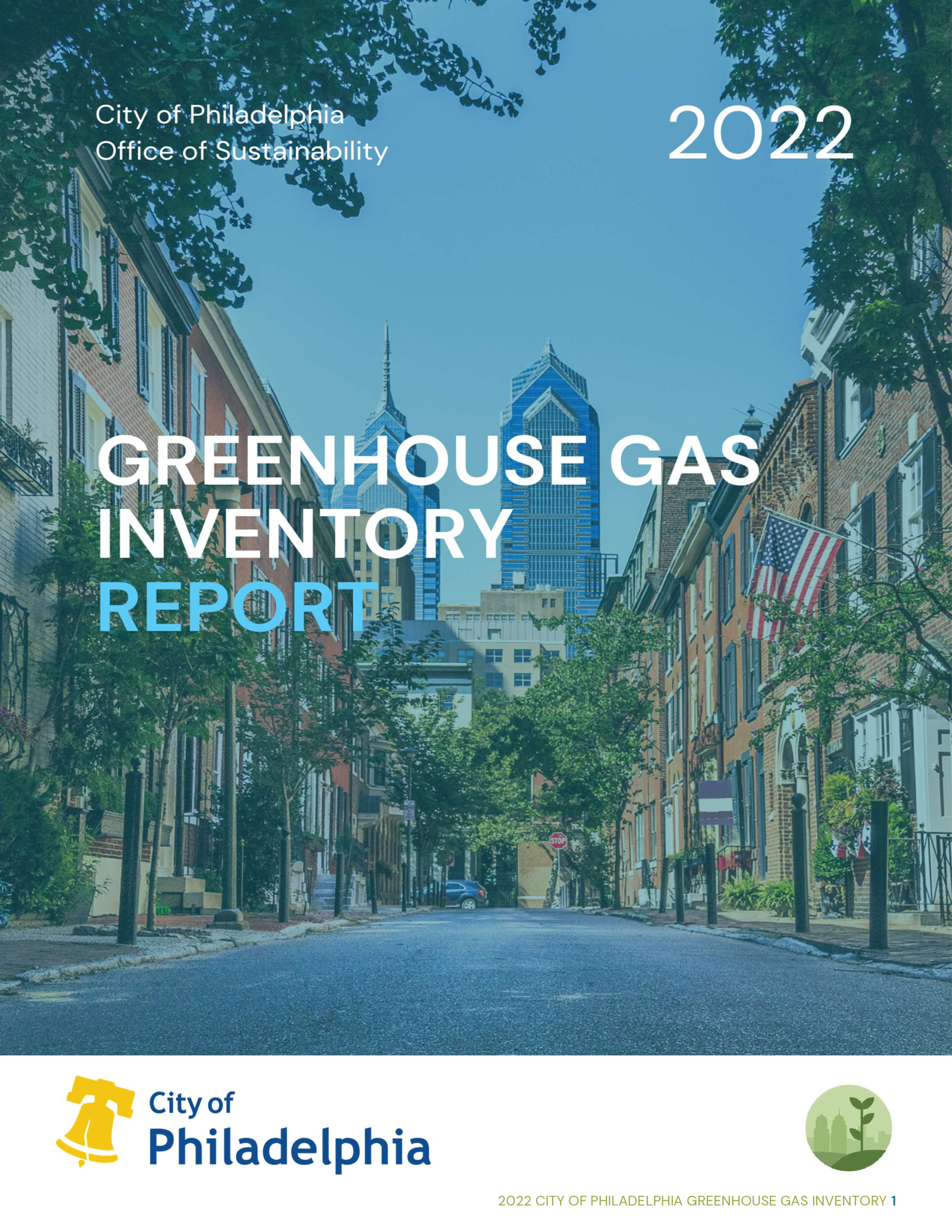
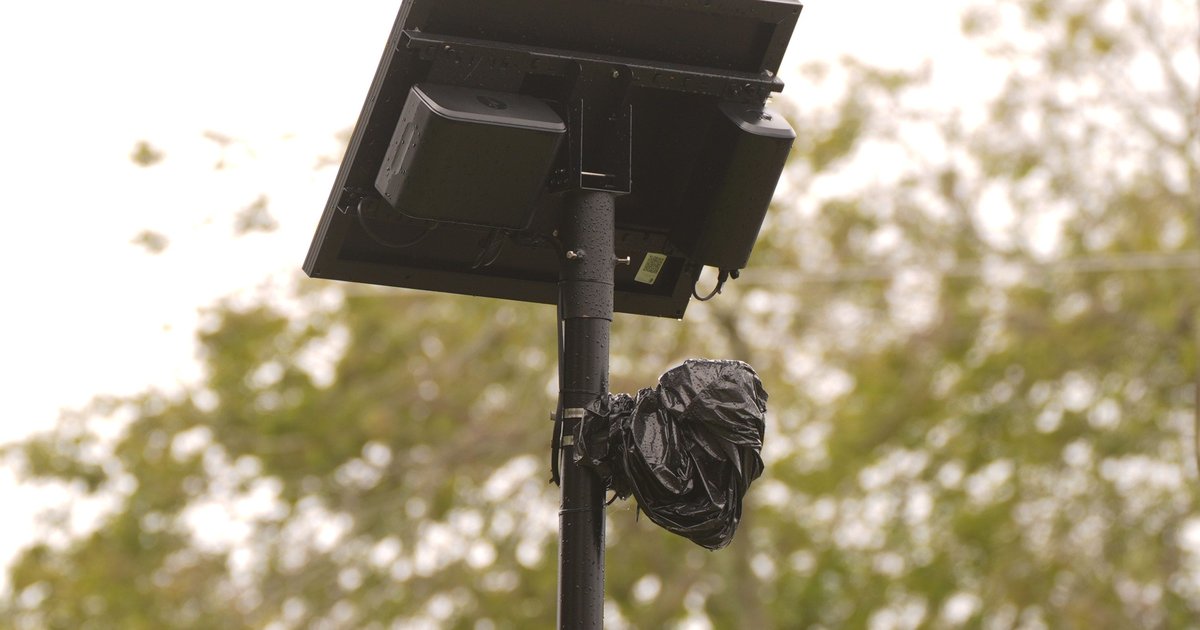
Emissions within the city, plus those from the electricity used there, fell 31% between 2006 and 2022, to 12.9 million tonnes. Much of that was not city policy: the city’s own inventory names the 2019 closure of the Philadelphia Energy Solutions refinery, which emitted over 3.2 million tonnes in 2018, and a smaller coal share in grid power. The goal is carbon neutrality by 2050.
% of the 2006 level
Show the numbers
| Citywide emissions | Path to 2050 | |
|---|---|---|
| 2006 | 100 | — |
| 2022 | 69 | 69 |
| 2050 | — | 0 |
Citywide emissions within the city plus purchased electricity (scopes 1 and 2), from the city’s 2022 inventory: 18.6 Mt in 2006, 12.9 Mt in 2022. The inventory names the 2019 closure of an oil refinery and a smaller coal share in grid power among the main causes. The target line runs straight from 2022 to the city’s goal of carbon neutrality in 2050. Source: City of Philadelphia, 2022 Greenhouse Gas Inventory
Buildings make most of the rest. Almost three-quarters of large buildings reported their energy use in 2024, the highest share yet, but only 38% of those due had carried out the tune-ups the city’s building energy programme requires, at its 2024 update.
Housing and safety are what residents name first: in IMD’s 2026 survey 70.4% put affordable housing among the city’s most urgent needs and 60.0% security. Mayor Cherelle Parker’s housing plan promises 30,000 homes built or preserved; by September 2026 the city counted more than 16,000, most of them repairs to existing homes. Water is the oldest engineering problem: the older districts have combined sewers that overflow into the rivers when it rains, the reason for the city’s 25-year green stormwater plan.
Philly311 beats one of its targets and misses another: in December 2025, 70–83% of calls were answered within 30 seconds, against a goal of half, but the average wait was three and a half to four and a half minutes, against a goal of 30 seconds. A 2020 programme, PHLConnectED, connected more than 22,500 school households to the internet, and by summer 2021, 91% of households with schoolchildren had home broadband.
The levers sit in Harrisburg; the data portal runs on volunteers
A Philadelphia department can run only what the city controls. The list shows where the other levers sit.
- Transit: SEPTA is a regional authority that depends on the State; in 2025 it survived a fiscal crisis only after the governor let it spend $394m of capital money on operations for two years.
- Cameras on streets: speed cameras exist because a State law allows them, corridor by corridor; the Philadelphia Parking Authority runs them.
- Surveillance: the Council President calls rules on licence-plate readers a State matter for now, so in September 2026 City Council asked Harrisburg to regulate or ban them.
- Water: the city owns its water department, but its stormwater plan is enforced by a consent order with the State’s environment department.
- Broadband and Wi-Fi: the city’s cable franchise with Verizon obliges it to install free Wi-Fi at more than 108 city sites, 51 of them done by April 2025; with other sites, 105 were live.
- Big infrastructure and digital-equity money: mostly Washington, which in 2025 cancelled the city’s $11.9m digital-equity grant and rescinded funds for the Chinatown Stitch, a plan to cover the expressway that divides Chinatown.
Inside City Hall, digital work sits in the Office of Innovation and Technology, led since April 2024 by Melissa Scott, a city technologist since 2015, with a Chief Data Officer on its executive team. The 2019 smart-city roadmap has moved to the Managing Director’s Office, where it is filed as archived.
The catalogue where most of the city’s open data is listed is not the city’s. OpenDataPhilly, built by a local software firm in 2010, has been run by volunteers since December 2023, with its remaining costs paid by that firm’s founder; it lists 320 datasets published by the city.
The Philadelphia Energy Authority, a municipal body, runs whole-home repairs with energy upgrades: 427 homes were finished by April 2026, with more than 5,000 households waiting. Ben Franklin Technology Partners, a State-funded investor, approved $6.5m for 28 local companies in 2025. Temple University and the University of Pennsylvania supply many of the city’s evaluations, and the Amistad Law Project, a civil-rights group, testified for the Council’s resolution against plate readers.
An archived roadmap, a grant taken back, a fight over cameras
Cherelle Parker, a Democrat, won the 2023 election and took office in January 2024. City Council has 17 members, ten elected by district and seven at large, and its two minority seats are held by the Working Families Party. Parker frames her technology aims as a “smart, interconnected government” that delivers services better. Pennsylvania’s governor, Josh Shapiro, faces re-election in November 2026, and the divided State legislature failed to agree long-term transit funding in 2025.
The city’s 2019 smart-city roadmap, launched by executive order with a smart-city director and an advisory committee and developed with a $200,000 grant from the Knight Foundation, now sits in the archive; we found no published account of what it achieved. At its launch the city’s chief information officer, Mark Wheeler, said it acknowledged that “digital access and adoption remain significant hurdles”.
That hurdle lost its money in 2025. In January Washington approved $11.9m for the city’s digital-equity programme, with 18 non-profits and universities, for low-cost internet, devices and skills; in May the federal government ended the whole national programme before a contract was signed.
What experience has shown is that this is not a ‘if you build it they will come’ situation.Council held its first hearing on AI in October 2025. The chief information officer and the mayor’s chief legal counsel promised staff guidelines by the spring, but could not say how data would be kept from federal immigration enforcement without a warrant. We could not confirm that the guidelines have been published. “They’re trained to give answers that are pleasing to people, that doesn’t necessarily mean correct answers,” Sorelle Friedler, a Haverford College computer scientist, told the hearing.
If anyone in the world would say that they were an AI expert, they would be lying, because it’s continuously transforming.Plate readers are the live dispute. The police say they run fixed and vehicle-mounted readers but no Flock cameras. Asked whether the city could write its own rules, the Council President called it “a state-related issue at this particular point in time”. In September 2026 Council passed a resolution, unanimously, asking the State to ban or regulate them; both candidates in the November 2026 governor’s race have backed bans.
This technology is widely unregulated, unknown and unencumbered. It’s here, and Harrisburg needs to step up to the plate to control it.Transit money is the argument with the most at stake. SEPTA cut services in August 2025 and a court ordered them restored; the two-year transfer that followed ends in mid-2027, with a $192m deficit and a repair backlog that has doubled in a decade to $10.2bn.
- Jun 2008[source]
Wi-Fi switched off
EarthLink dismantles Wireless Philadelphia.
- 2011[source]
Green City, Clean Waters
A 25-year stormwater plan begins.
- Jun 2020[source]
Speed cameras
Switched on along Roosevelt Boulevard.
- Aug 2023[source]
Zero Fare
Free transit cards for residents in deepest poverty.
- May 2025[source]
Bus-lane tickets
Cameras on buses begin ticketing parked cars.
- Sep 2026[source]
Plate-reader resolution
Council asks Harrisburg to regulate or ban them.
- Nov 2026[source]
Governor’s election
Both candidates have backed plate-reader bans.
- Mid-2027[source]
SEPTA’s bridge ends
The two-year transfer of capital money runs out.
- 2028[source]
School-zone cameras
The State’s pilot expires unless renewed.
- 2036[source]
Stormwater goals
Green City, Clean Waters’ final targets fall due.
- 2050[source]
Carbon neutrality
The city’s climate goal.
From a failed city-wide Wi-Fi to the climate goal.
Cameras by State permission, rain gardens under a State order
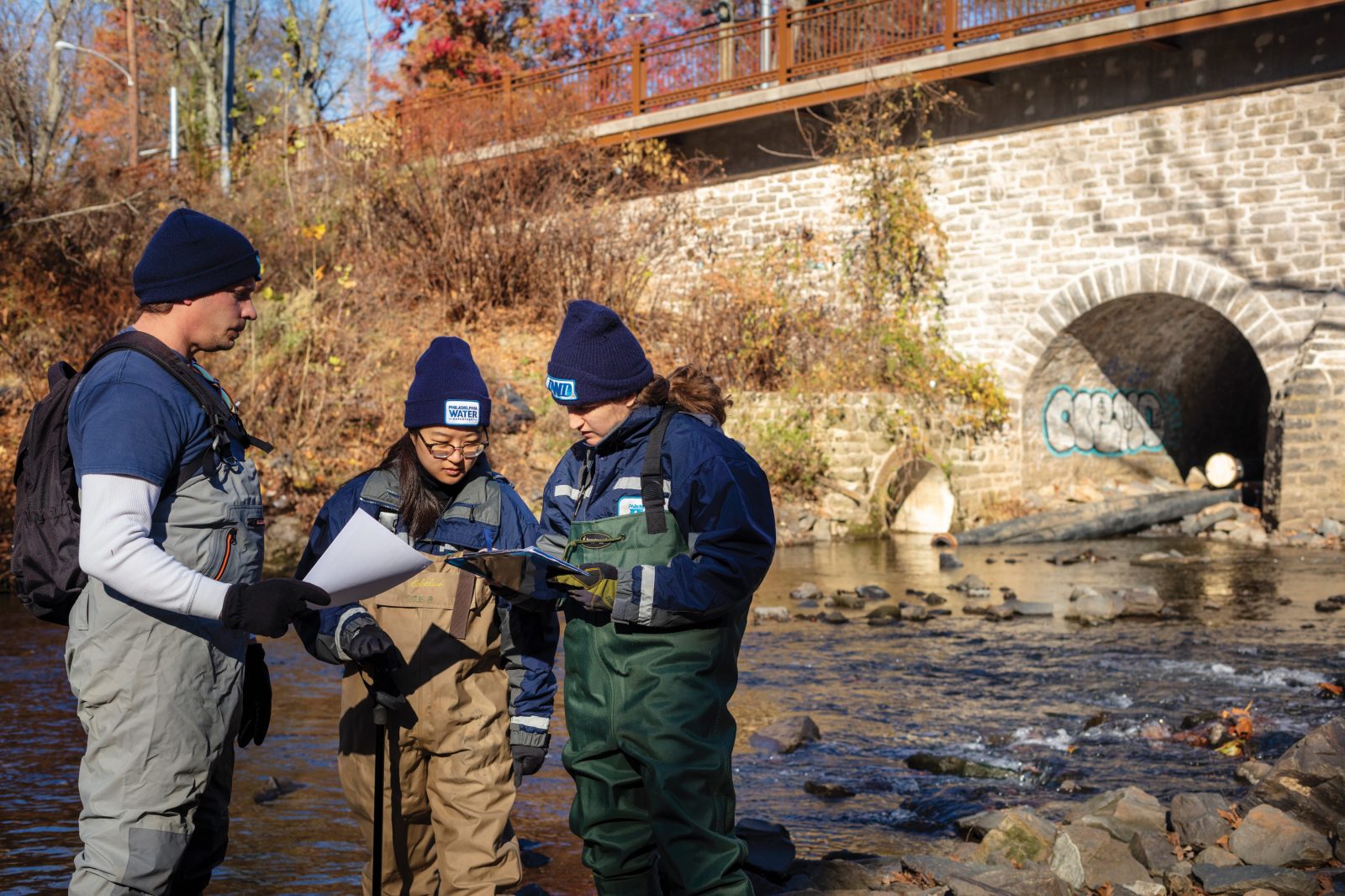
Green City, Clean Waters, the water department’s 25-year plan to cut sewer overflows mostly with green stormwater infrastructure, met its fifteen-year greening standard in 2026: more than 3,860 greened acres against 3,812 required, across over 1,100 projects. Its overflow-volume and sewer-lining targets are late; the department obtained a ten-month extension after finding contaminated soil at one site, and its evaluation goes to the State in August 2027.
Acres of hard surface whose rainwater is managed by green stormwater infrastructure, at the plan’s five-yearly milestones; the fifteen-year standard was 3,812 acres. The plan runs from 2011 to 2036 under a consent order with Pennsylvania’s environment department. Source: Philadelphia Water Department, 15 years of Green City, Clean Waters
Speed cameras on Roosevelt Boulevard, one of the city’s deadliest roads, cut speeding violations by 95% and fatal and serious-injury crashes by 21%, by the city’s figures; a University of Pennsylvania study estimated just under one life saved a month. A State law made them permanent in December 2023 and allowed five more corridors, each needing a city ordinance, and a school-zone pilot to 2028; in January 2025 the mayor signed a bill to extend them to a second corridor, Route 13.
Cameras on SEPTA buses now ticket cars parked in bus lanes, with a parking officer reviewing every capture. Since May 2025 they have run on 152 buses, where speeds rose 3–6%, and from February 2026 on 30 trolleys.
Zero Fare, a city pilot that gave free transit cards to residents in deepest poverty without any application, carried 4.3 million trips in its first year, with 64% of the cards in use. Its federal recovery money ran out in 2025 and the mayor’s budget proposal left it out; Nicolas O’Rourke of the Working Families Party said dropping it “betrays a serious anti-poverty strategy”. It was kept, and the city’s 2027 budget maintains it.
Wireless Philadelphia is the city’s cautionary tale. In 2008 EarthLink switched off the city-wide Wi-Fi it had built for $17m after fewer than 6,000 people subscribed, against an expected 100,000; the city declined to take it over. Today’s free Wi-Fi comes site by site through the cable franchise instead.
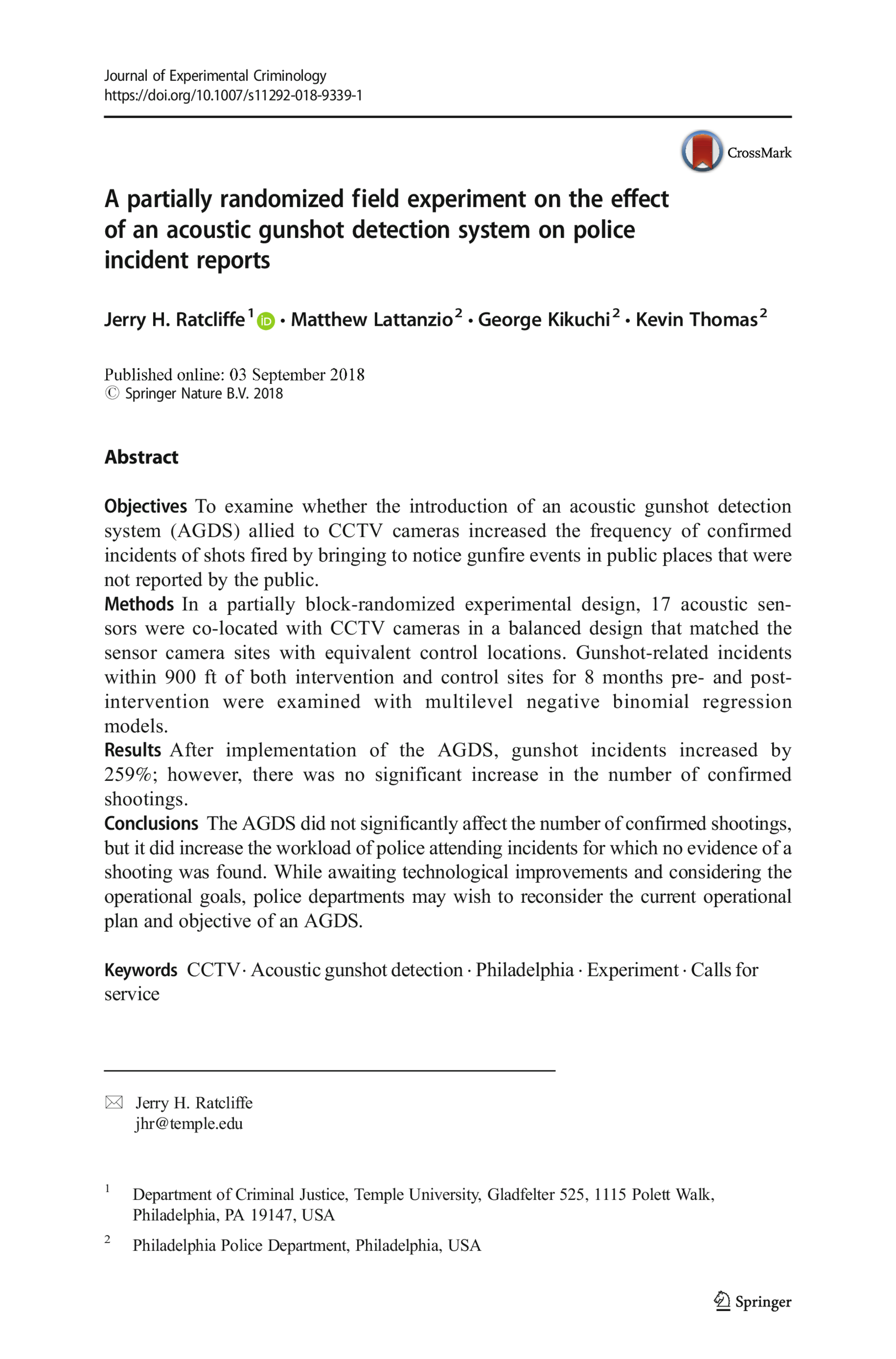
Gunshot detection has been tested here. In a Temple University experiment with the police, published in 2018, acoustic sensors raised gunshot-related incidents by 259% but brought no significant rise in confirmed shootings: more work for officers, no more shootings found. Whether the police use such sensors today we could not confirm.
Philly311 still runs on its old app; the city’s public data logged 518,841 cases in 2025. In August 2025 the technology office asked suppliers for ideas for a new app, with a first version targeted for May 2026, and said duplicate requests are still handled by hand, “a known bottleneck”. We could not confirm that the app has launched. Indego, the city-owned bike share, had a record year in 2025 with more than 1.3 million trips and 36 new stations.
Philadelphia comes 99th of 148 in the IMD Smart City Index, a residents’ survey. Its residents come 26th of 27 European and American cities we compared on whether public safety is not a problem, and only 41.1 out of 100 that reporting a maintenance problem online gets it fixed quickly; yet 71.2% say they are comfortable with face recognition to lower crime.
The results Philadelphia can show sit where a rule made the city count: cameras that sharply cut speeding on Roosevelt Boulevard under a State law, and a stormwater plan whose milestones a State order enforces. It has also done things on its own: it kept Zero Fare when the federal money ran out, and its own bike share had a record year. What failed shared one feature: a network handed to a company’s business model, a roadmap with no one counting its results, a grant that depended on Washington. What the city can change alone is how it measures.
References
Statistics1Click on any number to see the source
Population & migration
Resources in the SCH libraries7
- 2022 City of Philadelphia Greenhouse Gas Inventory — Knowledge
- Millions for public Wi-Fi, digital skills classes in Pa. cut as Trump targets 'racist' broadband program (Spotlight PA via WPSU, June 2025) — Knowledge
- City Council passes resolution calling for regulation or ban on Flock cameras (PhillyVoice, 24 Sept 2026) — Knowledge
- 15 years of Green City, Clean Waters — Knowledge
- Earthlink to End Philadelphia WiFi Network (NPR, 13 May 2008) — Knowledge
- A partially randomized field experiment on the effect of an acoustic gunshot detection system on police incident reports (Ratcliffe et al., Journal of Experimental Criminology) — Knowledge
- City of Philadelphia RFI Question Responses – 311 Mobile Application (Aug 2025) — Knowledge
Further sources10
- 2022 Greenhouse Gas Inventory — City of Philadelphia · Mar 2025
- Philly311 monthly report, December 2025 — City of Philadelphia · Jan 2026
- Mayor Parker’s housing plan progress — WHYY · Sep 2026
- OpenDataPhilly — about — OpenDataPhilly
- Longtime Philadelphia technologist is elevated to CIO — GovTech · Apr 2024
- Council AI hearing — PhillyVoice · Oct 2025
- SEPTA board approves FY27 budgets — Mass Transit · Jun 2026
- SEPTA trolleys to get AI parking cameras — PhillyVoice · Feb 2026
- Zero Fare: first-year results — City of Philadelphia · Oct 2024
- Smart City Index 2026 — IMD World Competitiveness Center · 2026