Overview of the Study
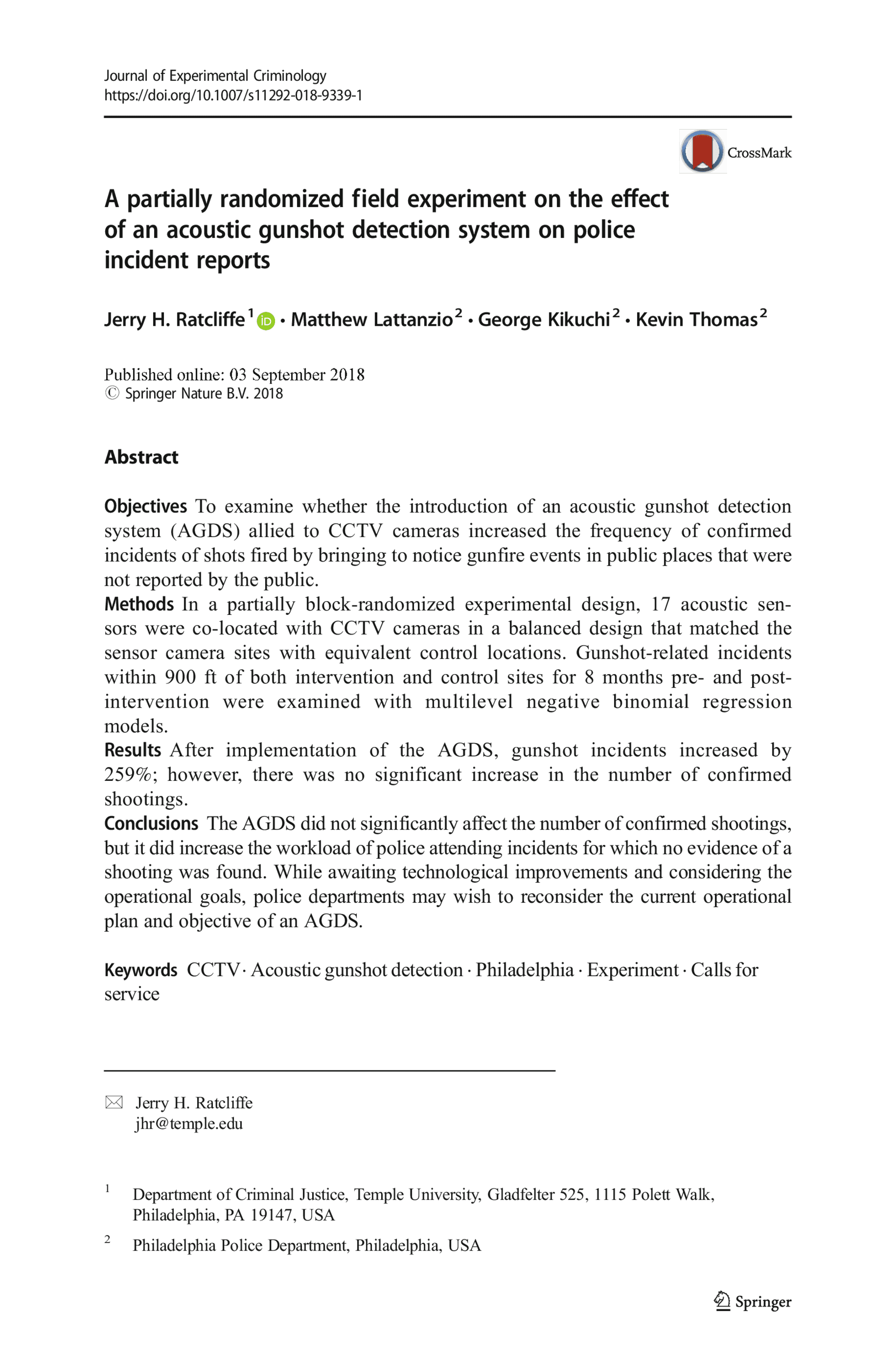
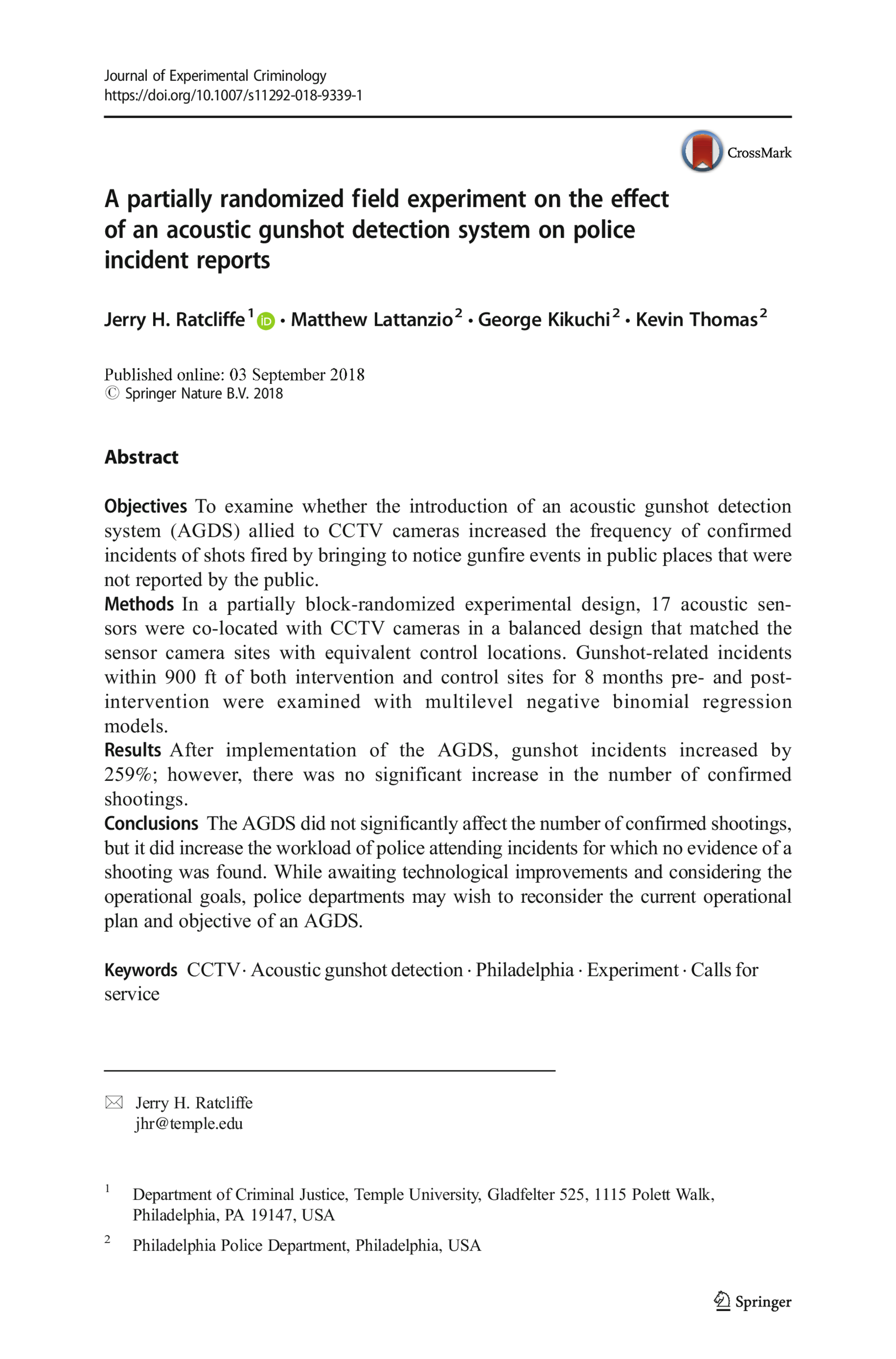
The paper titled “A partially randomized field experiment on the effect of an acoustic gunshot detection system on police incident reports” was authored by Ratcliffe and colleagues and published in the Journal of Experimental Criminology. The research was conducted in collaboration with the Philadelphia Police Department, offering rare randomized evidence on the impact of gunshot detection technology—a commercially marketed surveillance tool.
Research Design and Sample
The investigators employed a partially randomized field experiment, deploying acoustic gunshot detection sensors in selected precincts while keeping other precincts as controls. Over the study period, the system recorded acoustic events that were automatically logged and later cross‑checked with police incident reports. The randomization was limited to the placement of sensors, allowing comparison between areas with and without the technology while controlling for underlying crime trends.
Key Findings on Incident Reporting
The experiment revealed a 259 % increase in reported gunshot incidents in areas equipped with the detection system. This surge was driven primarily by the system’s ability to capture events that would otherwise go unnoticed, rather than an actual rise in gunfire. Importantly, the rise in reports did not correspond to a statistically significant increase in confirmed shootings, indicating many recorded incidents were false positives or non‑violent acoustic events.
Implications for Urban Safety Infrastructure
For European cities seeking to balance safety with sustainable urban development, the study highlights both the potential and the limits of high‑tech surveillance. While acoustic sensors can improve situational awareness, they also generate large volumes of data that require processing, storage, and energy consumption. The lack of a proportional rise in confirmed violent incidents suggests that policymakers must weigh the cost‑benefit ratio of deploying such systems at scale, especially in contexts where environmental sustainability is a priority.
Relevance to Sustainable Housing
Sustainable housing projects across Europe increasingly incorporate smart‑city technologies to enhance resident safety without compromising energy efficiency. The findings suggest that acoustic detection can be integrated into residential districts to provide early alerts, but designers should consider complementary measures—such as community‑based reporting and low‑energy sensor networks—to avoid unnecessary resource use. Embedding the technology within renewable‑powered infrastructure can mitigate its environmental footprint.
Technical and Operational Considerations
The sensors operate continuously, requiring reliable power sources and regular maintenance. Data transmission relies on wireless networks, which may add to the digital infrastructure load. The study’s methodology underscores the importance of rigorous evaluation frameworks to assess false‑positive rates and to calibrate sensor sensitivity, thereby reducing unnecessary police dispatches and associated carbon emissions from patrol vehicles.
Policy Recommendations for European Municipalities
- Pilot Programs: Initiate small‑scale pilots in mixed‑use neighborhoods to collect localized performance data.
- Energy Integration: Pair sensors with solar panels or district heating electricity to align with sustainability targets.
- Data Governance: Establish clear protocols for data storage, access, and anonymisation to protect privacy while enabling evidence‑based adjustments.
- Community Engagement: Involve residents in interpreting sensor data and reporting, fostering trust and reducing reliance on invasive surveillance.
Conclusion
The partially randomized experiment provides robust evidence that acoustic gunshot detection systems markedly increase reported gunshot incidents without a corresponding rise in verified shootings. For a pan‑European audience focused on sustainable housing, the study offers valuable insights into how advanced safety technologies can be responsibly integrated into eco‑friendly urban environments. Careful planning, energy‑efficient deployment, and transparent governance are essential to ensure that safety enhancements complement, rather than compromise, broader sustainability objectives.