Athens
From Crisis to Code: Athens Rewrites Its Urban Story
A decade ago, Athens was synonymous with austerity. Unemployment above 27 per cent, shuttered shopfronts in the historic centre, and a municipality so cash-strapped it struggled to keep streetlights on. Today, the Greek capital is building what may become Europe's largest smart city district, has been crowned Smart City of the Year at the 2026 Best City Awards, and is exporting a pioneering heat-resilience model to cities worldwide. The turnaround is neither complete nor uncontested — but it is unmistakably underway.
Under Mayor Haris Doukas, elected in 2023 on a platform of modernisation and sustainability, Athens has accelerated its digital transformation with a clarity of purpose that has drawn international attention. At the February 2026 Best City Awards, where the municipality and its technology arm DAEM S.A. — Athens Digital Services collected 15 prizes spanning digital twin development, AI-powered waste management, and energy poverty relief, Doukas declared: "We continue with a plan and a vision so that the 'smart city' means a more friendly and functional city for everyone."
The Digital Backbone Behind City Hall
Athens' smart city ambitions run through DAEM S.A. — Athens Digital Services, the publicly owned technology company that serves as the municipality's digital arm. DAEM manages the city's core IT infrastructure, cybersecurity operations, and an expanding portfolio of citizen-facing digital services — from online permits and digital payments to an AI-powered search assistant on the city's official website that operates around the clock.
The national Greek Smart Cities — Athens programme, funded through the European Union's Recovery and Resilience Facility, has given this work structural backing. The initiative centres on an urban data platform that aggregates information from sensors, municipal databases, and citizen reports into a single dashboard, enabling evidence-based decision-making across city departments. Smart street lighting that adjusts brightness based on activity, intelligent traffic management for the notoriously congested centre, and digital tools for waste optimisation are all part of the rollout. Crucially, the platforms and standards developed in Athens are designed to be replicated across other Greek municipalities, creating a national framework for smart city development that aligns with Greece's broader Digital Transformation Bible, which aims for full digitisation by 2030.
Among the most tangible recent deployments is "Kathará Athína" (Clean Athens), an AI and IoT-powered platform that provides businesses with real-time notifications of estimated waste collection truck arrival times — a small but telling example of how data-driven services are beginning to reshape daily routines. A GIS application for digitally mapping the city's listed heritage buildings, an energy portal that tracks the energy performance of municipal properties, and a digital twin under development all earned recognition at the 2026 Best City Awards.
In May 2026, DAEM unveiled four further actions to accelerate the municipality's digital transformation, including a new online service for permits to place merchandise outside shops — the kind of mundane bureaucratic friction whose removal residents and small businesses feel immediately. The municipality has also committed to a more structural reform: in 2025, the City of Athens signed its Open Government Partnership Action Plan 2025–2028, committing to unified digital tools for access to public information, social cohesion through targeted housing policies, and energy democracy as a response to energy poverty.
Yet Athens' digital ambitions sit within a political landscape that remains fragile. Greece ranked 120th on the 2024 IMD Smart City Index — down seven places from 2023 — a reminder that award ceremonies and lived experience do not always align. Critics point to uneven broadband coverage, a digital skills gap particularly among older residents, and a bureaucratic culture that still resists the transparency that smart governance demands.
That said, Athens' rapid catch-up has begun to attract international attention beyond the smart-city specialist press. A July 2025 essay in Tech Policy Press argued that the success of Europe's Digital Decade flagships — including the EU's digital identity wallet — may depend less on what happens inside the Berlaymont than in places like Athens, a notable inversion of the usual hierarchy in EU digital governance.
An Ecosystem Forged in Adversity
What makes Athens' innovation story distinctive is how much of it was born from crisis. When public budgets collapsed after 2010, civic creativity filled the vacuum. The synAthina Citizen Participation Platform, launched by the Municipality of Athens, emerged as a structured mechanism for channelling grassroots energy into policy. The online and offline platform connects citizens' groups with City Hall, co-developing urban and social innovation prototypes that feed directly into the municipality's decision-making. Internationally recognised by the OECD, the European Commission, and Germany's Nationale Stadtentwicklungspolitik programme, synAthina has been shared as a model of participatory governance with cities from Vilnius to Medellín.
The research backbone comes from the National Observatory of Athens (NOA), founded in 1842 and now Greece's leading institution for urban climate monitoring. Through its BEYOND Center of Earth Observation Research, the NOA operates sensor networks that track air quality, ultraviolet radiation, and pollen levels across the metropolitan area in real time — data increasingly integrated into the city's open data platforms and resilience planning.
The startup ecosystem, meanwhile, has coalesced around hubs like Found.ation Athens, Athens' pioneering incubator established in 2011. Found.ation runs acceleration programmes targeting urban challenges — from mobility and energy efficiency to civic technology — and has partnered with Google, Microsoft, and the European Commission to deliver digital skills training. Several notable Greek technology companies have emerged from its programmes, contributing to an ecosystem that, while still young compared to Amsterdam or Berlin, is growing with notable energy.
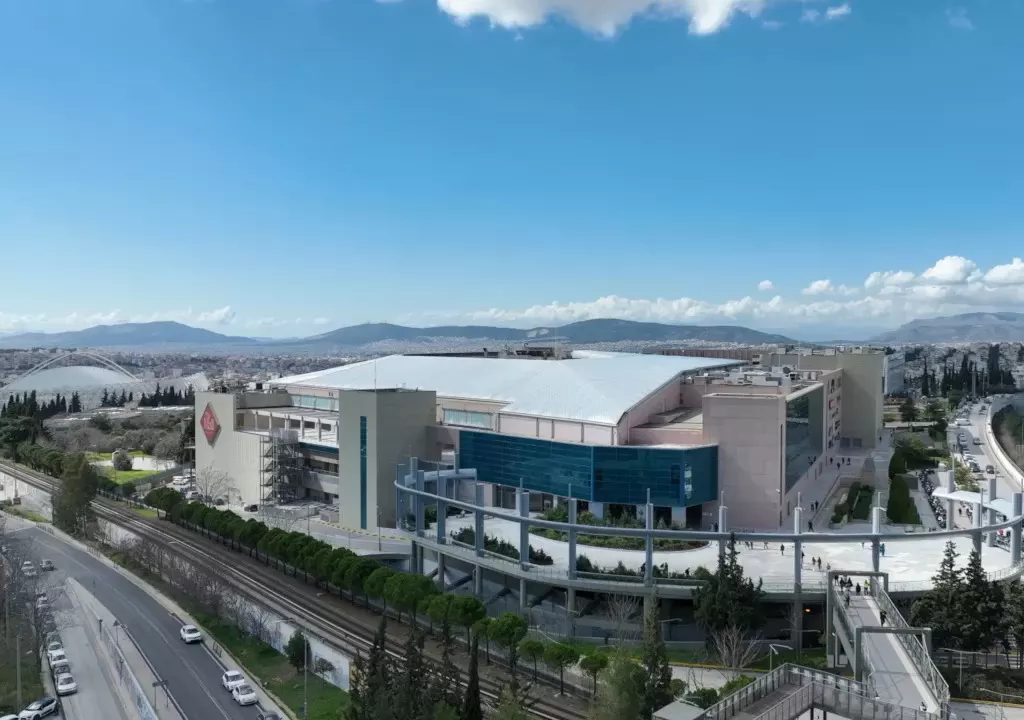
Philanthropy plays a role that is unusual by European standards. The Stavros Niarchos Foundation has invested billions in civic infrastructure, most visibly through the Stavros Niarchos Foundation Cultural Center (SNFCC) — a Renzo Piano-designed complex combining the National Library, the Greek National Opera, and a 21-hectare public park equipped with photovoltaic canopies and energy-efficient building systems. The SNFCC has become a reference point for sustainable urban design and a green oasis in the dense fabric of southern Athens.
The Ellinikon: A Smart City Rising from the Runway
No project captures Athens' ambitions — or its contradictions — more vividly than The Ellinikon Smart City Development. On the 620-hectare site of the city's decommissioned international airport, Lamda Development is building what it calls Europe's largest urban regeneration project: an €8 billion, 15-minute smart city on the Athenian Riviera. Construction is now underway across more than 40 sites, involving approximately 3,000 workers and 18 leading contractors.
The development integrates AI-driven energy management, IoT sensor networks for environmental monitoring, intelligent building management, and a unified data platform across the entire district. Smart residences, shared mobility hubs, and an air quality monitoring network are complemented by a 243-hectare coastal park — designed by Sasaki and targeting LEED Gold certification — that will be the largest in Europe. In October 2025, Lamda Development announced a multi-million-euro partnership with ION Group for an R&D Innovation Campus, positioning The Ellinikon as a European hub for AI and digitisation.
The project is expected to contribute approximately 2.5 per cent of Greece's GDP — a staggering figure that underscores both the ambition and the risks. Critics question whether a privately developed smart district, with luxury residences and high-end retail, will genuinely serve the broader Athenian population or simply create an enclave of affluence on the coastline. The tension between flagship development and equitable urban benefit is one Athens will need to navigate carefully.
Alongside The Ellinikon, smaller-scale but highly innovative projects are making their mark. Athens Cooling Havens, a European Urban Initiative project, deploys water-powered neighbourhood cooling stations in districts identified for high heat vulnerability. Smart sensors at each station monitor temperature, humidity, and usage, feeding data into the city's environmental platform and informing future climate adaptation investments.
Where the Heat Meets the Street
If there is one domain where Athens has genuinely led the world, it is heat resilience. In 2021, the city appointed Eleni Myrivili as its first Chief Heat Officer — one of the earliest such positions globally. Myrivili, a former deputy mayor with a background in anthropology and performance studies, went on to become the United Nations' first Global Chief Heat Officer in 2022, a year in which 70,000 Europeans died of heat-related causes. Athens' current Chief Heat Officer, Elissavet Bargianni, continues the work, leading the city's Resilience and Sustainability Department and overseeing its Athens Resilience Strategy 2030.
As Myrivili explained in a Yale Environment 360 interview: "We've been adding trees and green spaces, which, in a densely built city like Athens can be difficult. We've done pocket parks and created new spaces by moving and demolishing buildings, but also by putting green corridors in existing streets and taking away cars."
One of the most imaginative projects involves a 24-kilometre underground aqueduct built by the Romans in 150 AD, which still carries clean water beneath eight municipalities. The Athens Water Supply and Sewerage Company is working with the Ministry of Culture to create a network of irrigated green spaces along its route — a fusion of ancient infrastructure and contemporary climate adaptation that is quintessentially Athenian.
The Athens Resilience Strategy 2030, anchored by a landmark €55 million loan from the European Investment Bank, funds building retrofits, green corridors, nature-based solutions, and the transformation of public spaces. Three green corridors have been designed to connect green spaces, reduce heat stress, and create pleasant pedestrian routes. At Votanikos, a 215-acre metropolitan park with over 3,000 trees is taking shape in a run-down industrial district — a project that, alongside the Seráfeio complex's transformation into a model centre for green innovation, signals that Athens' smart city story extends well beyond the gleaming Riviera.
For residents, the experience of smart Athens is still patchy — a bus parking app in the historic centre here, an energy poverty office distributing LED bulbs and energy benefit cards there. But on a sweltering August evening, when a family finds relief at a cooling haven in Kypseli or a pensioner checks air quality data on a municipal portal before deciding whether to open the windows, the abstract language of smart cities becomes something felt. Athens has always been a city where life happens outdoors — in the kafenío over a frappé, on the neighbourhood platéia, along the evening vólta. The smart city, at its best, simply makes that outdoor life a little more bearable, a little more informed, and a little more shared.
References9 resources11 external