Greece
The Ancient City Reinventing Itself — Again
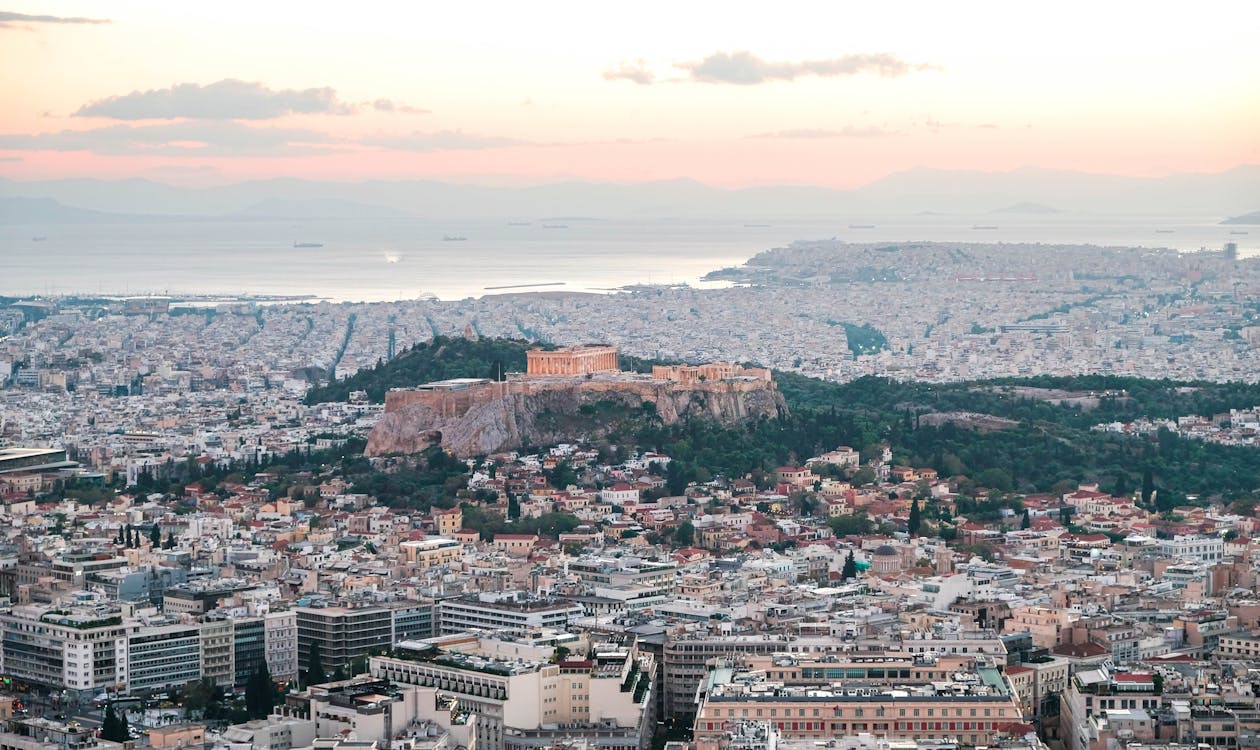
Greece is not the country most observers would place at the forefront of Europe's smart city conversation. A decade of economic crisis hollowed out public budgets, delayed infrastructure investment, and sent a generation of young technologists abroad. Yet precisely because Greece had to rebuild so much from so little, its approach to urban innovation carries a distinctive energy — part necessity, part ingenuity, part the stubbornness of a civilisation that has been reinventing its cities for three thousand years. Today, Athens is deploying 1,000 sensors and a city-wide digital platform to manage traffic and air quality. The former international airport on the Athenian Riviera is becoming Europe's largest smart city development. And a civic participation platform born in the depths of austerity has become a reference model for cities across the continent.
The national framework is anchored by Greece's Digital Transformation Bible 2020–2025, a strategy describing over 400 projects across digital infrastructure, public services, and skills development. In parallel, the government has committed to a Smart, Resilient and Climate Neutral Cities Initiative running through 2030, with six municipalities — Athens, Thessaloniki, Kozani, Trikala, Ioannina, and Kalamata — now receiving EIB advisory support to design and implement local investment strategies aligned with climate neutrality and smart city objectives. The EU's Recovery and Resilience Facility has committed €19.8 million specifically to transform Athens into a smart city through new infrastructure, digital platforms, and IT systems.
A Democracy Digitised — But Slowly
Greek politics shapes the smart city landscape in ways both enabling and constraining. The centre-right government of Kyriakos Mitsotakis has made digitalisation a signature priority, consolidating digital governance under a dedicated Ministry of Digital Governance and pushing through reforms that have moved tax filing, business registration, and public services online at a pace that would have seemed impossible a decade ago.
Yet the gap between national ambition and municipal capacity remains wide. Athens, with DAEM S.A. — Athens Digital Services — the city's dedicated digital services arm — has built genuine smart city capabilities, winning Smart City of the Year at the 2026 Smart City Awards for its integrated model of sustainable, digitally accessible urban management. But smaller municipalities often lack the staff, budgets, and technical knowledge to translate smart city strategies into working systems. The EIB advisory programme explicitly targets this gap, providing tailored support to help cities prepare bankable investment plans.
Critics point out that Greece's smart city investment is heavily concentrated in private mega-projects — particularly The Ellinikon — whilst public infrastructure in many neighbourhoods remains decades behind. The tension between a gleaming smart district on the Riviera and crumbling pavements in central Athens is not lost on residents, and the debate about who benefits from urban technology is sharper here than in wealthier northern European countries.
Where Crisis Bred Creativity: Athens' Innovation Ecosystem
Greece's smart city ecosystem is leaner than those of France or Germany, but what it lacks in scale it compensates for in resourcefulness and an increasingly confident start-up scene.
synAthina — Athens Citizen Participation Platform, the City of Athens' citizen participation platform, emerged during the financial crisis as a way to harness grassroots creativity when public resources had evaporated. The platform connects citizens' groups with city hall, enabling collaborative urban and social innovation prototypes that feed into municipal policy. Recognised by the OECD, the European Commission, and Germany's Nationale Stadtentwicklungspolitik programme, synAthina has been shared as a model with cities including Vilnius and represents a distinctly Greek contribution to smart city governance — one built on civic energy rather than technology budgets.
DAEM S.A. — Athens Digital Services, the technology arm of the Municipality of Athens, is responsible for the city's digital infrastructure, smart city platforms, and the ongoing deployment of sensor networks for traffic, environmental monitoring, and public service management. The National Observatory of Athens (NOA), Greece's oldest research institution, contributes climate data, urban heat island research, and environmental monitoring capabilities that inform both national and municipal smart city strategies.
The start-up ecosystem has grown remarkably. Athens now hosts over 440 start-ups and has produced its first unicorn in Viva Wallet, valued at over €1.8 billion. Found.ation Athens, Athens' pioneering start-up hub, supports early-stage companies in civic tech, digital infrastructure, and urban innovation. Forbes has described Athens' trajectory as a move "from myth to moonshot", noting that the fundamental ingredients — rising talent, strategic Mediterranean location, compelling cost advantage, and entrepreneurial spirit — are increasingly drawing venture capital attention. The Cisco International Center for Digital Transformation and Digital Skills in Thessaloniki, established in 2020 in collaboration with the municipality and national government, has hosted over 16,000 visitors and nearly 300 events, building digital capabilities in Greece's second city.
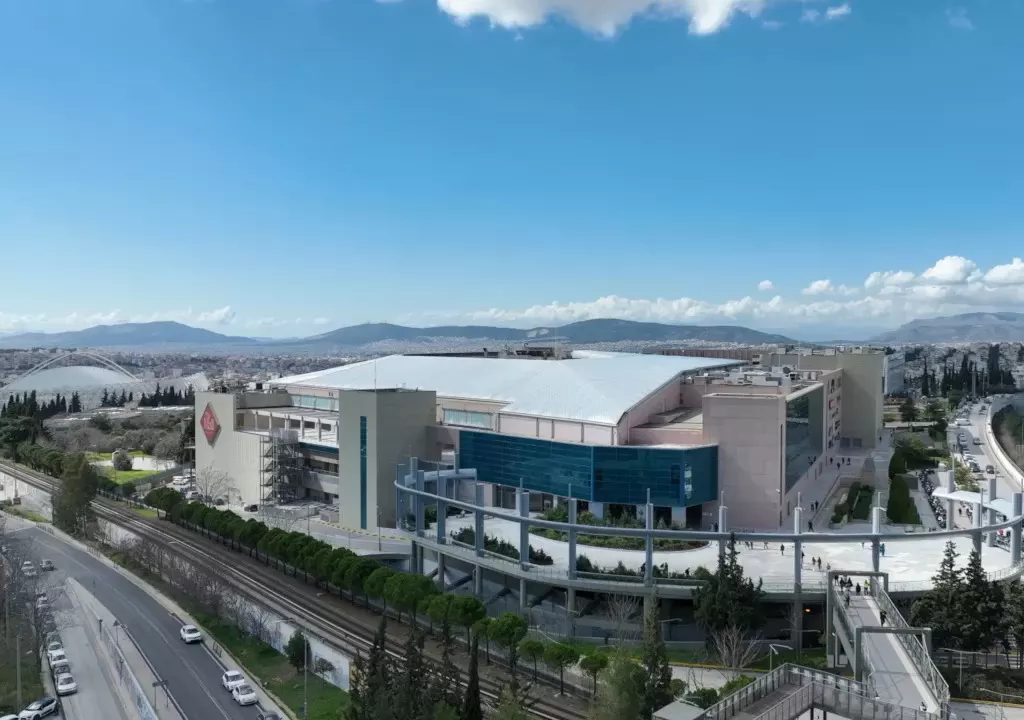
The Stavros Niarchos Foundation, one of Greece's most significant philanthropic organisations, has invested heavily in civic infrastructure that serves as a platform for smart city innovation — most notably the Stavros Niarchos Foundation Cultural Centre, whose energy-efficient design, public park, and community programming exemplify how private philanthropy can shape urban environments in contexts where public investment is constrained.
A Smart City Rising from a Runway
Greece's headline smart city project — and arguably the most ambitious urban development anywhere in southern Europe — is The Ellinikon Smart City Development. On the 620-hectare site of Athens' former international airport, Lamda Development is constructing what it describes as Europe's largest urban regeneration project: a $10 billion smart city on the Athenian Riviera designed as a 15-minute city where residents can access schools, parks, offices, and the beach within a quarter-hour's walk or cycle.
Construction is now underway across 40 sites. The development will house approximately 30,000 residents, and its smart city layer includes AI and IoT systems for water, waste, and energy management, smart buildings with automated comfort and efficiency controls, open data platforms, and the highest cybersecurity standards. The Riviera Tower — Athens' tallest skyscraper at 200 metres — is expected to be completed by the end of 2026. The project is projected to create 80,000 jobs and contribute 2.5 per cent of Greece's GDP, a figure that underscores both its ambition and the scale of Greece's bet on urban technology as an economic engine.
The Greek Smart Cities — Athens programme, funded through the EU Recovery and Resilience Facility, complements The Ellinikon with investments in the existing city. Digital platforms, open data systems, and e-services are being built to improve city infrastructure across Athens' dense historic core — where the challenges of retrofitting sensors into millennia-old urban fabric are rather different from building on a blank runway.
The Athens Cooling Havens project addresses one of the city's most urgent climate challenges: extreme urban heat. Using water-powered cooling stations deployed in vulnerable neighbourhoods, the project applies smart technology to a problem that kills hundreds of Europeans each summer and will only intensify as temperatures rise. The Athens Resilience Strategy 2030 frames these efforts within a broader approach to economic crisis recovery, heatwave adaptation, and social cohesion.
The Agora Goes Digital: Where Smart Meets the Street
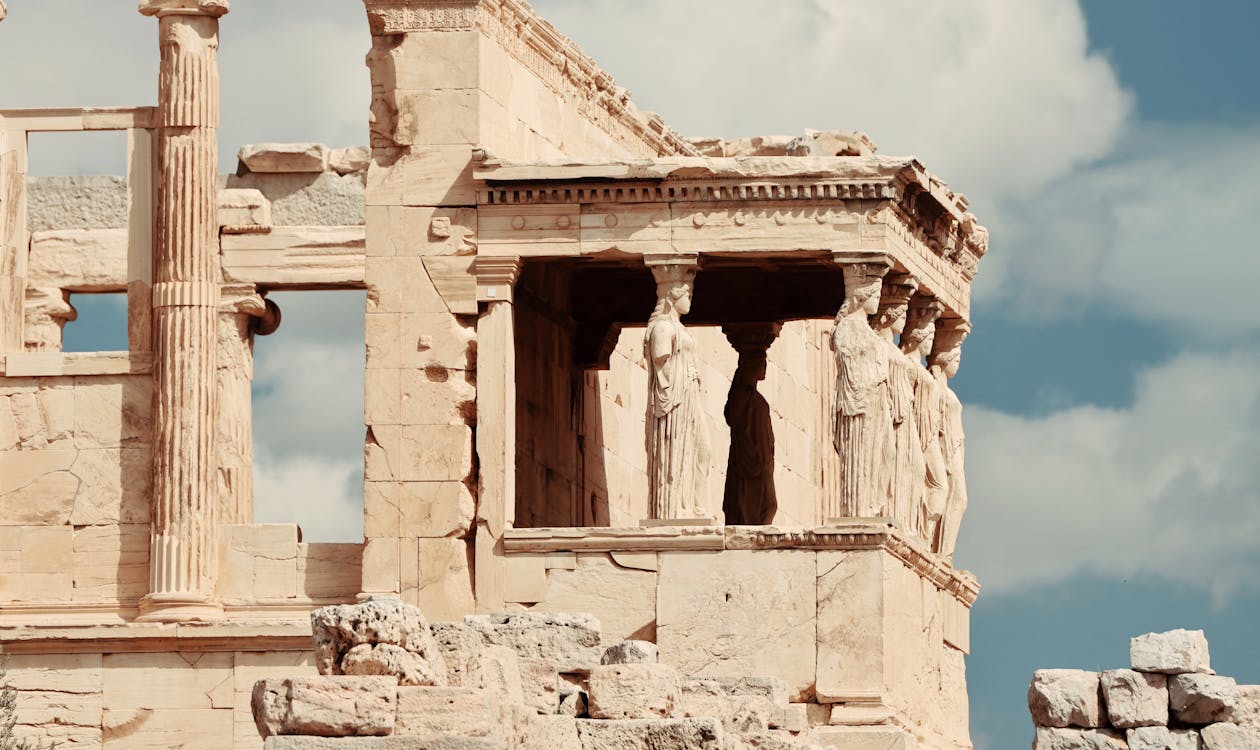
For all the billions flowing into The Ellinikon, the most characteristically Greek smart city experience may be something smaller and more human. Athens is a city where the ancient agora — the public gathering space that gave democracy its first physical form — still shapes how people use urban space. Cafés spill across pavements. Neighbourhoods function as villages. Conversation is a civic act.
synAthina captures this spirit digitally. When a neighbourhood group proposes to transform a vacant lot into a community garden, or a citizens' collective organises free coding workshops in a public square, the platform connects them with municipal resources and turns grassroots action into policy input. It is, in essence, a digital agora — and its success has earned Athens international recognition for participatory urban governance.
The Athens Innovation Summit 2025, organised by Endeavor Greece, and the BEYOND Expo Athens 2026, one of southeastern Europe's largest technology events, reflect a city that is learning to project its innovation story outward. The International Conference on Sustainable Cities 2025 further positions Athens as a meeting point for Mediterranean smart city dialogue — a role the city's geography and cultural magnetism make it uniquely suited to play.
There is a Greek habit that visitors notice quickly: the evening volta, the slow, sociable walk through the neighbourhood that families and friends take as the heat of the day fades. It happens in every city and village in the country, a daily ritual of seeing and being seen, of reclaiming the street as a shared living room. When Athens' new sensor networks measure air quality on those streets, when cooling havens offer refuge from heat that once drove people indoors, and when a citizen's idea submitted through synAthina becomes a shaded bench or a planted square, the smart city is not replacing the volta — it is making it possible for another generation.
References14 resources11 external