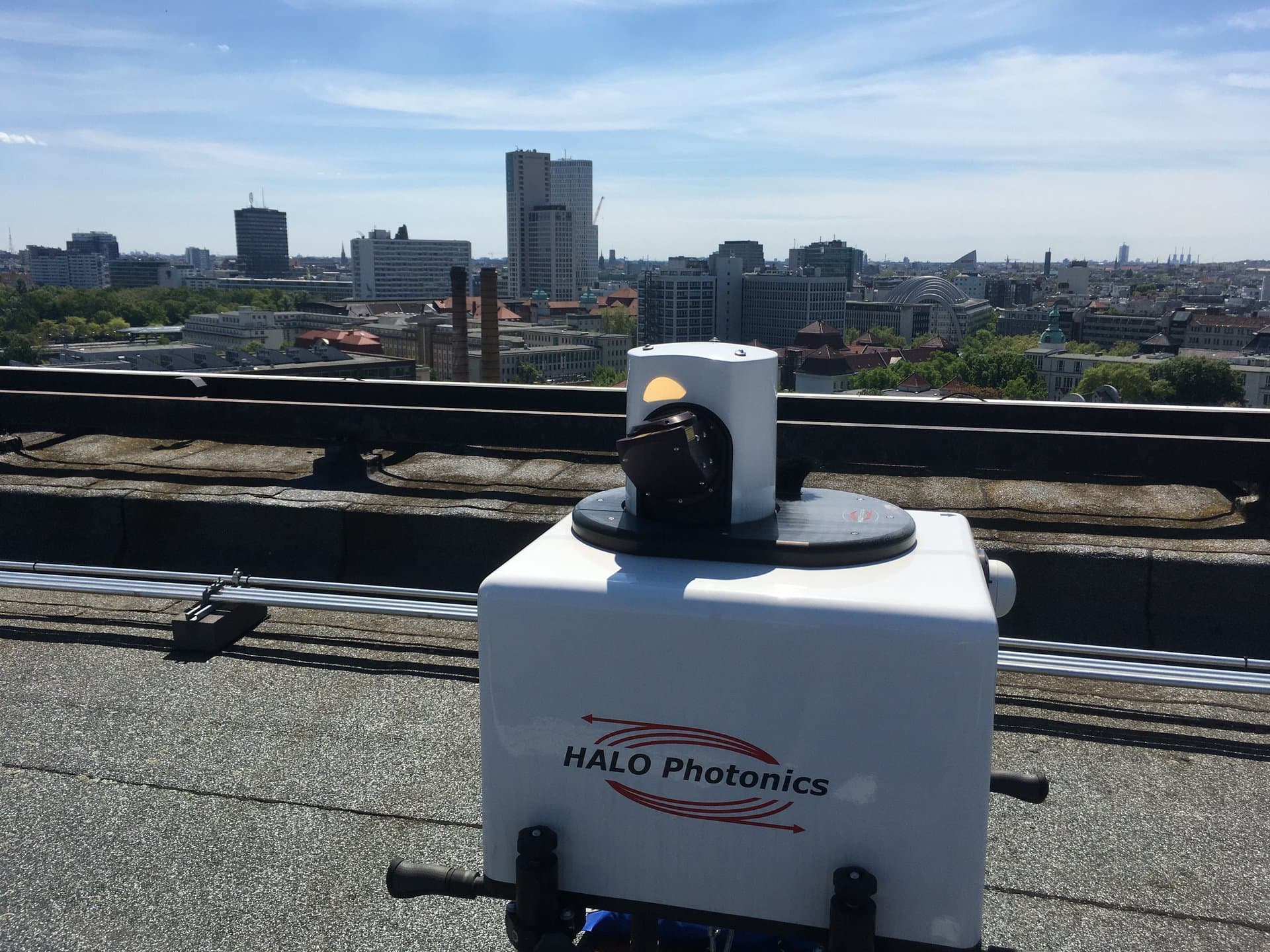
The Urban Climate Observatory (UCO) Berlin is a long-term, open scientific infrastructure operated by the Chair of Climatology at the Technische Universität Berlin (TU Berlin). It serves integrative, cross-scale research on urban weather, climate, and air quality in Berlin and the surrounding metropolitan region.
The UCO Berlin comprises three main components. First, the Urban Climate Observation Network (UCON) provides ground-level measurements of atmospheric variables — air temperature, relative humidity, air pressure, global radiation, wind speed, and precipitation — through a network of automatic weather stations positioned across the city. Since 2015, UCON has been supplemented by systematically collected data from Netatmo citizen weather stations, creating a crowdsourced monitoring layer that significantly increases spatial coverage.
Second, meteorological towers at sites including Rothenburgstraße (40 m) and the TU Berlin Campus Charlottenburg use eddy-covariance systems to quantify turbulent exchanges of sensible heat, water vapour, and carbon dioxide at various heights. Radiation sensors on these towers record short-wave and long-wave radiation fluxes, while phenological observations add ecological context.
Third, ground-based remote sensing instruments — including a Doppler wind LiDAR (Halo Photonics Stream Line XR), a microwave radiometer (RPG HATPRO-G5), and ceilometers (Lufft CHM 15k) — profile wind speed, direction, air temperature, humidity, aerosols, and cloud structures within the urban boundary layer. An X-band dual-polarisation Doppler weather radar is currently under construction.
The observatory's data support urban heat island mapping, air quality modelling, climate variability studies, and evidence-based climate adaptation strategies for Berlin. The lead scientist is Dr. Fred Meier.