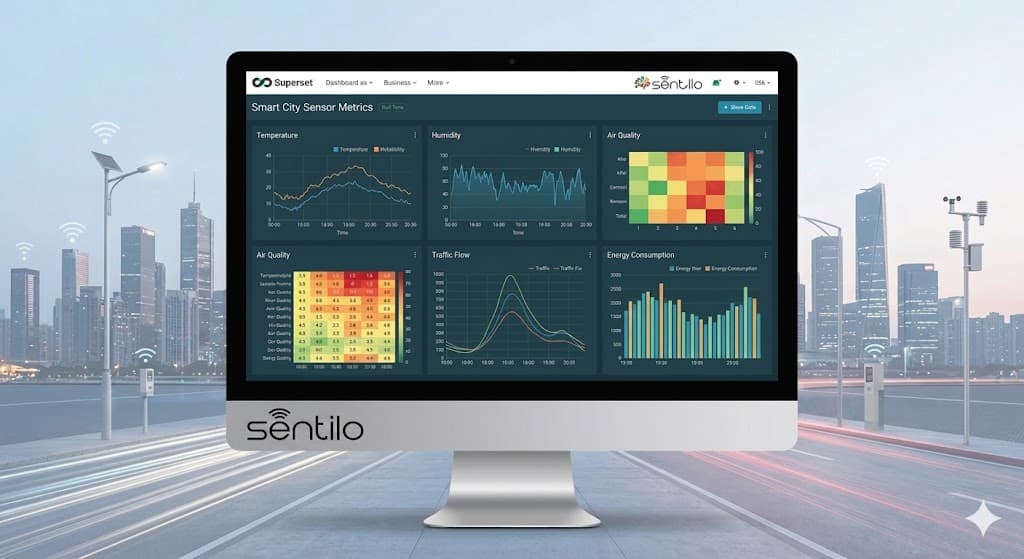
Sentilo is an open-source sensor and actuator platform developed by the Barcelona City Council through its Municipal Institute of Informatics (IMI). The project originated in November 2012 as part of Barcelona's strategy to position itself as a global reference in the smart cities domain. The name derives from the Esperanto word for "sensor."
The platform serves as a horizontal, cross-domain middleware layer that aggregates real-time data from diverse urban sensor networks — including environmental monitoring (noise, temperature, air quality), traffic flow counters for pedestrians and bicycles, smart waste management systems, and irrigation controls — through a unified REST API. By breaking down technology silos, Sentilo enables seamless data exchange between heterogeneous systems and integrates readily with existing legacy applications.
Technically, Sentilo uses Redis for real-time data handling and MongoDB for sensor catalog metadata. Its modular, component-based architecture supports horizontal scalability and can be extended without modifying the core system. The platform includes a universal data visualiser, an administration console, and a basic statistics module. It can be combined with tools such as Grafana and TimescaleDB for advanced historical analytics and dashboarding.
Barcelona's own deployment manages approximately 19,000 active sensors across the city, feeding data that helps municipal authorities allocate resources more efficiently and design data-driven services for citizens. Because Sentilo is published under an open-source licence on GitHub, any city or public administration can adopt and adapt it. It has been deployed by dozens of municipalities internationally, making it one of the most widely reused civic IoT platforms in Europe. OpenTrends has served as the principal technology partner for the platform's development and maintenance.