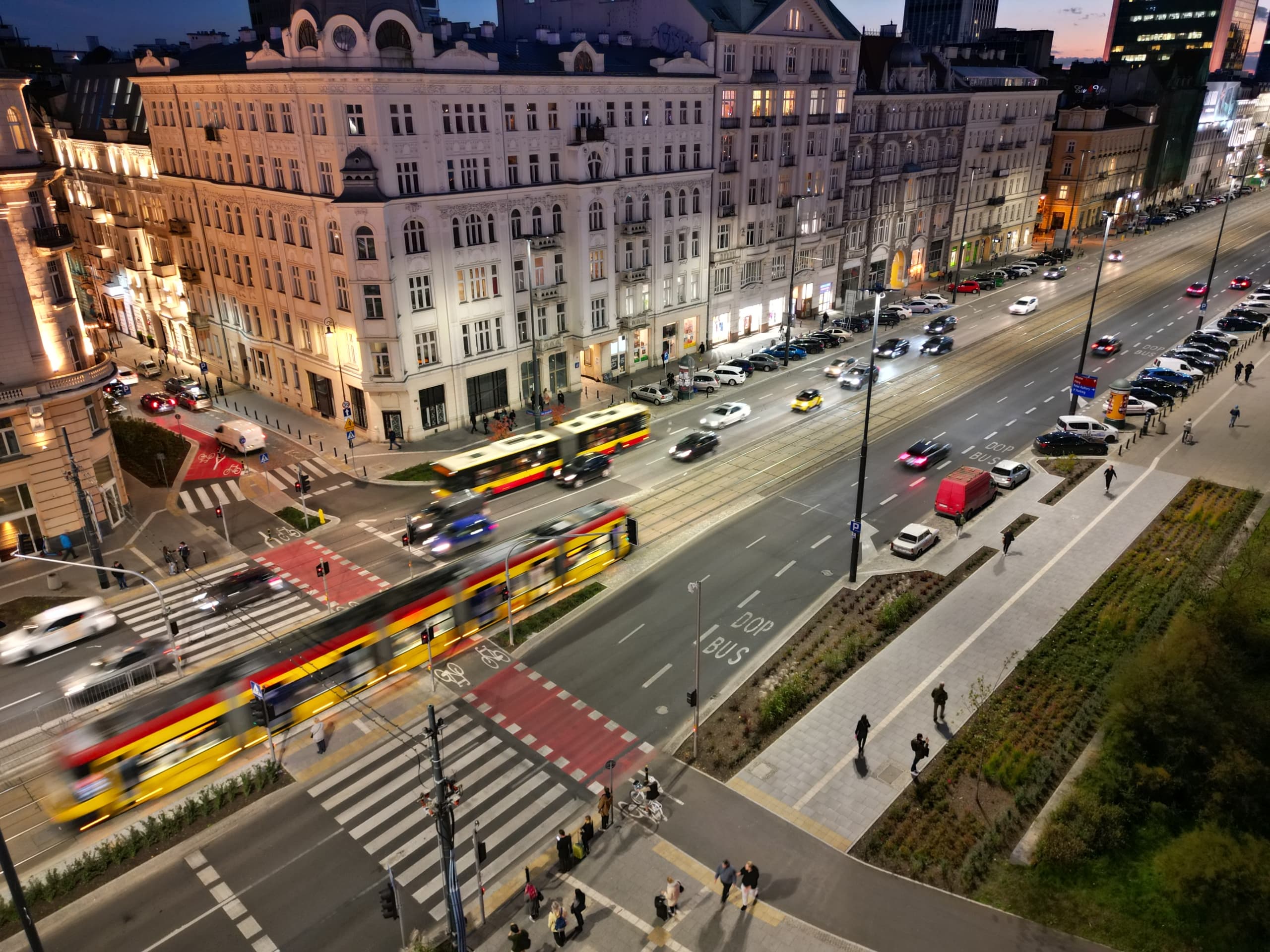
Overview of the Study
The Warszawskie Badanie Ruchu (WBR 2024–2025) is a publicly released report summarizing recent travel‑behaviour data for Warsaw, Poland. Produced by the city’s own research unit, the study was automatically submitted through the SCH profile routine and is listed in the city’s tenant library‑promotion policy. It is accessible online via the Warsaw city website https://warszawa19115.pl/pl/-/warszawskie-badanie-ruchu.
Growth in Car Traffic
According to the results, the number of cars entering Warsaw rose sharply from 0.96 million to 1.7 million. This near‑doubling of inbound vehicle traffic highlights a significant increase in private‑car use within a short period, a trend that directly impacts urban congestion, air quality, and the city’s carbon footprint.
Expansion of Ride‑Hailing Services
The survey records a seven‑fold increase in ride‑hailing licences. Such rapid growth in on‑demand mobility services suggests a shift in how residents and visitors navigate the city, offering alternatives to private car ownership but also adding to overall traffic volume and emissions if not integrated with sustainable transport policies.
Remote and Hybrid Work Patterns
The data show that 23 percent of the workforce now operates remotely or in a hybrid mode. This decline in daily commuting offers a potential lever for reducing traffic pressure and associated emissions, aligning with broader European goals for energy‑efficient, sustainable urban living.
Implications for Sustainable Housing
The increase in remote work supports demand for housing that accommodates home‑office spaces, energy‑efficient design, and proximity to essential services. At the same time, the surge in car and ride‑hailing traffic underscores the need for residential developments that prioritize low‑emission transport options, such as proximity to public transit, cycling infrastructure, and shared‑mobility hubs.
Methodology and Data Sources
The study is classified as a “Report / Study” and is not AI‑generated. It was compiled using city‑collected traffic counts, licence registrations, and commuter surveys. The automatic submission indicates that the dataset adheres to the city’s standard quality‑control procedures.
Refresh Cycle and Future Updates
The report belongs to the 2026‑Q4 refresh cycle, suggesting that the presented figures will be updated regularly to track trends over time. Continuous monitoring will be crucial for policymakers and developers aiming to align Warsaw’s housing stock with EU sustainability targets.
Access and Availability
The full report is publicly available on the Warsaw city portal, ensuring transparency and enabling researchers, planners, and the pan‑European audience to examine the raw data and methodological notes. No restrictions on reuse are indicated, facilitating comparative studies across European cities.
Key Takeaways for European Stakeholders
- Warsaw’s inbound car traffic has nearly doubled, indicating rising private‑vehicle reliance.
- Ride‑hailing licences have multiplied seven times, reflecting a booming on‑demand mobility market.
- Nearly a quarter of workers now telecommute, opening pathways for reduced commuting emissions.
- Sustainable housing strategies should integrate flexible workspaces, enhance access to low‑carbon transport, and consider the evolving mobility landscape. These facts provide a factual foundation for understanding how travel behaviour in Warsaw intersects with sustainable urban housing objectives, offering insights relevant to policymakers, developers, and researchers across Europe.