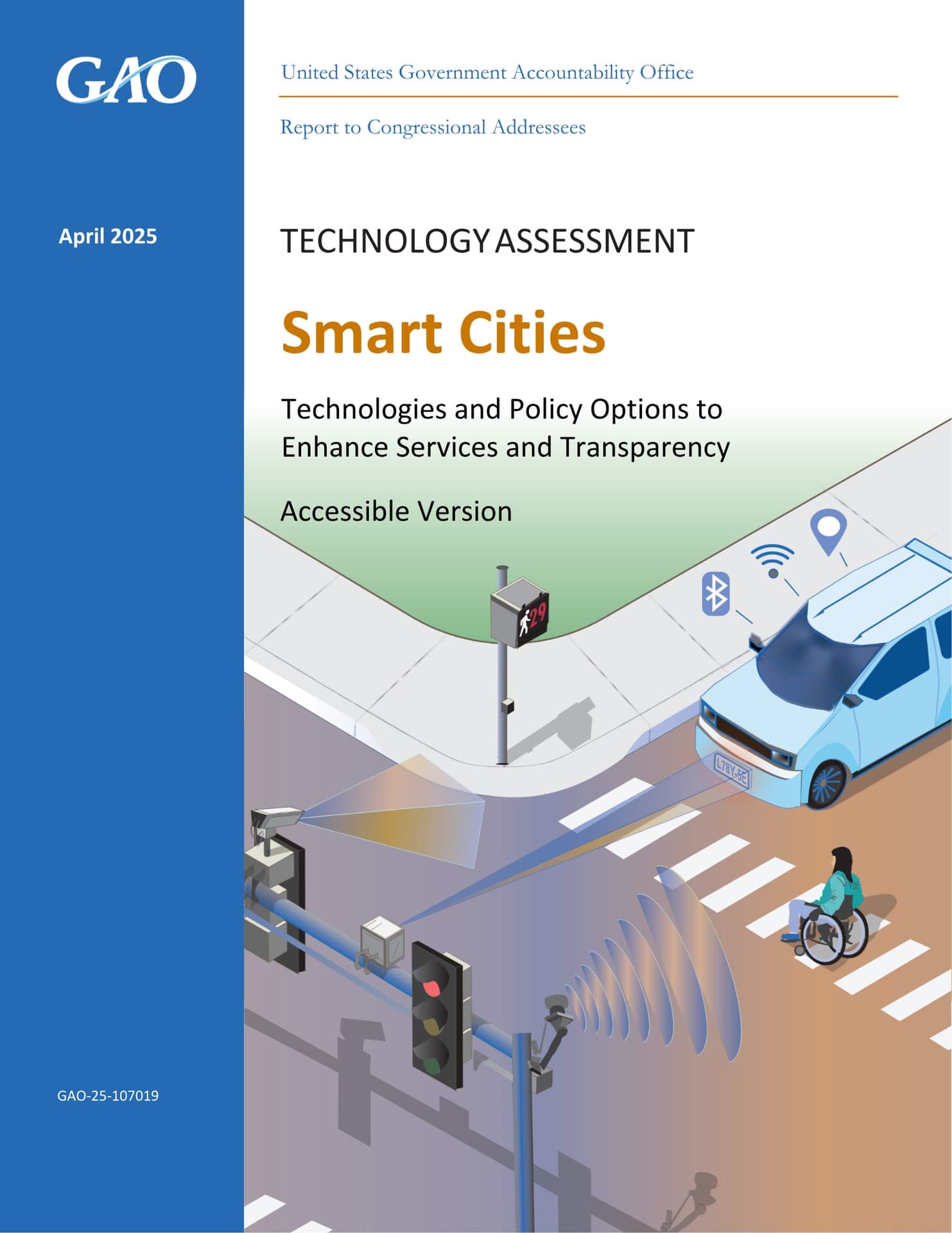
Overview of the GAO Report
The Government Accountability Office (GAO) has produced a comprehensive report titled “Smart Cities: Technologies and Policy Options to Enhance Services and Transparency (GAO‑25‑107019)”. It is a publicly available study that examines the deployment of sensor and surveillance technologies in U.S. municipalities, evaluating their benefits, risks, and the transparency afforded to residents. The report was submitted automatically through the SCH profile routine and is indexed under the national‑pressures category for the United States.
Key Findings on Technology Benefits
The GAO identified three primary categories of smart‑city technologies: data‑driven service delivery platforms, urban‑wide sensor networks, and integrated surveillance systems. Across the surveyed cities, these tools have been credited with improving traffic management, optimizing energy use in public lighting, and enhancing emergency response times. However, the report notes that quantifying these benefits remains challenging due to inconsistent data collection practices and limited longitudinal studies.
Risks and Transparency Gaps
A central concern highlighted by the GAO is the lack of disclosed risk information to residents. Many city programs do not provide clear explanations of data retention policies, algorithmic decision‑making processes, or avenues for public oversight. The study documents instances where facial‑recognition deployments proceeded without community consultation, raising privacy and civil‑rights questions.
Policy Options for Governments
The GAO proposes three actionable policy options for federal, state, and local authorities:
- Standardized Transparency Framework – develop uniform disclosure requirements for data collection, usage, and sharing.
- Risk‑Assessment Protocols – mandate pre‑deployment impact assessments that include privacy, equity, and security metrics.
- Citizen Engagement Mechanisms – create participatory platforms allowing residents to review, comment on, and influence smart‑city initiatives.
Data Highlights and Statistics
- Over 150 U.S. cities have implemented at least one smart‑city technology platform.
- Sensor networks generate an estimated 2.5 petabytes of data annually, yet only 30 % of municipalities have formal data‑governance policies.
- Approximately 45 % of surveyed cities lack publicly accessible dashboards that explain how data informs service decisions.
Relevance to Sustainable Housing in Europe
For a pan‑European audience focused on sustainable housing, the GAO report offers valuable insights into how urban sensor systems can support energy‑efficient building management, real‑time monitoring of indoor air quality, and predictive maintenance of housing infrastructure. The identified policy gaps underscore the importance of establishing robust governance structures before scaling similar technologies across European cities. By adopting the GAO’s recommended transparency and risk‑assessment frameworks, European municipalities can better align smart‑city deployments with sustainability goals, ensure resident trust, and foster equitable access to the benefits of digital urban services.