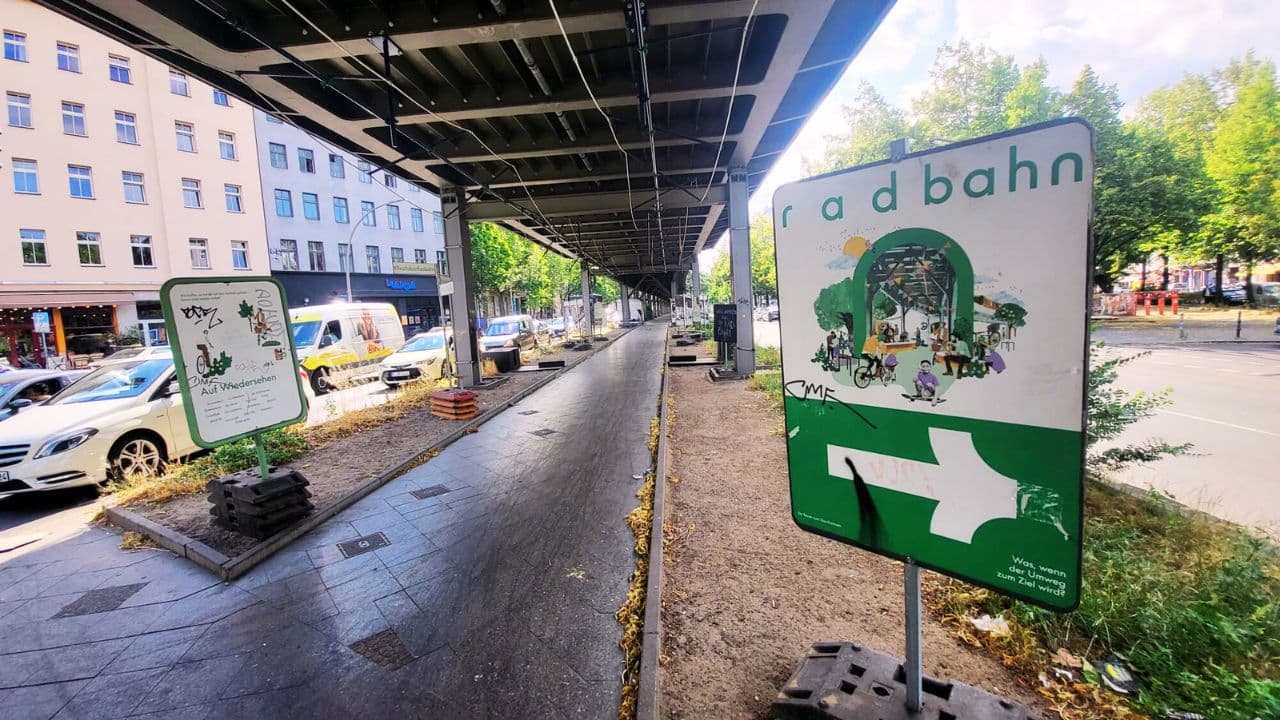
Overview of the Radbahn Real‑World Lab
The article, published by Entwicklungsstadt Berlin, examines the Radbahn pilot project in Kreuzberg, a federally funded cycling corridor intended to promote sustainable urban mobility. The piece is classified as a public news/feature article and was automatically submitted by the SCH profile routine. It is referenced in the city/berlin “lighthouse‑projects” catalogue.
Actual Usage and Current State
Field observations reveal that the 200 m stub of the Radbahn was disconnected from the network after autumn 2024 and that testing fittings were removed. Usage data show the line is “little used,” indicating a gap between the project’s sustainability goals and real‑world adoption. No timetable for further implementation has been established.
Infrastructure Changes and Decommissioning
The removal of fittings and the disconnection of the stub suggest a de‑escalation of the pilot. The infrastructure, originally designed to support a continuous cycling route, now exists as an isolated segment without functional integration into Berlin’s broader bike network.
Urban Context and Policy Implications
Located in Kreuzberg, a densely populated district with high demand for green transport, the Radbahn was part of a larger federal initiative to test innovative mobility solutions. Its limited success raises questions about project design, community engagement, and the alignment of federal funding with local needs.
Key Data Points
- Project type: Real‑world laboratory for cycling infrastructure.
- Length of the tested segment: 200 meters.
- Status as of the latest review: Disconnected, fittings removed, low utilization.
- No future implementation schedule announced.
Relevance for Sustainable Housing and Mobility
For a pan‑European audience focused on sustainable housing, the Radbahn case illustrates the challenges of integrating new transport infrastructure into existing urban fabrics. It highlights the importance of thorough feasibility studies, stakeholder involvement, and adaptable designs to ensure that mobility initiatives effectively complement eco‑friendly residential developments.