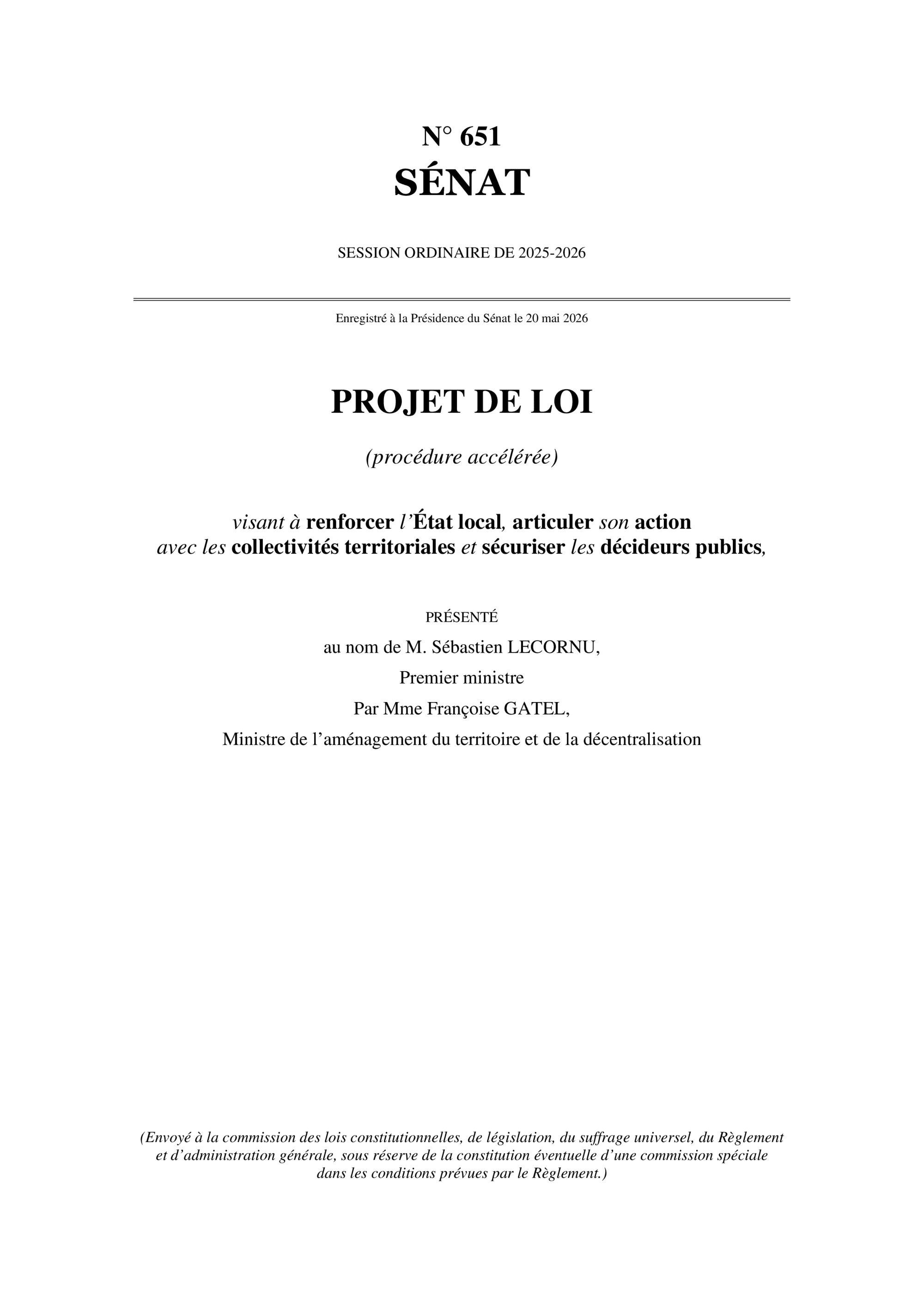

Overview of the Legislative Initiative
The document concerns a French Senate bill (Sénat n°651, 2025‑2026) titled “Projet de loi visant à renforcer l’État local, articuler son action avec les collectivités territoriales et sécuriser les décideurs publics.” It is a public policy document submitted automatically by the SCH profile routine and indexed in the national‑strategy‑politics section for France. The bill was prepared by the French Senate’s legislative drafting office, reflecting the institution’s role in shaping national decentralisation policy.
Purpose and Scope of the Bill
The bill aims to reinforce the role of the State at the local level, improve coordination between central authorities and territorial collectivities, and enhance the security of public decision‑makers. It seeks to adjust the balance of powers between the State and local governments, ensuring that national objectives—particularly those related to territorial planning and public service delivery—are effectively implemented across regions, departments, and municipalities.
Key Provisions Introduced
- Strengthening the authority of prefects, the State’s representatives in each department, to oversee local administration.
- Creating mechanisms for better alignment of State policies with the strategic plans of municipalities, intercommunalities, and regions.
- Introducing safeguards for public officials, including procedural protections and clearer responsibilities, to reduce legal uncertainties in decision‑making.
- Establishing a framework for coordinated action on urban development, housing, and environmental sustainability at the local level.
Impact on Sustainable Housing Initiatives
The bill’s emphasis on coordinated territorial action directly affects sustainable housing projects. By mandating closer collaboration between the State and local bodies, it facilitates the implementation of energy‑efficient building standards, the promotion of renewable energy integration in residential areas, and the allocation of funding for retrofitting existing housing stock. The strengthened prefectural oversight is intended to ensure that local housing policies comply with national climate targets and EU sustainability directives.
Reaction from Local Stakeholders
The legislative text generated significant controversy among mayors, intercommunal associations, and regional councils. Critics argue that the increased powers of prefects could undermine local autonomy and hinder innovative housing solutions tailored to specific community needs. The bill was ultimately withdrawn after organized protests from these territorial actors, reflecting the tension between centralisation and local self‑determination in French governance.
Current Status and Accessibility
The bill is classified as “Public” and is available through the Senate’s official website (https://www.senat.fr/leg/pjl25-651.pdf). It was submitted to the database on October 2, 2026, and is marked as not AI‑generated. The resource is auto‑approved under the tenant library‑promotion policy, ensuring its visibility for researchers and policymakers interested in French decentralisation and housing policy.
Relevance for a Pan‑European Audience
For European stakeholders focused on sustainable housing, the French experience illustrates the challenges of aligning national climate objectives with local implementation mechanisms. The bill’s attempt to centralise oversight while promoting sustainable development offers lessons on the importance of balancing authority and flexibility. It underscores the need for clear legal frameworks that protect public officials while empowering local entities to innovate in energy‑efficient construction, affordable housing, and climate‑resilient urban planning.