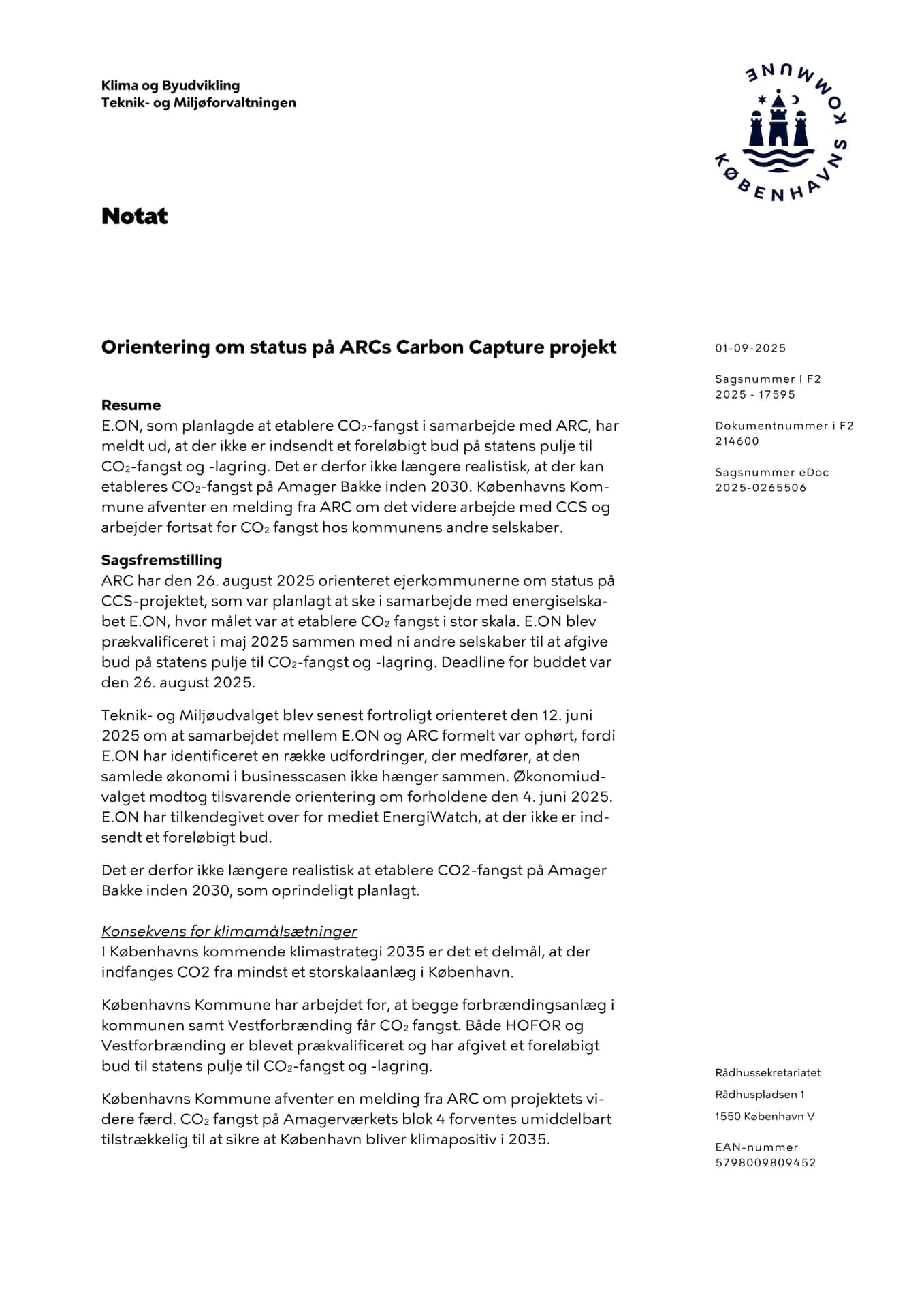
Overview of the Document
The resource is an official orientation note from the Technical and Environmental Administration of Copenhagen, detailing the current status of the ARCs Carbon Capture project at Amager Bakke (CopenHill). It is publicly available and was submitted to the municipal database on 16 October 2026. The document is authored by the city’s environmental officials and reflects the municipality’s assessment of the project’s feasibility.
Project Background and Goals
The ARCs Carbon Capture initiative aims to integrate large‑scale carbon removal technology into the existing waste‑to‑energy plant at Amager Bakke. The objective is to capture CO₂ emissions from the facility and store or reuse them, contributing to Copenhagen’s climate‑neutral target and supporting broader European sustainable‑housing strategies that rely on low‑carbon energy sources.
Current Feasibility Assessment
The orientation note states that the carbon capture component is no longer realistic before 2030. The primary reason is the withdrawal of the private partner E.ON, which had been responsible for providing the necessary technology and financing. Without this partnership, the technical and economic foundations of the project are insufficient for near‑term implementation.
Technical Challenges Highlighted
Key technical obstacles include the integration of capture equipment with the plant’s existing infrastructure, the need for substantial retrofitting, and uncertainties around long‑term storage solutions. The document cites limited space for retrofit, high energy penalties associated with capture processes, and the lack of a clear regulatory framework for carbon storage in Denmark.
Economic Considerations
The loss of E.ON’s investment has created a funding gap. The municipality indicates that alternative financing would require significant public expenditure, which competes with other climate and housing priorities. Cost estimates for a full‑scale capture system exceed the original budget, and the anticipated return on investment is uncertain given the delayed timeline.
Timeline and Next Steps
The note outlines that any renewed effort to pursue carbon capture at Amager Bakke would likely not commence before 2030. In the interim, the city plans to focus on improving energy efficiency at the plant, enhancing waste‑to‑energy processes, and exploring smaller‑scale pilot projects that could inform future larger deployments.
Stakeholder Involvement
The document references collaboration with local research institutions and European partners to monitor technological developments. It also mentions ongoing dialogue with community groups concerned about air quality and the visual impact of additional infrastructure.
Relevance for Sustainable Housing
For a pan‑European audience interested in sustainable housing, this orientation provides insight into how municipal energy assets intersect with carbon‑capture ambitions. It underscores the challenges of integrating emerging technologies into existing urban infrastructure and the importance of stable public‑private partnerships. The experience highlights that achieving low‑carbon heating for residential areas may depend more on incremental efficiency gains and renewable integration than on large‑scale capture projects in the short term.
Access and Further Information
The full orientation note is publicly accessible via the Copenhagen municipal website. It serves as a primary source for policymakers, researchers, and housing developers seeking detailed, official data on the status of carbon capture initiatives within an urban setting.