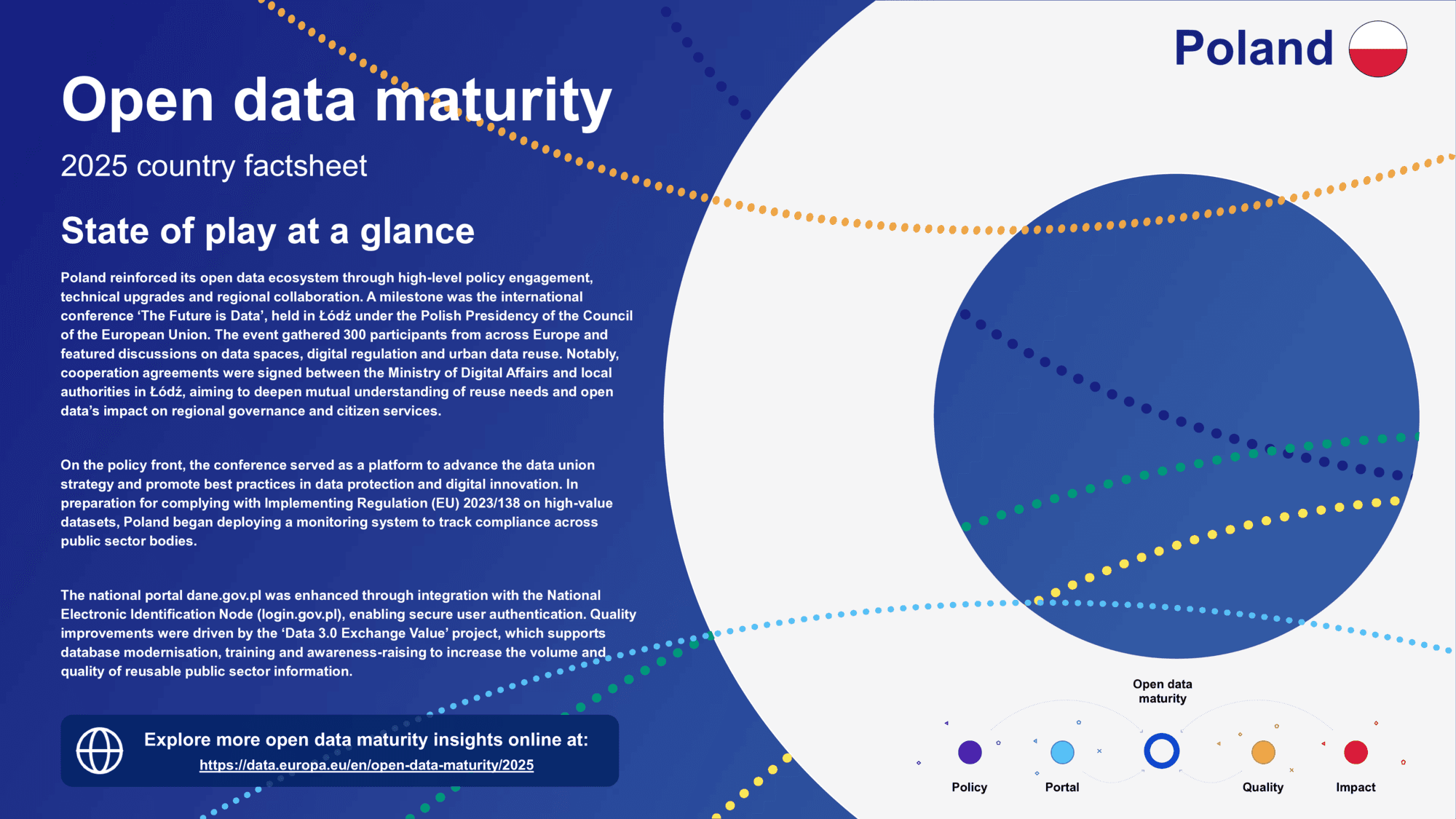
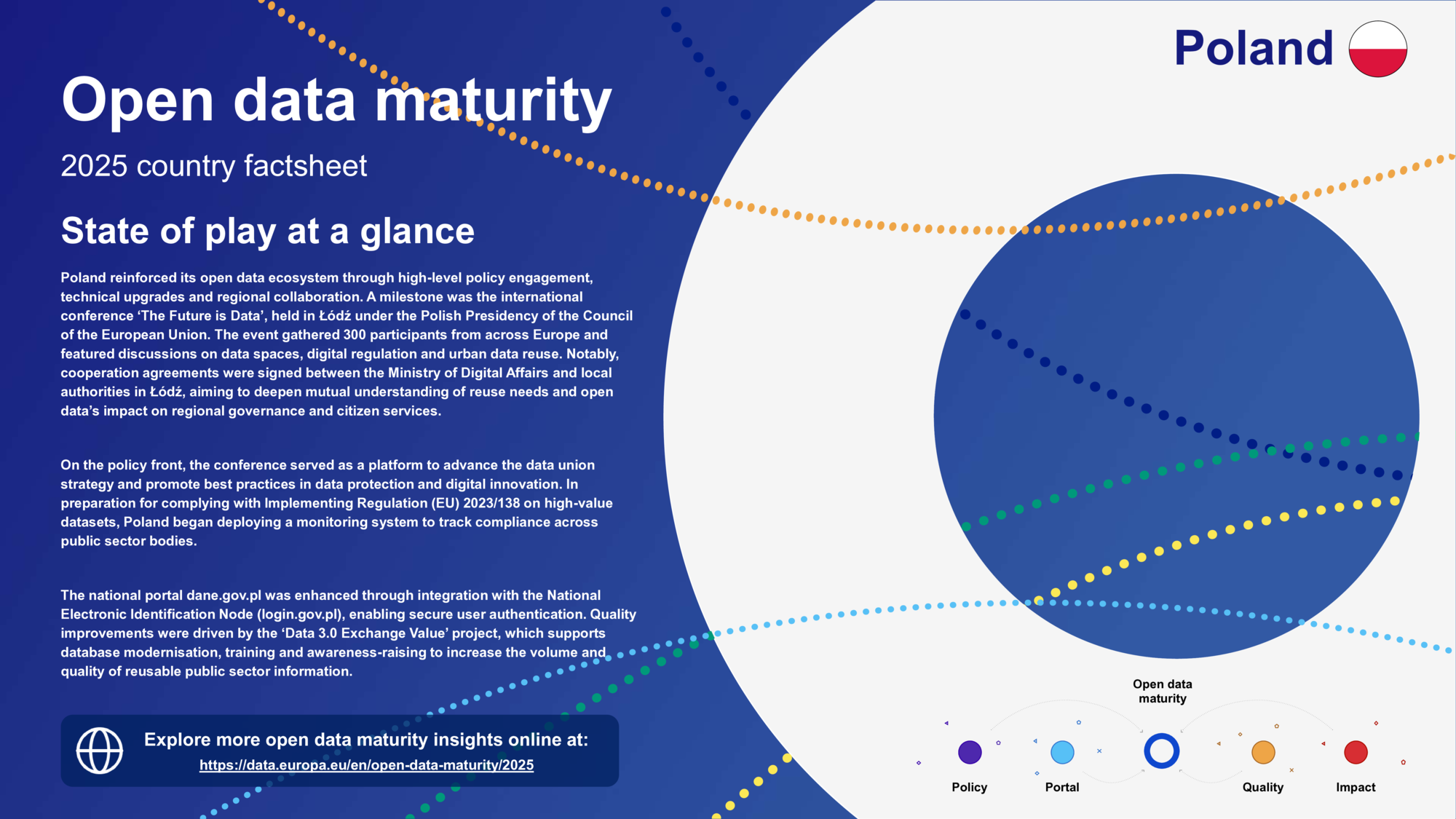
Overview of the Open Data Maturity Factsheet
The document titled “Open Data Maturity 2025 — country factsheet Poland (data.europa.eu)” is a publicly available report hosted on the European Data Portal. It was automatically submitted by the SCH profile routine and is part of the EU’s effort to monitor and promote open‑data initiatives across member states. The factsheet presents Poland’s performance in open‑data maturity, highlighting the country’s strategic framework, governance mechanisms, and recent policy actions that support transparent, reusable data for public and private stakeholders.
Key Open‑Data Infrastructure in Poland
Poland’s open‑data ecosystem is anchored by a single national portal that aggregates datasets from multiple public administrations. The portal follows EU‑aligned standards for metadata, licensing, and API access, enabling seamless data discovery and reuse. The factsheet notes that the portal is fully operational and continuously updated, with a refresh cycle scheduled for the fourth quarter of 2026. This infrastructure underpins the country’s ability to provide reliable data for research, innovation, and policy making.
Maturity Indicators and Performance Scores
The report presents a set of quantitative indicators that assess Poland’s maturity across dimensions such as data availability, quality, licensing openness, and reuse potential. Poland scores high on the availability of geospatial and environmental datasets, which are crucial for sustainable housing projects. The reuse agreements signed with local authorities in Łódź illustrate a concrete example of how open data can support urban planning, energy efficiency assessments, and the monitoring of building performance.
Collaboration with Local Authorities
A notable feature of the factsheet is the description of the 2025 reuse agreements between the national portal and the municipality of Łódź. These agreements grant third‑party developers access to detailed housing stock information, energy consumption records, and building permit data. The collaboration aims to foster innovative applications that improve energy retrofitting, identify affordable housing opportunities, and track progress toward EU sustainability targets.
Relevance for Sustainable Housing Across Europe
For a pan‑European audience interested in sustainable housing, the Polish factsheet offers valuable data on building energy performance, residential energy consumption patterns, and the spatial distribution of housing types. These datasets can be combined with similar resources from other member states to conduct cross‑country analyses of carbon footprints, retrofit potentials, and the effectiveness of policy measures such as energy‑efficiency certificates.
Data Accessibility and Licensing
All datasets referenced in the factsheet are released under open licences that permit commercial and non‑commercial reuse without restrictive conditions. The portal provides machine‑readable formats (CSV, JSON, XML) and supports API calls, facilitating integration into housing‑market platforms, GIS tools, and sustainability dashboards used by NGOs, research institutions, and private developers.
Publication and Submission Details
The factsheet was submitted to the European Data Portal on October 2, 2026 at 3:45 AM. It is marked as “Public” and not AI‑generated, ensuring that the information reflects official government sources and expert analysis. The submission process is automated, reflecting the EU’s commitment to timely and transparent data dissemination.
How to Use the Factsheet for Policy and Innovation
Stakeholders can leverage the Polish open‑data maturity factsheet to benchmark national progress, identify best practices, and design data‑driven solutions for sustainable housing. By accessing the portal’s datasets, policymakers can monitor the impact of energy‑efficiency retrofits, track compliance with EU directives, and support evidence‑based decision‑making for affordable and green housing initiatives across Europe.