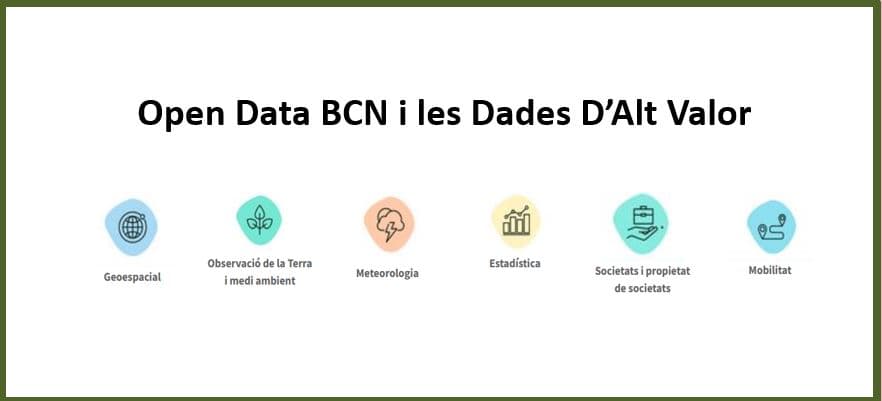
Overview of Open Data BCN Portal
Open Data BCN — Barcelona’s official open data portal — is managed by the Barcelona City Council through its Municipal Institute of Informatics (IMI). Launched in 2011, the portal offers free, machine‑readable datasets covering a wide range of municipal services. It serves as a central hub for citizens, researchers, and developers who need transparent, reliable data to understand and improve urban life in Barcelona, a city recognized for its progressive digital and sustainability policies.
Sustainable Urban Planning Data
The portal provides extensive datasets on urban planning and housing, including building permits, zoning regulations, land‑use classifications, and housing statistics. These data enable analysis of housing supply, affordability trends, and the spatial distribution of new developments, supporting evidence‑based policies that promote compact, energy‑efficient neighbourhoods and reduce urban sprawl.
Mobility and Low‑Carbon Transport
Mobility datasets contain real‑time and historical information on public transport usage, cycling infrastructure, traffic flow, parking availability, and pedestrian patterns. By offering open access to sensor‑derived traffic and mobility data, the portal helps planners model low‑carbon transport solutions, expand cycling networks, and optimise public transit to lower emissions and improve accessibility.
Environmental Monitoring for Green Cities
Environmental datasets include air‑quality measurements, noise‑pollution maps, green‑space inventories, water‑quality indicators, waste‑generation and recycling statistics, and district‑level energy consumption. These metrics allow cities across Europe to benchmark their environmental performance, design targeted interventions for air‑quality improvement, and promote circular‑economy practices in waste management.
Demographic and Social Service Insights
Population statistics, immigration data, income distribution, education access, and health indicators are available for each neighbourhood. Such granular social data help identify vulnerable communities, guide inclusive housing policies, and ensure that sustainability initiatives address social equity alongside environmental goals.
Economic and Commercial Context
Datasets on business registrations, commercial activity, tourism, and employment provide a picture of the local economy. Understanding the economic landscape assists in aligning sustainable housing projects with market demand, encouraging green building investments, and fostering job creation within the construction and retro‑fit sectors.
Technical Access and Interoperability
Open Data BCN offers a user‑friendly web interface, RESTful APIs, and data in CSV, JSON, XML, GeoJSON, RDF and other open formats. Built on the CKAN platform, the portal ensures compatibility with other European open‑data initiatives, facilitating cross‑city comparisons and collaborative research on sustainable urban development.
Integration with Barcelona’s Digital Ecosystem
The portal is tightly linked to Barcelona’s broader digital infrastructure, including the Decidim participatory platform, the Sentilo sensor network, and the City OS urban operating system. These integrations enable real‑time data flows, citizen participation in policy making, and advanced analytics that support smart, sustainable housing solutions.
International Recognition and Impact
Open Data BCN is consistently ranked among Europe’s top municipal open‑data portals and is cited in EU policy documents on data governance. Hundreds of developers, researchers, and civic‑tech projects have leveraged its datasets to create tools that monitor housing quality, optimise energy use, and promote transparent governance, reinforcing Barcelona’s reputation as a leader in smart, sustainable cities.