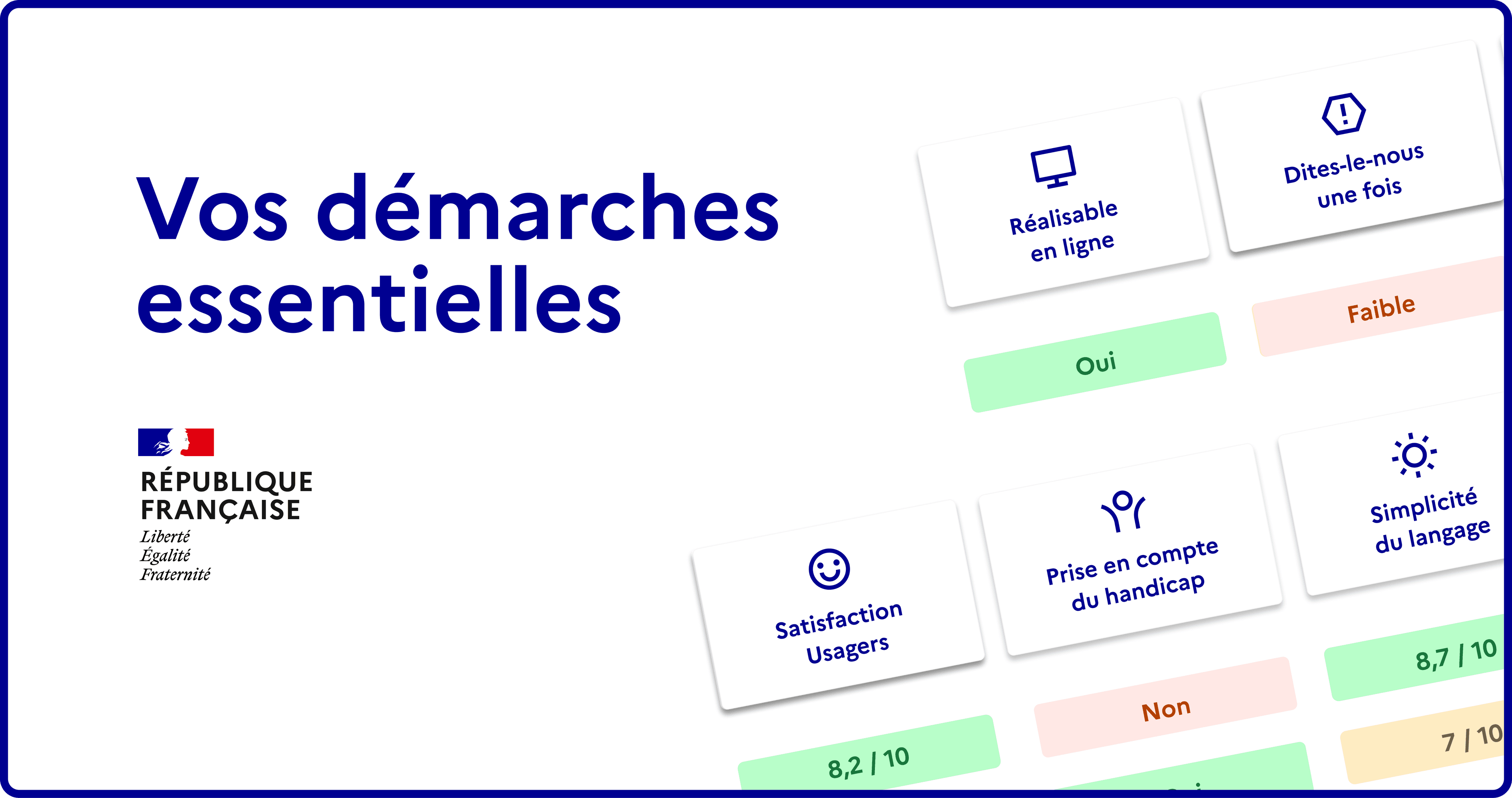
Overview of the Observatory
The “Observatoire de la qualité des démarches en ligne — Vos démarches essentielles” is a publicly released dataset hosted on data.gouv.fr, compiled by the French Digital Service (DINUM). It presents the State’s quarterly assessment of the digital quality of 250 essential public procedures, evaluating online availability and accessibility. The dataset is part of a systematic monitoring effort, refreshed each quarter, and was automatically submitted by the SCH profile routine.
Scope and Purpose
The observatory tracks the progress of digital transformation across France’s core administrative services. Its primary goal is to measure how many procedures are offered online and how many meet full accessibility standards, thereby supporting the national ambition of 100 % digital accessibility by the end of 2025. The data serve policymakers, researchers, and citizens interested in the effectiveness of e‑government initiatives.
Key Findings
- Out of 243 procedures that are already online, 219 are digitally available, representing a high level of online presence.
- Only 27 of those online procedures are fully accessible, highlighting a significant gap between availability and universal design.
- The dataset records 250 essential procedures in total, providing a comprehensive view of the public service landscape.
Methodology and Indicators
The observatory uses a standardized scoring system to evaluate each procedure on two dimensions: online presence and accessibility compliance (WCAG 2.1). Data are collected quarterly, allowing trend analysis over time. The “Refresh cycle: 2026‑Q4” indicates the most recent update, ensuring that stakeholders work with current information.
Institutional Context
DINUM (Direction Interministérielle du Numérique) is the French government agency responsible for digital transformation across ministries. Its mandate includes promoting open data, improving digital services, and ensuring that public administrations meet accessibility standards. The dataset reflects DINUM’s commitment to transparency and evidence‑based policy making.
Relevance for Sustainable Housing
While the observatory focuses on administrative procedures, many of the tracked services relate directly to housing, such as building permits, energy‑efficiency certifications, and subsidies for renovation. The data reveal that digital tools can streamline these processes, reducing paperwork, travel, and administrative delays—factors that contribute to lower carbon footprints. Faster, more accessible online services support sustainable housing initiatives by facilitating compliance with energy‑performance standards and enabling quicker access to financial incentives.
Future Outlook
The observatory sets a clear trajectory toward full digital accessibility by 2025. Ongoing quarterly updates will show whether the gap between online availability and full accessibility narrows. For a pan‑European audience, the French experience offers a benchmark for monitoring e‑government progress and illustrates how digital metrics can be leveraged to advance sustainability goals in the housing sector.
Practical Takeaways
- Stakeholders can use the dataset to identify which housing‑related procedures still lack full accessibility.
- Policymakers can target reforms toward the 27 fully accessible services to accelerate progress.
- Researchers can compare France’s digital transformation with other European nations, using the same indicators to assess cross‑country performance in sustainable public service delivery.