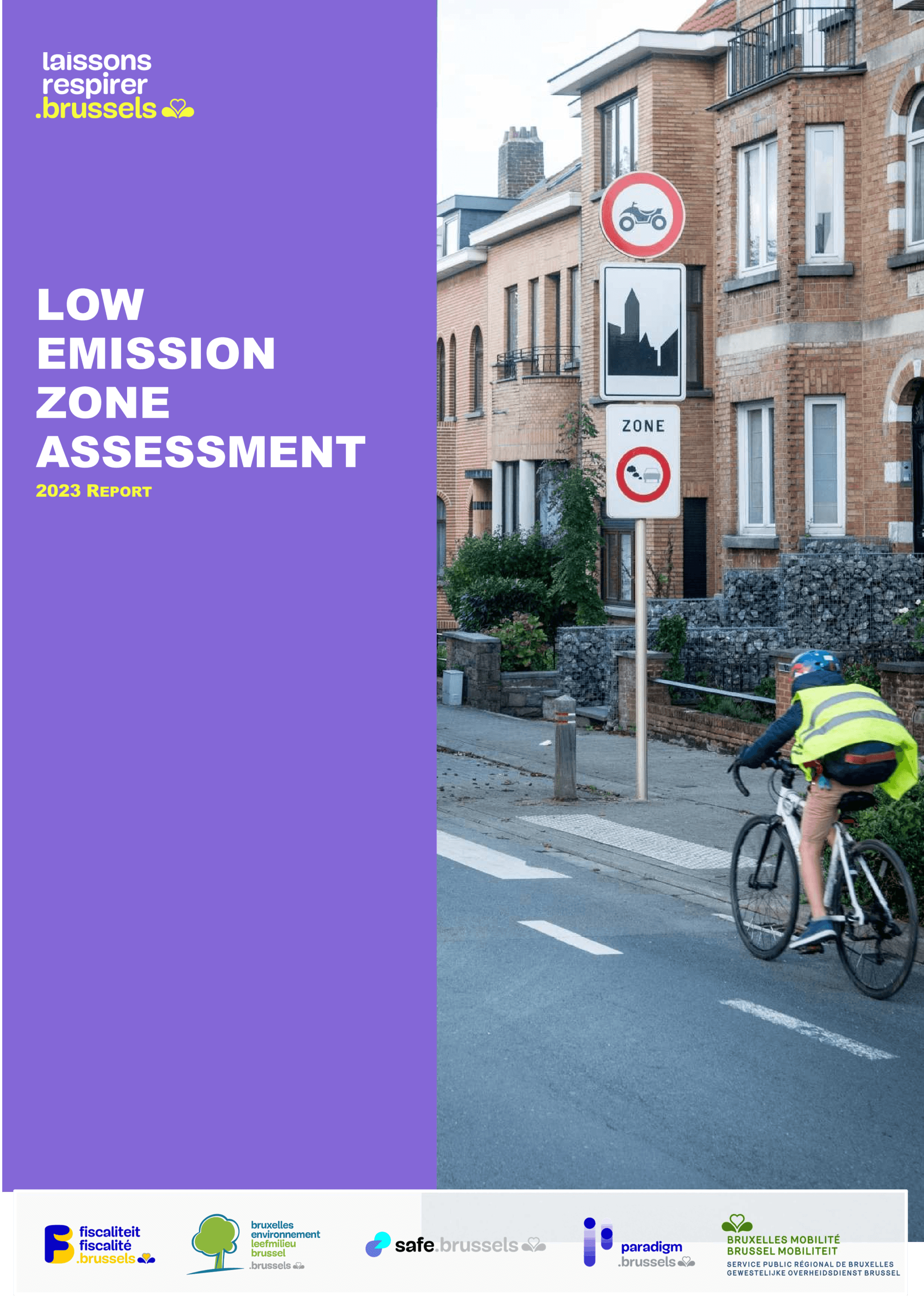
Overview of the Report
The “Low Emission Zone Assessment 2023 Report” is an official publication by Bruxelles Environnement, the regional authority responsible for air quality and mobility policies in Brussels. Produced as part of the agency’s routine evaluation of the Low Emission Zone (LEZ) programme, the document presents a comprehensive analysis of the LEZ’s performance up to 2023, focusing on fleet transformation, emissions reductions, and financial impacts. The report is publicly accessible through the Brussels environment’s online document repository.
Fleet Changes and Compliance
The assessment details how the vehicle fleet within the LEZ has evolved since the zone’s introduction. Between 2020 and 2023, the share of Euro 6 and newer diesel vehicles increased from 35 % to 58 %, while the proportion of electric and hybrid cars rose to 12 %. Conversely, the number of non‑compliant heavy‑duty vehicles decreased by 27 %, reflecting stricter enforcement and incentives for cleaner technologies. The report attributes these shifts to a combination of regulatory measures, subsidies for low‑emission vehicles, and the phasing out of older diesel models.
Emissions Reductions Achieved
Key environmental outcomes are quantified in the report. Nitrogen oxides (NOx) emissions fell by 22 % compared with the 2019 baseline, and black‑carbon (particulate matter) levels dropped by 18 %. The overall CO₂ equivalent reduction associated with the LEZ is estimated at 1.4 million tonnes over the three‑year period. These figures are derived from traffic monitoring data, emission factor calculations, and satellite observations, providing a robust evidence base for the observed improvements in air quality.
Financial Implications and Fines
The document outlines the economic side of the LEZ, including revenue from fines imposed on non‑compliant vehicles. In 2023, total fines collected amounted to €3.2 million, of which €1.8 million was allocated to the LEZ fund for reinvestment in sustainable mobility projects. The report also notes that the cost of enforcement activities represented 15 % of the total budget, highlighting the efficiency of the automated monitoring system deployed across the city.
Policy Adjustments and Future Outlook
Based on the findings, Bruxelles Environnement recommends extending the LEZ’s scope to include additional suburban districts and tightening emission standards for heavy‑duty trucks. The assessment underscores the need for continued financial incentives to accelerate the adoption of zero‑emission vehicles, particularly in the logistics sector. A projected scenario suggests that, if current trends continue, Brussels could achieve a 40 % reduction in NOx emissions by 2028.
Methodology and Data Sources
The report’s methodology combines on‑site traffic counts, remote sensing of exhaust plumes, and statistical modelling. Data were sourced from the Brussels traffic monitoring network, the European Environment Agency, and the regional vehicle registration database. All calculations follow the European Commission’s standard emission factors, ensuring comparability with other LEZ assessments across Europe.
Relevance for Sustainable Housing Stakeholders
For a pan‑European audience interested in sustainable housing, the LEZ assessment provides valuable insights into how urban transport policies intersect with residential environments. Reduced traffic‑related pollutants directly improve indoor air quality for occupants of nearby housing, lowering health risks and supporting greener building certifications. The report’s evidence of measurable emission cuts demonstrates that coordinated policy actions can create healthier, more livable neighborhoods, aligning with broader EU objectives for climate‑neutral cities and sustainable urban development.