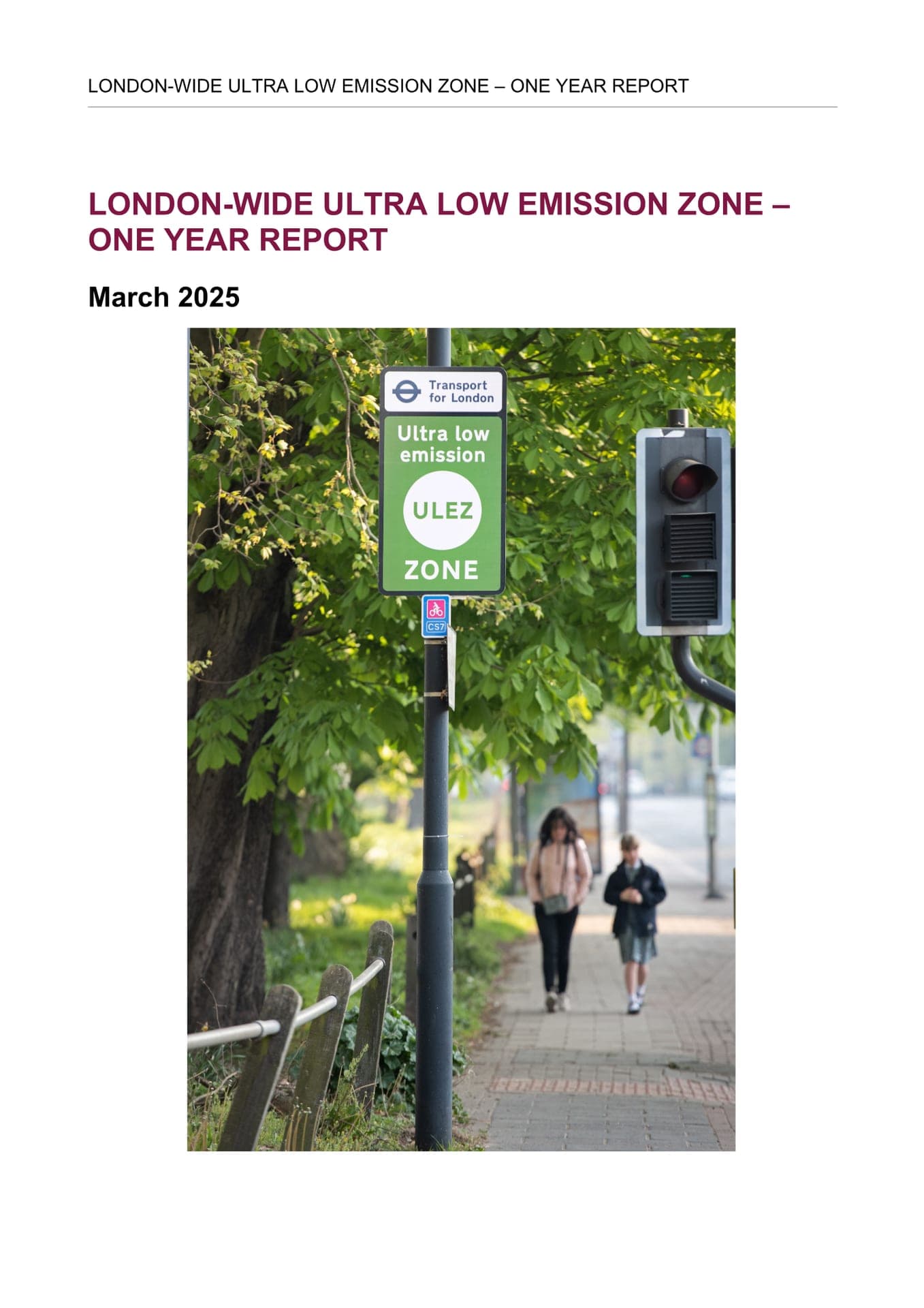
Overview of the ULEZ One‑Year Report
The Transport for London (TfL) report evaluates the first year of the London‑wide Ultra Low Emission Zone (ULEZ), a city‑wide, camera‑enforced program designed to reduce harmful vehicle emissions. The study presents compliance rates, air‑quality improvements, and climate‑impact assessments, offering a data‑rich snapshot of how stringent low‑emission policies perform at scale.
Key Compliance Findings
Compliance reached an impressive 96.7 % among vehicles operating within the zone, indicating that the majority of drivers either upgraded to cleaner vehicles or avoided the area. The high uptake reflects effective enforcement mechanisms and public awareness campaigns conducted by TfL and partner agencies.
Air‑Quality Benefits
Modelled reductions in nitrogen dioxide (NO₂) show a substantial improvement in urban air quality, aligning with the zone’s primary health‑focused objectives. The report quantifies the NO₂ cuts, demonstrating that the ULEZ contributes meaningfully to meeting the United Kingdom’s air‑quality targets.
Climate Impact Assessment
Despite strong air‑quality gains, the report indicates only a modest ~2 % decrease in carbon dioxide (CO₂) emissions. This disparity highlights that while the ULEZ effectively curbs local pollutants, its direct effect on overall greenhouse‑gas emissions is limited, underscoring the need for complementary climate strategies.
Economic and Social Context
The initiative was funded and managed by TfL, leveraging existing traffic‑monitoring infrastructure. The cost‑benefit analysis presented in the report suggests that health‑related savings from reduced pollution may offset operational expenses over time, though detailed financial figures are not disclosed in the summary.
Technical Implementation
The zone employs automatic number‑plate recognition (ANPR) cameras to identify non‑compliant vehicles in real time. Fines are issued automatically, and data collected feeds into ongoing monitoring and policy refinement. The technical setup demonstrates how digital enforcement can support large‑scale environmental regulation.
Future Outlook and Recommendations
The report recommends extending the ULEZ model to other UK cities and refining emission standards to achieve greater CO₂ reductions. It also suggests integrating the zone with broader sustainable transport initiatives, such as electric vehicle incentives and public‑transit enhancements, to amplify climate benefits.
Publication Details
The document is publicly accessible through TfL’s website and was submitted to the database on 16 October 2026. It is not AI‑generated and has undergone automatic approval under the tenant library‑promotion policy.