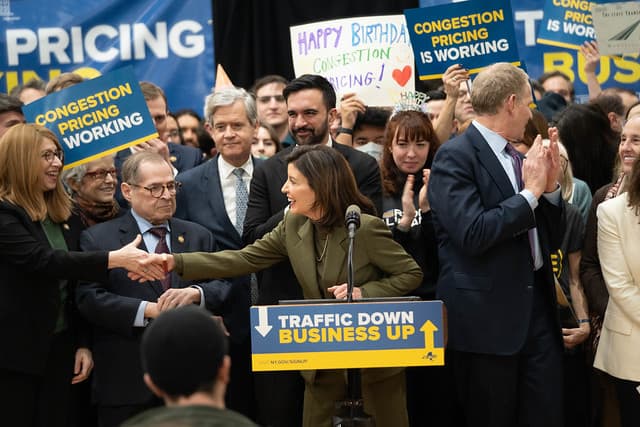
Overview of Congestion Pricing Impact
New York Governor Kathy Hochul’s office released a policy document announcing the first anniversary of the state’s congestion pricing program. The initiative, the United States’ inaugural urban cordon‑charge scheme, aims to reduce traffic, improve transit, and generate revenue for sustainable infrastructure. The document is publicly available on the Governor’s official website and was submitted to the SCH database on October 2 2026.
Traffic Reductions and Travel Times
One year after implementation, vehicle entries into the Manhattan central business district fell by 11 percent. The reduction in car traffic has contributed to faster crossing times at toll points and smoother flows on major arteries, easing congestion for remaining road users and public‑transport passengers.
Environmental Gains and Air Quality
The decrease in vehicle volume translated into measurable air‑quality improvements. Early monitoring shows lower concentrations of nitrogen oxides (NOx) and particulate matter (PM₂.₅) within the pricing zone, supporting the city’s climate‑action targets and offering health benefits to residents and commuters.
Financial Performance and Revenue Allocation
The program is projected to generate more than $550 million in net revenue during its first year. These funds are earmarked for public‑transport upgrades, including expanded bus and subway services, and for affordable‑housing projects that incorporate sustainable design standards, aligning with broader European interests in green urban development.
Policy Framework and Governance
Classified as a “Policy Document,” the release confirms that the program was not AI‑generated and follows New York State’s transparent reporting procedures. The document is listed under the “city/new‑york‑city § lighthouse‑projects” citation, indicating its role as a flagship initiative for urban mobility and climate resilience.
Access and Further Information
The full text, along with supporting data, can be accessed through the Governor’s official website at https://www.governor.ny.gov/news/less-traffic-better-transit-its-first-anniversary-governor-hochul‑celebrates‑transformational. The submission record notes automatic entry by the SCH profile routine, confirming its inclusion in the public policy database.
Implications for Sustainable Housing in Europe
While the document focuses on transportation, the earmarked revenue for affordable housing underscores a link between mobility policies and sustainable urban living. European cities examining congestion‑pricing models can draw lessons from New York’s integrated approach, where traffic reduction, environmental benefits, and reinvestment in green housing are pursued concurrently. The data illustrate how fiscal mechanisms tied to traffic management can fund housing that meets energy‑efficiency standards, supports transit‑oriented development, and reduces overall urban carbon footprints.