Overview of the Report
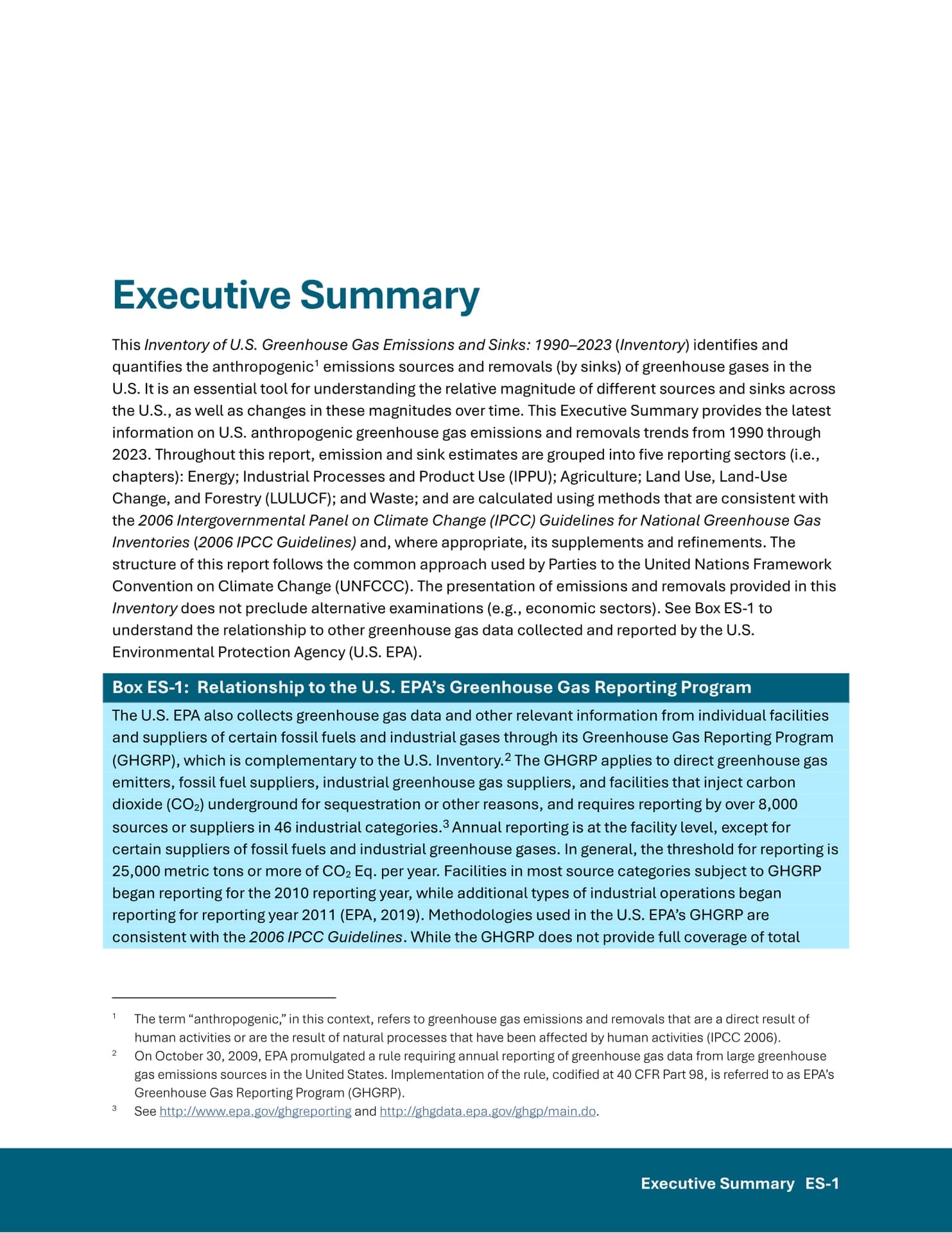
The document is the Executive Summary of the “Inventory of U.S. Greenhouse Gas Emissions and Sinks 1990–2023,” prepared by the U.S. Environmental Protection Agency (EPA) and released through the Environmental Defense Fund (EDF) via a Freedom of Information Act request. It presents a comprehensive accounting of national greenhouse‑gas (GHG) emissions and removals over a 33‑year period, offering a crucial reference for policymakers, researchers, and sustainability practitioners interested in long‑term emission trends and the effectiveness of mitigation measures.
Scope and Methodology
The inventory follows EPA’s established methodology for quantifying emissions from all major sectors, including energy production, industrial processes, agriculture, waste management, and land‑use change. It also accounts for carbon sinks such as forests and soils. Data are compiled from federal monitoring programs, industry reports, and scientific models, ensuring consistency with international reporting standards (e.g., the IPCC Guidelines). The 2023 summary represents the latest available data, extending the series that began in 1990.
Key Emission Trends
From 1990 to 2023, total gross GHG emissions in the United States have decreased modestly. Gross emissions in 2023 are reported to be 5.2 % lower than the 1990 baseline, reflecting gradual shifts toward cleaner energy sources, improved efficiency, and regulatory actions. Despite this decline, the absolute volume of emissions remains substantial, underscoring the continued relevance of aggressive climate policies.
Role of Sinks and Net Emissions
While gross emissions have fallen, the net emissions—gross emissions minus removals by sinks—show a more nuanced picture. Forests, soils, and other natural sinks have partially offset anthropogenic releases, but the net balance remains positive, indicating that the United States still contributes a net increase to atmospheric GHG concentrations. The report details the contribution of each sink type and highlights uncertainties related to land‑use dynamics.
Sector‑Specific Findings
- Energy: Still the largest source, though coal‑related emissions have declined sharply, while natural‑gas and renewable electricity have reshaped the profile.
- Industry: Emissions from cement, chemicals, and metal production have shown modest reductions due to process improvements and fuel switching.
- Transportation: Emissions have plateaued, with electric‑vehicle adoption beginning to influence the mix but offset by growth in freight activity.
- Agriculture: Methane from livestock and nitrous oxide from fertilizers remain significant, with limited progress in mitigation.
- Waste: Improvements in landfill gas capture have yielded modest emission cuts.
Data Highlights for Sustainable Housing
For a pan‑European audience focused on sustainable housing, the inventory offers several relevant insights:
- Residential energy use accounts for a notable share of total emissions, driven by heating, cooling, and appliance electricity.
- The shift from coal‑based heating to natural gas and electric heat pumps is reflected in the downward trend, suggesting that similar transitions in Europe could yield comparable benefits.
- Building‑related emissions intersect with the electricity sector; as grids decarbonize, the carbon intensity of electrically powered heating and cooling will decline.
- The report underscores the importance of integrating energy‑efficiency standards, retrofitting existing stock, and adopting low‑carbon technologies—strategies that align with EU directives on nearly zero‑energy buildings.
Access and Use
The Executive Summary is publicly available through the EDF library link provided. It serves as a baseline for tracking progress toward the United States’ emission‑reduction targets and can inform comparative analyses of national inventories, supporting cross‑regional learning on effective climate‑action pathways for the built environment.