Overview of the Initiative
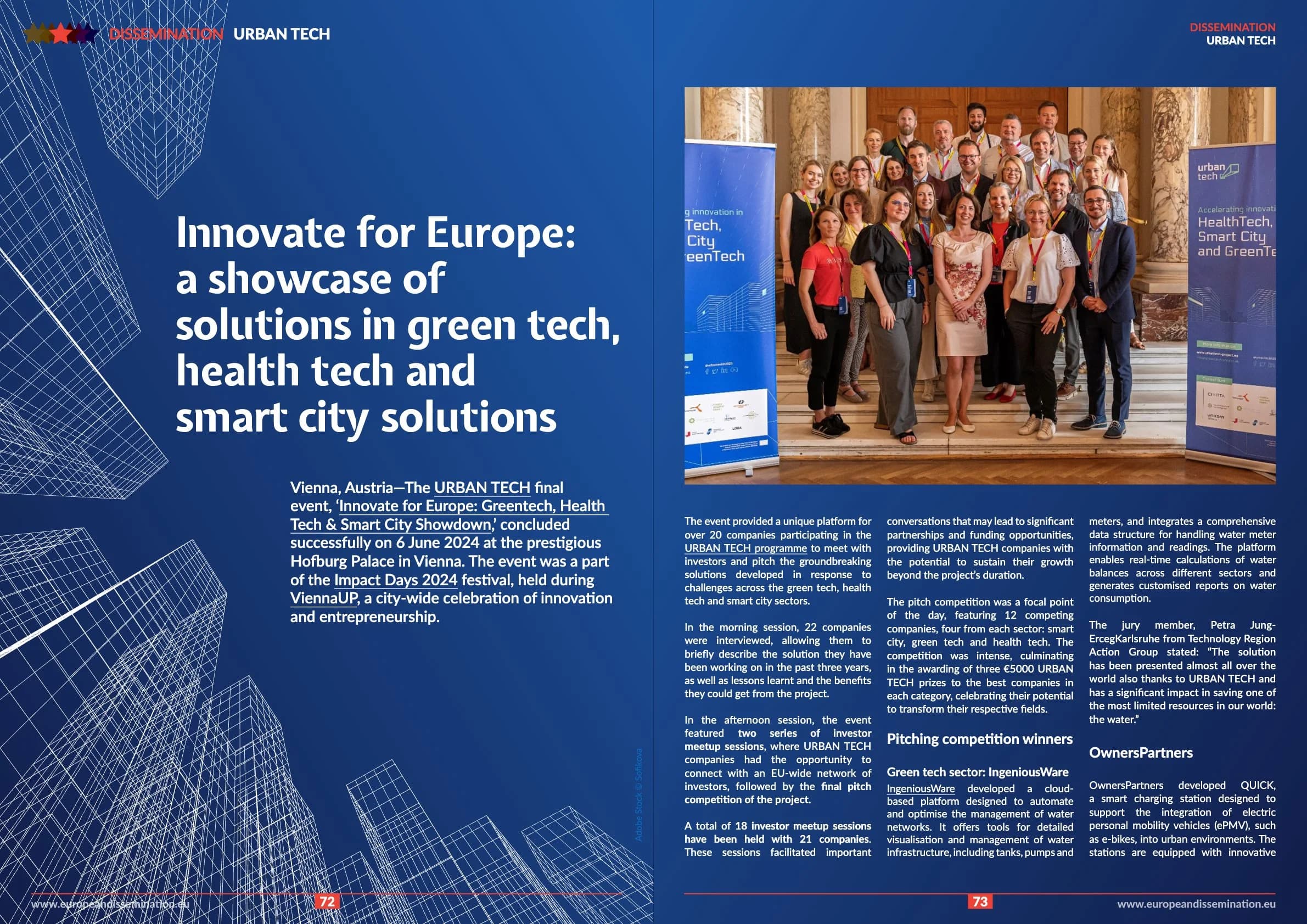
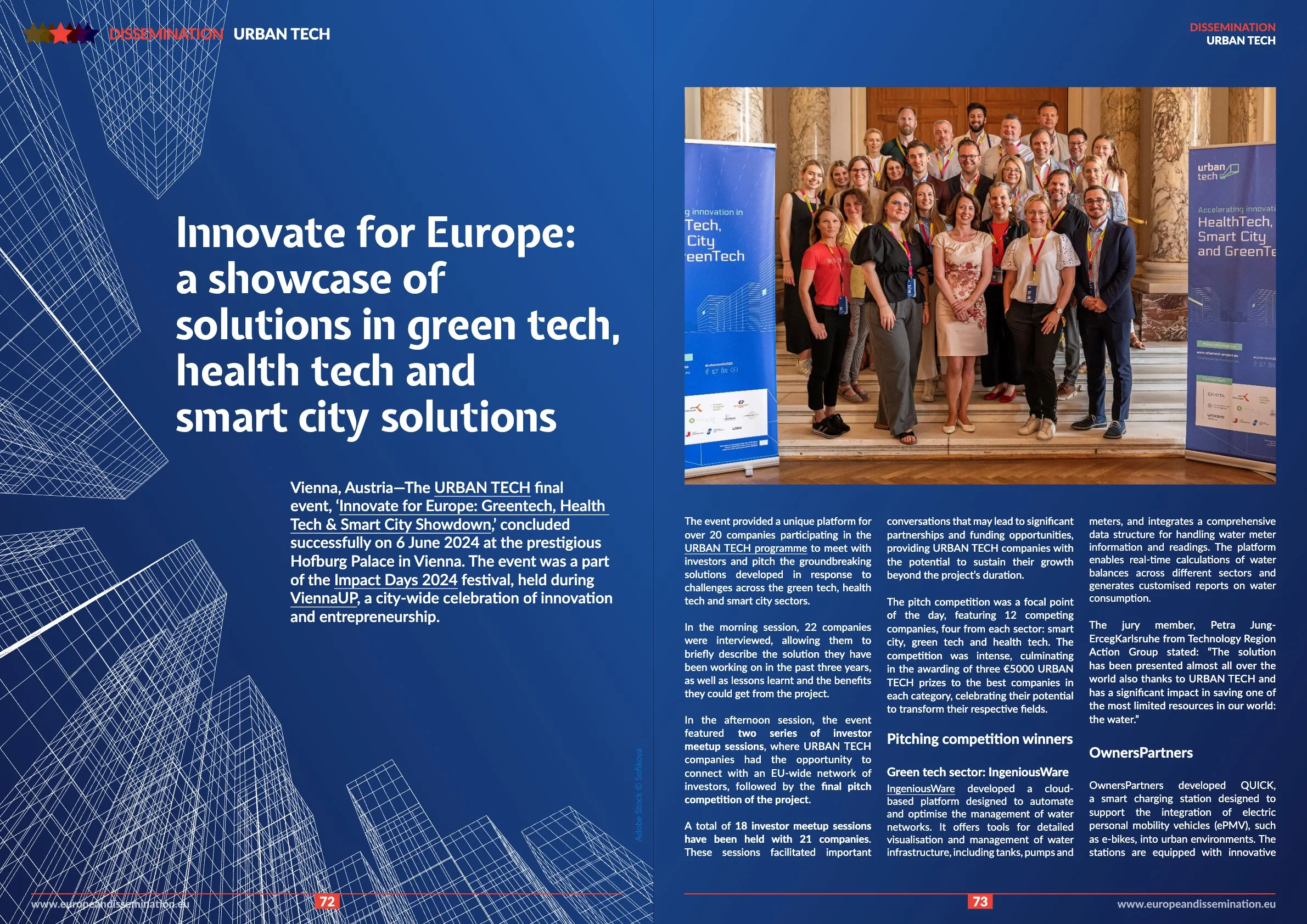
The resource, published by European Dissemination, presents the results of the URBAN TECH project – a three‑year Horizon 2020 programme that gathered more than 300 urban challenges across green tech, health tech and smart city sectors. The final event “Innovate for Europe: Greentech, Health Tech & Smart City Showdown” took place in Vienna on 6 June 2024, showcasing solutions from over 20 participating companies and facilitating investor matchmaking.
Key Project Metrics
- 314 challenges collected from 12 European countries
- 559 applications received, 323 companies selected from 36 countries
- 8 international challenge‑based hackathons, generating 160 travel vouchers
- 80 companies invited to submit full proposals; 80 solutions incubated in tech parks
- 900+ mentoring hours provided; 33 solutions piloted with challenge owners
- 23 solutions progressed to market discovery; 32 innovative solutions now market‑available
- Total financial support exceeds €2 million, benefiting more than 160 companies
Competition Winners and Their SolutionsGreen Tech – IngeniousWare: Developed “WaterIng”, a cloud‑based platform that visualises water networks, integrates meter data, automates water‑balance calculations and generates custom consumption reports. The solution aims to optimise water management for utilities worldwide.Smart City – OwnersPartners: Created “QUICK”, a modular electric‑personal‑mobility charging station equipped with UV disinfection lockers, air‑quality monitoring, solar panels and integrated user‑friendly apps for riders and city managers.Health Tech – Zana Technologies: Launched a digital patient companion for at‑home COPD rehabilitation, offering personalised exercise programmes, vital‑sign monitoring, AI‑driven chat support and multilingual mobile apps, with positive feedback from 80 % of pilot users.
Impact on Sustainable Housing
The showcased technologies directly support sustainable housing across Europe:
- WaterIng enables efficient water use in residential complexes, reducing waste and utility costs.
- QUICK stations encourage electric bike adoption, lowering emissions from short‑distance travel and facilitating greener commuting for apartment dwellers.
- Zana’s digital companion reduces the need for frequent clinical visits, allowing patients with chronic respiratory conditions to recover at home, decreasing travel‑related carbon footprints.
Investor and Market Engagement
The event hosted 22 company interviews and 18 investor‑meetup sessions, connecting 21 companies with a Europe‑wide investor network. Three €5 000 URBAN TECH prizes were awarded, one per sector, enhancing visibility and funding prospects for the winners.
European Collaboration and Dissemination
The URBAN TECH consortium comprised 11 technology parks, consultancy agencies and universities from nine countries, ensuring cross‑border expertise sharing. Dissemination channels include a dedicated website, video highlights, and a searchable database of all solution providers, facilitating broader access for policymakers, developers and housing professionals interested in sustainable urban solutions.
Access to Further Information
The full set of results, detailed company profiles and multimedia resources are available through the project’s website and a dedicated online portal, providing pan‑European stakeholders with the data needed to replicate or adapt these innovations for sustainable housing projects across the continent.