
Overview of the Report
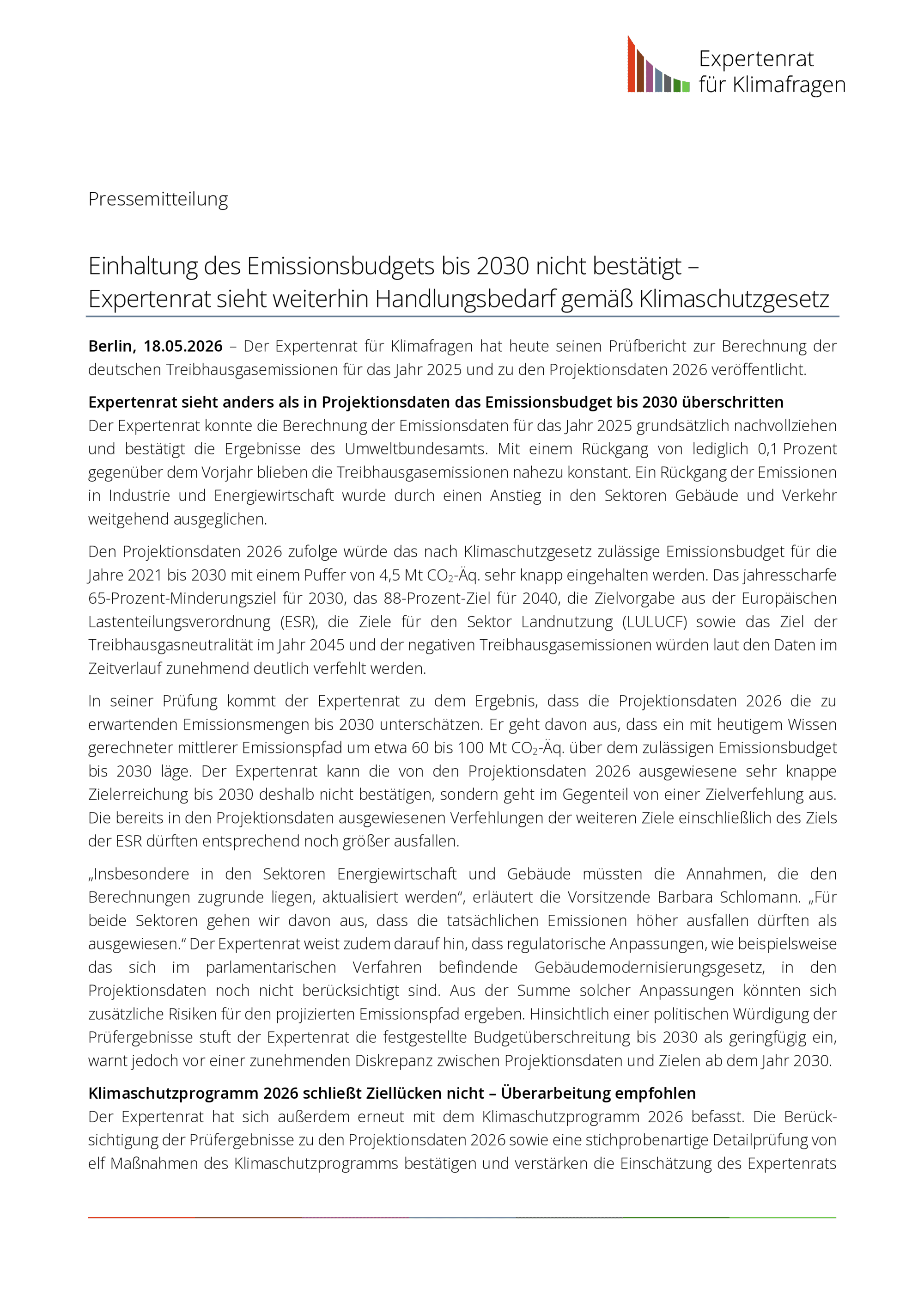
The document is a press release titled “Expertenrat für Klimafragen: Prüfbericht zu den Emissionsdaten 2025 und den Projektionsdaten 2026,” issued by the German statutory Climate Council (Expertenrat für Klimafragen). It presents the council’s assessment of Germany’s greenhouse‑gas emissions for the year 2025 and projected trends for 2026, with a particular focus on the housing sector’s role in meeting climate targets.
Emissions Findings for 2025
The council’s verdict indicates that total emissions remained flat in 2025, despite notable increases in the building and transport sectors. While some sectors achieved reductions, the rise in residential energy use and transportation offset these gains, preventing an overall decline. The report highlights that the 2021‑2030 emissions budget is projected to be exceeded by between 60 and 100 megatonnes of CO₂ equivalent if current trends continue.
Housing Sector Impact
In the housing domain, the data show a rise in energy consumption due to increased heating demand and a slower uptake of energy‑efficient renovations. The council notes that the existing building stock still relies heavily on fossil‑fuel based heating systems, contributing significantly to the sector’s emissions growth. The report underscores the need for accelerated retrofitting and the adoption of renewable heating technologies to align with climate objectives.
Transport Contributions
Transport emissions also increased in 2025, driven by higher private vehicle mileage and delayed electrification of the fleet. The council points out that while public transport usage grew modestly, it was insufficient to offset the rise in road traffic emissions, further pressuring the overall emissions balance.
Projections for 2026
The study projects that, without intensified policy measures, the emissions overshoot will continue into 2026. It estimates that the housing sector alone could add another 20‑30 Mt CO₂e to the national total, emphasizing the urgency of comprehensive energy‑saving measures and stricter building codes.
Policy Recommendations
Key recommendations include:
- Mandatory energy‑performance standards for existing residential buildings.
- Financial incentives and subsidies for deep‑renovation projects.
- Expansion of district heating networks powered by renewable sources.
- Strengthened vehicle emission standards and accelerated rollout of charging infrastructure.
Implementation Timeline
The council proposes a phased approach, with short‑term actions (2026‑2028) targeting rapid retrofits of high‑energy‑use buildings, and medium‑term measures (2029‑2035) focusing on the complete transition to low‑carbon heating and transport systems. The timeline aligns with the EU’s Fit for 55 package and the German Climate Protection Act.
Relevance for Sustainable Housing in Europe
For a pan‑European audience, the report offers a concrete case study of how housing‑related emissions can jeopardize national climate goals. The data illustrate the scale of retrofitting required and the potential emissions savings if EU members adopt similar stringent standards. The findings reinforce the importance of coordinated policy frameworks, cross‑border financing mechanisms, and shared best practices to achieve sustainable, low‑carbon housing across Europe.