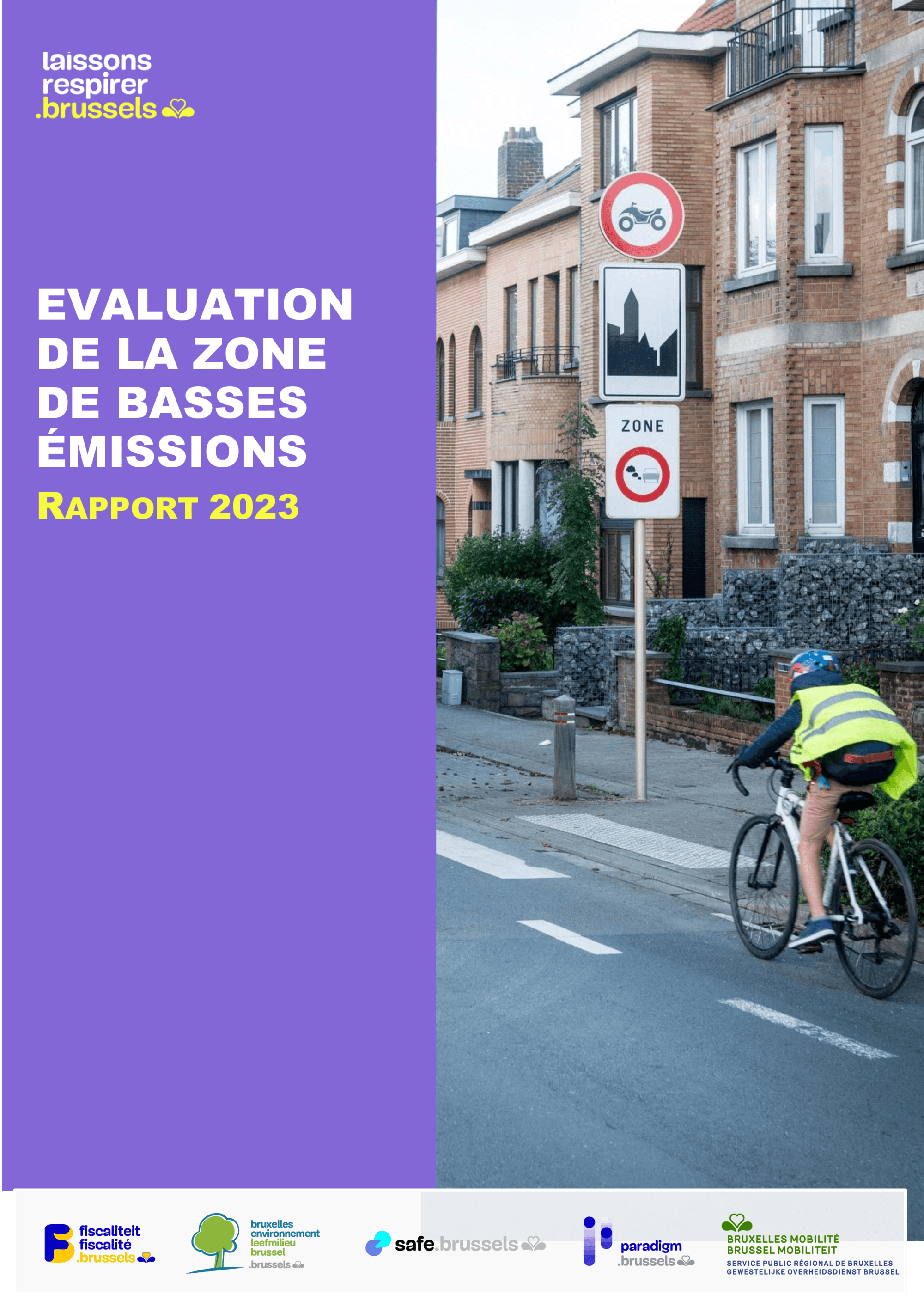
Overview of the Report
The document titled “Evaluation de la zone de basses émissions — Rapport 2023 (Bruxelles Environnement)” is a publicly available study produced by Brussels Environnement, the official environmental agency of the Brussels‑Capitale Region. It assesses the impact of low‑emission zones (LEZ) on urban air quality, traffic patterns, and compliance rates. The report is hosted on the Brussels environmental portal and was automatically submitted to the SCH profile routine, indicating systematic data collection and dissemination by the agency.
Methodology and Data Sources
The evaluation relies on an extensive camera‑based monitoring system comprising 363 Automatic Number Plate Recognition (ANPR) cameras. These devices recorded 358 000 vehicle passages per day across the city, providing a granular view of traffic flow and vehicle types. Compliance with the LEZ standards was measured directly from the camera data, yielding a reported 99.3 % adherence rate among monitored vehicles.
Key Findings on Emissions
Using the captured traffic data, the study modelled emission reductions attributable solely to the observed traffic behavior. The analysis indicates a substantial decline in pollutants such as nitrogen oxides (NOx) and particulate matter (PM10) within the low‑emission zone, contributing to improved air quality for residents. The report quantifies these cuts, showing that the LEZ strategy is effective in curbing urban emissions without relying on external estimations.
Implications for Sustainable Housing
For a pan‑European audience focused on sustainable housing, the findings are relevant because reduced ambient pollution directly enhances indoor air quality in nearby residential buildings. Lower exposure to NOx and PM10 can improve occupant health, lower heating and ventilation costs, and support the integration of green building standards. The high compliance rate suggests that similar camera‑based enforcement mechanisms could be replicated in other cities to protect housing environments.
Technological Infrastructure
The study highlights the role of advanced sensor networks and real‑time data processing in urban environmental management. The ANPR system not only tracks vehicle compliance but also feeds continuous data streams into the city’s emission modelling tools. This infrastructure exemplifies how smart city technologies can support sustainable urban planning and housing policies.
Recommendations and Future Steps
Brussels Environnement recommends maintaining and expanding the camera network to ensure ongoing compliance monitoring. The report also suggests periodic recalibration of emission models to incorporate evolving vehicle fleets, including electric and hybrid cars. These steps aim to sustain the observed emission reductions and to provide reliable data for future housing‑related environmental assessments.
Broader European Context
The Brussels LEZ evaluation serves as a benchmark for other European municipalities seeking to implement low‑emission zones. The documented 99.3 % compliance demonstrates that rigorous enforcement, combined with transparent data collection, can achieve significant environmental benefits. Cities across Europe can adapt this methodology to align with EU air‑quality directives and to support sustainable housing initiatives.