Overview of the Report
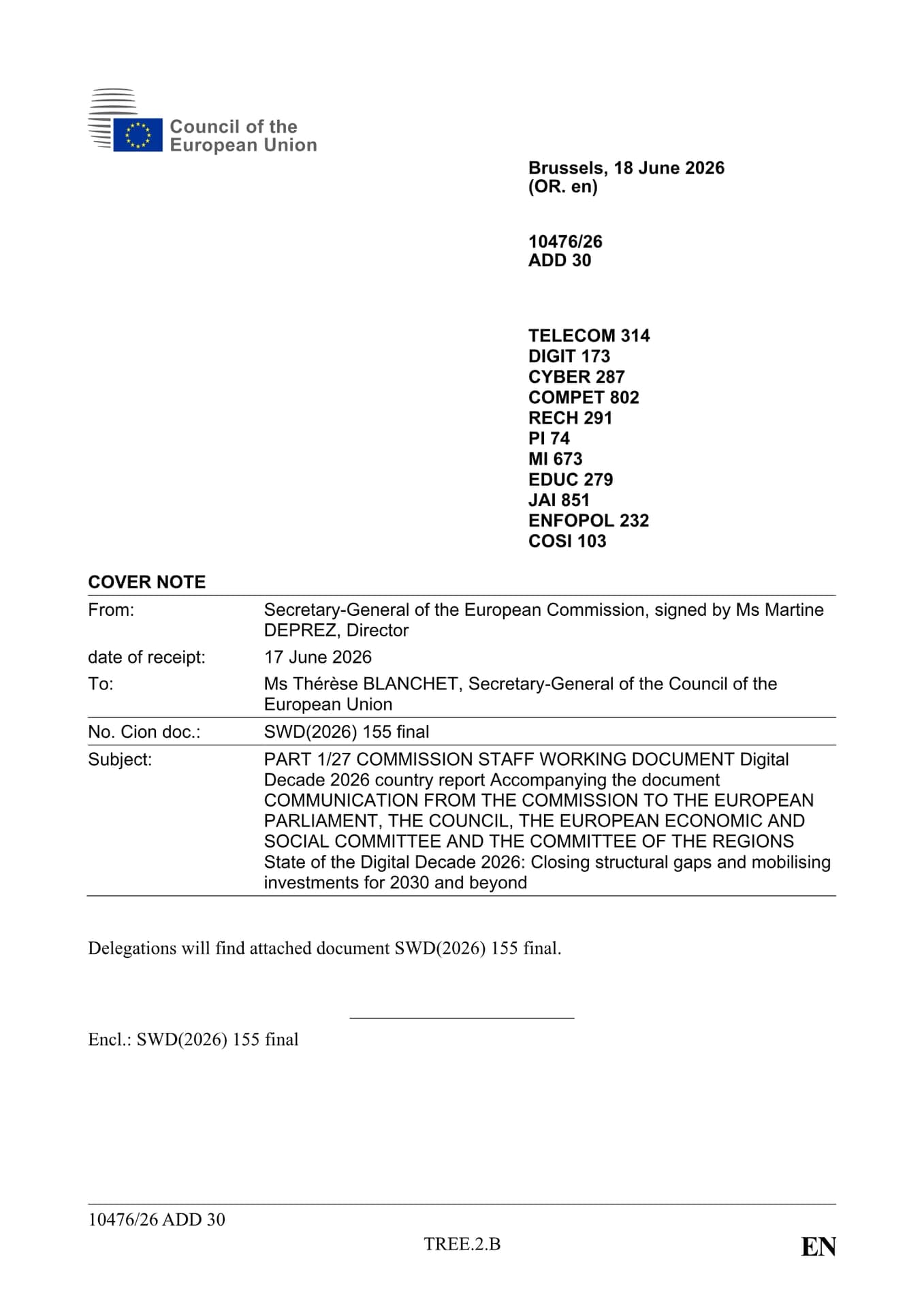
The document titled “Digital Decade 2026 country report: Austria (SWD(2026) 155 final)” is a publicly available report produced under the European Union’s Digital Decade framework. It is hosted on the Council of the European Union’s data portal (https://data.consilium.europa.eu) and was automatically submitted by the SCH profile routine. The report is classified as a “Report / Study” and is not AI‑generated.
Context for Sustainable Housing
While the primary focus of the report is on Austria’s digital infrastructure, the editorial angle highlights the country’s fibre‑optics gap, which directly impacts sustainable housing initiatives. Reliable high‑speed connectivity is a key component of energy‑efficient homes, enabling smart‑metering, automated energy management, and remote monitoring of building performance. The lack of a copper switch‑off plan and the cancellation of the 2025 funding call for mobile cubes suggest challenges in achieving fully digital, low‑carbon residential environments.
Digital Service Scores by Tier
The report provides quantitative scores for digital services across three administrative levels:
- Local tier: 87.0 %
- Regional tier: 76.07 %
- Central tier: 88.78 % These figures indicate that Austria performs relatively well at the local and central levels, but the regional score lags behind, pointing to uneven digital readiness across the country’s territories.
Infrastructure Gaps and Fibre Deployment
A key finding is the “fibre gap,” described as the shortfall between existing fibre‑optic coverage and the demand for ultra‑broadband in residential areas. The report notes that mobile‑cube solutions have not been adopted as a substitute for fibre, and there is no nationwide plan to decommission copper networks. This gap can hinder the implementation of smart‑home technologies essential for sustainable housing, such as real‑time energy consumption feedback and automated demand‑response systems.
Funding Landscape
The cancellation of the 2025 funding call for mobile‑cube projects removes a potential source of financial support for bridging the digital divide in housing. However, the broader Digital Decade agenda continues to allocate resources for digital infrastructure upgrades, which could be redirected toward expanding fibre networks in underserved regions, thereby supporting sustainable building retrofits and new eco‑friendly constructions.
Refresh Cycle and Future Outlook
The report is part of a quarterly refresh cycle, with the next update scheduled for Q4 2026. This regular updating mechanism ensures that stakeholders receive up‑to‑date information on Austria’s digital progress, which will be critical for monitoring the impact of digital infrastructure on sustainable housing targets over the coming years.
Implications for Pan‑European Audiences
For a pan‑European audience interested in sustainable housing, the Austrian case illustrates the importance of aligning digital infrastructure policies with climate‑friendly building strategies. The data underscores that strong local and central digital scores can facilitate advanced housing solutions, while regional disparities may require targeted interventions. The absence of a copper switch‑off plan and the halted mobile‑cube funding highlight policy areas where EU‑level coordination could accelerate the rollout of high‑capacity broadband, thereby enabling the broader adoption of smart, energy‑efficient homes across member states.