Overview of the Report
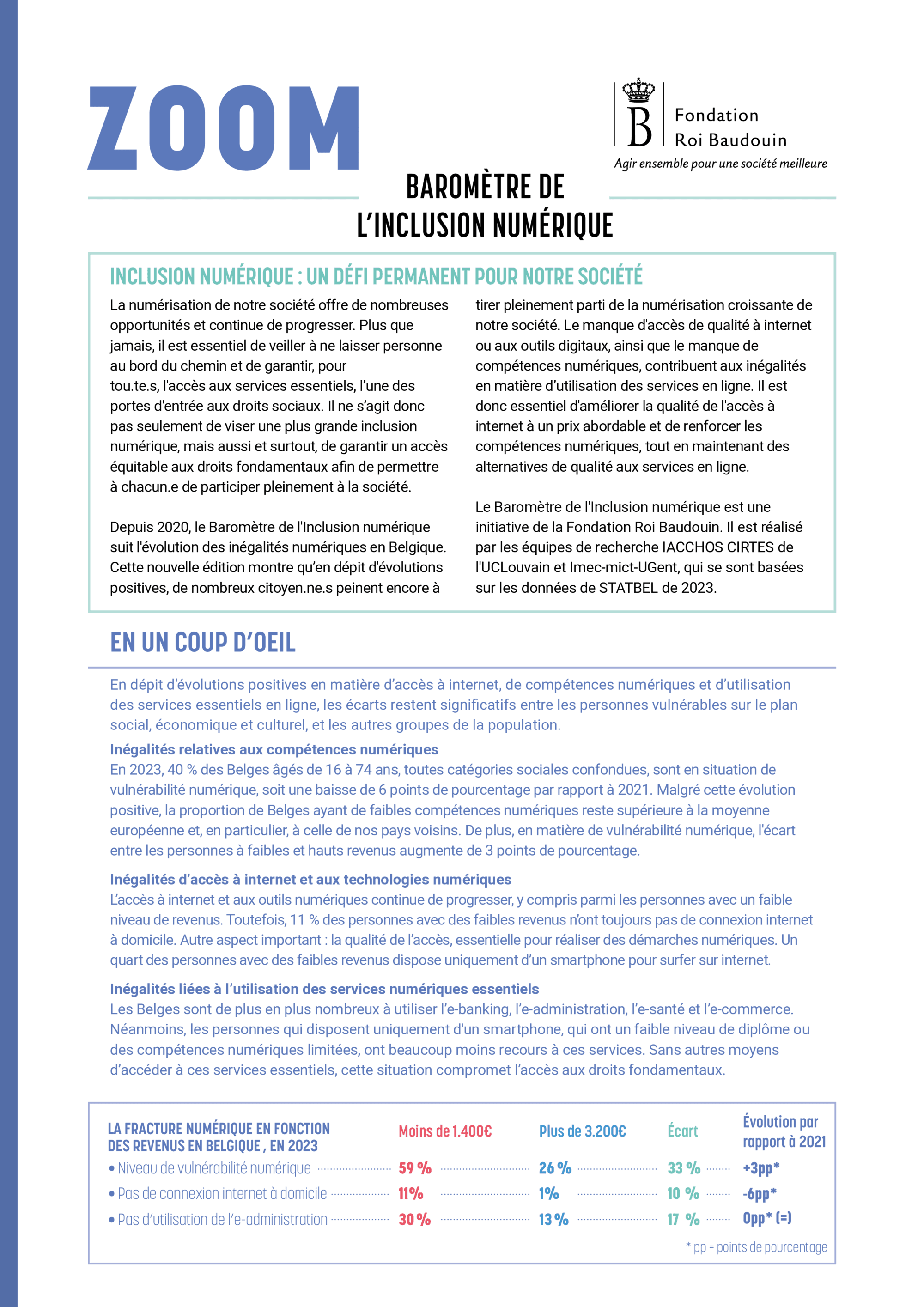
The Barometer of Digital Inclusion 2024 (ZOOM) is a study published by the Fondation Roi Baudouin. It provides a comprehensive analysis of digital vulnerability among adults in the Brussels region, highlighting the socioeconomic groups most affected.
Scope and Context
The study focuses on the population aged 16–74, revealing that 36 % of adults are digitally vulnerable. Vulnerability is defined by limited access to digital devices, insufficient digital skills, and low usage of online services. The research is part of a broader European effort to understand digital exclusion and its impact on social cohesion and economic participation.
Key Findings
- Overall Vulnerability: 36 % of adults in the region lack adequate digital inclusion.
- Affected Groups: The most vulnerable groups are low‑income households, job‑seekers, low‑qualified individuals, and single parents.
- Age Distribution: Vulnerability is spread across the entire 16‑74 age range, with higher concentrations among older adults and younger adults in precarious employment.
- Geographic Concentration: Urban districts with higher poverty rates show the greatest levels of digital exclusion.
Socio‑Economic Implications
The data indicate that digital exclusion reinforces existing social inequalities. Low‑income families and single‑parent households face barriers to accessing e‑government services, online education, and digital job markets. This undermines efforts toward inclusive economic growth and sustainable development, as digital tools are increasingly essential for participation in modern economies.
Relevance to Sustainable Housing
Digital inclusion intersects with sustainable housing initiatives. Households that cannot access digital platforms struggle to benefit from smart‑home technologies, energy‑efficiency monitoring tools, and online rental or ownership services. The report’s findings suggest that without addressing digital vulnerability, housing policies aimed at sustainability may fail to reach the most disadvantaged residents.
Policy Recommendations
- Targeted Digital Literacy Programs: Tailor training for low‑income and single‑parent households to improve basic digital skills.
- Affordable Access Initiatives: Subsidize broadband and device costs for vulnerable groups, enabling participation in digital services.
- Integration with Housing Strategies: Embed digital inclusion measures within sustainable housing projects, ensuring residents can use smart‑technology solutions.
- Cross‑Sector Collaboration: Encourage partnerships between government, NGOs, and the private sector to create holistic solutions that address both digital and housing needs.
Source Credibility
The Fondation Roi Baudouin, a reputable Belgian philanthropic organization, authored the study. While the authors are not individually named, the institution’s track record in social research adds credibility. The report is publicly available on the foundation’s media portal, ensuring transparency and accessibility.
Access Information
The full study can be accessed online at the Fondation Roi Baudouin’s website: https://media.kbs-frb.be/fr/media/11912/zoom_barometre_inclusion_numerique. It is listed as a public resource and was automatically submitted to the SCH profile routine for inclusion in the tenant library‑promotion system.