Overview of the Barometer Report
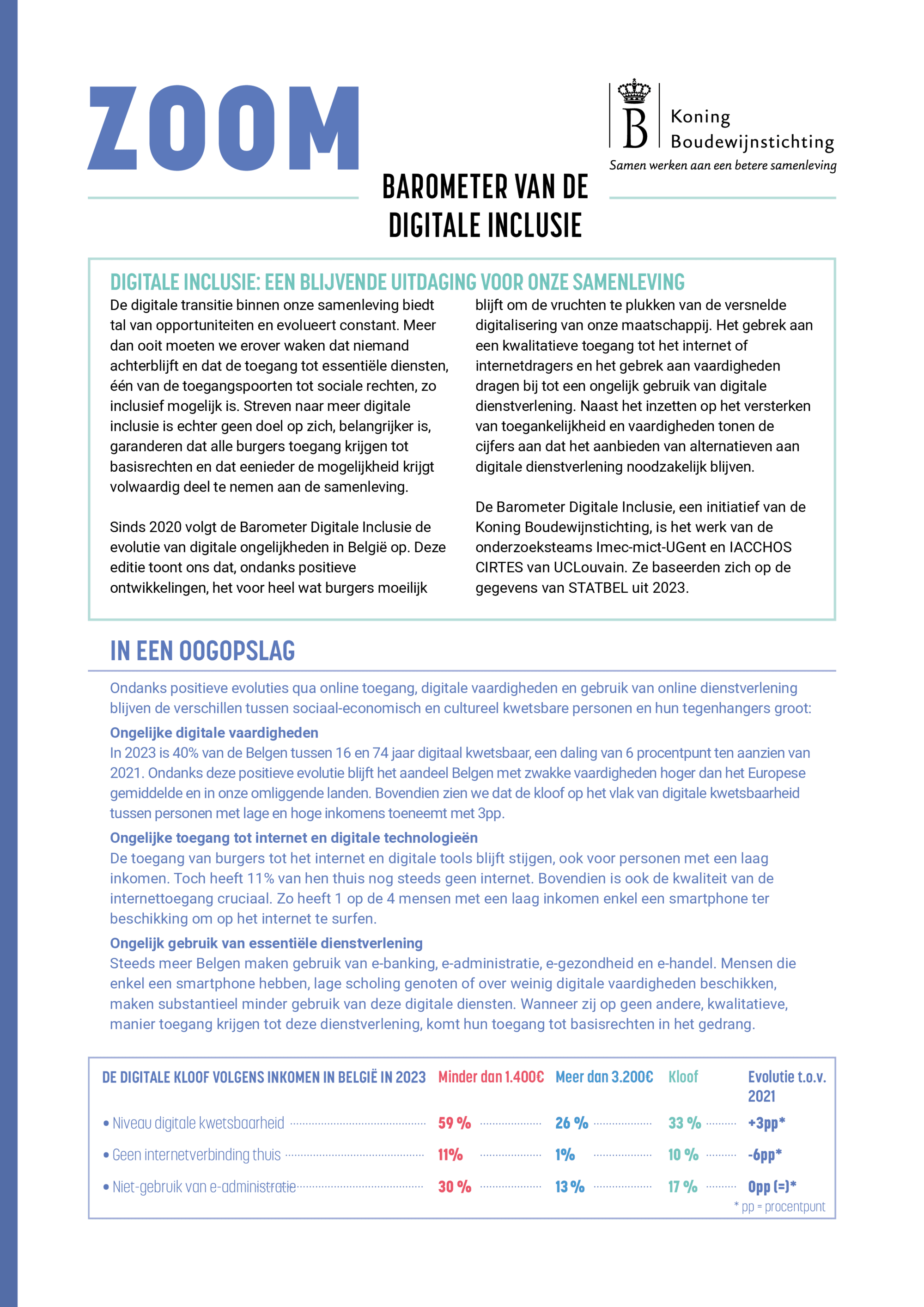
The Barometer of Digital Inclusion 2024 — Zoom is a comprehensive study produced through a collaboration between the Koning Boudewijnstichting, imec‑mict‑UGent, UCLouvain CIRTES, and based on Statbel 2023 data. It offers a detailed picture of digital vulnerability across Belgium, highlighting regional disparities and demographic groups most at risk of exclusion from digital services.
Scope and Geographic Focus
The report covers the entire Belgian territory, breaking down results for the three main regions: Wallonia, Flanders, and Brussels. It quantifies the proportion of the population aged 16–74 that is digitally vulnerable, providing a clear comparison between regions and illustrating where policy interventions are most needed.
Key Findings on Digital Vulnerability
- 40 % of the overall population aged 16–74 is considered digitally vulnerable.
- Vulnerability rises sharply with age: 55 % of people aged 55–74 fall into this category.
- Regional differences are pronounced: 45 % in Wallonia, 39 % in Flanders, and 36 % in Brussels are digitally vulnerable.
- Socio‑economic status matters: 30 % of low‑income households do not use e‑administration services, indicating a strong link between income and digital exclusion.
Implications for Sustainable Housing
Digital inclusion is increasingly tied to sustainable housing initiatives, as smart‑home technologies, energy‑efficiency platforms, and online tenant services require reliable digital access. The high share of vulnerable citizens, especially among older adults and low‑income groups, suggests that many households may be unable to benefit from energy‑saving tools, remote monitoring, or digital rent payment systems, potentially slowing the adoption of greener housing solutions.
Methodology and Data Sources
The barometer relies on official statistics from Statbel (the Belgian statistical office) for 2023, supplemented by targeted surveys and administrative records. Data were processed and validated by the research teams at imec‑mict‑UGent and UCLouvain CIRTES, ensuring methodological rigor and comparability across regions.
Refresh Cycle and Future Updates
The study follows a quarterly refresh schedule, with the next update planned for the fourth quarter of 2026. This regular cadence allows policymakers and stakeholders to monitor trends, assess the impact of interventions, and adjust strategies in a timely manner.
Policy Recommendations Highlighted
- Prioritise digital skills training for older adults, especially in Wallonia where vulnerability peaks.
- Expand affordable broadband infrastructure in low‑income neighborhoods to close the digital divide.
- Integrate digital inclusion metrics into sustainable housing programmes, ensuring that smart‑home incentives are accessible to all demographic groups.
- Coordinate between regional governments to share best practices and harmonise digital inclusion efforts across Belgium.
Access and Availability
The full report is publicly available on the Koning Boudewijnstichting website (https://media.kbs-frb.be/nl/media/11911/zoom_barometer_digitale_inclusie_2024). It has been automatically submitted to the SCH profile routine and is listed under the national‑pressures citation in the Belgium country profile. The resource is marked as public, not AI‑generated, and complies with the tenant library‑promotion policy.