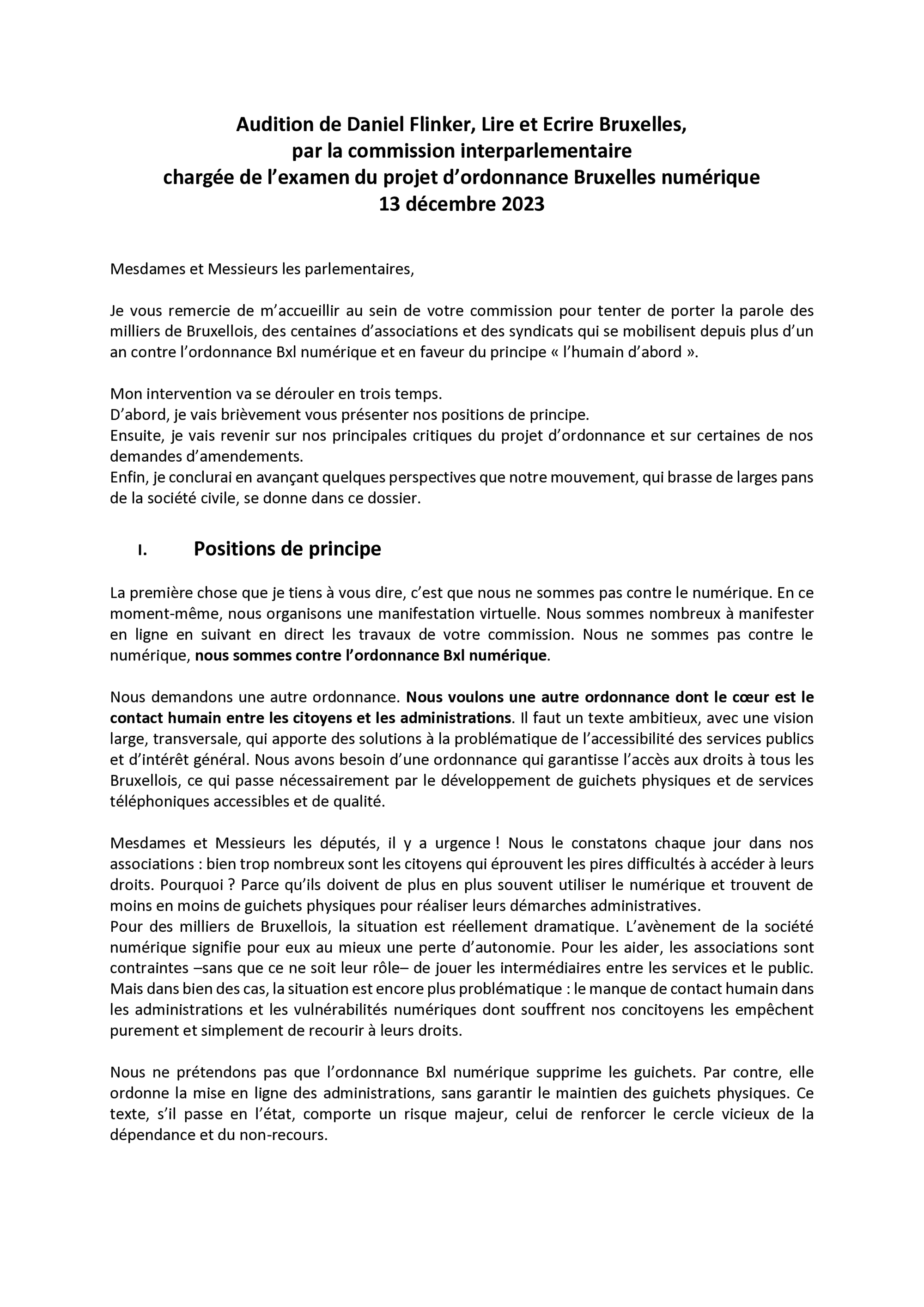

Overview of the Audition
The document records the testimony of Daniel Flinker before the inter‑parliamentary commission reviewing the draft Brussels Digital Ordinance. It was submitted automatically by the SCH profile routine and is publicly available through the Lire et Écrire Brussels website. The submission was entered into the database on 2 October 2026.
Context of the Publisher and Authors
Lire et Écrire Brussels is a civil‑society platform that aggregates research and advocacy material on urban policy. Daniel Flinker, representing a coalition of approximately 200 associations, provided expert input on the implications of a “digital‑by‑default” approach for the city’s residents and infrastructure.
Key Facts About the Policy Debate
The commission’s examination focuses on the proposed Brussels Digital Ordinance, which aims to increase digital service provision across municipal functions. The civil‑society coalition argues that mandatory digital channels risk excluding vulnerable groups, increase energy consumption, and undermine sustainable urban development goals.
Link to Sustainable Housing
While the primary subject is digital policy, the testimony highlights how excessive digitalisation can affect housing sustainability. Digital‑only service delivery may increase the need for data centres, raising the carbon footprint of housing administration. The coalition calls for hybrid solutions that preserve low‑energy, community‑based housing models and ensure equitable access to information.
Data Cited in the Audition
- Approximately 200 associations formed the coalition.
- The draft ordinance proposes a city‑wide shift to digital platforms for public services.
- No specific monetary figures are provided, but the environmental impact of increased digital infrastructure is emphasized.
Findings on Digital‑by‑Default Risks
The testimony identifies several risks:
- Digital exclusion of elderly, low‑income, and non‑native‑language residents.
- Higher energy consumption from expanded digital networks and devices.
- Potential loss of local knowledge and community engagement in housing decisions.
Recommendations from the Coalition
- Maintain parallel analog channels for essential services, especially housing applications and renewals.
- Conduct life‑cycle assessments of digital tools to quantify carbon emissions.
- Implement community‑centred digital literacy programmes to reduce exclusion.
- Prioritise low‑energy ICT solutions that align with Brussels’ climate‑neutral housing targets.
Document Accessibility
The resource is publicly accessible via the provided website link. It is classified under the “Policy Document” subtype and has been auto‑approved according to the tenant library‑promotion policy. The submission record indicates it was entered into the database on 2 October 2026 at 12:37 AM.