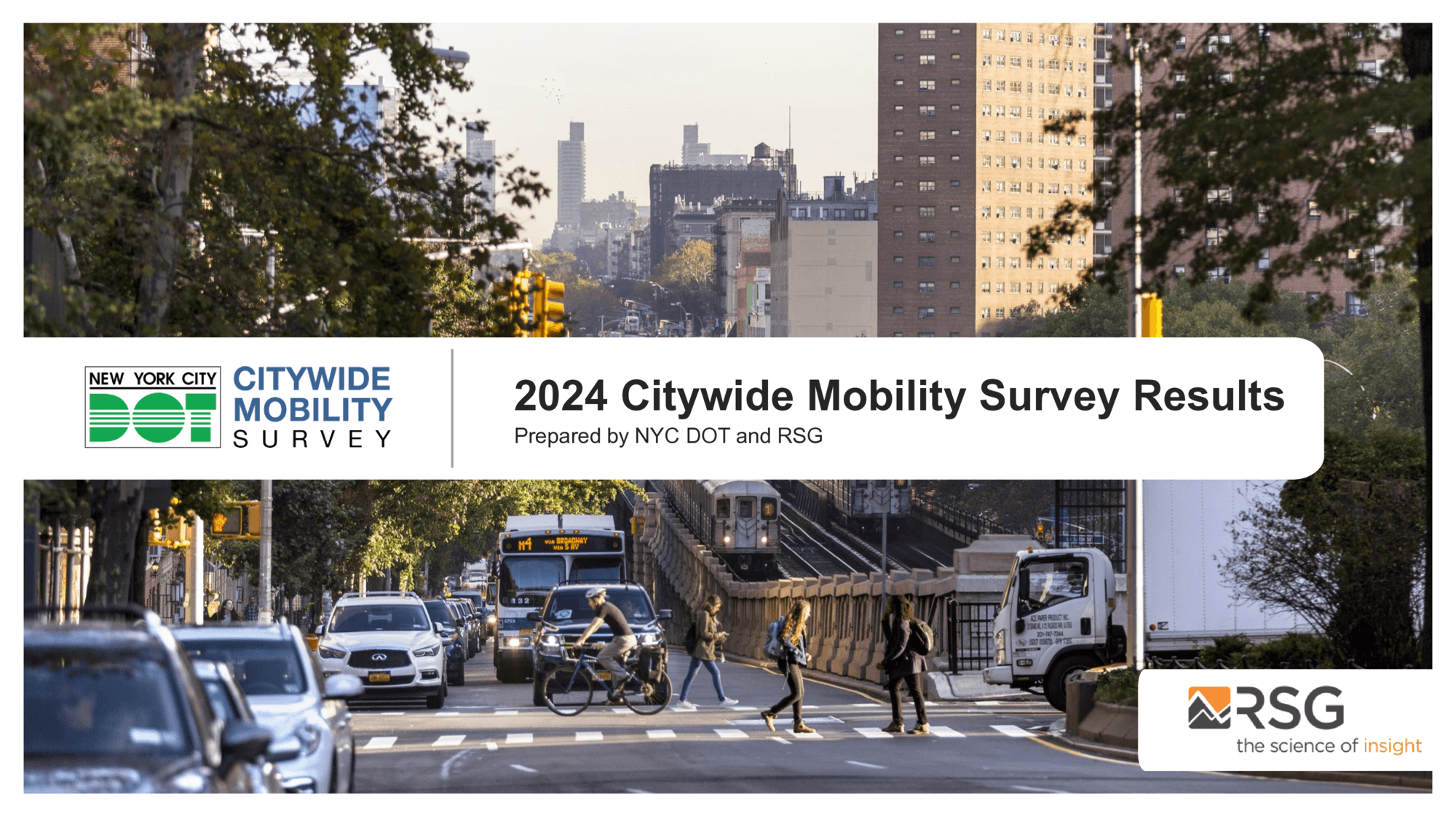
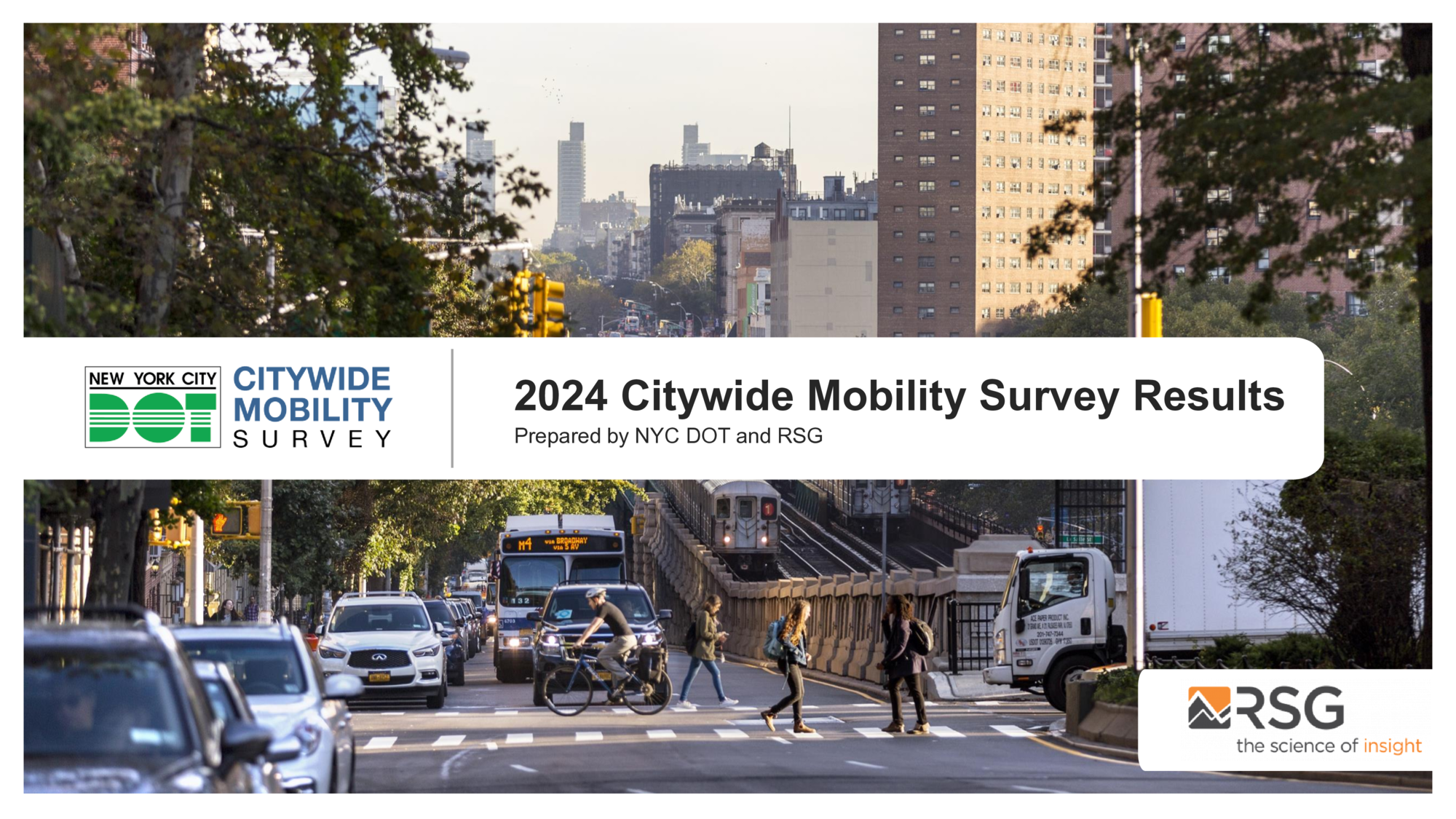
Overview of the Survey
The 2024 Citywide Mobility Survey (CMS) is a comprehensive household travel study conducted by the New York City Department of Transportation (NYC DOT). It captures travel behavior across all trips made by residents, providing a detailed picture of transportation mode share, trip lengths, and travel patterns citywide. The survey serves as a benchmark for evaluating transportation policies, including congestion pricing and bus service improvements.
Key Findings on Sustainable Modes
The CMS reveals that 61.2 % of all trips were made using sustainable modes—walking, biking, public transit, and shared micro‑mobility. This marks a notable increase in low‑emission travel compared to previous years, highlighting the growing adoption of environmentally friendly options among New Yorkers. However, the share of transit trips remains below the 2019 baseline, indicating challenges in maintaining or expanding public‑transport usage.
Public Transit Performance
Transit usage accounts for a smaller proportion of total trips than in 2019, despite overall gains in sustainable travel. The data show a decline in subway and bus ridership, partially attributed to lingering effects of the pandemic, service disruptions, and competition from emerging micro‑mobility services. The survey quantifies this gap, providing a clear metric for policymakers to target in future transit improvements.
Growth of Active Travel
Walking and cycling together comprise a substantial portion of the sustainable mode share. The report documents increased bike‑share memberships and higher rates of pedestrian trips, especially in neighborhoods with expanded bike lanes and pedestrian‑friendly streetscapes. These trends suggest that infrastructure investments are effectively encouraging active travel.
Car‑Based Travel Patterns
Despite progress in sustainable modes, car trips still represent a significant share of total travel. The survey details average vehicle miles traveled (VMT) per household, peak‑hour congestion levels, and the prevalence of single‑occupancy trips. These figures underscore the continued relevance of congestion pricing and other demand‑management strategies to reduce car dependency.
Demographic Insights
The CMS disaggregates travel behavior by income, age, and ethnicity, revealing disparities in mode choice. Lower‑income households show higher reliance on public transit and walking, while higher‑income groups are more likely to use private vehicles or ride‑hail services. Understanding these patterns helps tailor equity‑focused transportation policies.
Implications for Sustainable Housing
For a pan‑European audience interested in sustainable housing, the survey offers valuable data on how travel behavior interacts with residential location. Higher densities and mixed‑use developments correlate with greater use of sustainable modes, reinforcing the importance of integrating housing policy with transit planning. The findings support the case for compact, transit‑oriented neighborhoods that reduce car trips and lower carbon emissions.
Policy Recommendations Highlighted
The report outlines several policy levers: expanding protected bike lanes, improving bus reliability, scaling up micro‑mobility networks, and enforcing congestion pricing. It also recommends targeted outreach to communities with lower transit usage to boost equitable access to sustainable travel options.
Future Monitoring and Updates
The CMS is part of a regular refresh cycle, with the next update scheduled for Q4 2026. Continuous data collection will allow cities to track progress toward climate goals, assess the impact of new transportation initiatives, and adjust strategies as travel patterns evolve.