Denmark
The Country That Decided to Outrun Climate Change
Denmark does not merely talk about smart cities. It builds them — and then opens the door for the world to come and look. A nation of 5.9 million people wedged between the North Sea and the Baltic has turned its small size into an advantage: short distances between government, universities, and industry mean that ideas move fast from whiteboard to street level. The result is a country where climate ambition and digital innovation are not parallel tracks but the same track, and where Copenhagen — regularly crowned the world's smartest city — serves as both laboratory and shop window for a distinctly Danish approach to urban technology.
That approach is rooted in a political consensus rare in Europe. Denmark's Climate Act, adopted in 2020 with support from all parties in the Folketing, commits the country to a 70 per cent reduction in greenhouse gas emissions by 2030 and full climate neutrality by 2050. These are not aspirational targets but legally binding obligations, monitored by an independent Climate Council that publicly evaluates government progress. The act has created a policy framework that cascades down to every municipality, shaping procurement decisions, building codes, and infrastructure investments in ways that make smart city technology not optional but necessary.
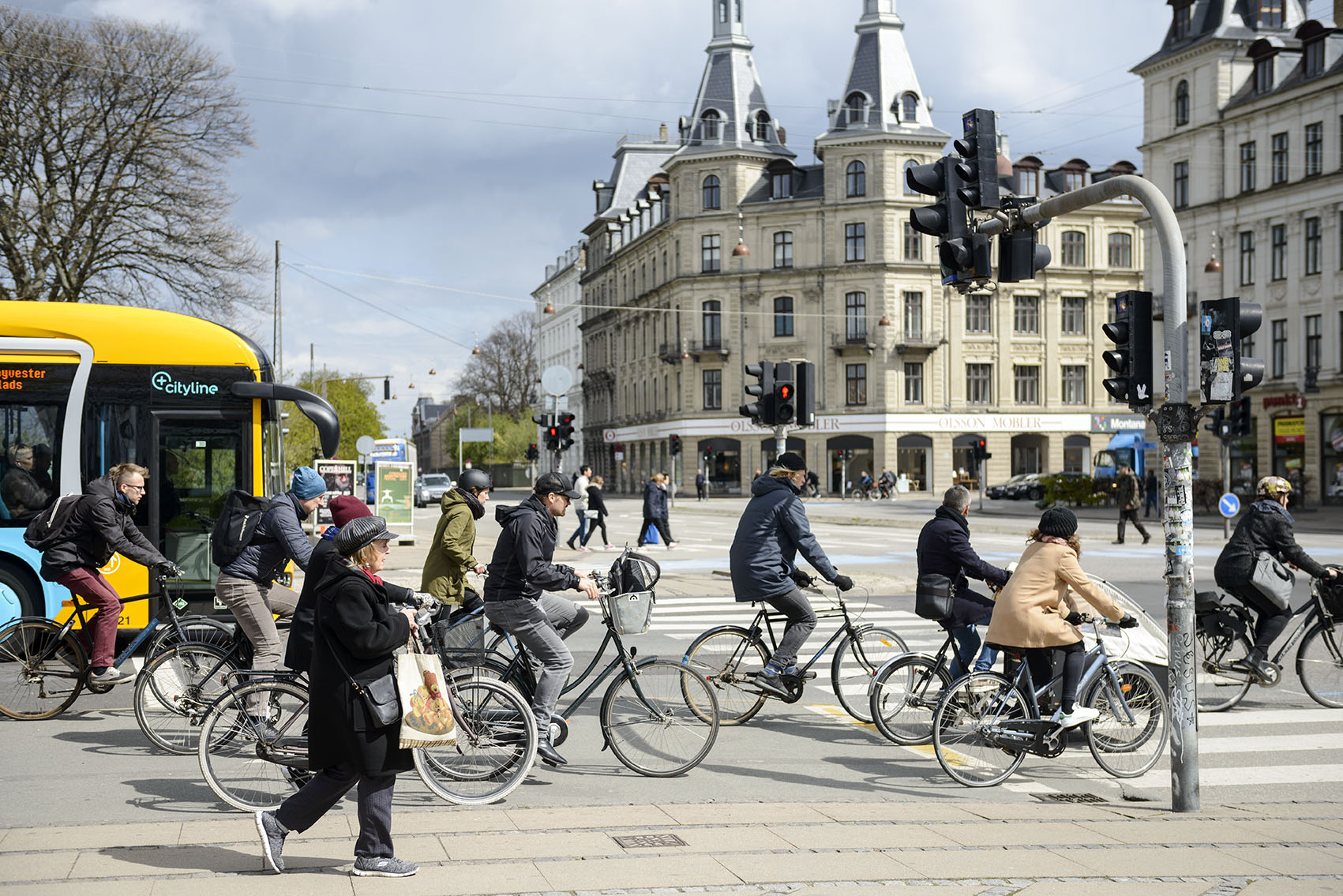
Copenhagen, with a population of roughly 800,000, has been the engine of this transformation. The city's CPH 2025 Climate Plan, launched in 2012, set what seemed an audacious goal: to become the world's first carbon-neutral capital by 2025. Structured around four pillars — energy, mobility, urban planning, and city administration — the plan triggered a cascade of infrastructure investments that have cut emissions by 80 per cent since 2005. Wind turbines and biomass now dominate the energy supply. District heating reaches 99 per cent of buildings. Cycling accounts for nearly half of all commutes. "Copenhagen has proven that economic growth and radical carbon reduction can go hand in hand," Lord Mayor Sophie Hæstorp Andersen told State of Green when the city adopted an even more ambitious strategy in September 2025 — aiming for climate positivity by 2035, meaning Copenhagen intends to absorb more carbon than it emits.
A Government That Codes Its Climate Promises Into Infrastructure
The political architecture behind Denmark's smart city landscape operates at multiple levels. Nationally, the government's Digital Strategy and Green Transition programme channel funding through agencies like Smart City Denmark, a coordination platform that connects municipalities with technology providers. The Danish Board of Technology (Teknologirådet), an independent body advising the Folketing, has shaped public debate on algorithmic transparency, data ethics, and citizens' digital rights — ensuring that Denmark's smart city agenda carries a democratic dimension often absent elsewhere.
At the municipal level, Copenhagen's Københavns Kommune - Teknik- og Miljøforvaltningen (Technical and Environmental Administration) acts as both regulator and innovator, embedding sensor networks, real-time traffic management, and environmental monitoring into the city's physical infrastructure. The administration's willingness to experiment in public space has made Copenhagen a testing ground for technologies that other European capitals approach with greater caution.
Yet Denmark's approach is not without friction. Critics point out that the 2025 carbon-neutral target was not fully met on schedule — residual emissions from waste incineration proved stubbornly difficult to eliminate. The debate around data collection in public spaces, particularly facial recognition and mobility tracking, has generated pushback from civil liberties groups. And smaller Danish municipalities, lacking Copenhagen's resources and international profile, sometimes struggle to translate national ambitions into local reality. The Danish Board of Technology has repeatedly called for more equitable distribution of smart city investment beyond the capital region.
Where Universities, Utilities, and Start-ups Share a Postcode
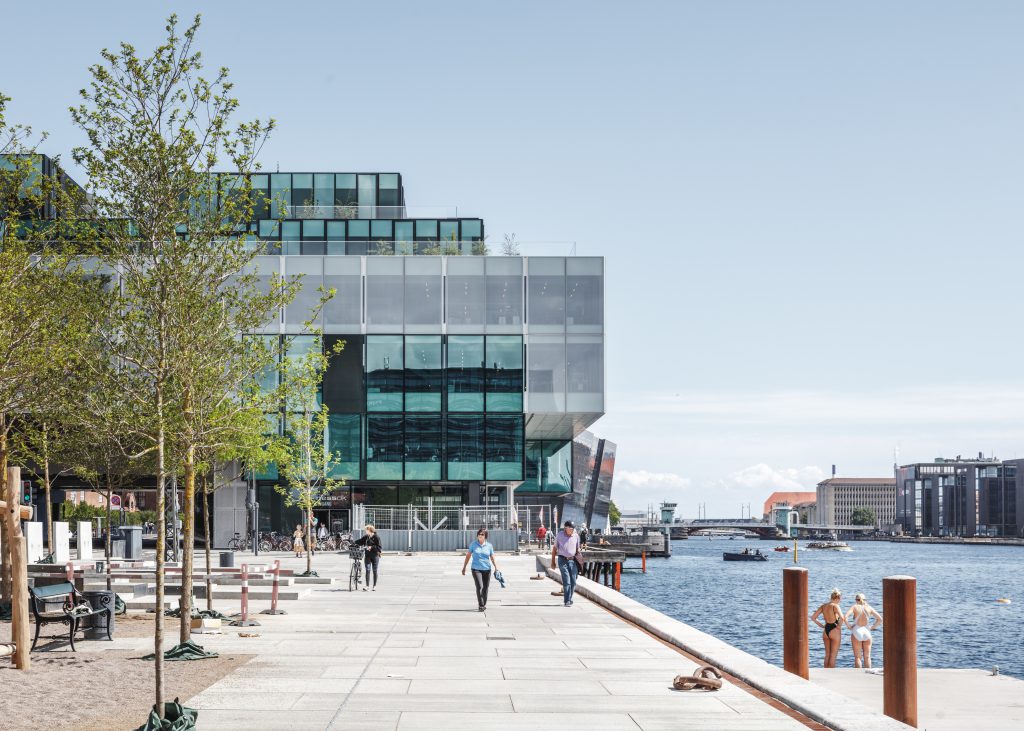
Denmark's smart city ecosystem is unusually compact. In Copenhagen's Nordhavn district and along the waterfront, the critical institutions sit within cycling distance of each other — a geography that accelerates collaboration in ways that sprawling metropolitan regions cannot replicate.
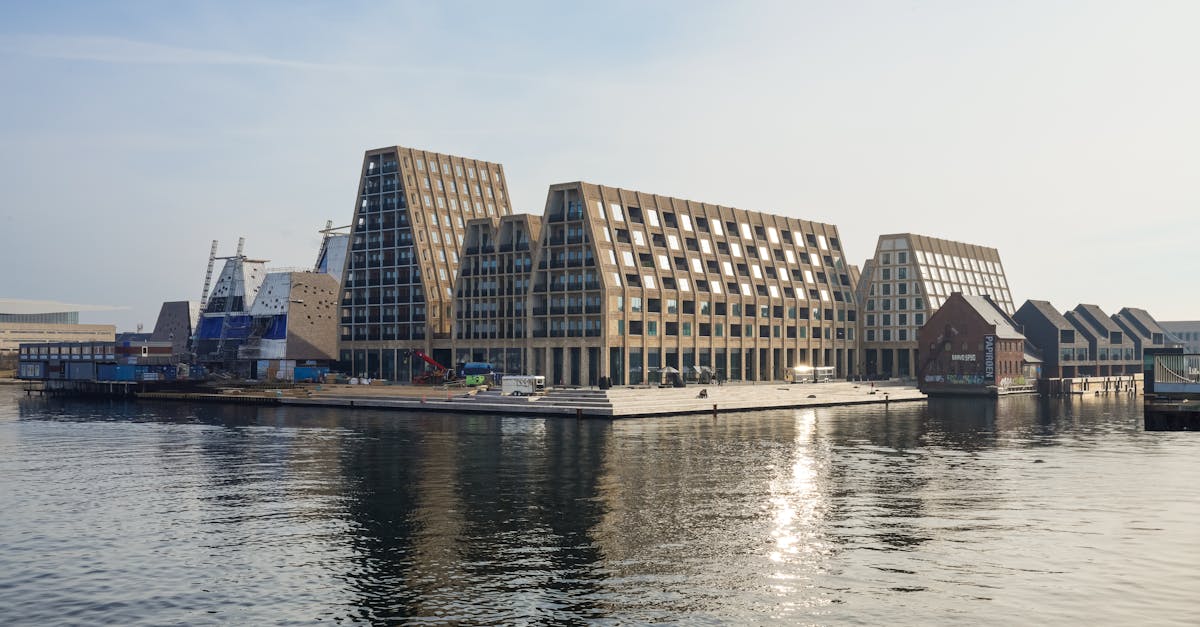
BLOXHUB, housed in a striking building on Copenhagen's waterfront designed by the Danish Architecture Centre, functions as a hub for over 250 organisations working on sustainable urbanisation. Architects, engineers, data scientists, and municipal officials share workspace and run joint programmes, creating what BLOXHUB describes as a "connector for sustainable urbanisation." The hub's international partnerships extend Denmark's influence into urban innovation networks across Scandinavia and beyond.
Copenhagen Solutions Lab, the city's official smart city unit, operates as a bridge between municipal government and the private sector. The lab coordinates pilot projects across air quality monitoring, energy optimisation, and intelligent mobility, providing a structured pathway for start-ups to test solutions in real urban conditions. Its open data platform publishes city datasets that feed research at the DTU - Technical University of Denmark, one of Europe's leading engineering institutions, whose departments in artificial intelligence, energy systems, and urban computing supply much of the analytical talent powering Denmark's smart city projects.
The start-up ecosystem punches well above its weight. Corti, a Copenhagen-based AI company, developed real-time decision-support tools for emergency dispatchers that have been adopted by health services across Scandinavia. StreetSmart uses computer vision to analyse road surfaces and predict maintenance needs, reducing costs for municipalities. Penneo has built digital identity and signature infrastructure used across Nordic public administrations. These companies benefit from Gate 21, a public-private partnership in the Greater Copenhagen region that connects municipalities with green technology firms, co-funding pilot projects that would otherwise stall at the procurement stage.
Denmark consistently ranks among the EU's top performers in digitalisation, placing first or second in the European Commission's Digital Decade country reports for digital public services and connectivity. This digital maturity gives smart city deployments a foundation that many European peers lack: citizens are comfortable with digital interfaces, government databases are interoperable, and trust in public institutions remains high.
Living Laboratories: From Waste Mountains to Flood-Proof Streets
Denmark's lighthouse projects share a common trait: they address real urban problems at scale, not in hermetically sealed demonstration zones but in functioning neighbourhoods where residents live and commute.
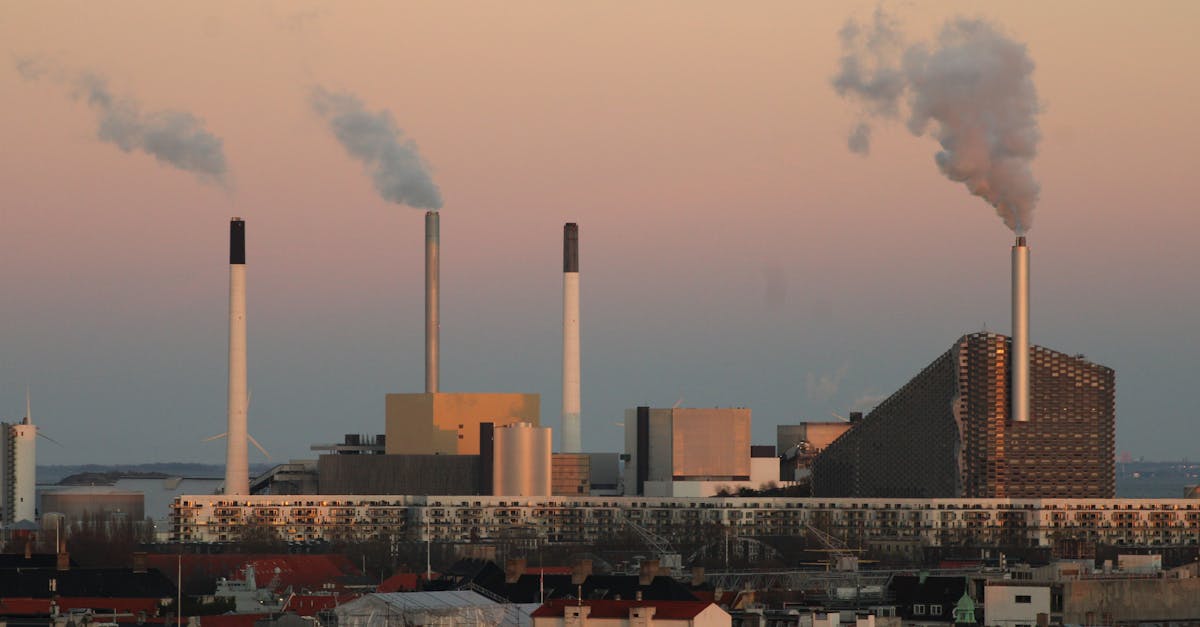
CopenHill (Amager Resource Centre) — officially Amager Bakke — is perhaps the most visually striking example. Designed by Bjarke Ingels Group, this waste-to-energy plant in Copenhagen's harbour district processes 440,000 tonnes of waste annually, generating electricity and district heating for 150,000 homes, whilst its rooftop doubles as a public ski slope and hiking trail. CopenHill has become a symbol of Denmark's refusal to treat infrastructure as purely functional: if a building must exist, it should give something back to the city.
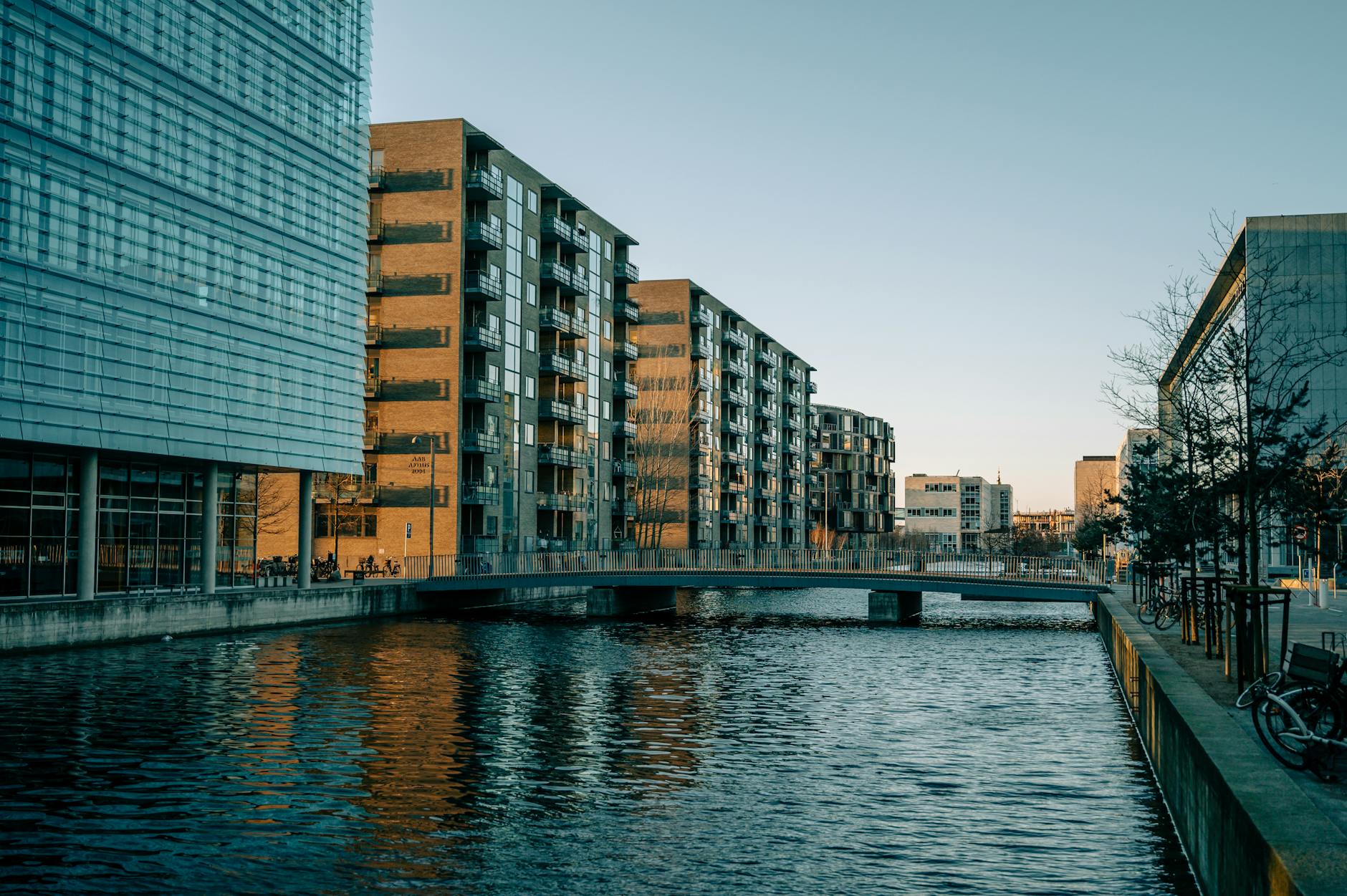
The Nordhavn Energy Lab transforms an entire district into a testbed for integrated energy systems. In this former industrial harbour being redeveloped into housing for 40,000 residents, buildings, electric vehicles, and the power grid communicate through a shared digital platform. Heat pumps, solar panels, and battery storage are coordinated in real time, creating what engineers call a "power-flexible district" — one that can shift its energy consumption to match wind and solar production. State of Green, the national platform for Danish cleantech, calls Nordhavn "an urban area of the future" and regularly hosts international delegations touring its systems.
Copenhagen's Copenhagen Cloudburst Management Plan tackles a challenge that climate change is making urgent across northern Europe: intense rainfall overwhelming urban drainage. Rather than building ever-larger underground pipes, the city redesigned streets, parks, and public squares to absorb and channel stormwater. Copenhagen Solutions Lab provides the sensor infrastructure that monitors water levels in real time, triggering automated responses in the drainage network. The approach — green infrastructure augmented by digital intelligence — has become a reference model for cities from Rotterdam to Melbourne.
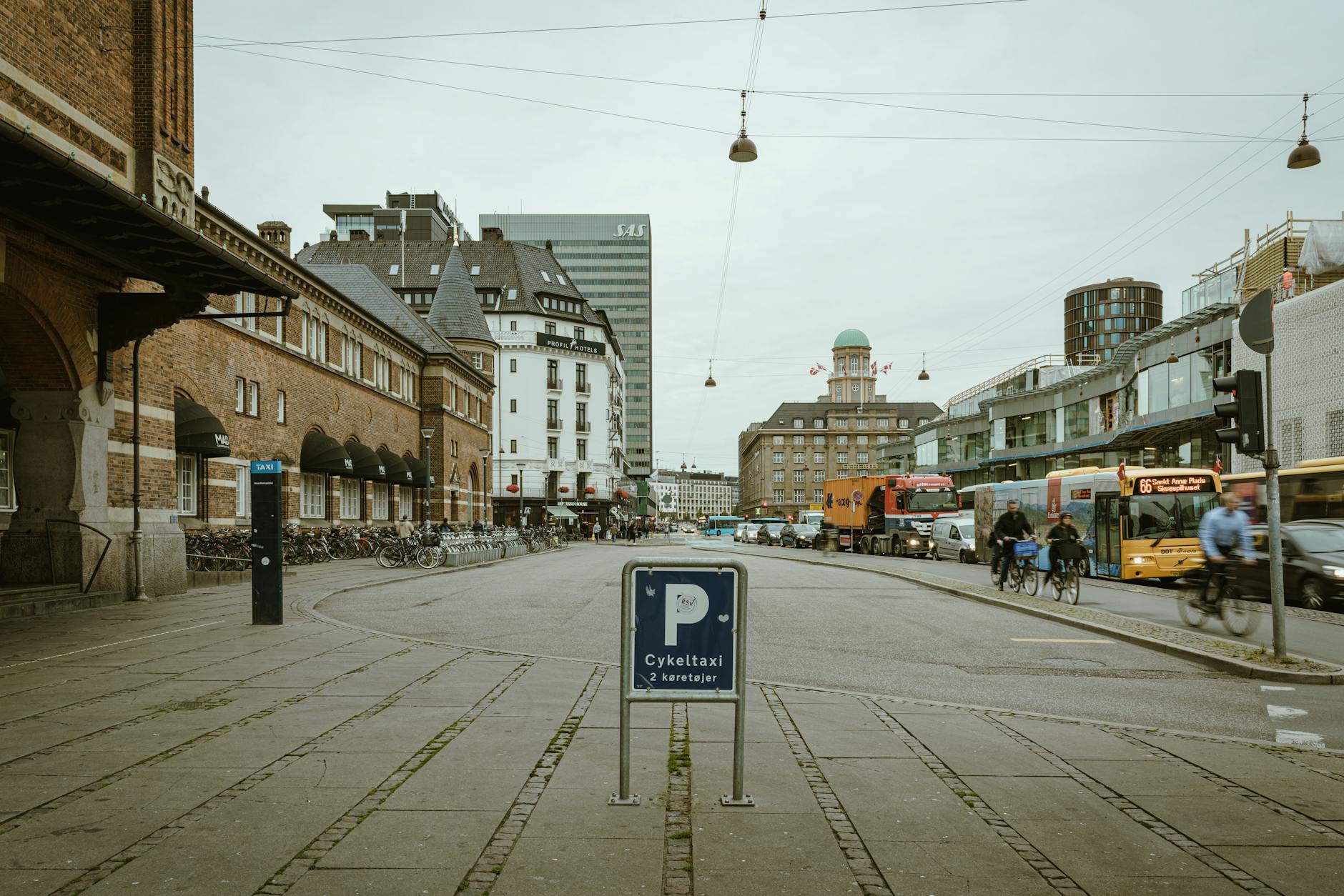
The Cycle Super Highways Copenhagen network extends far beyond Copenhagen's municipal boundaries, connecting suburbs across the Greater Copenhagen region with high-quality cycling infrastructure designed using traffic data and commuter analytics. With over 500 kilometres planned, the network applies smart city thinking to the most analogue of transport modes: sensors count cyclists, apps provide real-time route information, and green-wave signal timing keeps riders moving. Smart Parking Copenhagen complements this by using sensor data to reduce the time drivers spend circling for parking spaces, cutting both emissions and congestion.
The Copenhagen Connecting - City Data Platform data platform underpins many of these projects, aggregating data streams from sensors, municipal systems, and utility networks into a shared infrastructure layer. This platform enables the cross-domain analysis — linking energy, mobility, and environmental data — that distinguishes genuinely integrated smart city approaches from isolated technology pilots.
Hygge Meets the Algorithm: Where Smart Becomes Personal
For all the ambition of its infrastructure, Denmark's smart city story ultimately lands in the everyday. Copenhageners experience it when they open the city's cycling app and see a green wave timed to their commute speed. They feel it when a cloudburst hits and the neighbourhood park they walk through every morning quietly transforms into a retention basin, protecting their basement from flooding. They encounter it at CopenHill, where families ski down a waste-to-energy plant on a Saturday afternoon, or in Nordhavn, where their building's heat pump adjusts itself to the wind forecast.
"Copenhagen is a living laboratory," notes the beesmart.city portrait of the Danish capital, "where smart solutions are tested in real urban environments with real citizens." The city's calendar of innovation events reflects a posture shaped by Denmark's deep-rooted culture of openness and collaboration: a desire not just to innovate but to share what it has learnt.
That culture — hygge, the untranslatable Danish concept of cosiness and convivial togetherness — is more relevant to the smart city story than it might appear. Denmark's approach to urban technology is fundamentally communal: the cycling infrastructure works because Danes trust shared public space; the data platforms succeed because citizens trust institutions to use information responsibly; the energy experiments in Nordhavn function because residents accept that their building is part of a larger system. A 2021 Towards Inclusive and Sustainable Strategies in Smart Cities: Zurich, Oslo, and Copenhagen found that Copenhagen's success depends not merely on technology but on the social contracts that make collective urban experiments possible.
Walk through Copenhagen's streets on a winter evening — past the warm glow of café windows, the steady stream of bicycle lights, the quiet hum of a district heating network powered by wind — and you encounter a city that has woven technology so deeply into its fabric that it has become invisible. That, perhaps, is the Danish definition of a truly smart city: one where the intelligence is everywhere, and nowhere on display.
References18 resources11 external