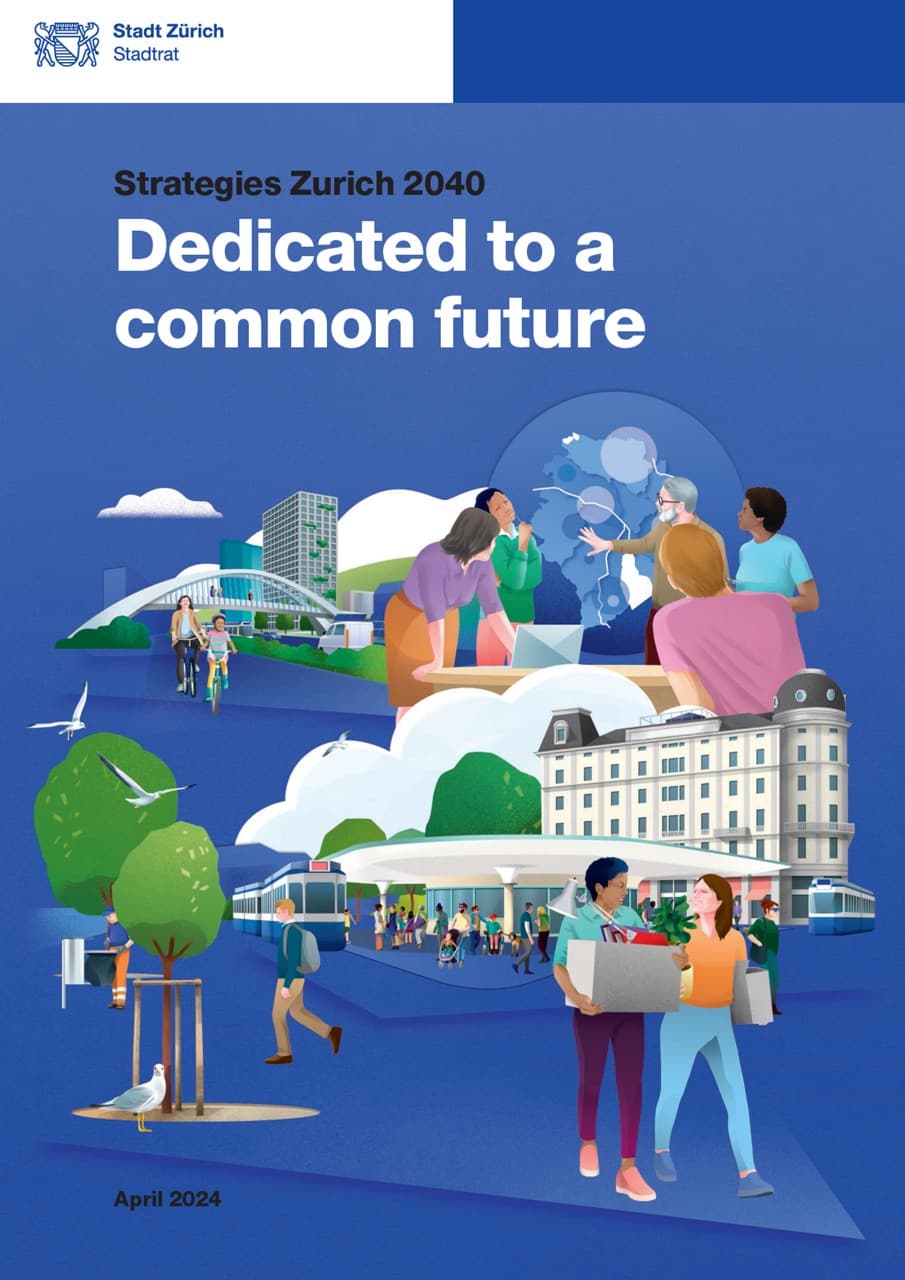
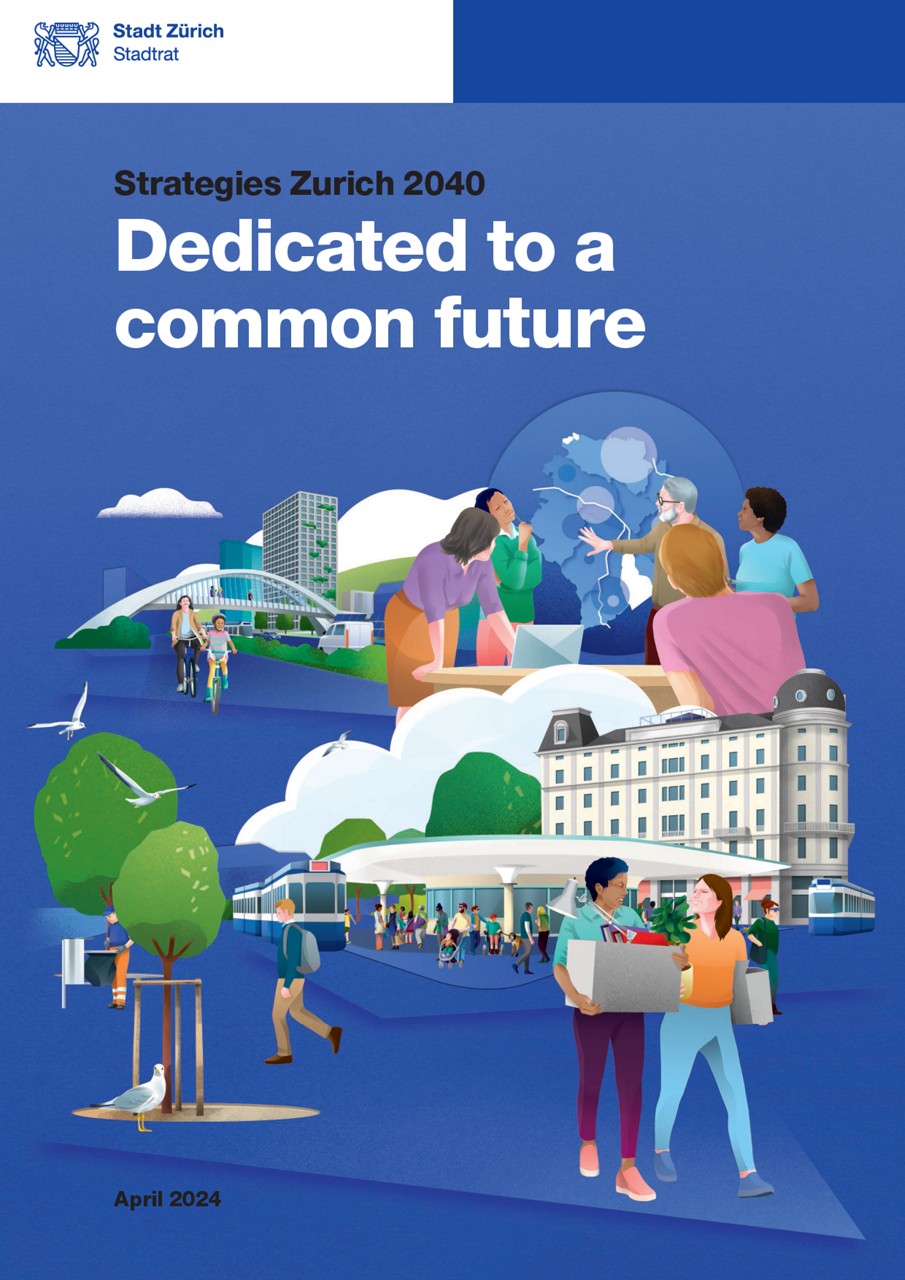
Overview of Zurich Strategies 2040
The Strategien Zürich 2040 (Strategies Zurich 2040) is the City Council’s long‑term framework guiding urban development in Zurich for the next two decades. Adopted by the Stadtrat in 2024, it addresses rapid population growth, climate neutrality, social diversity, and digital transformation. The strategy is published by the City of Zurich and authored by municipal officials under the leadership of Mayor Corine Mauch, reflecting the city’s official policy direction.
Context and Demographic Pressure
Zurich expects its population to exceed 500,000 by 2040, not counting the wider metropolitan area. This surge creates heightened demand for housing, mobility, education, health, energy, cultural facilities, and public space. Simultaneously, the city confronts global challenges such as climate change, geopolitical instability, rising migration, and the need to balance ecological goals with economic competitiveness.
Stable Livelihoods – Climate‑Neutral Energy & Housing
The first action area focuses on securing ecological, economic, and social foundations. Key targets include a net‑zero‑by‑2040 energy system and alignment with the 2000‑Watt Society framework. The strategy promotes resource‑conserving construction, circular‑economy practices, and biodiversity protection. Housing policy emphasises cooperative and non‑profit models to maintain affordability and social diversity while expanding the housing stock responsibly.
Attractive Urban Space – Sustainable Growth & Public Realm
The second area aims to shape high‑quality built environments through inward urban growth, mixed‑use neighbourhoods, and enhanced public spaces. It stresses sustainable housing supply, support for housing cooperatives, and the use of Zurich’s digital twin for scenario modelling. Digital tools help evaluate development impacts, optimise land use, and ensure that new constructions align with climate and livability goals.
Successful Coexistence – Social Cohesion & Inclusion
The third action area addresses social cohesion, neighbourhood diversity, political participation, and cultural vitality. Priorities include affordable housing access, integration of a diverse population, and equitable distribution of public services across all districts. The framework seeks to foster inclusive communities where residents of different backgrounds can co‑exist harmoniously.
Efficient Administration – Digital Maturity & Transparency
The fourth area strengthens the capacity, agility, and digital maturity of Zurich’s public administration. Objectives cover transparent resource management, attraction of skilled employees, and delivery of high‑quality services. The strategy embeds digital planning infrastructure, notably the urban digital twin, as a core tool for climate adaptation, participatory planning, and efficient governance.
Relevance for Sustainable Housing Practitioners
For pan‑European audiences focused on sustainable housing, the strategy provides a concrete example of integrating climate goals with housing policy. It demonstrates how a major city can combine cooperative housing models, circular construction, and digital planning to achieve affordability while reducing carbon emissions. The emphasis on a net‑zero target by 2040 aligns with EU climate objectives, and the use of a digital twin offers a replicable model for data‑driven urban planning.
Access and Further Information
The full English summary and the original German document are available on the City of Zurich’s website. The strategy serves as a reference point for sectoral strategies in planning, mobility, energy, and social policy, guiding city employees and external stakeholders in long‑term, sustainable urban development.