Overview of Vienna’s Climate Roadmap
The Vienna Climate Guide, officially titled “Wiener Klimafahrplan,” is the City of Vienna’s strategic framework for achieving climate neutrality by 2040. Presented in 2022, it succeeds the earlier Climate Protection Programmes (KliP I and KliP II) that guided the city’s climate policy since 1999. The guide is publicly available on the city’s website (https://www.wien.gv.at/en/environment/vienna-climate-guide) and is managed by the Director’s Office for Climate Affairs.
Historical Context and Evolution
Vienna’s first Climate Protection Programme (KliP I) aimed to cut 2.6 million tonnes of CO₂‑equivalent annually by 2010, a target reached in 2006. KliP II, launched in 2009, added a goal of avoiding 1.4 million tonnes per year up to 2020 and was extended through 2021. Rather than creating a third KliP, the city introduced the Klimafahrplan as a newly designed framework aligned with the 2040 neutrality objective set in the 2020 coalition agreement.
Energy & Heating Transformation
A central pillar is the accelerated phase‑out of fossil‑fuel heating. The “Raus aus Gas” (Out of Gas) initiative pushes residential and commercial buildings toward renewable‑powered district heating and heat‑pump installations. This shift is intended to drastically reduce natural‑gas consumption across the city.
Sustainable Building Measures
The guide promotes extensive energy‑efficient retrofits for existing stock and high‑performance standards for new construction. Vienna’s large social‑housing sector, administered by entities such as Wiener Wohnen, plays a key role. Programs like THEWOSAN provide funding for thermal renovations, supporting the city’s ambition to lower building‑related emissions.
Mobility Toward Climate Neutrality
Transport is targeted to become climate‑neutral by 2040. Measures include expanding public‑transport networks, encouraging cycling and walking, building e‑mobility charging infrastructure, and reducing car‑dependent urban planning. These actions aim to cut transport‑related greenhouse‑gas emissions while maintaining accessibility.
Urban Planning & Green Infrastructure
The Klimafahrplan integrates climate goals into the broader urban development plan (STEP 2025) and the Smart City Wien Framework. Nature‑based solutions such as urban greening, water‑sensitive design, and new parks are prioritized. Since 2021, over 222,000 m² of park area have been created or redesigned, and 25,000 trees have been pledged for planting.
Governance, Legal Basis & Monitoring
Vienna reinforced the Klimafahrplan with the Vienna Climate Law, which enshrines the 2040 neutrality target in legislation. The law rests on three pillars: climate protection, climate adaptation, and circular economy. It obliges all municipal departments to minimise emissions and establishes monitoring structures to track progress.
Alignment with Wider Strategies
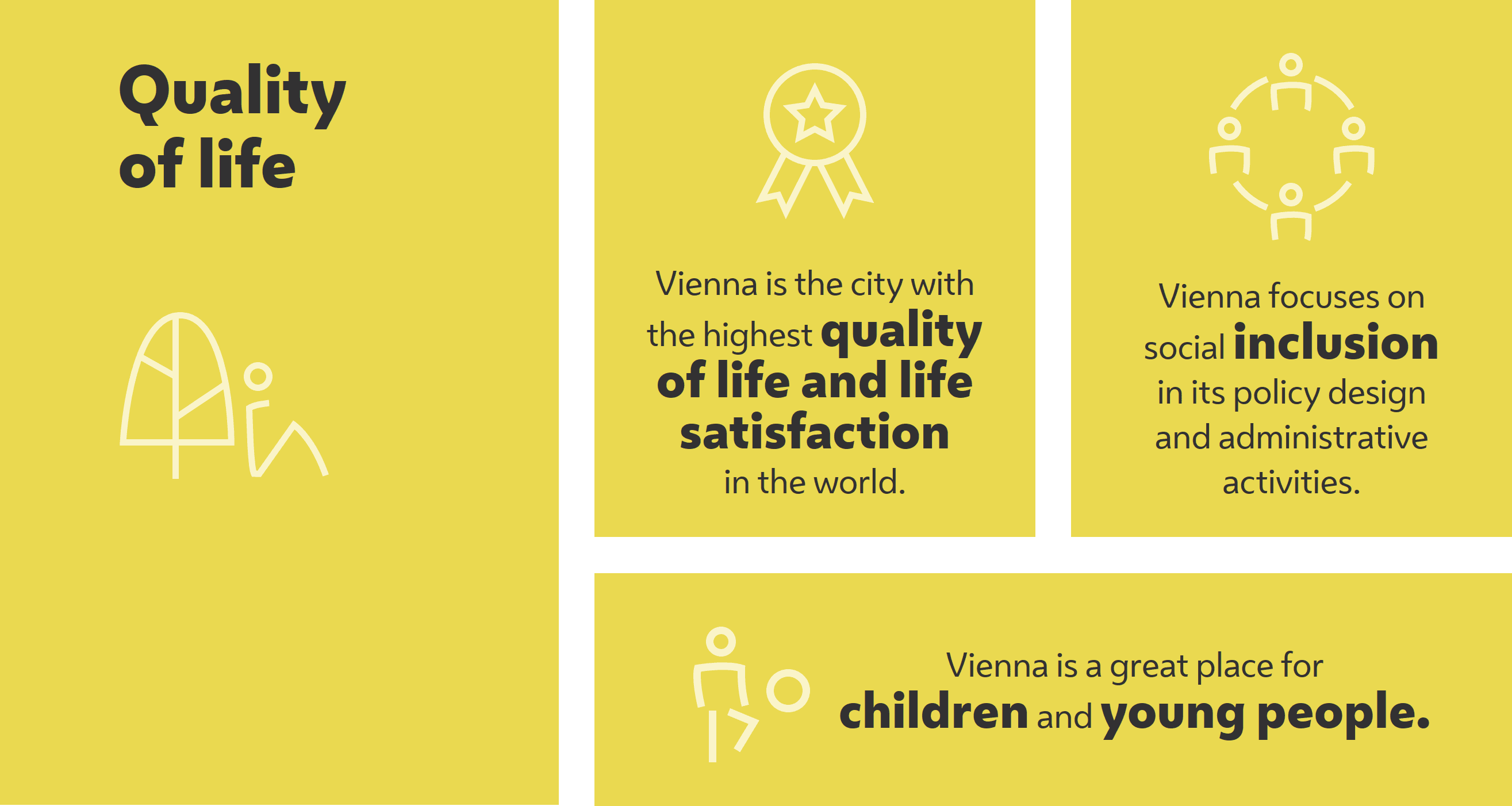
The Vienna Climate Guide aligns with the Smart City Wien Framework (2019–2050), the EU Covenant of Mayors, and Austria’s national climate targets. Its approach emphasizes low‑carbon transition while preserving social equity, reflecting Vienna’s tradition of extensive social housing and publicly accessible services.
Key Data Highlights
- Phase‑out of fossil‑fuel heating as a priority.
- Energy‑efficient retrofits and high‑performance new building standards.
- Expansion of district heating and heat‑pump adoption.
- Target for transport climate neutrality by 2040.
- Creation/redesign of 222,000 m² of park space and planting of 25,000 trees since 2021.
- Legal backing through the Vienna Climate Law, ensuring coordinated municipal action. These facts provide a comprehensive picture of Vienna’s ambitious, legally supported, and socially inclusive pathway toward a sustainable, climate‑neutral city, offering valuable lessons for pan‑European stakeholders focused on sustainable housing and urban resilience.