Introduction – Context of the Resource
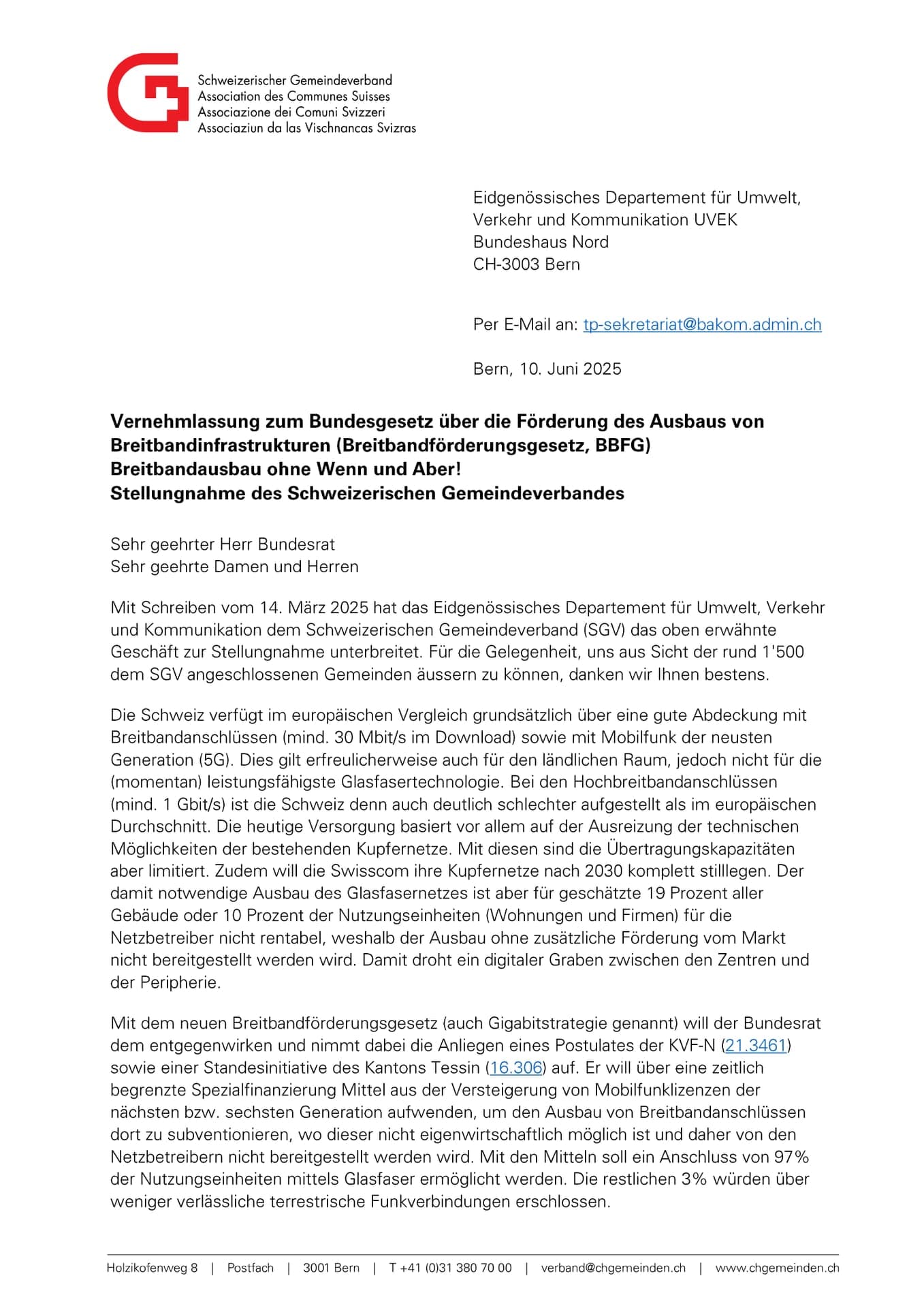
The document gathers the consultation responses from the umbrella organisations of municipalities, cities and mountain regions to the Swiss Federal Office of Communications (BAKOM) regarding the 2025 Broadband Promotion Act. It reflects the collective stance of local authorities on how broadband infrastructure should be financed and deployed, especially in rural and mountainous areas. The responses were compiled and submitted automatically by the SCH profile routine, indicating an organized effort to present a unified voice from the cantonal and communal level.
Rural Gigabit Ambitions
The mountain‑region association argues that the current funding model risks leaving up to 600 communes without adequate broadband. They emphasize that co‑financing by financially weaker cantons and individual communes is essential to achieve the national gigabit target. Without such support, the programme may fall short of its coverage goals, particularly in high‑altitude and sparsely populated zones where deployment costs are higher.
Funding Mechanisms and Co‑Financing
Key data highlight the financial gap: many small communes lack the fiscal capacity to match federal contributions. The respondents propose a tiered co‑financing structure where wealthier cantons provide supplemental funds to poorer ones, enabling consistent investment across all regions. This approach aims to balance equity with efficiency, ensuring that broadband rollout is not solely dictated by market profitability.
Expected Impact on Connectivity
The consultation outlines that improved broadband access is expected to boost local economies, support remote work, and enhance public services such as education and healthcare. The association cites studies indicating that each percentage point increase in broadband penetration can raise regional GDP by up to 0.3 %. For mountain communities, reliable high‑speed internet is also linked to retaining population and fostering sustainable tourism.
Implementation Timeline and Responsibilities
Respondents stress the need for a clear implementation schedule, recommending that project milestones be synchronized with cantonal budget cycles. They call for transparent reporting mechanisms to monitor progress and ensure that allocated funds reach the intended municipalities without administrative delays.
Sustainable Housing Connection
Broadband infrastructure is presented as a cornerstone for sustainable housing initiatives. High‑speed connectivity enables smart‑home technologies, energy‑efficient building management systems, and remote monitoring of renewable energy assets. The document underscores that integrating digital services with housing can reduce energy consumption, lower carbon footprints, and improve residents’ quality of life.
Policy Recommendations Summary
- Adopt a co‑financing model that aligns federal, cantonal, and communal contributions.
- Prioritise funding for mountain and remote communes to meet gigabit targets.
- Establish a unified reporting framework for transparency and accountability.
- Link broadband rollout to sustainable housing programs to maximise environmental benefits.
Conclusion – Stakeholder Consensus
The collective response reflects a strong consensus among Swiss local authorities that equitable funding and coordinated implementation are vital for achieving nationwide broadband coverage. By addressing financial disparities and linking digital infrastructure to sustainable housing, the proposed measures aim to foster inclusive, resilient, and environmentally responsible development across Switzerland.