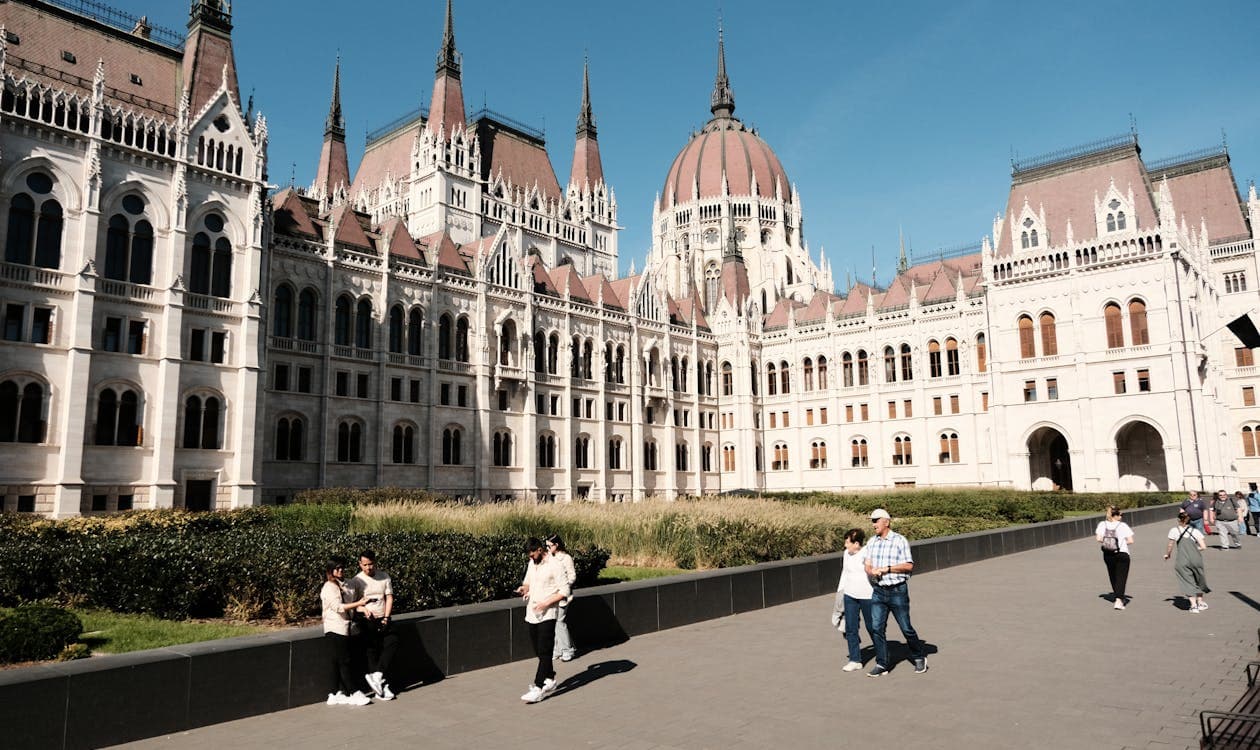
Overview of the Resource
The document presents Budapest’s Smart Green City Climate Strategy, published by the Global Forum on Human Settlements (GFHS) under UN ECOSOC status. It details the city’s comprehensive plan for urban sustainability, climate resilience, and smart governance, highlighting its recent recognition with the Global Smart Green City Award in Geneva.
Strategic Vision and Pillars
Budapest’s strategy is built on three pillars: Empowering Budapest (affordable housing and health), Green Budapest (climate‑conscious, livable city), and Democratic Budapest (transparent governance and citizen participation). Initiated in 2008 and reinforced by a 2019 City Council pledge, the plan aims to cut carbon emissions by 80 % and offset the remaining 20 %, aligning with the EU Mission for 100 % Climate‑Neutral and Smart Cities by 2030.
Energy Efficiency and Building Retrofits
Key actions target building energy performance: extensive insulation, smart metering, and renewable energy installations in residential and public structures. The district heating network is being modernised to serve a large share of households, reducing reliance on fossil fuels. Solar photovoltaic projects on municipal buildings and community energy schemes are also promoted.
Sustainable Transport Initiatives
The strategy seeks to lower transport‑related emissions through public transit enhancements, expanded cycling infrastructure, and the creation of low‑emission zones. Smart public transportation systems are introduced to reduce congestion and encourage eco‑friendly mobility.
Nature‑Based Solutions for Adaptation
Adaptation measures focus on nature‑based solutions to counter heatwaves, flooding, and extreme weather. Initiatives include expanding parks, green corridors, and street trees to mitigate the urban heat island effect; installing green roofs and walls for better insulation and storm‑water management; and strengthening flood defenses along the Danube and its tributaries. Biodiversity conservation efforts protect urban wetlands and natural habitats.
Smart Governance and Data Use
Budapest integrates Internet of Things (IoT) devices for real‑time monitoring of energy consumption, air quality, and environmental conditions. Data‑driven decision‑making guides resource allocation across districts, enhancing the efficiency of climate actions and smart city services.
Community Engagement and Education
Resident participation is fostered through educational programmes, workshops, and participatory budgeting. These initiatives raise awareness of sustainable practices, empower citizens to contribute to climate goals, and build a culture of sustainability throughout the city.
International Recognition
The strategy’s success earned Budapest the Global Smart Green City Award, presented by the GFHS in Geneva. This accolade underscores the city’s leadership in clean energy, green spaces, and intelligent urban management on a pan‑European stage.