Loading...
Country
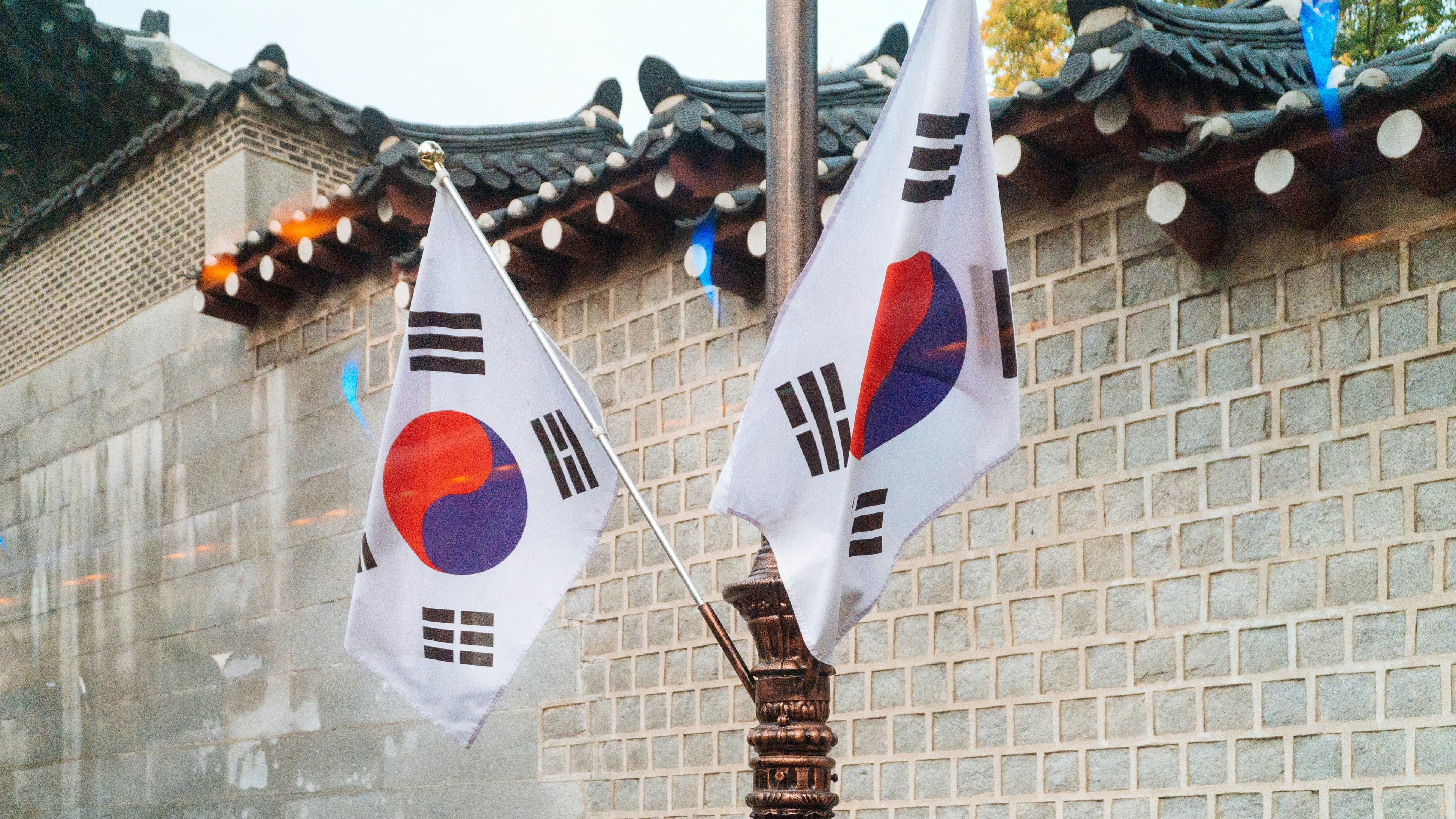
South Korea
Population51.8M
The Country That Treats Smart Cities as Industrial Policy
When South Korea decided, in the early 2000s, that it would become the world's leading smart city nation, it did not approach the task as an urban planning challenge. It approached it as an industrial policy programme — the same way it had built Hyundai, Samsung, and POSCO. Smart cities were to be designed, financed, exported, and continuously upgraded by an alliance of central government ministries, chaebol conglomerates, public research institutes, and elite universities. Two decades later, that approach has produced some of the world's most ambitious urban experiments, a substantial export industry, and a string of sober lessons about what happens when smart cities are built before the people who are meant to live in them arrive.
With 51 million people concentrated overwhelmingly in cities — Seoul Capital Area alone houses around half the national population — South Korea is one of the most urbanised countries on earth. Density, ageing demographics, and a deep cultural comfort with technology have created conditions in which smart city solutions are not novel propositions but everyday expectations.
From u-City to Smart City 4.0
South Korea's smart city story begins with the u-City concept ("ubiquitous city"), formalised in the 2008 Act on the Construction of Ubiquitous Cities. The law gave central government a legal framework to plan, fund, and certify intelligent urban developments — the world's first national legislation of its kind. By the mid-2010s, u-City had been folded into the broader Smart City Act, and a succession of national strategies followed: the 1st (2013) and 2nd (2019) Smart City Comprehensive Plans, the 3rd Comprehensive Plan (2024–2028), and the K-City Network programme launched in 2020 to export Korean smart city know-how to partner countries.
The Ministry of Land, Infrastructure and Transport (MOLIT) is the smart city lead, but governance is genuinely cross-ministerial. The Ministry of Science and ICT runs the 5G, AI, and data infrastructure programmes. The Ministry of Trade, Industry and Energy oversees the smart grid and hydrogen city pilots. The Korea Land and Housing Corporation (LH) develops the physical sites. And the Korea Agency for Infrastructure Technology Advancement (KAIA) coordinates the National Pilot Smart City programme. "Smart city is one of Korea's key national strategic projects," MOLIT has stated, framing it explicitly as part of the country's industrial competitiveness agenda.
This whole-of-government approach is reinforced by the Korea Smart City Association and a dense network of municipal smart city departments. Seoul Metropolitan Government's Digital Policy Bureau alone employs hundreds of staff and has published successive editions of its Smart Seoul master plan, most recently Smart Seoul 6.0, which centres AI, digital twins, and citizen participation.
Government, Chaebol, University — Then Citizens
The institutional architecture of Korean smart cities is unusually concentrated. On the public side, MOLIT, the Ministry of Science and ICT, LH, the Korea Expressway Corporation, and KT Corporation (the partly state-owned telecoms operator) drive most large deployments. On the private side, the chaebols are everywhere: Samsung Electronics and Samsung C&T provide hardware, construction, and systems integration; LG CNS runs city operating systems; SK Telecom and KT compete to provide the 5G and IoT backbones; Hyundai E&C builds the physical infrastructure; Hyundai Motor Group is one of the world's largest investors in urban air mobility and autonomous vehicles.
The research layer is led by KAIST (Korea Advanced Institute of Science and Technology), with strong smart city programmes in autonomous mobility, AI, and urban robotics, and by the Korea Research Institute for Human Settlements, which serves as the country's de facto urban planning think tank. Seoul National University, Yonsei, and Korea University all run substantial urban data and AI research groups. The Korea Institute of Civil Engineering and Building Technology leads the technical certification of smart city standards.
What has historically been weaker is the citizen layer. Songdo, the country's most famous smart city, was widely criticised in its first decade as a "smart city without people" — a technically impressive but socially sparse environment that failed to attract the population it had been designed for. "Songdo is the world's smartest city, but who actually lives there?" the BBC asked in 2013, an article that became part of a long international debate about whether top-down smart city design can ever produce vibrant urbanism. The 3rd Comprehensive Plan explicitly acknowledges this critique, placing "citizen-centred smart cities" and "data sovereignty" at the centre of the 2024–2028 agenda.
Songdo, Sejong 5-1 and the Busan Eco Delta
Korea's flagship developments illustrate three generations of smart city thinking.
Songdo International Business District, built on reclaimed land near Incheon International Airport, opened in stages from 2009. Developed by Gale International and POSCO E&C with technology from Cisco and IBM, it remains one of the world's most-cited smart city case studies: pneumatic waste collection, pervasive sensor networks, energy-efficient buildings, and the country's first widespread deployment of telepresence in public services. Two decades on, Songdo has finally filled out as a city — home to UN agencies, the Green Climate Fund secretariat, and around 200,000 residents — but it remains as much a cautionary tale as a triumph.
Sejong 5-1 National Pilot Smart City, launched in 2018 by MOLIT and LH, marked a deliberate move away from Songdo's tech-utopian template. Built around seven "innovation elements" — mobility, healthcare, education, energy/environment, governance, culture/shopping, and jobs — Sejong 5-1 is designed around shared autonomous vehicles, AI-powered healthcare hubs, and a citizen-data platform that gives residents granular control over their personal data. The companion pilot, Busan Eco Delta Smart City, focuses on climate resilience and water management, integrating smart water grids, robotic logistics, and a hydrogen energy network. Both pilots are explicitly conceived as test beds for export.
Seoul has gone further than any other Korean city in deploying smart services in an existing dense urban fabric. S-DoT (Seoul Data of Things), a network of more than 1,100 environmental sensors, measures temperature, humidity, noise, fine dust, ultraviolet radiation, and vibration in real time. The Seoul Digital Twin reconstructs the entire city in 3D for urban planning, disaster simulation, and citizen consultation. The Seoul Bot chatbot service handles millions of public inquiries annually, while the TOPIS transport operations centre integrates real-time data from buses, taxis, subways, and traffic cameras into a single command-and-control platform that has become a global reference for urban mobility management.
At the national level, the K-City Network programme has signed smart city cooperation agreements with more than 20 countries, from Vietnam to Saudi Arabia, exporting Korean expertise in master planning, technology integration, and operations. The annual World Smart City Expo in Goyang has grown into one of Asia's most important smart city gatherings, with hundreds of exhibitors and tens of thousands of visitors.
Experience the Smart City: Jjimjilbang, PC Bang and the 24-Hour Metropolis
To experience a Korean smart city, start in a Seoul subway station. The Seoul Metropolitan Subway — one of the world's longest and busiest networks — offers 5G connectivity throughout, real-time arrival information in four languages, contactless T-money payments accepted on buses, trains, taxis, and convenience stores, and platform doors at every station. Step out into Gangnam or Hongdae and you enter a streetscape where almost every transaction — ordering a coffee, paying for parking, renting a shared bicycle, identifying yourself at a polling station — happens through a smartphone.
Then find a jjimjilbang (Korean sauna and spa) and a PC bang (gaming café), two institutions that capture something essential about Korean urban life: 24-hour cities where socialising, eating, gaming, sleeping, and working flow into one another. The infrastructure that makes this possible — reliable gigabit broadband, ubiquitous public Wi-Fi, late-night delivery apps, real-time bus tracking at 3am bus stops — is the smart city in action, even when no one calls it that.
End the night at a pojangmacha (street food tent) sharing soju and grilled samgyeopsal with friends who have ordered the side dishes by tapping a tablet at the table. The smart city is not the spectacle of Songdo's pneumatic tubes. It is the unremarkable miracle of a country where everything works at any hour — and where the next iteration of the smart city is already being designed in a KAIST lab, a Samsung R&D centre, and a MOLIT briefing room.
References12 external
External Sources
Act on the Construction of Ubiquitous Citieselaw.klri.re.krSmart City Act of Korealaw.go.krK-City Network Global Cooperation Programenglish.molit.go.krSmart Seoul 6.0 — Smart City Policiesenglish.seoul.go.krNational Pilot Smart City — Sejong 5-1smartcity.go.krNational Pilot Smart City — Busan Eco Deltasmartcity.go.krSongdo IBDsongdoibd.comSongdo: the smartest city in the world?bbc.comWorld Smart City Expoworldsmartcityexpo.comKAISTkaist.ac.krKorea Research Institute for Human Settlementskrihs.re.krKorea Smart City Associationsmartcity.or.kr