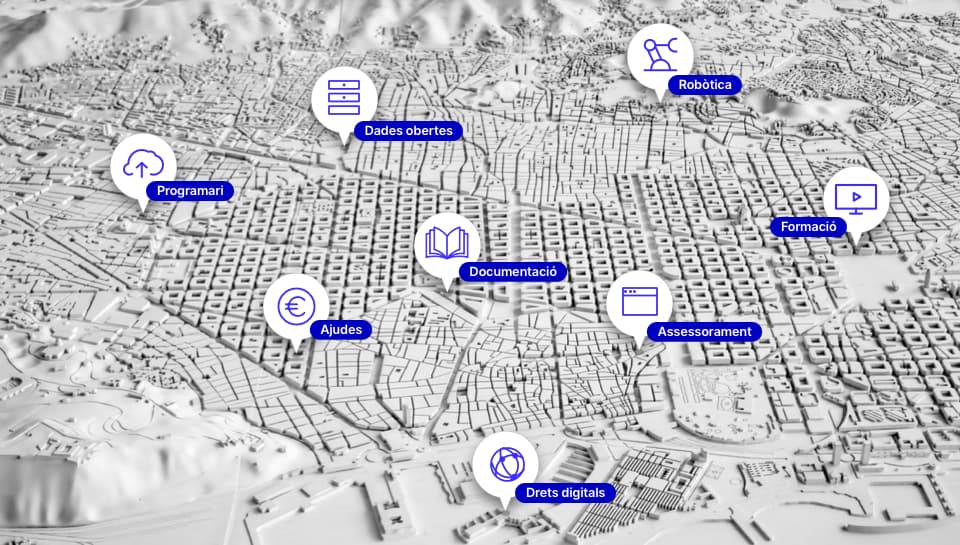
Overview of Barcelona’s Digital Strategy
The Barcelona Digital City Plan 2023‑2027, published by the Ajuntament de Barcelona, outlines the city’s roadmap for digital transformation across municipal functions. It builds on a decade of digital governance experience and aims to align technology with democratic values, social inclusion, and environmental justice. The plan positions Barcelona as a reference for European cities seeking human‑centric digital development.
Pillar 1: Technological Sovereignty
Barcelona commits to retaining control over its digital infrastructure, data, and software. An “open‑source first” policy requires new municipal software to be open source unless a clear justification is provided. Data sovereignty clauses ensure citizens’ personal data remain under public governance, and procurement favours local tech firms and cooperatives, reducing reliance on global giants. The city invests in municipal data platforms to avoid dependence on third‑party cloud services.
Pillar 2: Digital Inclusion
The plan seeks to guarantee that no resident is left behind. Key actions include expanding free public Wi‑Fi across all districts, enforcing WCAG 2.1 AA accessibility standards for digital services, and providing in‑person digital mediation at municipal offices and community centres. Subsidised devices are offered to low‑income households, while Barcelona Activa runs digital skills programmes to boost digital literacy.
Pillar 3: Data‑Driven City Management
Barcelona aims to become a data‑driven city while upholding strict ethical standards. The IoT sensor network is expanded—covering air quality, noise, traffic, and waste—using the open‑source Sentilo platform. A unified urban analytics platform consolidates data from multiple departments. An AI governance framework mandates impact assessments, bias audits, and transparency before AI deployment. Over 500 datasets are available through the city’s open data portal.
Pillar 4: Digital Innovation for the Public Good
Innovation is directed toward public needs rather than commercial profit. The city funds public innovation labs such as BIT Habitat and Barcelona Activa’s tech incubators, and promotes challenge‑based procurement that defines problems instead of prescribing solutions. Regulatory sandboxes allow testing of new urban technologies under controlled conditions. Barcelona actively participates in European smart‑city networks and contributes to EU standard‑setting and open‑source projects.
Pillar 5: Digital Public Services
All municipal services are being digitised while preserving in‑person alternatives. The Barcelona Fàcil portal enables residents to complete more than 300 procedures online. Proactive services use consented data to notify citizens of eligible benefits automatically. Internally, the city modernises IT systems, upskills civil servants, and adopts agile working methods across departments.
Governance and Implementation
The Municipal Institute of Informatics (IMI) leads implementation, supported by a cross‑departmental Digital Transformation Committee and an external Advisory Board of experts. The plan follows an agile methodology with annual action plans, quarterly reviews, and continuous performance measurement. Annual progress reports are published to ensure transparency and accountability.
Budget and Funding Sources
Significant municipal resources are allocated to infrastructure, services, skills development, and innovation. Barcelona also pursues European funding through Horizon Europe, the Digital Europe Programme, and other EU instruments to complement local investment.
International Influence and Relevance for Sustainable Housing
Barcelona’s emphasis on open‑source technology, data sovereignty, and inclusive digital services offers a model for integrating digital tools into sustainable housing initiatives across Europe. By ensuring that digital platforms are transparent, locally controlled, and accessible to all residents, the plan supports smart‑housing solutions that can improve energy efficiency, resident participation, and equitable access to services. The city’s experience provides actionable insights for European policymakers aiming to combine sustainability goals with robust, citizen‑centred digital governance.