Ireland
The Island That Became a Tech Capital — and Now Wants to Be Smart
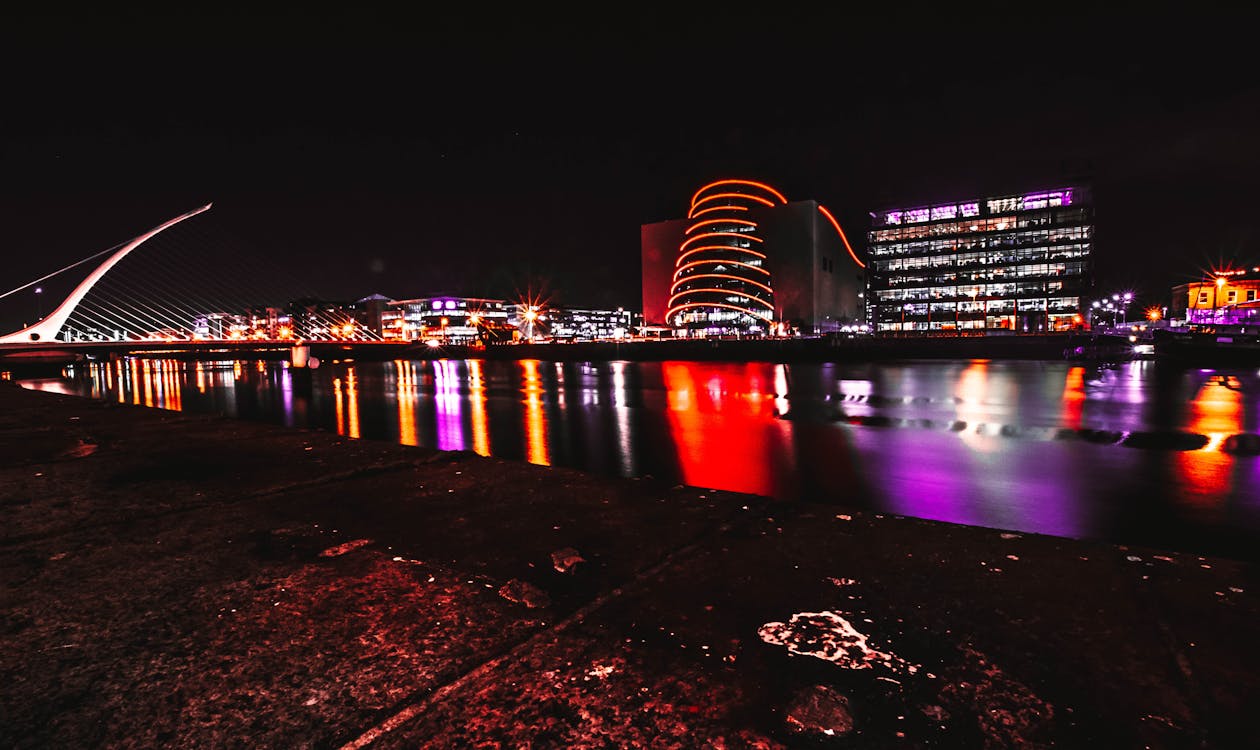
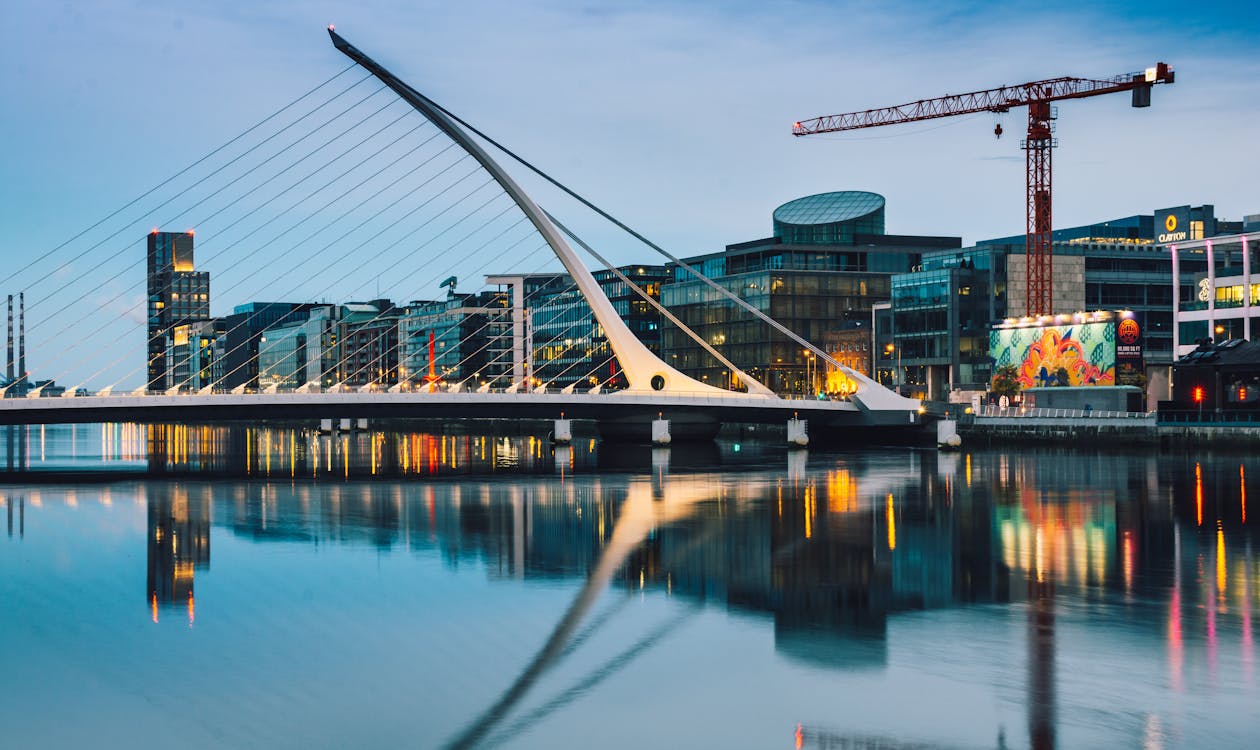
Ireland's relationship with technology is a story of dramatic reinvention. A country that in the 1980s was haemorrhaging its young to emigration now hosts the European headquarters of Google, Meta, Microsoft, Apple, and scores of other technology giants, most of them clustered along Dublin's Grand Canal Dock and Silicon Docks. The presence of these firms has shaped Ireland's digital infrastructure, attracted world-class engineering talent, and given the country a peculiar vantage point: it sits at the nerve centre of the global tech economy, yet its own cities and towns are still working out what "smart" actually means for Irish life.
The conversation is accelerating. In 2025, the Irish government published Digital Ireland: Connecting our People, Securing our Future, an updated national digital and AI strategy with 90 deliverables across seven policy areas, from public services and enterprise to cybersecurity and digital skills. Dublin is one of the EU Mission 100 Climate-Neutral and Smart Cities, committing to radical emissions cuts by 2030. And the All Ireland Smart Cities Forum — a network connecting municipalities from Cork to Belfast — is steadily broadening the smart city agenda beyond the capital. Yet Ireland also produced one of Europe's most influential critical voices on smart urbanism, the geographer Rob Kitchin of Maynooth University, whose scholarship has challenged cities worldwide to ask harder questions about who benefits from data-driven governance. That tension — between enthusiastic adoption and careful interrogation — gives Ireland's smart city story its particular flavour.
Digital Ireland: Political Ambition Meets Practical Rollout
Ireland's national approach to digital transformation is coordinated from the Department of the Taoiseach, signalling the political weight placed on the agenda. The Digital Ireland framework, first launched in 2022 as Harnessing Digital and substantially updated in 2025, is structured around five strategic ambitions — Apply, Grow, Invest, Lead, and Empower — with a strong emphasis on AI adoption, cybersecurity, and ensuring no community is left behind in the digital transition.
The numbers behind the strategy are considerable. Ireland's National Strategic Roadmap for the EU Digital Decade includes 81 measures backed by a budget of €9.2 billion, of which €4.8 billion comes from public funds. The European Commission's 2025 assessment notes that Ireland performs well in digital infrastructure and public services but flags slow growth in ICT specialists and gaps in e-health access — a reminder that ambition on paper must translate into capacity on the ground.
At the city level, Dublin's political leadership has been broadly supportive of smart city development, though the agenda has sometimes struggled for attention alongside Ireland's acute housing crisis and healthcare pressures. Dublin City Council adopted a Digital Transformation Strategy 2025–2030 that commits to making Dublin a "digital city" by the decade's end, with priorities including connected infrastructure, open data, smart mobility, and climate-responsive technology. The city's Climate Action Plan 2024–2029 targets a 51 per cent reduction in greenhouse gas emissions by 2030, leaning heavily on digital tools for energy monitoring and transport planning.
Critical voices have not been absent. Kitchin's work, notably his 2015 paper Making Sense of Smart Cities: Addressing Present Shortcomings, argued that much smart city rhetoric "seeks to appear non-ideological, commonsensical and pragmatic" while obscuring deeper questions of power, surveillance, and corporate influence. Dublin has responded in part by joining the Cities Coalition for Digital Rights and piloting a Digital Rights Governance Framework — an acknowledgement that building a smarter city requires building public trust alongside the sensors.
Four Councils, One Smart City: Dublin's Collaborative Model
The institutional architecture of Smart Dublin is one of its most distinctive features. Unlike many European smart city programmes led by a single municipality, Smart Dublin is a joint initiative of all four Dublin Local Authorities — Dublin City Council, South Dublin County Council, Fingal County Council, and Dún Laoghaire–Rathdown County Council — covering the entire metropolitan region of nearly 1.5 million people. Founded to "future-proof the Dublin region by trialling and scaling innovative solutions to local challenges," the programme is coordinated by a dedicated Dublin City Council — Smart City Unit within Dublin City Council.
Smart Dublin's signature approach is its Smart Districts model. Rather than attempting city-wide rollouts from the outset, the programme concentrates pilots in strategically selected neighbourhoods, each with a distinct thematic focus:
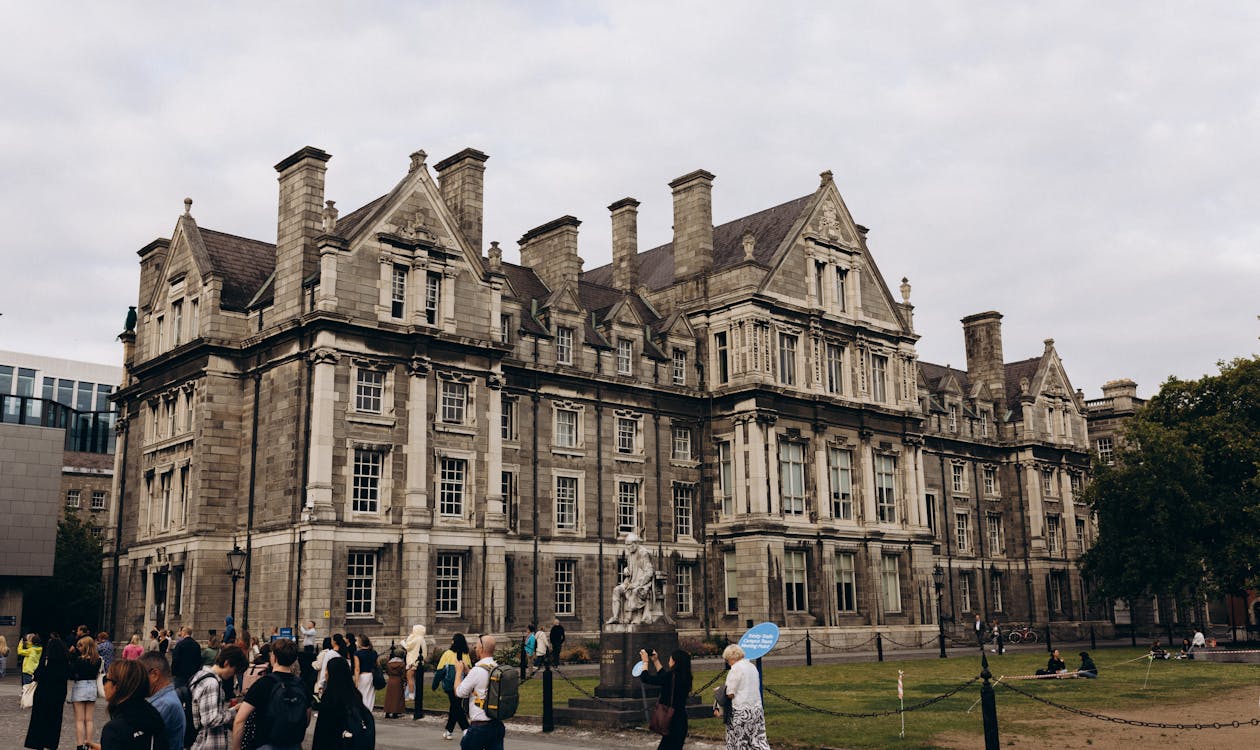
- Smart Docklands Testbed, launched in 2018, serves as the original testbed — a joint venture between Dublin City Council and CONNECT — SFI Research Centre for Future Networks, the Science Foundation Ireland (SFI)-funded Research Centre for Future Networks at Trinity College Dublin. It acts as an "honest broker" between government, industry, universities, and residents.
- Smart DCU uses Dublin City University's campus as a living laboratory for digital twin research, IoT integration, and AI-driven building management.
- Smart D8 Health and Wellbeing District is Dublin's first smart district dedicated to community health and wellbeing, working with approximately 45,000 residents in one of the city's most diverse inner-city neighbourhoods.
- Smart Sandyford and Smart Balbriggan extend the model into suburban and commuter-belt contexts.
Beyond Dublin, the All Ireland Smart Cities Forum connects municipalities across the island — including Cork, Galway, Limerick, Waterford, and Belfast — to share knowledge and coordinate cross-border smart city initiatives. The Forum lists over 65 active projects across its partner cities, spanning smart environment, mobility, economy, government, living, and people categories. This all-island dimension is unusual in a European context and reflects Ireland's pragmatic approach to North-South cooperation.
Supporting the ecosystem is a strong research base. Science Foundation Ireland (SFI) has invested strategically in centres such as CONNECT — SFI Research Centre for Future Networks, which unites over 450 researchers working on future networks, IoT, and smart city applications. Dogpatch Labs Dublin, Ireland's leading startup hub in Dublin's Docklands, provides acceleration programmes for civic tech and urban innovation ventures. And the annual Dublin Tech Summit 2026, which draws thousands of attendees, has become a significant showcase for Ireland's ambitions at the intersection of technology and urban life.
From Digital Twins to Flood Sensors: What Dublin Has Actually Built
The most tangible evidence of Ireland's smart city progress lies in a growing portfolio of deployments that have moved from pilot to operational scale.
Digital twins have become a centrepiece. Working with the Irish Centre for High-End Computing (ICHEC) and technology partner Bentley Systems, Smart Dublin has developed 3D digital twin models using drones, building information models (BIM), and LIDAR scanning. The Smart D8 digital twin, built in Unreal Engine 5.5, allows residents to virtually navigate their neighbourhood and provide feedback on proposed developments — a practical application of participatory planning that the European Commission has highlighted as a model. The Twin for Resilience (T4R) Digital Twin Project project, funded through Interreg Europe, extends this work into climate resilience planning.
Active travel and road safety monitoring represent another area of real deployment. Smart Dublin has partnered with VivaCity Labs to install AI-powered sensors across the city that measure pedestrian, cyclist, and vehicle movements in real time. The data feeds directly into Dublin City Council's ambition to ensure every resident is within five minutes or 500 metres of an active-travel route. As Jamie Cudden, executive manager for corporate services and transformation at Dublin City Council, has noted, the goal is to use data "to make the right decisions and evaluate the impact of schemes" rather than relying on assumptions.
Smart waste management has been one of the most visible public-facing deployments. Bigbelly smart bins, which use sensors to signal when they need emptying, have been rolled out across Dublin City, Dún Laoghaire, and the Docklands district, reducing collection trips and improving streetscape cleanliness.
Environmental monitoring networks, including flood sensors along the Dodder and Liffey rivers and air quality monitors, feed into Dublin's open data platform, Dublinked, which makes city data available to researchers, civic tech developers, and the public. Dublin's fire brigade has begun using open city data visualisations to improve emergency response planning — Rob Howell of the Dublin Fire Brigade's Organisational Intelligence Unit described how bringing together previously siloed tabular data through digital tools "really made the most of all the information and gave us something we can really use moving forward."
Outside Dublin, the Future Mobility Campus Ireland in Shannon offers a purpose-built smart city testbed for autonomous vehicle development and connected transport testing, integrating digital twin capabilities with real-world driving conditions — a reminder that Ireland's smart city ambitions extend beyond the capital.
Where the Smart City Meets the Craic
If you want to experience how technology is quietly reshaping everyday life in Dublin, start with a Dublin Bikes station. The city's public bike-sharing scheme, one of the earliest in Europe when it launched in 2009, was a gateway for many Dubliners into thinking about data-driven urban services. Today, real-time bike availability data feeds into the Smart D8 digital twin, and IoT sensors across the city track cycling patterns to inform new protected lane infrastructure.
Walk through the Docklands — once a declining port district, now a gleaming tech quarter — and you pass Bigbelly smart bins, environmental sensors mounted on lampposts, and the CONNECT research centre at Trinity College Dublin, where the next generation of urban communication networks is being developed. In the D8 neighbourhood around Thomas Street and the Liberties, residents can explore their area through an immersive digital twin and comment on planning proposals without attending a council meeting in person.
There is something characteristically Irish about the way this smart city is being built: collaboratively, with an instinct for storytelling and human connection rather than top-down technocracy. Dublin's approach to digital rights — creating a video series with Academy of the Near Future to explore ethics and privacy in plain language — reflects a culture that values conversation and debate. The city that gave the world Joyce, Yeats, and Beckett now has its own digital narrative emerging.
And then there is the Irish language. Dublin City Council's Gaeilge365 initiative, recognised as an URBACT Good Practice, fuses digital innovation with language revitalisation — using apps, community platforms, and behavioural science to bring Irish into daily urban life. Smart Dublin has even launched a programme inviting young people to explore how Irish language and traditions can inspire environmental innovations, connecting ancient ecological knowledge with sensor technology and open data. It is a reminder that in Ireland, the smartest city is one that remembers where it came from.
As the writer Colm Tóibín once observed, "Dublin is a city that invents and reinvents itself." The smart city chapter of that reinvention is still being written — cautiously, collaboratively, and with a healthy scepticism that may turn out to be its greatest asset.
References12 resources10 external