Austria
The Quiet Achiever: How Vienna Turned Quality of Life into a Smart City Strategy
Austria's smart city story is, at its heart, a Viennese story. With 9.2 million people spread across nine federal provinces, the country's urban innovation agenda is dominated by its capital — a city of two million that has topped the Mercer Quality of Living Survey for over a decade and used that reputation not as a trophy but as a strategic platform. Where other European capitals chase technology for its own sake, Vienna has built its smart city identity around a deceptively simple proposition: that the highest form of urban intelligence is a city where people actually want to live.
The Smart Climate City Strategy Vienna, first adopted in 2014 and substantially revised in 2022, is the umbrella framework binding the city's climate, energy, mobility, and digitalisation ambitions into a single document with a horizon stretching to 2050. Its headline goals are unambiguous: carbon neutrality by 2040, a fifty per cent green space ratio maintained across the urban area, and — unusually for a smart city strategy — an explicit commitment to social inclusion, framing technology as a means to extend high quality of life to everyone in the city, not merely to optimise infrastructure.
"High quality of life for everyone in Vienna through social and technical innovation in all areas, while maximising conservation of resources," the strategy states — a sentence that captures the distinctive Viennese blend of ambition and pragmatism.
Beyond the capital, the Smart Cities Network Austria, supported by the Federal Ministry for Climate Action (BMK) and the Climate and Energy Fund, connects cities across the country — from Graz and Linz to Salzburg and Innsbruck — sharing strategies and piloting solutions for climate-neutral mobility and energy supply. Yet Vienna remains the undeniable centre of gravity.
From Rathaus to Algorithm: Who Governs Austria's Smart City
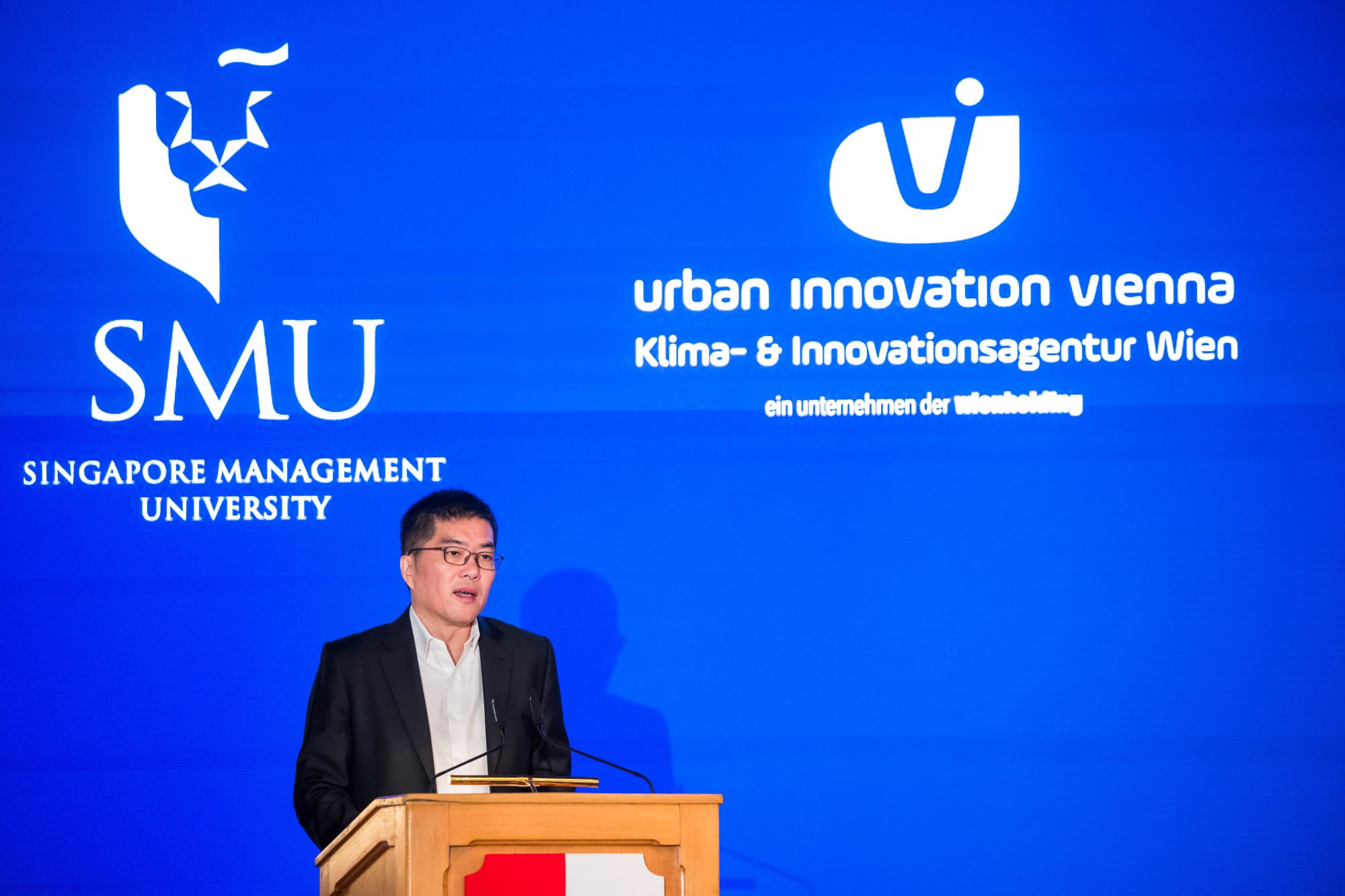
Vienna's smart city governance rests on a tight institutional architecture. Urban Innovation Vienna (UIV), a subsidiary of Wien Holding, the city's municipal holding company, serves as the strategic implementation arm — coordinating EU-funded research projects, managing international partnerships, and providing strategy consulting to city departments navigating everything from climate adaptation to digitalisation. UIV is the connective tissue between Vienna's political leadership and its sprawling network of innovation projects.
Alongside the climate strategy sits the Digitale Agenda Wien, adopted by the Vienna City Council in 2019, which frames digitalisation through the lens of Digitaler Humanismus — digital humanism. The concept, championed by Vienna's universities and embedded in municipal policy, insists that technology must serve democratic values, transparency, and human dignity. The initiative DigitalCity.Wien, a public-private partnership between the city administration and Vienna's ICT sector, translates this philosophy into practical collaboration: "Gemeinsam machen wir Wien zur digitalen Hauptstadt" — together, we make Vienna the digital capital.
Vienna's political leadership under Mayor Michael Ludwig has consistently positioned the city as a counterweight to Silicon Valley-style techno-optimism. The OECD's City Innovation Snapshot for Vienna notes that the city "most closely associates innovation capacity with experimentation, pilots and prototyping" and with "resident engagement" — a deliberate framing that places citizens at the centre rather than technology vendors.
Yet sceptics ask whether Vienna's consensus-driven governance slows the pace of change. The city's decision-making culture, shaped by decades of Social Democratic majority rule and a powerful municipal bureaucracy, can be cautious. Critics in the Austrian startup community argue that procurement processes remain cumbersome and that the city's preference for in-house solutions sometimes crowds out private innovation.
An Ecosystem Built on Public Infrastructure
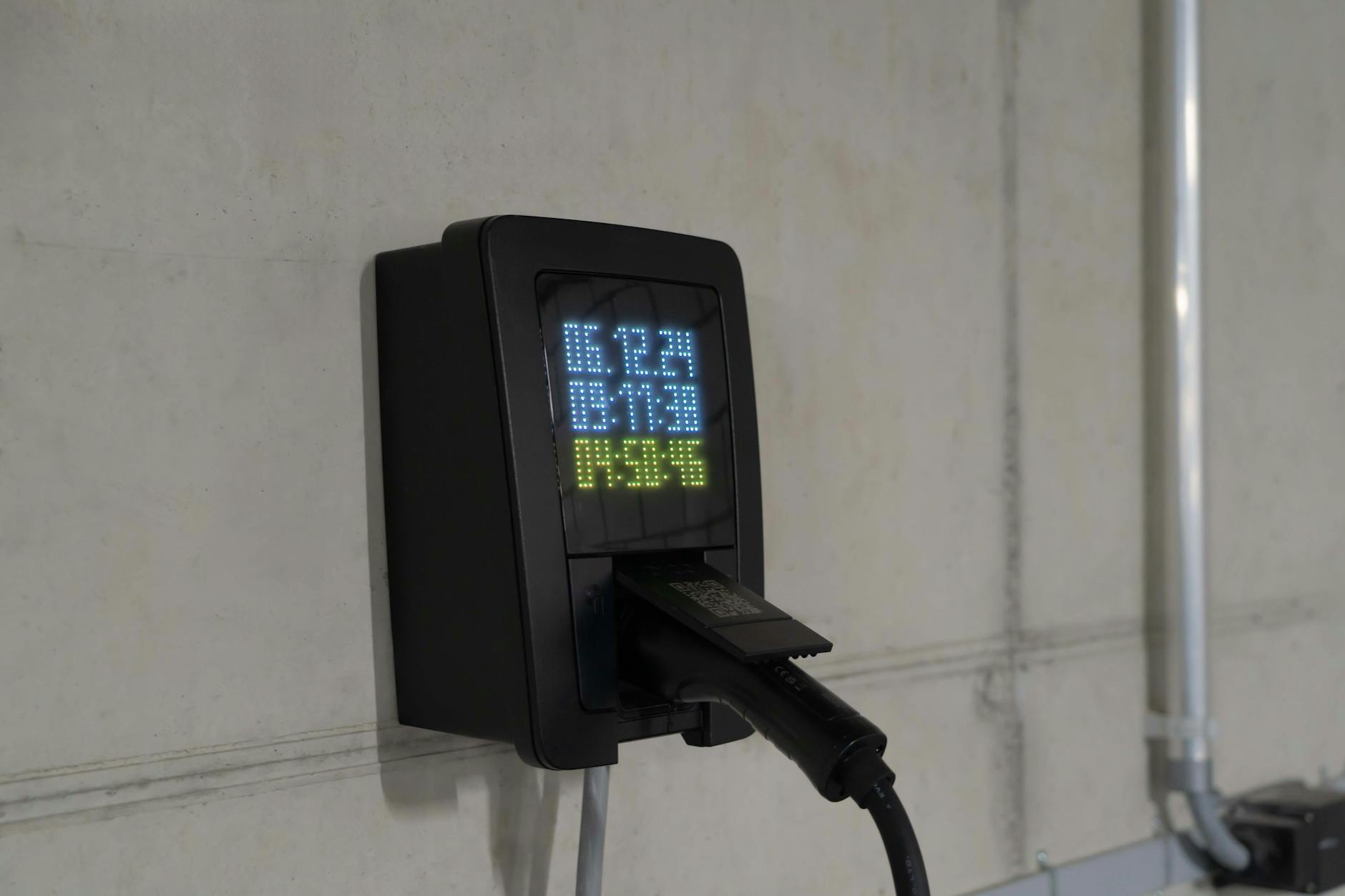
Vienna's smart city landscape is unusual in Europe because it is anchored overwhelmingly in publicly owned infrastructure. Wien Energie — Smart Grid & Digital Energy, Austria's largest regional energy supplier and a subsidiary of Wiener Stadtwerke, operates an extensive smart grid integrating renewable sources, advanced metering, and intelligent load management. The company serves over two million customers, manages one of Europe's largest urban solar programmes, and runs Vienna's district heating network covering more than 440,000 households. Its innovation lab pilots peer-to-peer energy trading on blockchain platforms, electric vehicle charging networks, and demand-response programmes.
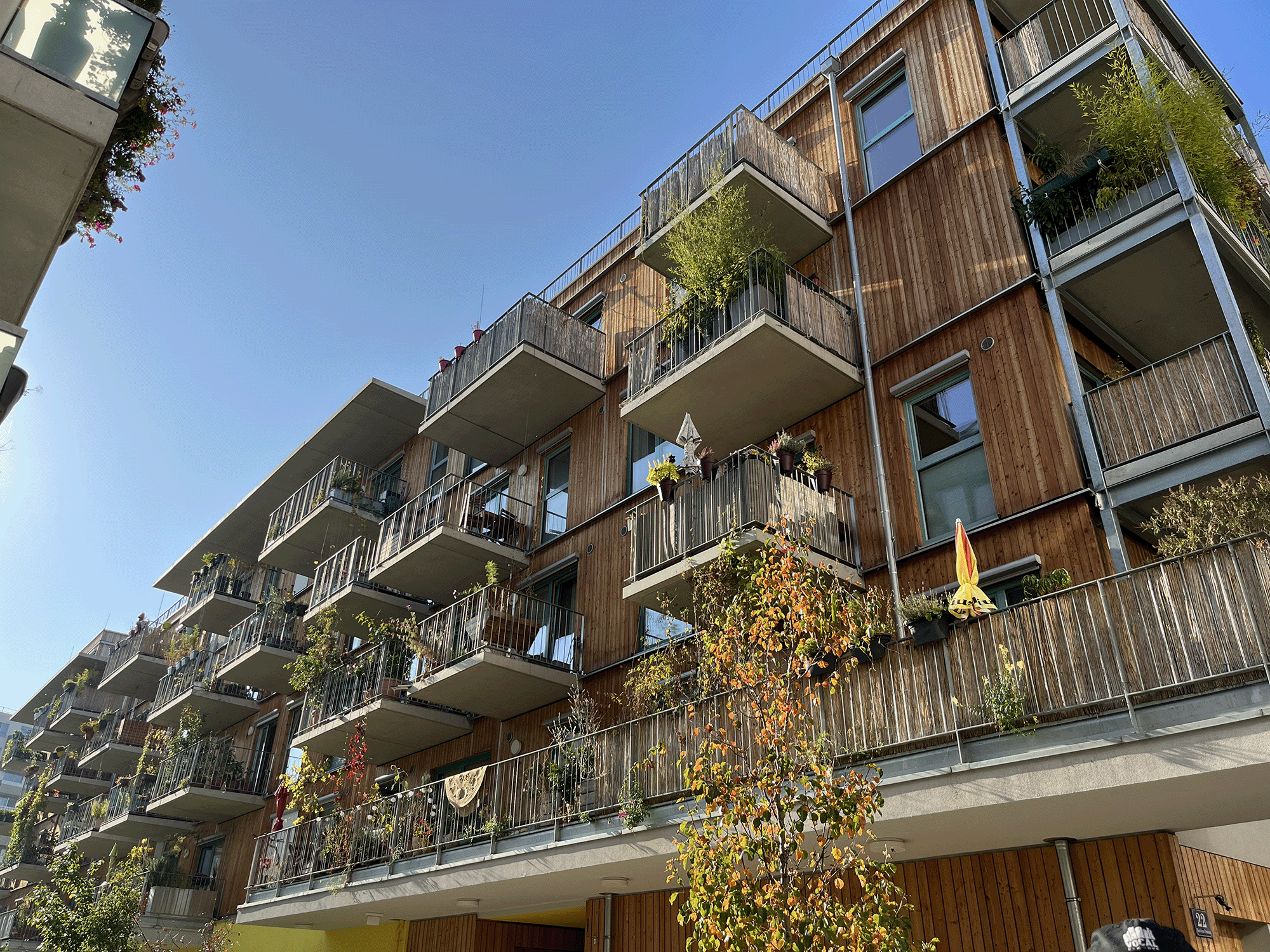
Wiener Wohnen, managing approximately 220,000 social housing units — making it the largest municipal housing manager in Europe — is increasingly engaged in smart building technologies. Building energy management systems, renewable energy installations, and climate adaptation measures are being rolled out across its vast portfolio, contributing to Vienna's climate neutrality targets while maintaining the affordability that defines the Viennese housing model. As the Green Social Housing: Lessons from Vienna report documents, the city's approach to sustainable housing has become a European reference point.
The Austrian Institute of Technology (AIT) provides the research backbone, with centres focused on energy, mobility, and digital safety. Vienna's universities — the Technical University of Vienna (TU Wien), the University of Natural Resources and Life Sciences (BOKU), and the Vienna University of Economics and Business (WU) — contribute applied research on urban systems, while a growing cluster of startups around proptech, energy tech, and civic technology adds entrepreneurial energy.
Seestadt and Beyond: Where Smart City Meets the Street
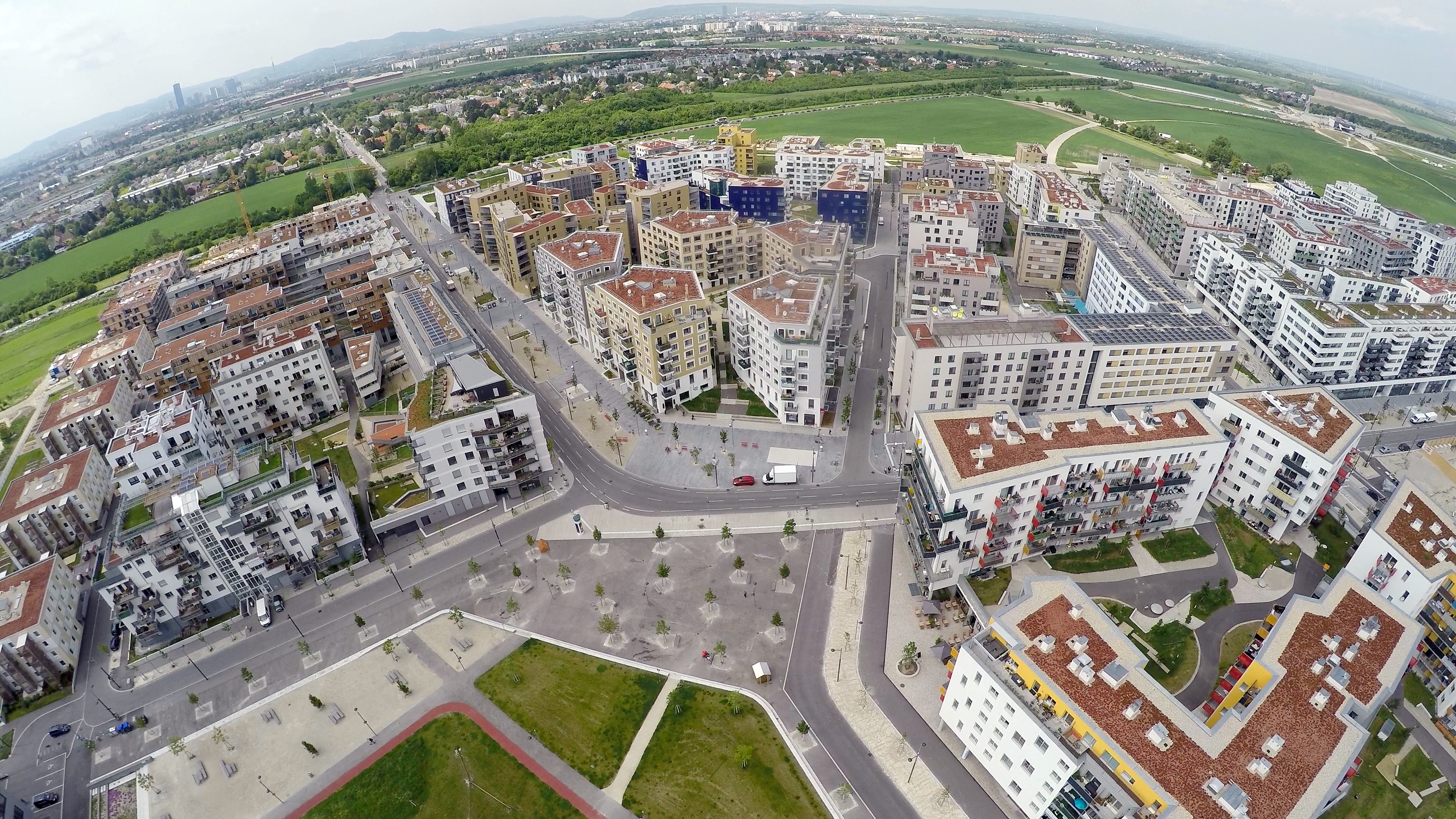
The most significant Austrian smart city deployment is in Vienna's Seestadt Aspern, one of Europe's largest urban development areas. The Aspern Smart City Research (ASCR) project, a public-private partnership between Siemens, Wien Energie, Wiener Netze, the City of Vienna, and Wien 3420 aspern Development AG, uses the living laboratory of Seestadt to test and optimise smart energy systems in a real-world urban environment.
ASCR focuses on four core areas: smart buildings that actively manage their own energy consumption and generation, smart grids that balance supply and demand across the district, smart ICT infrastructure for data-driven energy management, and smart users who interact with energy systems through digital tools and feedback mechanisms. Researchers work with actual residents and businesses, collecting anonymised data on energy consumption patterns and demonstrating that intelligent coordination between buildings, grid infrastructure, and renewable energy sources can significantly reduce peak loads.
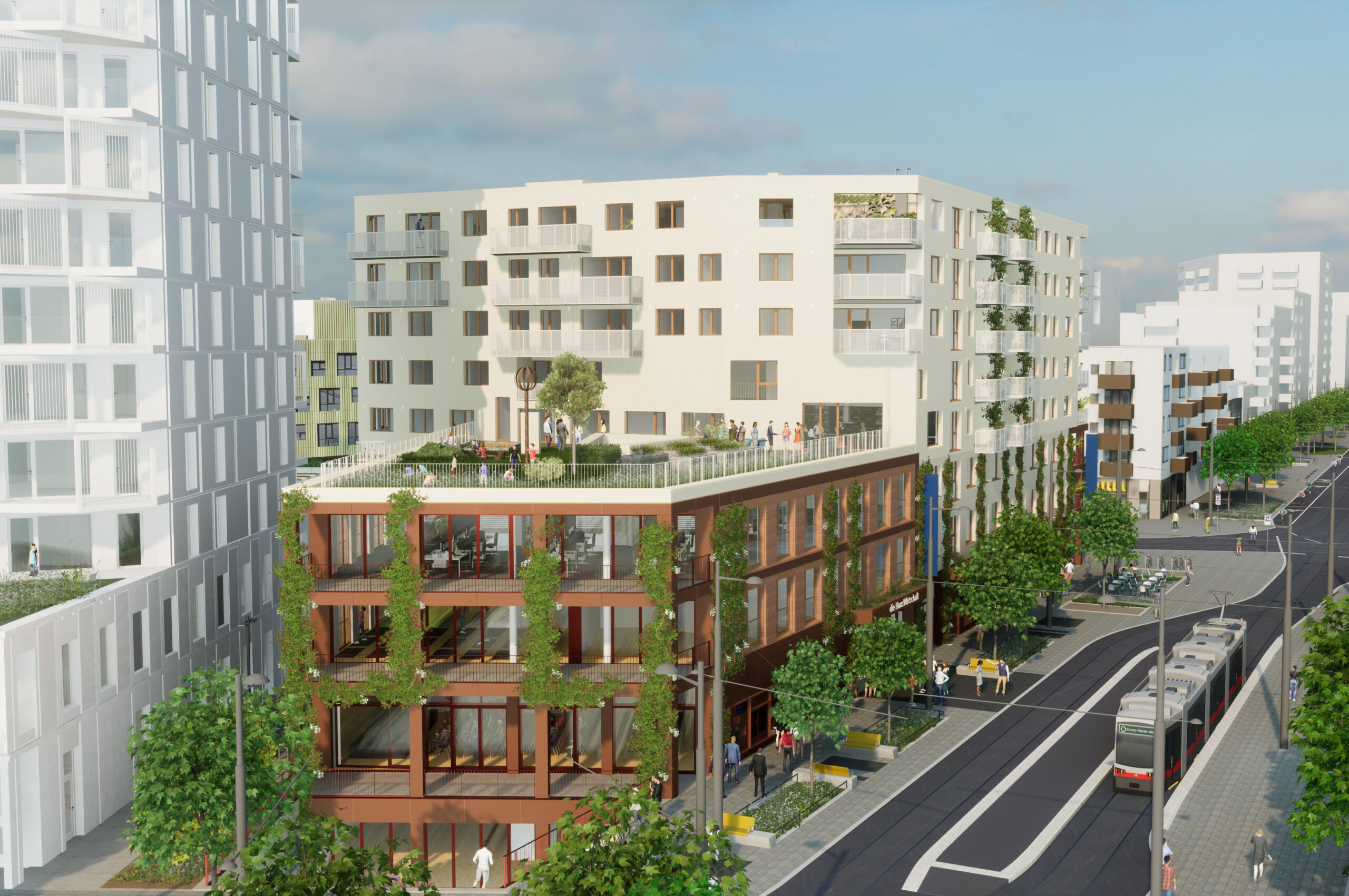
Beyond Seestadt, Vienna's smart city project portfolio spans dozens of initiatives. The city is digitising its public services — Wien stellt digital zu has delivered over 100,000 digital government communications in a single month. Meanwhile, the participatory housing cooperative HausWirtschaft Vienna in the Nordbahnviertel represents a different strand of innovation: a radically mixed-use building combining living and working spaces within Vienna's subsidised housing programme, governed through a cooperative structure that gives residents democratic control.
The The State of European Smart Cities: Exploring and showcasing models, solutions, and financing for European replication to achieve climate neutrality report highlights Vienna's participatory governance as a model, noting how the city has used citizen engagement to enhance project outcomes across energy, mobility, and urban planning.
Kaffeehauskultur Meets Digital Humanism: Where Innovation Becomes Experience
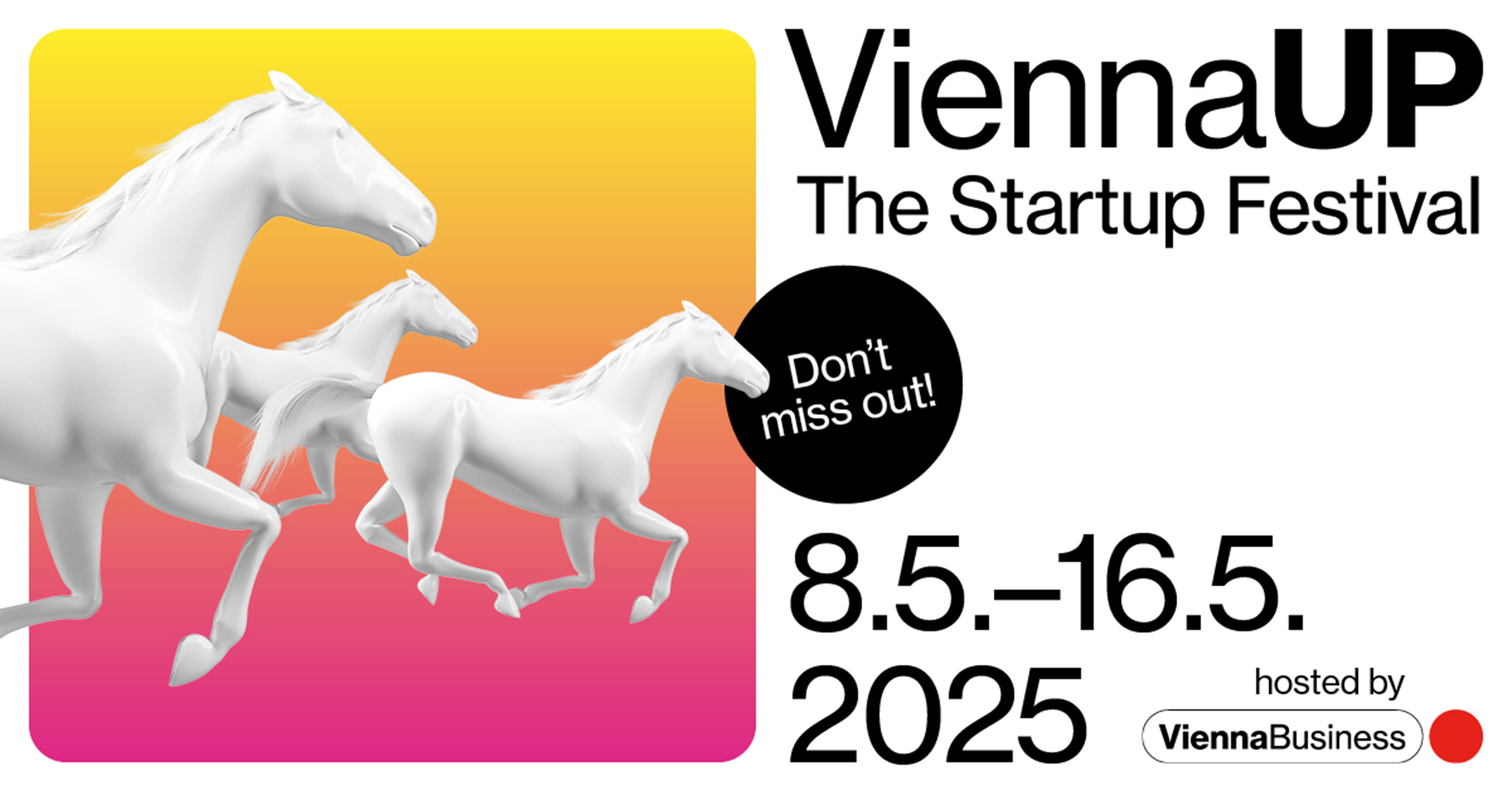
The simplest way to experience Austria's smart city ambitions is at ViennaUP 2025, the capital's annual startup and innovation festival organised by the Vienna Business Agency. The multi-week programme brings together entrepreneurs, investors, and urban technology enthusiasts across Vienna's innovation spaces, with dedicated tracks on urban technology, climate tech, and sustainable innovation.
But the daily experience is more subtle. Ride a Wiener Linien tram and check the real-time departure screens that integrate data across the city's extensive public transport network — one of the most affordable and heavily used in Europe. Walk through the Nordbahnviertel and see HausWirtschaft's community café where cooperative members shape their neighbourhood. Visit Seestadt Aspern and observe a district designed from scratch around smart energy principles, where residents interact with their building's energy systems through smartphone apps.
What connects these experiences is something deeply Viennese: Kaffeehauskultur — the coffee house culture that UNESCO recognised as intangible cultural heritage. The Viennese coffeehouse is not merely a place to drink coffee but a civic institution where ideas are debated, newspapers read, and time deliberately spent. Vienna's digital humanism — the insistence that technology must serve people, not the other way around — is, in essence, Kaffeehauskultur applied to urban innovation. The city builds smart systems the way it builds coffeehouses: with care for atmosphere, a suspicion of haste, and an unshakeable belief that the point of it all is a good life.
"Vienna not only defines environmental goals but also includes all aspects of the lives of its residents," the city's tourism office notes — a statement that captures why Vienna's smart city approach, for all its quiet understatement, may be among Europe's most ambitious.
References8 resources12 external